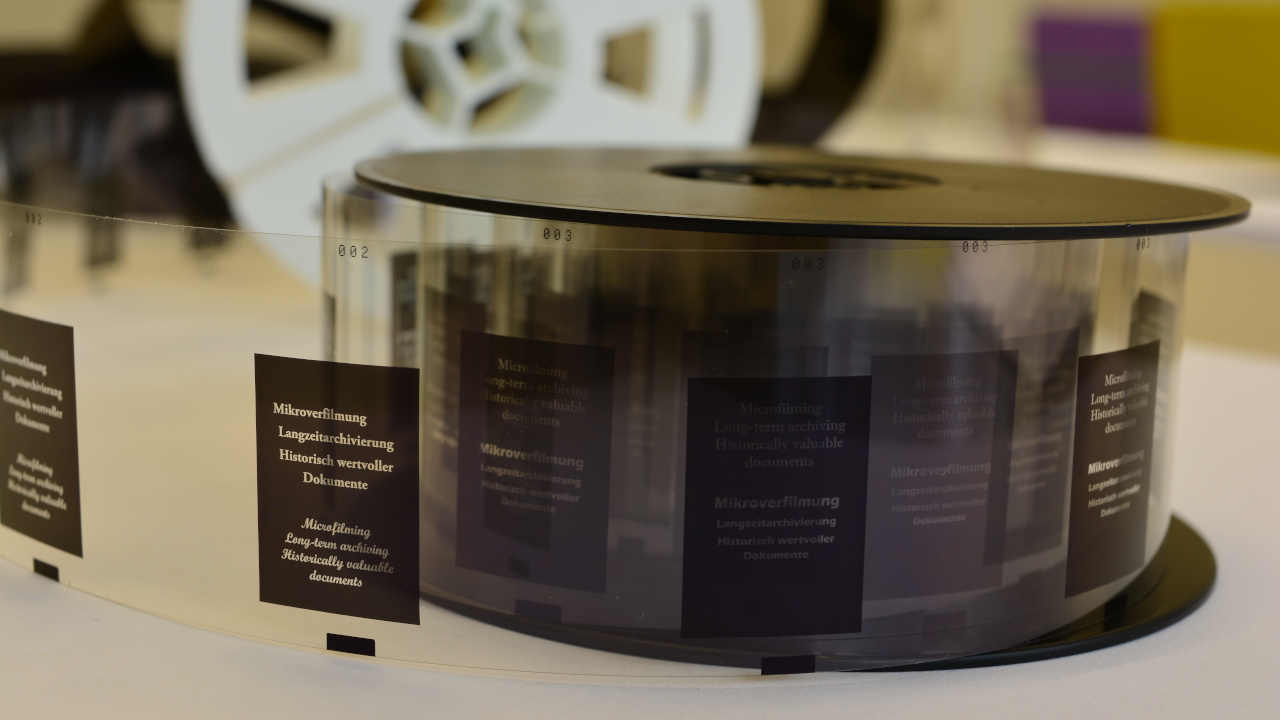
Before cloud storage, thumb drives, and the mysterious “Downloads” folder where PDFs go to retire, there was microfilm and microfiche. These tiny analog powerhouses turned mountains of paper into compact strips and sheets of photographic information. They were not glamorous. Nobody ever leaned across a dinner table and whispered, “Tell me more about silver-gelatin microforms.” Yet for libraries, archives, courts, newspapers, universities, hospitals, and government agencies, microfilm and microfiche solved a very serious problem: how to store huge amounts of information without needing another building, another basement, or another apology to the fire marshal.
The phrase “information density” sounds modern, almost like something from a data-center brochure. But microfilm and microfiche were practicing information density long before the internet learned how to buffer. By reducing full-size documents into miniature photographic images, microforms made it possible to preserve newspapers, legal records, census pages, engineering drawings, research reports, and rare books in a form that could last for generations when properly created and stored. They compressed knowledge physically, not digitally. A reader needed light, magnification, patience, and occasionally a strong cup of coffee.
Today, microfilm and microfiche sit in an interesting place between nostalgia and necessity. Many people associate them with old library machines and squeaky reels, but archivists still respect them because they are stable, standardized, and surprisingly resilient. Digital access may be faster, but microfilm remains one of the great preservation technologies: simple, compact, and readable without a subscription plan.
What Are Microfilm And Microfiche?
Microfilm and microfiche belong to a family of formats called microforms. A microform is a reduced-size reproduction of documents or images. Instead of storing a newspaper page at full size, a camera photographs the page and shrinks it onto film. When someone needs to read it, a microfilm reader enlarges the image on a screen or scanner. The result is a little like putting a library through a shrink ray, except the shrink ray has cataloging standards.
Microfilm: The Roll Format
Microfilm usually comes as a roll of film, commonly 16mm or 35mm wide. The 16mm format is often used for office-size documents, legal files, business records, and other smaller pages. The 35mm format is better suited for newspapers, maps, engineering drawings, and oversized documents. One 100-foot roll of 16mm microfilm can hold thousands of document images, depending on page size, reduction ratio, filming method, and image quality. For storage managers, that is the kind of math that makes file cabinets feel personally attacked.
Microfiche: The Flat Sheet Format
Microfiche is a flat sheet of film, commonly around 4 by 6 inches. Instead of being wound on a reel, images are arranged in a grid. A single sheet may contain dozens or even hundreds of pages, depending on the reduction ratio and layout. Microfiche became popular for catalogs, technical manuals, academic reports, government publications, and records that needed organized, direct access. If microfilm is a movie reel of information, microfiche is more like a tiny apartment building where every page has its own window.
Why Information Density Matters
Information density is the amount of usable information stored in a given physical space. A printed newspaper archive can devour shelves at a dramatic rate. A few decades of daily newspapers may require rows of heavy bound volumes. Microfilm can reduce that footprint enormously. The same information that once demanded rooms of shelving can fit into compact drawers, cabinets, or climate-controlled storage areas.
This matters because storage is never just about space. It is about cost, safety, access, and preservation. Paper is bulky, vulnerable to fire and water, attractive to pests, and often acidic. Old newspapers are especially fragile because many were printed on inexpensive wood-pulp paper that yellows, cracks, and crumbles over time. Microfilming allowed institutions to capture the intellectual content before the paper deteriorated beyond use.
That compactness also changed access. Instead of handling fragile originals every time someone wanted to research an obituary, court notice, ship arrival, or city council scandal from 1912, staff could provide a microfilm copy. The original could rest safely while the researcher scrolled through the film, sometimes too fast, overshooting the page, rewinding, sighing, and repeating the sacred dance of archival discovery.
The Science Behind The Shrink
Microforms work through photographic reduction. A document is photographed at a reduced scale, producing an image small enough to store on film while retaining enough detail to be enlarged later. Reduction ratios vary. Common document microfilming may use ratios such as 18:1, 24:1, or higher. Microfiche often uses grid arrangements where many reduced document images appear on one sheet. The higher the reduction ratio, the more pages can fit, but the harder the system must work to preserve legibility.
This is where information density becomes a balancing act. More compression sounds attractive until letters become fuzzy, margins disappear, or faint handwriting turns into mysterious archival fog. Preservation-quality microfilming is not simply “take a tiny picture and hope.” It requires careful camera work, exposure control, processing, inspection, indexing, and storage. Density is useful only when the information remains readable.
Silver-Gelatin, Diazo, And Vesicular Film
Not all microfilm is the same. Preservation masters are commonly associated with silver-gelatin film on a stable base, especially polyester, because of its long-term preservation value. Diazo and vesicular films have also been used, often for duplicate or service copies. These materials differ in chemistry, appearance, durability, and storage needs. Mixing incompatible film types in the same enclosures can create preservation problems, because chemicals released by one material may damage another. In plain English: some films are bad roommates.
Good archival practice separates film types, stores rolls and fiche in proper enclosures, and avoids damaging materials such as rubber bands, poor-quality boxes, wood cabinets, and contaminated environments. Microforms may be small, but they are still photographic materials. They dislike heat, humidity, dust, fingerprints, pollutants, and being yanked around by impatient humans.
Microfilm Versus Microfiche: Which Is Better?
The honest answer is: it depends on the job. Microfilm is excellent for long runs of sequential material. Newspapers, court ledgers, census records, and continuous office files often fit naturally on reels. Researchers can move frame by frame through a timeline. A reel is efficient when the collection itself has a natural order.
Microfiche is useful when direct access matters. Because images are arranged on flat sheets, users can often identify sections more quickly, especially when the fiche has readable headers. Technical manuals, parts catalogs, government reports, and academic indexes often benefit from this layout. Instead of winding through hundreds of frames, a reader can select the relevant sheet and jump closer to the needed page.
Think of microfilm as a road trip and microfiche as a parking lot map. Microfilm says, “Enjoy the journey.” Microfiche says, “Row C, space 14, bring your glasses.”
Why Archives Still Trust Microforms
The great strength of microfilm and microfiche is not speed. Nobody claims that scrolling a reel is faster than typing a search term into a digital database. The strength is preservation stability. Properly produced and stored archival microfilm can last for hundreds of years. It does not require an operating system, cloud login, software update, file migration, proprietary viewer, or password reset email that never arrives.
Digital files are powerful, searchable, and easy to distribute, but they require active management. Storage media fail. File formats age. Systems become obsolete. Metadata gets lost. Servers need maintenance. A digital preservation program can absolutely protect records for the long term, but it must keep working. Microfilm, by contrast, is a low-tech preservation medium. If you have light and magnification, you have a fighting chance.
This is why many institutions treat microfilm and digitization as partners rather than enemies. Microfilm can serve as a preservation copy, while digitized images provide broad access. A good scan from quality microfilm can bring old newspapers and records online, making them searchable and viewable from anywhere. The original microfilm remains a stable backup. That combination is practical: analog for endurance, digital for convenience.
The Storage Conditions That Make Or Break Microforms
Microfilm and microfiche are durable only when treated properly. Temperature and relative humidity matter a great deal. Cooler temperatures are generally better, and humidity must be controlled to reduce chemical deterioration, mold growth, and emulsion damage. Dust can scratch film. Air pollutants can cause blemishes and chemical reactions. Fingerprints can damage surfaces. Poor enclosures can accelerate decay.
For silver-gelatin microforms, careful storage is especially important. Preservation guidance commonly recommends cool, dry, stable environments, proper boxes or sleeves, and minimal handling of master negatives. Service copies should be used for researchers whenever possible, while master copies remain protected. This is not archival fussiness; it is common sense wearing cotton gloves.
Another important issue is film base. Older nitrate and acetate films can deteriorate and release harmful acidic products. Acetate deterioration is sometimes associated with a vinegar-like odor, which is never what you want your archive to smell like unless your archive is secretly a salad. Deteriorating films should be separated, assessed, duplicated, or reformatted before information is lost.
Digitizing Microfilm And Microfiche
Digitization has transformed the way people use microforms. A scanned microfilm collection can become searchable, shareable, and accessible to researchers who live far from the holding institution. Genealogists, historians, journalists, students, and legal researchers benefit enormously from digital access. Instead of traveling to a reading room, they can search names, dates, headlines, and locations online.
However, digitization is not magic. A poor-quality film usually produces a poor-quality scan. Scratches, uneven density, blur, warped film, and high reduction ratios can all affect results. Optical character recognition, or OCR, may struggle with old fonts, broken type, faded ink, handwritten notes, skewed pages, and newspaper columns that look as if they were assembled during a windstorm.
Good digitization requires planning. Institutions must decide which copy to scan, what resolution and tonal settings to use, how to name files, how to capture metadata, how to check quality, and how to preserve the digital masters. Access copies may be smaller and faster to load, while preservation files should retain more detail. The best projects respect both the source material and the future user.
Real-World Examples Of Microform Information Density
Newspaper preservation is one of the clearest examples. A century of local newspapers can contain births, deaths, marriages, advertisements, election results, school events, business openings, disasters, sports scores, editorials, and the occasional headline that aged like milk. Preserving that material on paper alone can be difficult because newspapers were often printed cheaply and heavily used. Microfilm allowed libraries to capture page images in sequence and store them compactly.
Government records offer another example. Agencies produce forms, reports, permits, case files, correspondence, and indexes. Many records must be retained for legal, administrative, or historical reasons. Microfilm historically provided a way to reduce storage costs while keeping records readable and organized. In some programs, film also served as a security or backup copy.
Engineering and architectural records also benefited from microforms. Large drawings are awkward to store, retrieve, and duplicate. Microfilm and aperture cards made it possible to preserve drawing images in compact formats while maintaining indexing systems for retrieval. The original drawing might be huge enough to double as a picnic blanket, but the microform version could fit in a drawer.
The User Experience: Charming, Clunky, And Surprisingly Effective
Anyone who has used a microfilm reader knows the experience is physical. You thread the reel, adjust the lens, focus the image, move forward, reverse, zoom, rotate, and try not to lose your place. It can feel like operating a small submarine that only travels through old newspapers. Microfiche readers have their own ritual: slide the sheet under glass, move the tray, hunt the grid, and slowly bring a tiny page into view.
Is it as convenient as a keyword search? No. Is it satisfying when you finally find the exact page you need? Absolutely. Microforms reward patience and pattern recognition. You learn how newspapers were organized. You notice recurring columns, local businesses, changing language, printing errors, and social habits that a quick search might miss. The slowness can become part of the research method.
That said, access equipment matters. A clean, well-maintained reader-scanner can make research productive. A dim, dusty, misaligned machine can turn a simple lookup into a heroic quest. Institutions that still offer microform access should maintain equipment, provide clear instructions, and help new users understand the basics. The technology may be old, but frustration does not have to be part of the preservation strategy.
Common Myths About Microfilm And Microfiche
Myth 1: Microfilm Is Obsolete
Microfilm is not obsolete in preservation contexts. It is less visible than digital access, but many archives still rely on microfilm as a long-term medium. Obsolete means unusable. Microfilm remains usable with simple optical equipment, which is exactly why preservation professionals still take it seriously.
Myth 2: Digitization Automatically Replaces Microfilm
Digitization improves access, but it does not automatically solve preservation. Digital files must be managed, backed up, migrated, and documented. In many cases, the strongest strategy is to digitize for access while retaining microfilm as a preservation source.
Myth 3: All Microfilm Is High Quality
Quality varies. Some microfilm is sharp, consistent, and beautifully processed. Some is faint, scratched, dense, blurry, or incomplete. The quality of the original document, camera work, processing, storage, and handling all affect the final result.
Myth 4: Microfiche And Microfilm Are The Same Thing
They are related but not identical. Microfilm is usually a roll; microfiche is a flat sheet. Both store reduced images, but they differ in layout, retrieval style, equipment handling, and common use cases.
Why Microforms Still Matter In A Digital World
Microfilm and microfiche remind us that preservation is not the same as convenience. A digital database can make information easy to find, but preservation asks a deeper question: will the information survive? For records with long-term historical, legal, or cultural value, survival depends on stable formats, good metadata, careful storage, and responsible access planning.
Microforms also teach humility. Modern technology changes quickly. Storage platforms rise and fall. File formats come and go. Search tools improve, then break, then improve again. Microfilm looks old-fashioned, but its simplicity is an advantage. It stores human-readable images in a compact analog format. No battery required. No firmware update required. No pop-up asking whether you accept cookies.
Experiences Related To Information Density: Microfilm And Microfiche
Working with microfilm and microfiche can feel like stepping into a conversation between the past and the present. The first experience many people remember is the machine itself. A microfilm reader has a presence. It hums, glows, clicks, and asks for cooperation. You do not simply “open” a document; you load it. You guide the reel onto spindles, thread the film through a path, adjust the glass, and turn a knob that can move you from yesterday’s page to last decade’s page in one careless spin.
The experience teaches respect for information density very quickly. A single reel may look unimpressive in the hand, but once magnified it becomes a corridor of pages. Birth announcements, foreclosure notices, grocery ads, war updates, recipes, political cartoons, and weather reports all sit in sequence on a thin strip of film. The small physical object contains a surprisingly large social world. That is the magic of microfilm: it does not merely save space; it compresses context.
Microfiche creates a different kind of experience. Instead of scrolling through a reel, the user navigates a grid. At first, the sheet looks like a tiny city seen from an airplane. Each frame is a building, each row a street, each header a signpost. The process is slower than digital browsing, but it can be more deliberate. You begin to notice how the information was arranged and why. Manuals, catalogs, indexes, and reports often make sense on fiche because the sheet gives the user a visual map of the content.
There is also a practical lesson in patience. Digital search encourages us to expect instant answers. Microforms remind us that research often includes uncertainty. You may search three reels before finding the correct date. You may discover that an issue is missing, a page was filmed out of order, or the name you expected was spelled differently. These obstacles can be annoying, but they also make researchers better observers. They learn to check surrounding dates, alternate spellings, related headings, and neighboring records.
Another experience is the joy of accidental discovery. While searching for one article, you might find a forgotten advertisement, a local scandal, a sports score, or a public notice that changes your understanding of the subject. Microfilm browsing creates room for serendipity. A keyword search often takes you directly to what you asked for; microfilm sometimes shows you what you did not know to ask.
For archivists and librarians, microforms offer a different experience: responsibility. A drawer of film is compact, but it is not self-preserving. Staff must monitor storage conditions, inspect film, separate unstable materials, replace poor enclosures, maintain readers, and help users handle materials correctly. Information density reduces space, but it concentrates risk. If one reel holds thousands of pages, damage to that reel can affect an enormous amount of content.
The strongest lesson from microfilm and microfiche is that preservation is a chain of decisions. The filming decision, the storage decision, the access decision, and the digitization decision all matter. When done well, microforms become quiet heroes of cultural memory. They sit in cabinets, ignored by most people, until someone needs proof, history, identity, or a missing piece of a story. Then the little strip of film becomes enormous.
Conclusion
Information density is not just a technical measurement; it is a preservation philosophy. Microfilm and microfiche show how much human knowledge can be compressed into small physical forms without surrendering readability or long-term value. They helped institutions preserve fragile newspapers, legal documents, government records, technical files, and rare publications while saving space and reducing wear on originals.
In the digital age, microforms may look old-fashioned, but their strengths remain relevant. They are compact, stable, standardized, and readable with relatively simple tools. Digitization makes them easier to search and share, but good preservation still depends on quality sources, careful storage, and smart planning. Microfilm and microfiche are not relics of a forgotten information age. They are reminders that the best preservation tools are not always the flashiest; sometimes they are the ones quietly holding centuries of information in a drawer.