Forklifts look tough, and in many ways they are. They can lift heavy pallets, move awkward materials, and make a warehouse feel like a well-choreographed dance floor. But even the strongest forklift has one very important condition: the load must be carried within its rated limits. That is where load center distance comes in.
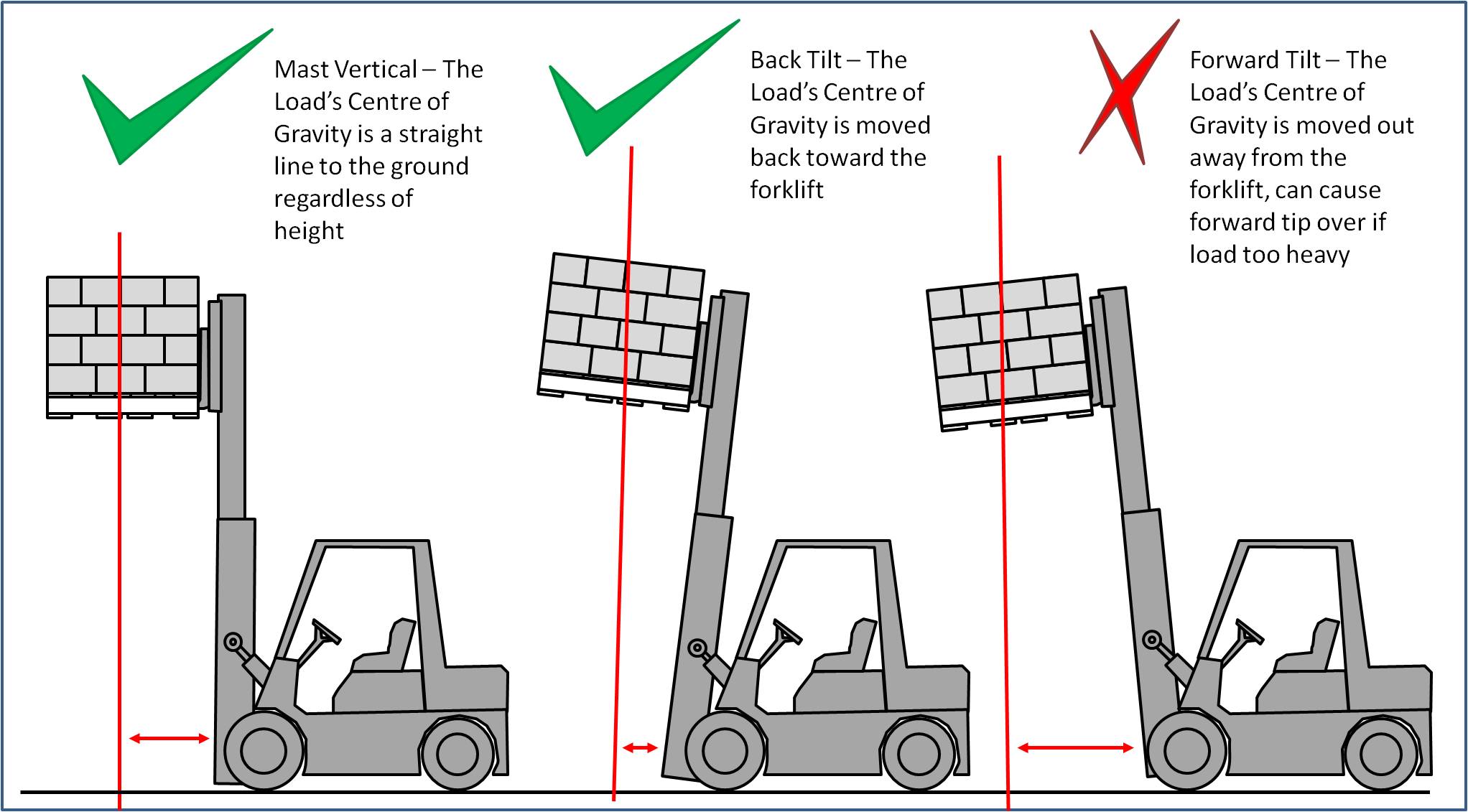
Load center distance is the horizontal distance from the vertical face of the forks to the load’s center of gravity. In plain English, it tells you how far the weight is sitting away from the forklift. The farther the weight moves forward, the harder the forklift has to work to keep the load stable. Think of holding a bowling ball close to your chest versus holding it at arm’s length. Same bowling ball. Completely different level of “why did I agree to this?”
For forklifts, this is not just a comfort issue. It is a safety issue. A load that exceeds the rated load center can reduce lifting capacity, shift the combined center of gravity forward, and increase the risk of a tip-over. Operators, supervisors, warehouse managers, and safety trainers should understand how to determine forklift load center distance before lifting anything that is long, wide, uneven, unusually shaped, or heavier than usual.
This guide explains how to determine load center distance for forklifts in six practical steps, with examples, safety reminders, and real-world experience at the end. It is written for education and planning; actual forklift operation should only be performed by trained, authorized operators following the forklift’s data plate, workplace procedures, and applicable safety rules.
What Is Forklift Load Center Distance?
The forklift load center is the distance from the face of the forks to the center of gravity of the load. For a standard, evenly distributed pallet, the center of gravity is usually at the middle of the pallet’s depth. If a pallet is 48 inches deep and the weight is evenly spread, the load center is typically 24 inches.
That is why many forklifts are rated at a 24-inch load center. A common capacity plate might say something like “5,000 lb at 24 in load center.” This does not mean the forklift can lift 5,000 pounds no matter what. It means the forklift can lift that amount under the listed conditions, including the stated load center, lift height, mast configuration, and attachment setup.
When the load center increases, the forklift’s effective capacity decreases. A 5,000-pound load at a 24-inch load center creates a load moment of 120,000 inch-pounds. Move that same weight out to a 36-inch load center, and the load moment jumps to 180,000 inch-pounds. The forklift did not get weaker; the load simply became harder to balance.
Why Load Center Distance Matters
Forklifts are designed around balance. The counterweight at the rear of the truck helps offset the load at the front. The front axle works like a fulcrum. When the load is too heavy or too far forward, the forklift can become unstable.
Load center distance affects:
- Rated lifting capacity: A larger load center can reduce how much weight the forklift can safely handle.
- Forward stability: Loads that sit too far forward increase the chance of tipping toward the forks.
- Side stability: Off-center or uneven loads can shift weight sideways, especially while turning.
- Attachment performance: Fork extensions, clamps, booms, and other attachments can move the load farther from the mast.
- Lift height safety: Capacity may change at different mast heights, especially on reach trucks and high-lift applications.
In other words, the load center is not a small technical detail hiding on the data plate because engineers needed more numbers to print. It is one of the key measurements that determines whether a lift is safe.
How to Determine Load Center Distance for Forklifts: 6 Steps
Step 1: Read the Forklift Data Plate First
Before measuring the load, start with the forklift’s data plate, also called the nameplate or capacity plate. This plate gives the rated capacity, load center, truck weight, mast height, attachment information, and other operating limits. It is usually mounted where the operator can see it from the driving position.
Look for the rated capacity and the listed load center. For example, the plate may show:
- Capacity: 5,000 lb
- Load center: 24 in
- Maximum lift height: 189 in
- Attachment: Standard forks or listed attachment
This tells you the forklift’s rated lifting ability under those specific conditions. If the data plate is missing, unreadable, altered, or does not match the installed attachment, do not guess. Guessing around forklift capacity is how warehouses accidentally invent expensive sound effects.
If a forklift has an attachment, such as a side shifter, carton clamp, roll clamp, rotator, boom, or fork extensions, the capacity plate should reflect that configuration. Attachments often add weight and push the load center forward, reducing capacity. When in doubt, contact the manufacturer, dealer, or qualified service provider for the correct rating.
Step 2: Identify the Load’s Shape and Weight Distribution
Next, study the load itself. A neat pallet of evenly stacked boxes is much easier to evaluate than a long steel pipe, carpet roll, machine part, liquid tote, or oddly shaped crate. The key question is: where is the load’s center of gravity?
For a uniform load, the center of gravity is usually near the geometric center. For example:
- A 48-inch-deep pallet with evenly distributed weight usually has a 24-inch load center.
- A 60-inch-deep crate with evenly distributed weight usually has a 30-inch load center.
- A 72-inch-long load carried lengthwise may have a 36-inch load center.
But not all loads play nicely. If one side of a pallet holds heavy metal parts and the other side holds empty packaging, the center of gravity shifts toward the heavier side. If a machine is heavier at one end, measuring only the outside dimensions can give a misleading answer.
When the load is uneven, ask for the manufacturer’s weight information, shipping documents, center-of-gravity markings, or rigging instructions. Some crates and machinery shipments include symbols or labels showing the center of gravity. Those markings are not decoration; they are the load’s way of saying, “Please do not pick me up like a pizza box.”
Step 3: Measure from the Fork Face to the Load’s Center of Gravity
Now measure the actual load center distance. The measurement starts at the vertical face of the forks, not at the fork tips. The vertical face is the upright part of the fork heel, closest to the mast. From there, measure forward to the load’s center of gravity.
For a standard evenly distributed pallet, the calculation is simple:
Load center distance = Load depth ÷ 2
Example: If a pallet is 48 inches deep and the weight is evenly distributed, the load center is:
48 ÷ 2 = 24 inches
Another example: If a crate is 72 inches deep and evenly loaded, the load center is:
72 ÷ 2 = 36 inches
That 36-inch load center is important. A forklift rated for 5,000 pounds at a 24-inch load center may not safely lift 5,000 pounds at a 36-inch load center. The load is sitting farther away from the forklift’s balance point, increasing the load moment.
For irregular loads, the measurement may require more information than a tape measure. If the true center of gravity is unknown, treat the load conservatively and get qualified help before lifting.
Step 4: Compare the Actual Load Center to the Rated Load Center
Once you know the actual load center, compare it with the forklift’s rated load center on the data plate.
If the actual load center is equal to or less than the rated load center, and the load weight is within the rated capacity, the lift may be within the listed capacity range. You still need to consider height, attachment, floor conditions, travel path, and load stability.
If the actual load center is greater than the rated load center, capacity is reduced. A longer load creates more leverage against the forklift. This is where many capacity mistakes happen. Someone sees “5,000 lb” on the data plate and assumes the forklift can lift any 5,000-pound object. But a 5,000-pound compact cube and a 5,000-pound long crate are not the same lift.
A useful screening formula for evenly distributed loads is:
Estimated capacity = Rated capacity × Rated load center ÷ Actual load center
Example:
- Rated capacity: 5,000 lb
- Rated load center: 24 in
- Actual load center: 36 in
5,000 × 24 ÷ 36 = 3,333 lb estimated capacity
This means the forklift may be roughly limited to 3,333 pounds at a 36-inch load center, assuming other conditions are unchanged. However, this formula is only a planning estimate. It does not replace the forklift’s official capacity plate, manufacturer load chart, or engineering evaluation.
Step 5: Account for Attachments, Fork Extensions, and Load Position
Attachments can change everything. A side shifter, fork positioner, clamp, rotator, carpet pole, boom, or fork extension can add weight and move the effective load center forward. Even if the load itself has not changed, the attachment may reduce the forklift’s safe capacity.
Fork extensions are especially misunderstood. They may support longer loads, but they do not magically upgrade the forklift’s rated load center. If the load’s center of gravity moves farther from the fork face, the forklift sees a larger moment. The steel sleeves may be longer, but the laws of physics remain irritatingly consistent.
Also consider how the load sits on the forks. Keep the load as close to the mast as practical and fully supported by the forks. A load perched near the fork tips increases the load center and reduces stability. Forks should be spread wide enough to support the load and inserted far enough to prevent tipping or sliding.
If the attachment is not listed on the data plate, or if the plate does not show the correct attachment capacity, stop and verify the rating. The safe capacity should be based on the forklift and attachment as a combined system.
Step 6: Verify Stability Before Lifting and Traveling
After measuring and comparing the load center, perform a final safety check before the lift. This does not mean “try it and see what happens.” It means verify the load, forklift rating, route, surface, height, and operating conditions before moving.
Check that:
- The load weight is known or reliably estimated.
- The actual load center is within the forklift’s rated capacity limits.
- The data plate matches the forklift’s current attachment setup.
- The load is stable, secured, and centered on the forks.
- The forks are inserted properly and the load is close to the mast.
- The travel path is level, clear, and suitable for the forklift.
- The operator is trained and authorized for that forklift type.
When lifting, raise only as much as needed, avoid sudden movements, and keep the load low while traveling. Turning with an elevated or unstable load can shift the center of gravity and increase tip-over risk. A forklift may feel solid, but it is not immune to bad geometry.
Common Load Center Examples
Example 1: Standard Pallet
A warehouse receives a 48-inch-deep pallet weighing 3,000 pounds. The weight is evenly distributed. The forklift is rated for 5,000 pounds at a 24-inch load center.
The load center is 48 ÷ 2 = 24 inches. Since the actual load center matches the rated load center and the weight is below capacity, the load is within the basic rating, assuming lift height and attachment conditions also match the data plate.
Example 2: Oversized Crate
A crate is 72 inches deep and weighs 3,800 pounds. The forklift is rated for 5,000 pounds at a 24-inch load center.
The load center is 72 ÷ 2 = 36 inches. A rough estimate would be 5,000 × 24 ÷ 36 = 3,333 pounds. Since the crate weighs 3,800 pounds, this lift may exceed the estimated safe capacity. The right move is to use a properly rated forklift, get manufacturer guidance, or choose a different handling method.
Example 3: Uneven Machine Load
A machine crate is 60 inches deep and weighs 2,800 pounds, but the motor sits toward the front of the crate. The geometric center is 30 inches, but the actual center of gravity may be farther forward.
In this case, using 30 inches may underestimate the real load center. The operator should look for center-of-gravity markings, shipping paperwork, or manufacturer information before handling the load. Uneven weight deserves extra respect.
Mistakes to Avoid When Measuring Forklift Load Center
Using Fork Length Instead of Load Center
Fork length and load center are not the same. A 48-inch fork does not automatically mean a 24-inch load center in every situation. The load center depends on where the load’s center of gravity sits relative to the fork face.
Ignoring the Data Plate
The data plate is the forklift’s official capacity guide. It should not be treated like a sticker that came free with the machine. If the plate says the truck is rated at a specific load center and height, those conditions matter.
Forgetting About Attachments
Attachments may lower capacity by adding weight and increasing the distance between the load and the mast. A forklift that handles a load safely with standard forks may not handle the same load safely with a clamp, boom, or extension.
Assuming All Loads Are Evenly Balanced
Many loads are not evenly balanced. Motors, pumps, drums, liquids, bundled pipe, and mixed pallets can have shifting or offset centers of gravity. When the weight distribution is unknown, do not treat the load like a perfect rectangle from a math textbook.
Practical Experience: What Real Warehouses Teach About Load Center Distance
In real warehouse and yard work, load center problems usually do not appear as dramatic textbook examples. They show up quietly: a pallet feels “heavier than it should,” the rear tires seem light, the mast flexes more than expected, or the operator needs more tilt than usual to keep the load steady. Those are clues that the load’s center of gravity may be farther forward or less stable than expected.
One common experience involves oversized pallets. A standard 48-inch pallet may fit neatly within a forklift’s 24-inch load center rating. But when a facility starts receiving 60-inch or 72-inch crates, the same forklift may no longer be the right tool. The load may not look dramatically different from the operator’s seat, but the extra depth changes the leverage. That extra foot or two can make a major difference in safe capacity.
Another lesson comes from long materials such as lumber bundles, pipe, carpet rolls, or metal stock. These loads often require special handling because the center of gravity may sit far from the fork face, especially when carried lengthwise or with an attachment. A carpet pole, for example, can move the load center much farther forward than standard forks. The forklift may need to be rated for that attachment and that specific load center, not just the load’s total weight.
Mixed pallets are also tricky. A pallet may weigh less than the forklift’s rated capacity but still be unstable if the heavy items are stacked at the front, on one side, or high above the fork level. A pallet of boxed parts can look harmless until one side contains dense metal components and the other side contains light packaging. The forklift does not care what the label says; it responds to where the weight actually sits.
Experienced operators learn to respect the small details. They check whether the load is tight against the fork heel. They notice when a pallet is damaged or sagging. They avoid traveling with the load raised. They slow down before turning. They ask questions when the weight is unknown. Most importantly, they do not let routine become a substitute for measurement.
Supervisors can help by making load information easy to find. Mark heavy or unusual loads with weight and center-of-gravity information. Keep data plates clean and readable. Train employees to recognize when an attachment changes capacity. Do not pressure operators to “just move it real quick.” Forklift incidents often happen during exactly those quick, informal lifts that skipped the boring but important checks.
A practical habit is to create a simple load center checklist for unusual materials. Before lifting, the operator or supervisor confirms the load weight, load depth, likely center of gravity, attachment used, rated capacity, lift height, and travel route. This takes far less time than repairing a forklift, replacing damaged inventory, or explaining to management why a crate now has the shape of a modern art sculpture.
The biggest real-world takeaway is simple: the number on the data plate is not a universal permission slip. It is a rated capacity under specific conditions. Load center distance tells you whether your actual load matches those conditions or is asking the forklift to do something more demanding. When the load center increases, slow down, calculate, verify, and use the right equipment.
Conclusion
Determining forklift load center distance is one of the most important steps in safe material handling. Start with the data plate, understand the load’s shape and weight distribution, measure from the fork face to the center of gravity, compare that distance to the rated load center, account for attachments, and verify stability before lifting or traveling.
For simple, evenly distributed loads, the load center is often half the load depth. For irregular, long, or uneven loads, the answer may require center-of-gravity markings, manufacturer information, or qualified evaluation. When the actual load center is greater than the forklift’s rated load center, safe capacity decreases. That is not a suggestion from the forklift; it is physics wearing a hard hat.
Note: This article is for educational and planning purposes. Always follow the forklift data plate, operator manual, employer safety procedures, and applicable regulations. Forklifts should be operated only by trained and authorized operators.