Editor’s note: This article is based on public information from the U.S. Coast Guard, DEA, DVIDS, DHS, GAO, USNI News, major U.S. news reporting, and maritime-security analysis. It is written for public education and does not include operational details that could help criminal activity.
Every so often, a real-life video appears that makes action-movie directors quietly close their laptops and whisper, “Fine. The ocean wins.” The Coast Guard chase of a drug-running semi-submersible in the Eastern Pacific is one of those moments. In the now-famous 2019 footage, crew members from the U.S. Coast Guard Cutter Munro pursue a low-riding vessel slicing through open water, close the distance, and board it while waves slap against the hull like the Pacific itself has joined the security team.
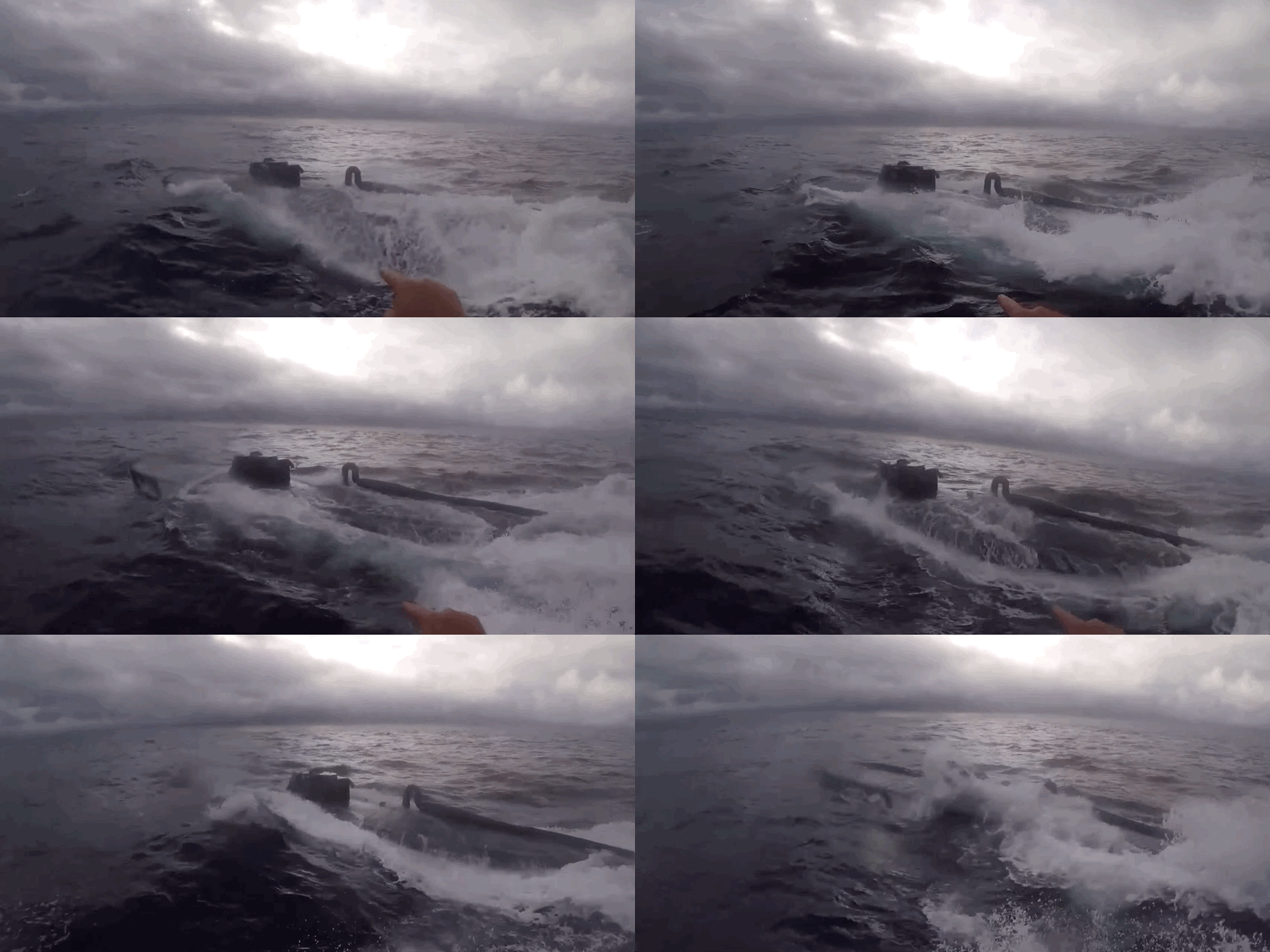
The scene is dramatic because it is not polished. There is no movie soundtrack, no slow-motion helicopter shot, no hero turning toward the camera with suspiciously perfect hair. Instead, there is a moving semi-submersible, shouted commands, a boarding team, and the dangerous reality of maritime drug interdiction. The vessel was reportedly carrying nearly 17,000 pounds of cocaine, valued at roughly $232 million, making the chase more than viral entertainment. It was a window into how far criminal networks will go to move narcoticsand how difficult it is to stop them at sea.
For readers searching for “Coast Guard semi-submersible chase,” “drug-running semi-submersible,” or “narco-sub video,” the story is bigger than one wild clip. It involves transnational crime, advanced maritime surveillance, long-range patrols, legal authority on the high seas, and the stubborn courage of Coast Guard crews who often work far from shore and far from applause.
What Happened in the Coast Guard Semi-Submersible Chase?
The chase took place on June 18, 2019, in international waters of the Eastern Pacific Ocean. The U.S. Coast Guard Cutter Munro, a Legend-class National Security Cutter based in Alameda, California, was operating as part of a counter-drug mission targeting maritime smuggling routes off Mexico, Central America, and South America.
The suspect vessel was a self-propelled semi-submersible, commonly called an SPSS. That term sounds like something a bored engineer invented while avoiding a meeting, but it describes a very real problem. These craft sit extremely low in the water, leaving only a small portion visible above the surface. They are not true submarines, because they usually cannot fully dive and travel underwater like military submarines, but they are built to reduce visibility and carry large illegal cargoes across long distances.
In the video, Coast Guard crew members approach the semi-submersible from a smaller pursuit boat. One crew member can be heard issuing commands in Spanish, telling those aboard to stop. The vessel continues moving. A Coast Guardsman then climbs onto the semi-submersible’s wet, rounded top and bangs on the hatch. Moments later, a person emerges with hands raised.
That short clip became famous because it compressed an entire maritime-security mission into a minute of pure tension. But behind that minute were weeks of patrol work, surveillance support, interagency coordination, and training. The chase was not a lucky fishing trip where the Coast Guard accidentally hooked a narco-sub between tuna. It was part of a broader campaign against drug trafficking in the Eastern Pacific.
Why Drug-Running Semi-Submersibles Are So Hard to Catch
Drug-running semi-submersibles are built for one ugly purpose: moving large amounts of narcotics while avoiding detection. They are often cramped, dangerous, and disposable. Their operators may spend days or weeks at sea in harsh conditions, riding in a vessel that is less “high-tech submarine” and more “floating panic closet with an engine.”
From a law-enforcement perspective, the challenge is enormous. The Eastern Pacific drug transit zone covers a vast stretch of ocean. Searching it is not like checking a parking lot for a suspicious van. It is closer to looking for a half-submerged bathtub in an area the size of a continent, while that bathtub is moving, the weather is changing, and the people aboard may try to destroy evidence.
The Coast Guard and partner agencies use aircraft, cutters, intelligence, and coordination through organizations such as Joint Interagency Task Force South to identify suspect vessels. Even then, finding a semi-submersible is difficult. Interdicting one safely is another challenge entirely. Boarding teams must consider sea state, visibility, structural hazards, unknown cargo, and the possibility that suspects may attempt to sink the vessel.
The Cutter Munro: More Than a Backdrop
The USCGC Munro is not simply “the big ship in the background.” It is a National Security Cutter designed for long-range missions, including maritime law enforcement, search and rescue, defense readiness, and counter-narcotics operations. National Security Cutters give the Coast Guard the endurance and command-and-control capability needed to operate far offshore, where smaller vessels cannot stay on station for long.
Munro’s 2019 deployment was especially notable because it was the cutter’s first deployment to that counter-drug region, yet it contributed to a major series of interdictions. In July 2019, authorities offloaded more than 39,000 pounds of cocaine and 933 pounds of marijuana in San Diego. The combined estimated value was about $569 million, representing 14 suspected drug-smuggling interdictions and disruptions by three Coast Guard cutters between May and July of that year.
Those numbers are huge, but numbers alone can become abstract. Imagine pallets, bales, and evidence stacks large enough to turn a pier into the world’s worst warehouse sale. Now remember that every pound represented organized criminal profit, violence, corruption, and risk to communities. Suddenly, the video is not just dramatic. It becomes part of a much larger public-safety story.
Why the Video Went Viral
The Coast Guard semi-submersible chase went viral because it delivered something rare: a clear, close-up view of a high-stakes maritime interdiction. Most people know the Coast Guard for rescues, hurricane response, boating safety, and dramatic helicopter hoists. Those missions are vital, but the service also has a major law-enforcement role.
The Munro video showed that role in a way people could instantly understand. No policy memo required. A strange vessel is moving across the ocean. A Coast Guard team catches it. A hatch opens. Suspects surrender. It is direct, visual, and unforgettable.
It also challenged the popular image of drug trafficking. Many people picture smuggling as something that happens at airports, border checkpoints, or hidden compartments in trucks. Maritime trafficking is different. It uses open water, remote routes, and specialized vessels. The ocean gives criminal networks space, but it also gives the Coast Guard a mission: stop threats before they reach shore.
What Is a “Narco-Sub,” Really?
The phrase “narco-sub” is catchy, but it can be misleading. Most vessels described this way are not military-style submarines. They are usually low-profile vessels or self-propelled semi-submersibles. Their design helps them sit low in the water, making visual detection harder from a distance.
Calling them “submarines” may be convenient, but it also risks making them sound more glamorous than they are. These vessels are not sleek underwater sports cars. They are hazardous tools used by criminal networks. Conditions inside can be miserable. Ventilation may be poor. Space is limited. Safety is not exactly the brand promise. If a cruise ship is a floating hotel, a narco-sub is a floating bad decision with a hatch.
For law enforcement, the danger is not only the cargo. Semi-submersibles can be unstable, difficult to board, and intentionally destroyed. That makes quick, disciplined action essential. The boarding team in the Munro video did not have the luxury of casually strolling aboard with a clipboard and a polite “Good afternoon, gentlemen.” They had to act fast while staying within training, law, and safety protocols.
The Bigger Fight Against Maritime Drug Trafficking
The Coast Guard’s drug-interdiction mission has deep roots. The service’s law-enforcement authority at sea allows it to operate in U.S. waters and, under certain legal frameworks, on the high seas. Its counter-narcotics work often involves cooperation with the Navy, Customs and Border Protection, the Drug Enforcement Administration, partner nations, and international task forces.
Modern maritime drug trafficking is flexible. Criminal organizations use go-fast boats, fishing vessels, hidden compartments, container shipping, and semi-submersibles. When one route becomes risky, traffickers adjust. When law enforcement improves surveillance, smugglers experiment with different methods. It is a grim version of innovation, minus the inspirational conference badges.
That is why a single bust matters, but no single bust ends the problem. The Munro chase disrupted one shipment and removed a massive amount of cocaine from the trafficking pipeline. It also sent a message: even far offshore, even in rough waters, even with a vessel designed to be hard to see, the Coast Guard can still show up at the hatch.
Why Interdiction at Sea Matters
Stopping narcotics at sea can prevent drugs from reaching distribution networks on land. It also allows authorities to target shipments before they fragment into smaller loads that are harder to trace. In that sense, maritime interdiction is both a public-safety tool and an intelligence tool.
Large seizures can also weaken criminal organizations financially. Cocaine shipments worth hundreds of millions of dollars are not casual weekend projects. They represent investment, logistics, corruption, and risk. When law enforcement seizes a shipment, criminal networks lose product, transportation assets, and sometimes personnel. That does not magically erase demand or organized crime, but it disrupts business. And organized crime, like every other business, hates inventory problems.
There is also a human side. Drug trafficking routes are tied to violence, exploitation, and instability. Crews aboard smuggling vessels may be low-level participants pressured by larger organizations. Communities along trafficking corridors may face intimidation and corruption. Coast Guard interdictions are one part of a wider effort that includes prosecution, international cooperation, prevention, treatment, and economic policy.
What the Video Does Not Show
The viral footage is exciting, but it does not show everything. It does not show the intelligence work that helped locate the vessel. It does not show the long hours of patrol before contact. It does not show the legal process after suspects are detained. It does not show the evidence handling, safety checks, reports, or coordination with prosecutors.
That matters because viral clips can make complex work look simple. A viewer sees a boarding and thinks, “Well, that was quick.” In reality, the visible moment is the tip of a very large operational iceberg. The Coast Guard must balance speed, safety, law, and evidence preservation. The crew must protect themselves, the suspects, and the integrity of any future case.
It is also worth noting that not every interdiction becomes public in such dramatic fashion. Many are routine, careful, and quiet. The ocean does not provide a highlight reel every time. Sometimes the work is paperwork, maintenance, watchstanding, and patience. Glamorous? Not always. Necessary? Absolutely.
Lessons From the Coast Guard Chase
1. The Ocean Is a Major Front in Drug Enforcement
The Munro chase reminded the public that drug trafficking is not limited to land borders or airports. The sea remains a major transit route, especially for large shipments. Criminal networks use distance as cover, but maritime law enforcement is built to operate in that distance.
2. Technology Helps, But People Still Matter
Aircraft, sensors, cutters, and communications systems are critical. Yet the most memorable moment from the video is human: a Coast Guardsman climbing onto a moving semi-submersible and knocking on the hatch like the world’s most intense delivery driver.
3. Semi-Submersibles Are Dangerous, Not Glamorous
Popular culture sometimes gives “narco-sub” stories a strange shine. The reality is far darker. These vessels are risky, uncomfortable, and tied to organized crime. They are symbols of desperation and profit, not clever adventure.
4. Big Seizures Are Part of Bigger Systems
The 2019 seizure was impressive, but it was one piece of a larger mission involving multiple cutters, agencies, and interdictions. Successful maritime security depends on networks of cooperation, not lone-hero storytelling.
Public Reaction: Why We Could Not Look Away
People shared the video because it looked unbelievable. There is something almost surreal about watching a Coast Guard crew chase down a vessel that appears to be half-swallowed by the sea. It feels like a scene from a thriller, except the stakes are real and the camera is not there for entertainment.
The clip also sparked admiration for Coast Guard boarding teams. Their work can be physically demanding, legally complex, and dangerous. They operate in unstable environments where decisions must be made quickly. The Munro video made that visible to millions of people who may never have thought about what maritime law enforcement looks like beyond the horizon.
And yes, the phrase “Stop your boat!” became memorable because it was so direct. There is no corporate language there. No “Please consider reducing maritime velocity at your earliest convenience.” Just stop the boat. Sometimes clarity is the best communication strategy.
Experience-Based Reflections on Watching the Chase
Watching the Coast Guard chase down a drug-running semi-submersible is the kind of experience that starts with curiosity and ends with a much deeper respect for the people who patrol the ocean. At first, the video grabs you because it is intense. The camera shakes. The water is loud. The suspect vessel looks strange, almost unreal, as it pushes forward with only a small part visible above the waves. It is easy to react like a movie viewer: eyes wide, mouth slightly open, snack forgotten halfway to your face.
But after the first viewing, another feeling takes over. You begin to notice the discipline. The crew is not acting wildly. They are moving with purpose. The commands are clear. The approach is controlled. The boarding looks bold, but it is not reckless entertainment. It is trained action under pressure. That difference matters. Real courage is not chaos wearing sunglasses. Real courage is preparation meeting danger and still doing the job correctly.
The video also changes how you think about scale. Most of us experience the ocean from beaches, ferries, fishing trips, or vacation photos where the biggest emergency is dropping a phone in the sand. The Eastern Pacific drug transit zone is something else entirely. It is vast, remote, and difficult to patrol. When you understand that, the interception feels less like a simple chase and more like finding a needle in a haystack while the haystack is moving and the needle has criminal financing.
Another striking part is how ordinary the semi-submersible looks compared with its value. People may expect a high-tech villain machine with glowing panels and dramatic lighting. Instead, these vessels often appear rough, cramped, and brutally practical. That contrast is unsettling. A craft carrying hundreds of millions of dollars in narcotics does not need to look impressive. It only needs to move cargo and avoid attention. Crime, apparently, does not always hire a designer.
For anyone interested in maritime security, the chase is a reminder that law enforcement at sea is both old-fashioned and modern. The old-fashioned part is physical: boats, waves, boarding teams, hatches, shouted commands. The modern part is the invisible network behind the scene: surveillance, intelligence, interagency cooperation, communications, and legal coordination. The video shows the final few feet, but the mission began long before the boarding team reached the hull.
There is also a community lesson. Drug shipments do not exist in isolation. They connect to addiction, violence, corruption, and organized crime. A seizure at sea may happen far from American neighborhoods, but the effects can reach those neighborhoods. That is why the Coast Guard’s work matters even to people who live nowhere near the coast. The ocean may feel distant, but supply chainslegal and illegalhave a way of making distance disappear.
Finally, the chase leaves viewers with a healthy respect for the unglamorous parts of public service. Viral moments are exciting, but they sit on top of long deployments, missed family events, rough weather, maintenance, training, and paperwork. The Coast Guard crew did not wake up that morning inside a movie trailer. They were doing a job that requires patience until suddenly it requires everything at once.
Conclusion
The Coast Guard chase of a drug-running semi-submersible remains one of the most gripping public glimpses of maritime drug interdiction. It had all the ingredients of a viral moment: speed, danger, a strange vessel, and a boarding team performing under pressure. But the real importance of the event goes beyond the video. It highlighted the scale of maritime trafficking, the difficulty of detecting semi-submersibles, and the crucial role the Coast Guard plays in stopping narcotics before they reach land.
The 2019 Cutter Munro interdiction showed that the fight against transnational drug trafficking is not always visible from shore. Sometimes it unfolds hundreds of miles away, in rough water, with a small team closing in on a hatch. It is serious work, and the video gave the public one unforgettable look at how serious it can be.