Self-service is beautiful. It is clean, scalable, low-friction, and wonderfully quiet. A customer lands on your website, clicks “Start Free,” enters a credit card, and begins paying while your sales team is still deciding which oat milk belongs in the office fridge. For SaaS founders, ecommerce operators, and digital product teams, self-service can feel like the promised land: no long calls, no awkward demos, no “circling back,” and no buyer committee that includes someone named Greg from procurement.
But here is the twist: the same self-service model that helps you acquire customers efficiently can also quietly cap your revenue. Many companies build a fast, elegant path for small buyers, then accidentally leave larger accounts wandering around the checkout page like confused tourists at an airport kiosk. The product may be excellent. The pricing may be clear. The onboarding may be smooth. Still, bigger customers often need something more: guidance, trust, security answers, workflow advice, procurement help, or a human who can say, “Yes, we have solved this before.”
That tiny shift away from pure self-service does not mean abandoning product-led growth. It means adding a smart human layer at the moments where revenue is most likely to multiply. In many cases, this is where a $49 monthly account becomes a $15,000 annual contract, then a $60,000 expansion, then a company-wide rollout. That is the “30x” opportunity: not a magic button, but a revenue unlock created by moving the right customer from “do it yourself” to “let us help you win faster.”
The Self-Service Dream: Fast, Scalable, and Slightly Too Polite
Self-service works because modern buyers love control. They want to research, compare, test, and purchase without being trapped in a 45-minute discovery call where someone asks, “What keeps you up at night?” when the honest answer is “this meeting.” A strong self-service motion lets users experience value quickly. They can sign up, invite teammates, test features, and decide whether the product fits their real workflow.
This model is especially powerful for SaaS products with simple onboarding, clear use cases, transparent pricing, and fast time to value. Project management tools, design platforms, developer APIs, email marketing software, AI writing tools, scheduling apps, and analytics dashboards often grow through this motion. The product itself becomes the salesperson. The landing page explains the promise. The free trial proves it. The checkout page collects the money. It is a wonderfully efficient machine.
Self-service also improves customer acquisition cost. When users can evaluate and buy without heavy sales involvement, the company can serve more prospects with fewer people. That means marketing, product, lifecycle emails, tutorials, templates, and in-app prompts do more of the heavy lifting. For early-stage companies, this can be the difference between affordable growth and a sales payroll that eats the budget like a raccoon in a bakery.
Where Pure Self-Service Starts Leaving Money on the Table
The problem begins when every buyer is treated like the same buyer. A solo freelancer and a 700-person operations team may both click the same pricing page, but they are not carrying the same questions, risks, budget, or potential value. The freelancer wants speed and affordability. The operations team wants integration details, permissions, compliance documents, admin controls, onboarding support, and a reason to believe that switching will not cause internal chaos.
Pure self-service often fails at the exact moment a customer becomes more valuable. Larger accounts may hesitate because they cannot find the right plan. They may want volume pricing but see only monthly tiers. They may need a security review but have no clear path to request one. They may want to roll the product out across departments, yet the website speaks only to individual users. The result is painful: high-intent buyers either choose the smallest plan, delay the purchase, or leave completely.
This is why the most successful product-led companies often evolve into hybrid go-to-market machines. They keep the self-service engine because it creates demand efficiently. Then they add sales assistance, customer success, solution consulting, onboarding, or account expansion at the moments where human help increases confidence and contract value.
What “Tilting Just a Smidge” Actually Means
Tilting from self-service does not mean putting a “Book a Demo” wall in front of every visitor. Please do not take your smooth sign-up flow and replace it with a form that asks for company size, phone number, favorite childhood snack, and annual budget before the user can even see the product. That is not a revenue strategy. That is a digital obstacle course.
A better approach is selective assistance. Keep the self-service path open for users who want it. Then identify signals that suggest a customer may benefit from a higher-touch motion. These signals can include multiple users from the same domain, repeated visits to the pricing page, heavy product usage, invitations sent to teammates, advanced feature adoption, integration activity, API usage, security page views, or attempts to exceed plan limits.
In other words, let the product qualify the buyer. A person casually exploring your tool at 11:30 p.m. does not need a sales rep jumping out of the bushes. But a team with 18 active users, three admins, and repeated visits to your enterprise page is waving a tiny revenue flag. That is when a helpful human can step in with context, not pressure.
The 30x Revenue Logic: A Simple Example
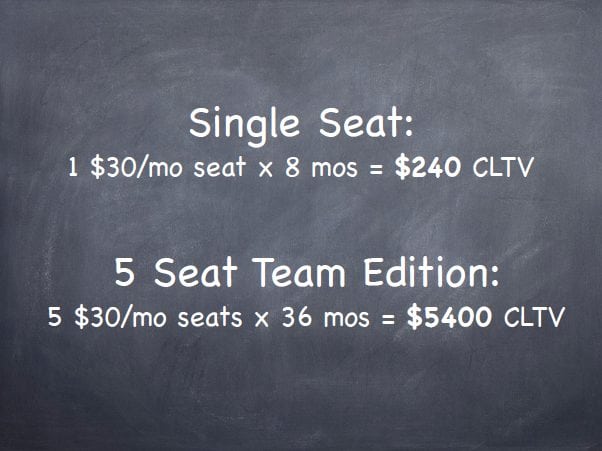
Imagine your SaaS company sells a self-service plan for $50 per month. A small team signs up and pays $600 per year. That is good revenue, especially if acquisition cost is low. But now imagine the same company has 40 employees who could use the product. They need shared billing, user permissions, onboarding, analytics, compliance documents, and a custom workflow. If they stay on the small plan, you earn $600. If someone helps them build a company-wide rollout, the account may become a $18,000 annual contract.
That is 30 times more revenue from the same original demand. The buyer did not come from a brand-new channel. You did not need a Super Bowl ad, a billboard, or a viral TikTok dance performed by your CFO. The demand was already there. The difference was recognizing that the customer had outgrown the self-service lane and needed a guided path to a bigger outcome.
This is the hidden power of product-led sales. Self-service creates the relationship. Product usage reveals intent. Sales assistance expands the value. Customer success protects the value. Pricing and packaging capture the value. When these pieces work together, revenue growth can look dramatic because the company is no longer selling only to individuals; it is expanding into teams, departments, and organizations.
Why Bigger Buyers Need More Than a Checkout Button
Large buyers are not necessarily slower because they enjoy bureaucracy. They are slower because the risk is bigger. A $20 monthly tool can be purchased with minimal drama. A platform that touches customer data, employee workflows, financial reporting, or core operations needs more trust. The buyer may need approval from IT, finance, legal, security, and leadership. Each group has different concerns.
Security and Compliance Questions
Enterprise buyers often need answers about data storage, access control, encryption, audit logs, privacy policies, single sign-on, vendor risk, and compliance standards. If your website does not make these answers easy to find, buyers may assume you are not ready for serious customers, even if your product is technically excellent.
Workflow Fit
A buyer may love your product but still wonder how it fits into existing systems. Does it integrate with Salesforce, HubSpot, Slack, Google Workspace, Microsoft Teams, Stripe, Snowflake, Jira, or internal tools? Can teams migrate data smoothly? Can roles and permissions match the company structure? A salesperson or solutions consultant can turn uncertainty into a workable plan.
Buying Committee Alignment
In B2B sales, the person using the product is not always the person approving the budget. Self-service may win the user, but sales assistance helps win the organization. The human layer can translate product enthusiasm into business value, ROI, implementation timelines, and executive-friendly language. Basically, it helps your champion avoid walking into a budget meeting armed only with “I really like it.”
How to Add Sales Assistance Without Ruining Self-Service
The goal is not to make every customer talk to sales. The goal is to offer help exactly when help increases value. Done well, the customer feels supported, not hunted. Done poorly, the customer feels like they clicked a pricing page and triggered a corporate smoke alarm.
1. Keep the Free Trial or Freemium Door Wide Open
Do not punish buyers for wanting to test the product. Let individuals and small teams sign up easily. Keep onboarding fast. Make the first “aha moment” obvious. The product should still do the early selling because that is where self-service shines.
2. Add Smart Triggers for Human Outreach
Use product-qualified lead signals instead of random sales activity. Good triggers include rapid team growth, use of premium features, repeated upgrade attempts, high usage volume, enterprise domain signups, admin activity, integration setup, or visits to security and procurement pages. Outreach based on behavior feels relevant because it is relevant.
3. Change the Message from “Want a Demo?” to “Want Help?”
Many buyers do not want a demo because they already tried the product. They want help making the product work at scale. A better message might be: “We noticed your team is adding more users. Want help setting up roles, permissions, and rollout best practices?” That feels useful. It is less “sales ambush” and more “friendly guide with a flashlight.”
4. Create an Upgrade Path That Makes Sense
Your pricing should make expansion feel natural. A customer should understand why they would move from individual to team to business to enterprise. Each tier should unlock value that matches the customer’s stage: collaboration, admin controls, reporting, automation, integrations, support, security, and governance.
5. Give Customer Success a Revenue Seat
Customer success is not just support with a nicer sweater. It is one of the strongest expansion engines in a hybrid model. When customer success teams help accounts adopt features, train teams, measure outcomes, and discover new use cases, they create the conditions for renewals and upsells. Revenue grows because customers are actually getting value, which is much better than hoping they forget to cancel.
Product-Led Sales: The Bridge Between “Try It” and “Scale It”
Product-led sales is the practical middle ground between pure self-service and traditional enterprise sales. It starts with the product experience, then uses real usage data to guide sales conversations. Instead of cold-calling random companies and asking whether they have “five minutes,” the team focuses on accounts already showing intent.
This approach changes the sales conversation. The rep can see which features the account uses, how many people are active, where friction appears, and what value has already been created. That makes outreach more specific. Instead of saying, “Can I show you our platform?” the rep can say, “Your team has created 24 projects and invited users from three departments. Companies at this stage usually benefit from admin controls and onboarding support. Would it be useful to map that out?”
That is a very different energy. It respects the buyer’s intelligence. It also shortens the distance between interest and purchase because the customer has already experienced the product. The sales conversation becomes less about persuasion and more about expansion.
Pricing Is Where the Revenue Multiplier Becomes Real
A hybrid motion only works if pricing can capture the value you create. Many self-service companies undercharge larger accounts because their pricing was designed for individuals. A flat $20 monthly plan may be perfect for solo users, but it can become a revenue leak when a 300-person company uses the product heavily and pays less than it spends on office snacks.
Strong SaaS pricing usually connects price to value. That might mean seats, usage, projects, contacts, storage, transactions, workflow volume, AI credits, reports, or managed accounts. The right metric depends on how customers experience value. If value grows with usage, usage-based or hybrid pricing may make sense. If value grows with collaboration, seat-based tiers may work. If value grows with business outcomes, premium packaging and enterprise plans may be better.
The key is to avoid making your best customers your least profitable customers. If a large account creates more support cost, infrastructure cost, onboarding complexity, or compliance work, the pricing model should reflect that. Otherwise, growth starts looking impressive on a dashboard while margins quietly crawl under the table.
Common Mistakes When Moving Beyond Self-Service
The first mistake is swinging too far. Some companies discover enterprise revenue and suddenly hide everything behind “Contact Sales.” This can damage the self-service engine that created demand in the first place. Buyers who wanted to start immediately now have to wait for a rep, schedule a call, and explain their needs before touching the product. Many will simply leave.
The second mistake is using sales outreach too early. A user who has not reached value yet does not need an account executive. They need better onboarding. If sales jumps in before the product proves itself, the experience feels pushy and premature.
The third mistake is treating expansion like a pricing trick instead of a value strategy. You cannot simply rename your highest tier “Enterprise,” triple the price, and hope everyone applauds. Larger customers expect larger value: better controls, stronger support, smoother onboarding, deeper integrations, and clear business outcomes.
The fourth mistake is ignoring internal alignment. Product, marketing, sales, customer success, finance, and support all need to agree on what makes an account qualified for assistance. Without shared definitions, the handoff becomes messy. Marketing celebrates signups, product tracks activation, sales wants bigger deals, and customer success inherits confused customers. That is not a funnel. That is a group project with no teacher.
A Practical Hybrid Revenue Playbook
Start by mapping your customer journey from signup to expansion. Identify the moments when users get value, invite others, hit limits, request features, or show buying intent. Then decide which moments should remain automated and which deserve human assistance.
Next, create account scoring based on product behavior and firmographic fit. A high-fit account with strong usage should receive a different experience than a low-fit account with casual activity. The goal is not to chase everyone. The goal is to focus energy where the account has both need and revenue potential.
Then improve your enterprise readiness. Add clear security documentation, procurement resources, implementation guides, admin features, role-based permissions, case studies, ROI calculators, and comparison pages. These assets help buyers self-educate while making sales conversations more productive.
Finally, measure the right numbers. Track self-service conversion, product-qualified leads, sales-assisted conversion, average contract value, expansion revenue, net revenue retention, activation rate, time to value, churn, and customer acquisition cost. A hybrid model should not be judged only by how many demos it books. It should be judged by whether more customers reach value and more revenue is captured from accounts with real expansion potential.
Specific Example: From $99 Plan to Department-Wide Contract
Consider a fictional analytics SaaS product called MetricMuffin. Yes, the name is ridiculous, but stay with it. MetricMuffin offers a $99 monthly self-service plan for small teams. A marketing manager signs up, connects website data, builds dashboards, and invites two teammates. Within two weeks, the team is checking reports daily. Good start.
Then the product data shows something interesting. The account adds users from sales and customer success. Someone visits the integrations page four times. Another user clicks the enterprise security documentation. The team hits the dashboard limit. In a pure self-service model, MetricMuffin might simply show an upgrade modal. Some users would upgrade. Others would postpone the decision.
In a hybrid model, those signals trigger a helpful message: “Your team is expanding MetricMuffin across departments. Want help setting up shared dashboards, permissions, and Salesforce reporting?” The account accepts. A solutions specialist helps map the workflow. Sales creates a business case around faster reporting and reduced manual spreadsheet work. Customer success supports rollout. The account moves from $1,188 per year to a $36,000 annual plan. That is roughly 30x revenue from the original self-service account.
The important point is not that every account will do this. Most will not. The point is that some accounts can, and a purely automated model may never notice them in time.
Experience Notes: What Teams Learn When They Add a Human Layer
Teams that shift from pure self-service to a lightly assisted model usually learn a humbling lesson: customers were not always confused because the product was bad. Sometimes they were confused because the next step was too big for a help article. A buyer can understand the product and still need help building internal consensus. A user can love the tool and still need a rollout plan. A manager can see the value and still need proof for finance.
In practice, the best experiences come from treating sales assistance as a customer experience feature, not a sales trap. One strong pattern is the “concierge upgrade.” Instead of pushing a buyer into a generic demo, the company offers targeted help: migration planning, team setup, security review, workflow design, or success planning. The buyer feels like the company is removing friction rather than adding pressure.
Another lesson is that support conversations often reveal expansion opportunities before sales dashboards do. Customers ask, “Can we add another department?” or “Do you integrate with our CRM?” or “Can managers control permissions?” These questions are not just support tickets. They are buying signals wearing casual clothes. Companies that connect support, success, and sales data can spot these moments earlier.
Teams also discover that pricing pages need to do more than display numbers. A good pricing page guides buyers into the right path. Small users should feel safe starting on their own. Larger buyers should see that enterprise options exist without feeling forced into them. Clear packaging, comparison tables, FAQs, security links, and “talk to an expert” prompts can increase confidence without blocking the checkout flow.
One overlooked experience is the internal emotional shift. Founders and product teams often worry that adding sales means betraying the product-led philosophy. But the real philosophy is not “never talk to customers.” It is “let customers experience value before forcing a conversation.” Once that value is visible, a human conversation can be incredibly helpful. The product opens the door; the human helps widen it.
Sales teams also have to adapt. In a product-led environment, the old pitch-heavy style feels clunky. The customer may already know the product well. They do not need a feature parade. They need diagnosis, strategy, and confidence. The best reps become consultants who understand product usage, identify growth opportunities, and help customers make a smart internal case.
Customer success becomes more strategic too. Instead of waiting until renewal season, success teams can help accounts expand naturally by driving adoption. They can identify inactive teams, recommend templates, host training, share benchmarks, and show leaders what value has already been created. Expansion becomes a result of successful usage, not a surprise invoice with confetti.
The biggest lesson is that revenue growth often hides in the gap between “the customer can buy” and “the customer can confidently scale.” Self-service handles the first part beautifully. Human assistance often unlocks the second. When companies design both motions to work together, they stop arguing about whether PLG or sales-led growth is better. They build a system where each does what it does best.
Conclusion: The Future Is Not Self-Service or Sales. It Is Smart Assistance.
Self-service is still one of the most powerful growth engines in modern business. It lowers friction, reduces acquisition costs, and lets customers experience value on their own terms. But pure self-service can become a ceiling when bigger buyers need guidance, trust, and organizational support.
Tilting just a smidge from self-service means keeping the easy path while adding human help at high-value moments. It means using product data to identify serious accounts, offering assistance that feels useful, designing pricing that captures expansion, and aligning sales with customer success. Done well, this model does not slow growth down. It gives growth a bigger lane.
The 30x revenue opportunity is not about pushing every user into a sales call. It is about recognizing when a small account is actually the doorway to a much larger relationship. The buyer may start with a credit card and a free trial, but with the right guidance, they can become a team rollout, a department standard, or an enterprise-wide platform. Sometimes the smallest tilt creates the biggest lift.