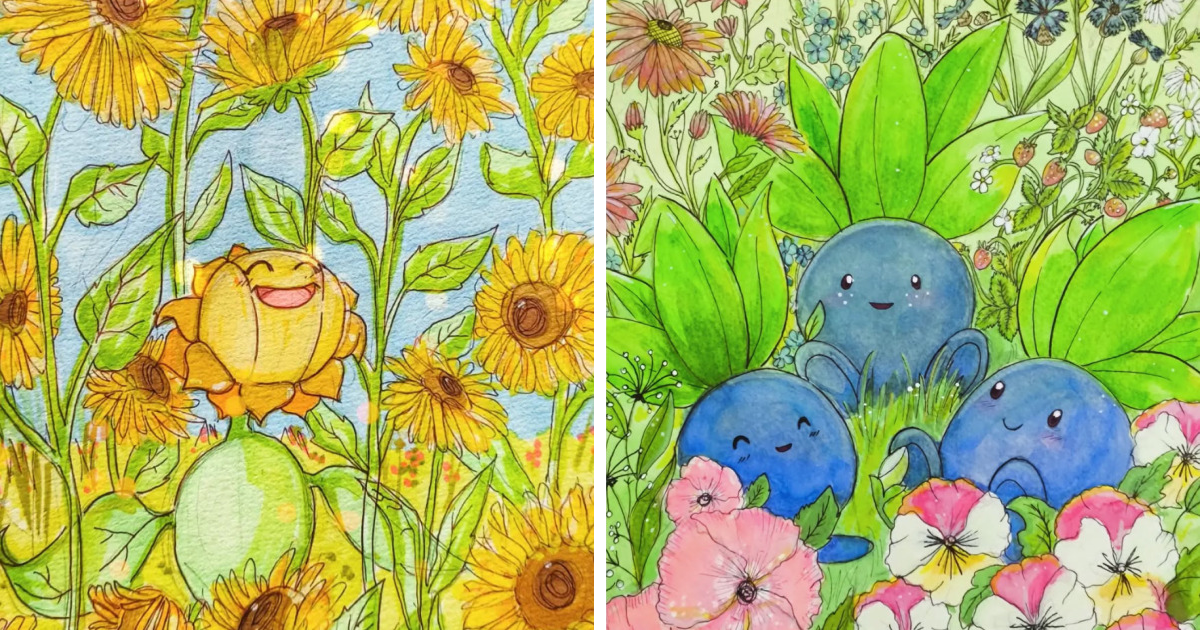
Some people text “good morning.” My friend sends hand-drawn Pokémon illustrations that look like they escaped from a sketchbook, raided a candy shop, and came back wearing tiny emotional support backpacks. The first time I saw one, I tried to respond like a normal adult. I failed. All I could type was, “Why is this Pikachu looking at me like I owe it pancakes?”
That is the magic of hand-drawn Pokémon fan art. It does not need cinematic lighting, a thousand-dollar tablet, or a dramatic orchestral soundtrack. Sometimes all it needs is pencil, paper, a few confident lines, and the kind of expressive little face that makes your brain temporarily turn into pudding. Pokémon has always been built around connection: trainers and creatures, friends trading cards, players sharing discoveries, and artists turning beloved characters into something personal. A cute drawing of Eevee napping in a teacup may not technically be a legendary encounter, but emotionally? Absolutely.
This article explores why my friend’s Pokémon drawings feel so charming, how hand-drawn fan art keeps the franchise feeling alive, and why cuteness is not as simple as “big eyes plus tiny paws.” There is real design thinking behind it, even when the artist is just doodling Squirtle with a snack.
Why Hand-Drawn Pokémon Art Feels So Special
Digital art can be gorgeous, polished, and powerful. But hand-drawn Pokémon illustrations have a different kind of warmth. You can see the human touch in every line. A slightly wobbly curve on Charmander’s tail does not ruin the drawing; it gives it personality. A colored-pencil shadow under Bulbasaur makes the little plant dinosaur feel like it was drawn by someone who genuinely wanted it to have a good day.
That handmade feeling matters because Pokémon itself is rooted in personality. Pikachu is not just “yellow mouse with electricity.” Jigglypuff is not just “round singer with marker-related revenge issues.” Each Pokémon has a silhouette, attitude, expression, and mood. When a fan artist redraws them by hand, they are not simply copying a design. They are interpreting a character.
My friend’s illustrations are adorable because they do something official art often cannot: they feel like a private joke between the artist and the viewer. A sleeping Snorlax with a tiny blanket. A Psyduck holding a note that says “I tried.” A very serious Rowlet wearing a bow tie for reasons no court should question. These drawings work because they combine recognizable Pokémon traits with tiny, human details.
The Pokémon Factor: Why These Characters Invite Fan Art
Pokémon has been part of pop culture since the 1990s, growing through video games, the animated series, the trading card game, movies, apps, and collectibles. That long history gives artists a huge visual playground. Some fans grew up with the original Kanto starters; others discovered the franchise through mobile games, modern Nintendo titles, or the Pokémon Trading Card Game. Across generations, the appeal remains surprisingly consistent: Pokémon are designed to be collected, cared for, battled with, remembered, and loved.
That last part is important. Pokémon are not just monsters. Many are companions. Their designs often balance strength with approachability. Charizard can look fierce, but draw it holding a tiny cupcake and suddenly it becomes a dragon trying its best at a bake sale. Gengar can be spooky, but sketch it with a shy grin and it turns into the ghost who definitely ate the last cookie but feels complicated about it.
Recognizable Shapes Make the Drawings Instantly Readable
The best Pokémon designs are easy to identify even in simple outlines. Pikachu’s ears, Bulbasaur’s bulb, Squirtle’s shell, Eevee’s fluffy collar, and Jigglypuff’s round body are visual shortcuts. A hand-drawn artist can simplify them without losing the character. That is why a small doodle in the corner of a notebook can still feel unmistakably Pokémon.
My friend understands this instinctively. The drawings do not overcomplicate things. A few soft lines, a round body, an exaggerated expression, and suddenly there is a tiny creature on the page demanding emotional investment. It is very rude of the drawing to be that effective.
The Science of “Too Cute To Handle”
Cuteness is not just internet slang. Researchers have long studied why certain features make humans react with affection. Big eyes, round faces, small noses, soft proportions, and short limbs often trigger what is known as the baby schema effect. In simple terms, our brains tend to respond warmly to features associated with youth, softness, and vulnerability.
That helps explain why so many Pokémon are dangerously adorable. Round characters like Jigglypuff, Spheal, Togepi, Rowlet, and Wooloo practically sprint into the cuteness zone. Even more angular or powerful Pokémon can become cute when an artist softens their eyes, rounds their posture, or gives them a shy expression.
Then there is the phenomenon often called “cute aggression,” which describes the strange feeling of seeing something so adorable that you want to squeeze it, bite the air, or make a sound only dolphins should understand. Obviously, nobody should actually crush a drawing of Piplup. But the emotional overload is real. My friend’s art has caused several cases of “I cannot look at this tiny sleeping Pokémon without making a noise.” Medical science may not have a billing code for that yet.
What Makes My Friend’s Pokémon Illustrations Work
The cutest fan art is rarely cute by accident. Even when the drawing looks spontaneous, it usually succeeds because of a few strong artistic choices. My friend’s hand-drawn Pokémon illustrations shine because they use simplicity, expression, storytelling, and texture in just the right amounts.
1. Simple Lines With Big Personality
Clean lines make cute drawings easier to read. A complicated sketch can be impressive, but a simple illustration often feels more immediate. My friend uses soft outlines and gentle curves that make each Pokémon feel approachable. The result is not stiff or overly perfect. It feels alive, like the character might blink if you stare long enough.
2. Expressions That Tell a Tiny Story
A good Pokémon illustration does not need a full comic panel to tell a story. A nervous Charmander looking at rainclouds says enough. A proud Bulbasaur sitting beside a newly sprouted flower practically deserves its own motivational poster. My friend’s drawings often focus on one emotional beat: sleepy, smug, curious, hungry, shy, or delighted. That specificity makes the art memorable.
3. Soft Details That Add Warmth
Hand-drawn texture brings charm. Pencil shading, marker strokes, colored-pencil gradients, and tiny imperfections make the artwork feel personal. A digital brush can imitate that look, but real paper has a softness that feels nostalgic. It reminds viewers of school notebooks, trading cards tucked into binders, and childhood afternoons spent drawing favorite characters instead of doing math homework. Not that I would know. Allegedly.
4. Little Props That Make Pokémon Feel Relatable
One of the funniest things my friend does is give Pokémon ordinary objects. A Vulpix with a scarf. A Mudkip beside a bowl of soup. A Mimikyu holding a tiny balloon. These additions do not distract from the character; they create a mini-scene. Suddenly, the drawing is not just “a Pokémon.” It is a moment.
Why Pokémon Fan Art Still Matters
Fan art is one of the strongest signs that a fictional world is alive in people’s imaginations. Official games, shows, cards, and merchandise build the foundation, but fan creativity keeps the conversation going between releases. Artists draw favorite Pokémon in new outfits, new poses, new styles, and new emotional situations. The community responds because the art feels both familiar and fresh.
Pokémon’s official trading card art also shows how powerful illustration can be. The Pokémon TCG has featured many artists with distinct styles, from dynamic battle scenes to peaceful slice-of-life moments. Official illustration contests have encouraged artists to explore “magical Pokémon moments,” proving that Pokémon art is not only about accuracy. It is about mood, imagination, and the bond between creature and world.
That is exactly why my friend’s handmade drawings feel so effective. They do not try to replace official Pokémon art. They celebrate it. They say, “I love this character enough to draw it my way.” That is the heart of fan creativity.
A Friendly Note About Fan Art and Respect
Because Pokémon is a protected franchise, fan artists should treat their work with care. Sharing personal drawings online, participating in communities, and celebrating favorite characters can be wonderful. However, artists should be thoughtful about commercial use, credit, originality, and the rules of any contest or platform where they post. The safest and most respectful approach is to enjoy fan art as a tribute, not as a way to mislead people into thinking it is official merchandise.
That does not make fan art less meaningful. In fact, it makes the creative relationship clearer. The artist brings love, humor, and interpretation; the franchise provides the world and characters that inspired them. When done respectfully, the result can be delightful.
Best Pokémon for Cute Hand-Drawn Illustrations
Some Pokémon practically arrive with “please draw me adorably” energy. Pikachu is the obvious classic, with its round cheeks and expressive ears. Eevee is another fan favorite because its fluffy collar and big eyes work beautifully in soft pencil or marker. Bulbasaur has the rare gift of being both a plant and a friend, which is not something most houseplants can claim. Squirtle is perfect for playful poses, especially when drawn with oversized sunglasses or a tiny towel after swimming.
Other excellent choices include Togepi, Piplup, Rowlet, Mew, Cleffa, Spheal, and Sprigatito. The secret is not just picking a cute Pokémon; it is giving that Pokémon a situation. A sleepy Spheal is cute. A sleepy Spheal tucked into a donut-shaped pillow is a public safety hazard for the heart.
How Beginners Can Create Their Own Cute Pokémon Drawings
You do not need to be a professional illustrator to start drawing Pokémon. In fact, the best way to begin is to choose one favorite character and draw it repeatedly. The first attempt may look like Pikachu got inflated at the wrong gas station. That is fine. Drawing improves through observation, repetition, and patience.
Start With Basic Shapes
Most cute Pokémon can be broken into circles, ovals, triangles, and curved lines. Begin with the head and body shape before adding details. This keeps the proportions friendly and prevents the drawing from turning into a mysterious electric potato.
Exaggerate One Emotion
Pick a mood before drawing: happy, sleepy, confused, proud, shy, or dramatic. A clear emotion helps guide the eyes, mouth, pose, and accessories. A confused Psyduck should not stand like a confident superhero unless the joke is that Psyduck has no idea what confidence is.
Keep the Pose Readable
Cute drawings often work best with simple poses. Sitting, waving, sleeping, holding something, peeking from behind a leaf, or looking up at the viewer can all be effective. Once the pose reads clearly, details can be added without clutter.
Add a Personal Twist
The personal twist is where fan art becomes memorable. Draw your favorite Pokémon with your favorite snack, in your favorite season, or reacting to your daily mood. Monday morning Meowth? Very relatable. Rainy-day Charmander? Instant drama. Finals-week Psyduck? Basically a documentary.
Why These Drawings Make People Smile
My friend’s Pokémon illustrations work because they are not trying too hard to be impressive. They are trying to be joyful. That distinction matters. The drawings invite viewers into a small, gentle world where a Pokémon can nap, snack, wobble, grin, or look mildly betrayed by a vegetable.
In a fast-moving internet culture full of polished images, handmade cuteness feels refreshing. It reminds us that art does not always need to be grand to matter. Sometimes a tiny pencil drawing of Eevee wearing a flower crown can do more for your mood than a motivational speech delivered by a man in a headset microphone.
Personal Experiences: Living With Pokémon Art That Is Too Cute
The first time my friend showed me a full page of hand-drawn Pokémon illustrations, I made the mistake of saying, “Oh, I’ll just take a quick look.” That was a lie. There is no quick look when a page contains a baby-faced Bulbasaur sitting beside a mushroom, a Pikachu with cheeks round enough to qualify as emergency flotation devices, and a Squirtle waving like it just won “Most Polite Turtle” at a county fair.
What surprised me most was how much personality came through in such small drawings. One Eevee looked excited, but not generically excited. It looked like it had just heard someone open a bag of chips from three rooms away. A Charmander looked brave, but also slightly worried, like it had volunteered for a mission and then remembered that missions often involve walking. A Psyduck sat in the corner with the empty stare of someone who opened 47 browser tabs and forgot why.
Watching my friend draw was even better. The process started with loose circles and construction lines. At first, the sketch looked like a collection of friendly eggs. Then the ears appeared. Then the eyes. Then one tiny mouth changed everything. It was almost unfair how one curved line could turn a blank face into “small creature experiencing a feeling.” I began to understand that cuteness is not only about polish. It is about timing, restraint, and knowing exactly which detail to emphasize.
There were also hilarious failures, which honestly made the whole experience more charming. One Pikachu accidentally had one ear much larger than the other, giving it the energy of a detective listening for crime. A Rowlet became so round that it stopped looking like an owl and started looking like a decorative bun. A Jigglypuff’s eyes were placed just slightly too low, creating the expression of someone who had seen the future and found it mildly inconvenient. Instead of throwing those drawings away, my friend kept them. They became part of the sketchbook’s personality.
That taught me something important about fan art: perfection is not always the point. The point is affection. When someone draws a Pokémon by hand, they are spending time with that character. They are deciding how it sits, smiles, sulks, or celebrates. They are turning a globally recognized design into a small personal moment. That is why a simple sketch can feel intimate.
Over time, my friend’s drawings became a kind of visual diary. Around stressful weeks, the Pokémon looked sleepy or dramatic. During happier moments, they bounced, danced, or wore tiny accessories. Seasonal drawings appeared too: autumn Vulpix, winter Piplup, spring Bulbasaur, summer Squirtle. My favorite was a tiny Gengar holding a heart-shaped balloon while trying very hard to look spooky. It failed completely. Ten out of ten.
These illustrations also became conversation starters. Friends who had not played Pokémon in years suddenly remembered their first starter, their favorite card, or the one Pokémon they always tried to catch. Someone would point at a drawing and say, “Wait, I loved that one!” That is the quiet power of fan art. It reopens old memories without demanding a dramatic speech.
So yes, my friend’s hand-drawn Pokémon illustrations might be too cute to handle. But maybe that is the point. They remind us that creativity does not have to be complicated to be meaningful. A pencil, a page, and a beloved character can create a tiny spark of happiness. And if that spark happens to look like a very round Pikachu asking for snacks, I see no problem whatsoever.
Conclusion
Hand-drawn Pokémon illustrations are more than cute doodles. They are personal love letters to a franchise built on friendship, imagination, collecting, battling, and emotional attachment to creatures that somehow make us care deeply about fictional ecosystems. My friend’s drawings stand out because they combine recognizable Pokémon designs with handmade warmth, expressive storytelling, and just enough humor to make every sketch feel alive.
Whether it is a sleepy Eevee, a confused Psyduck, a proud Bulbasaur, or a Gengar failing to be intimidating, these illustrations prove that fan art still has a special place in Pokémon culture. It keeps characters fresh, invites community connection, and reminds us that sometimes the cutest things are made not with perfect tools, but with genuine affection.
Note: This article is written for web publishing as an original, human-readable SEO blog post inspired by real Pokémon history, fan-art culture, illustration principles, and cuteness psychology.