Few holiday specials are as small, sincere, and quietly powerful as A Charlie Brown Christmas. It has no glittering North Pole, no villain plotting to steal December, and no hero who suddenly discovers he can fly a sleigh. Instead, it gives us a sad little tree, a boy with seasonal anxiety, a beagle with excellent dance instincts, and jazz music that sounds like snow falling on a quiet street.
Premiering in 1965, A Charlie Brown Christmas became one of the most beloved Christmas TV specials in American pop culture. But behind its gentle 25-minute runtime is a story full of risky creative choices, nervous executives, rushed deadlines, unexpected music, and one of the most famous tiny trees in television history. Here are 13 facts you may not know about A Charlie Brown Christmas—and why this modest Peanuts classic still feels fresh, funny, and deeply human decades later.
1. The Special Happened Because of Coca-Cola
One of the funniest facts about A Charlie Brown Christmas is that a special criticizing holiday commercialism exists partly because of a major soft drink sponsor. Coca-Cola wanted a Christmas program, and its advertising agency contacted producer Lee Mendelson about creating a Peanuts holiday special.
Mendelson had already been working with Charles M. Schulz on a documentary about Peanuts, so when the opportunity arrived, he moved fast. The project was not born from a years-long studio plan. It came together because a sponsor needed holiday programming, and the Peanuts team had the right characters at exactly the right moment.
That irony gives the special a delicious little wink: a corporate-backed TV show became one of America’s sharpest, sweetest reminders not to let commercial noise drown out the heart of Christmas.
2. It Was the First Animated Peanuts TV Special
Before A Charlie Brown Christmas, Charlie Brown, Snoopy, Lucy, Linus, and the gang were best known from Charles Schulz’s newspaper comic strip. The strip had already become a cultural phenomenon, but bringing those quiet, deadpan characters to prime-time television was a major leap.
The special was the first Peanuts animated TV special, and its success opened the door for many more, including It’s the Great Pumpkin, Charlie Brown and A Charlie Brown Thanksgiving. In other words, without this Christmas special, generations of viewers might never have had annual appointments with Snoopy’s dance moves, Lucy’s bossy wisdom, or Linus’s blanket-powered philosophy.
3. CBS Executives Thought It Might Fail
Today, calling A Charlie Brown Christmas a failure sounds like saying cookies are bad or Snoopy has no rhythm. But before the premiere, CBS executives were reportedly unsure about the whole thing. The pacing was slow. The music was jazz. The voice acting sounded unusually natural. There was no laugh track telling viewers when to chuckle.
In the polished world of 1960s television, the special looked almost too simple. It did not behave like a standard animated program. It had melancholy, silence, awkwardness, and a child openly asking why Christmas made him feel depressed. That was bold television, even if it came packaged with round heads and tiny shoes.
The network aired it largely because it was already scheduled. Then the audience showed up in huge numbers, and the supposed risk became a holiday treasure.
4. More Than 15 Million Households Watched the Premiere
A Charlie Brown Christmas first aired on CBS on December 9, 1965. Despite the network’s concerns, more than 15 million households tuned in. At the time, that meant an enormous share of American television viewers watched Charlie Brown try to direct a Christmas play and rescue one very droopy tree.
The strong ratings proved that audiences were ready for something quieter and more thoughtful than the usual holiday spectacle. The special ranked among the most-watched programs of the week and quickly became a repeat-worthy tradition.
Charlie Brown may be famous for losing baseball games, missing footballs, and generally being treated like the universe’s favorite target, but on premiere night, he won big.
5. Charles Schulz Refused to Use a Laugh Track
One of the most important creative decisions behind A Charlie Brown Christmas was the lack of a laugh track. In the 1960s, laugh tracks were common in TV comedy and animation. They helped guide viewers toward jokes, whether the joke needed help or not.
Schulz did not want one. His characters were funny because they were honest, understated, and sometimes painfully serious. Adding canned laughter would have turned their small emotional moments into something artificial.
That choice still matters. The silence in the special allows Charlie Brown’s loneliness to feel real. It gives Linus’s speech room to breathe. It lets Snoopy’s physical comedy land naturally. The result is a holiday special that trusts viewers instead of nudging them in the ribs every 12 seconds.
6. Real Children Voiced the Characters
Many animated shows use adult actors to play children. A Charlie Brown Christmas took a different path by using actual child performers for many of the Peanuts characters. That decision gave the special a wonderfully imperfect sound.
The voices are not slick or overproduced. They pause, rush, flatten, brighten, and occasionally feel like real kids reading lines because, well, they were real kids reading lines. That natural quality became part of the charm.
Charlie Brown sounds tired in a way that only a child can sound tired. Linus sounds thoughtful without becoming theatrical. Lucy sounds confident enough to run a small government. The casting helps the special feel less like a cartoon product and more like a neighborhood pageant that somehow made it onto national television.
7. Vince Guaraldi’s Jazz Soundtrack Was a Huge Risk
One of the most recognizable parts of A Charlie Brown Christmas is Vince Guaraldi’s jazz score. Today, the music feels inseparable from the Peanuts world, but at the time, jazz was an unusual choice for a children’s Christmas cartoon.
Instead of sugary orchestration or bouncy novelty songs, Guaraldi gave the special piano lines that were playful, wistful, and cool without trying too hard. Tracks like “Christmas Time Is Here,” “Skating,” and “Linus and Lucy” gave the special emotional texture. The music understood that Christmas can be joyful and lonely at the same time.
That musical sophistication helped the special appeal to adults as well as children. It also introduced countless young viewers to jazz, possibly without them realizing they were receiving a tiny music education between Snoopy dances.
8. “Linus and Lucy” Was Written Before the Christmas Special
Many fans associate “Linus and Lucy” with A Charlie Brown Christmas, especially because of the unforgettable dance scene. But the tune was originally composed for an earlier Peanuts-related project, a documentary about Charles Schulz and his comic strip.
That documentary did not become a major broadcast success, but Guaraldi’s music found its perfect home in the Christmas special. The bouncy piano riff became the unofficial sound of Peanuts itself. You can hear just a few seconds of it and immediately picture kids dancing with elbows, shoulders, and total disregard for choreography.
It is one of those rare pieces of TV music that escaped its original context and became part of American holiday memory.
9. “Christmas Time Is Here” Almost Did Not Have Lyrics
The gentle opening song, “Christmas Time Is Here,” is now one of the most beloved pieces of Christmas music. But it began as an instrumental melody by Guaraldi. Producer Lee Mendelson reportedly felt the opening needed words and, with time running short, wrote the lyrics himself.
The song’s magic comes from its simplicity. It does not shout about holiday cheer. It floats. The children’s choir sounds tender and slightly fragile, which fits the special’s emotional world perfectly. Christmas is here, the song says, but it does not pretend everyone automatically feels merry on command.
That honesty is why the song has endured. It captures both the glow and the ache of the season.
10. Linus’s Bible Speech Was a Bold TV Moment
One of the most famous scenes in A Charlie Brown Christmas comes when Charlie Brown asks whether anyone knows what Christmas is all about. Linus steps onto the stage and recites the Nativity passage from the Gospel of Luke.
For a network children’s special, that was a bold choice. Some people involved worried that quoting Scripture directly might feel too serious or controversial. Schulz, however, wanted the scene included. For him, the moment was central to the story.
What makes the scene work is its stillness. Linus does not shout. The camera does not overdecorate the moment. He simply speaks. The special pauses long enough for sincerity to enter the room, and suddenly Charlie Brown’s sadness has a context larger than tinsel, pageants, or aluminum trees.
11. The Sad Little Tree Became a Cultural Symbol
Charlie Brown’s Christmas tree is barely a tree. It is more of a botanical sigh. It droops, sheds needles, and looks like it would lose a wrestling match to a candy cane. Yet it became one of the most famous Christmas trees in television history.
The tree works because it represents the entire message of the special. Charlie Brown sees value where others see failure. He chooses something real, vulnerable, and overlooked instead of something shiny and artificial. The gang mocks it at first, but eventually they transform it with care.
Today, the phrase “Charlie Brown Christmas tree” is widely used to describe any small, imperfect, lovable tree. That is quite an achievement for a twig with stage fright.
12. The Special Won Major Awards
After all the worry that A Charlie Brown Christmas might not work, the special went on to win major recognition, including an Emmy Award and a Peabody Award. Not bad for a project that some people feared would damage the Peanuts brand.
The awards recognized what audiences already understood: this was not just a cute holiday cartoon. It was a carefully made, emotionally intelligent piece of television. It respected children’s feelings, trusted quiet storytelling, and turned a simple Christmas pageant into a meditation on loneliness, kindness, faith, and belonging.
Charlie Brown may not get much applause inside his own world, but in the real one, the special earned plenty.
13. It Changed the Sound and Shape of Christmas TV
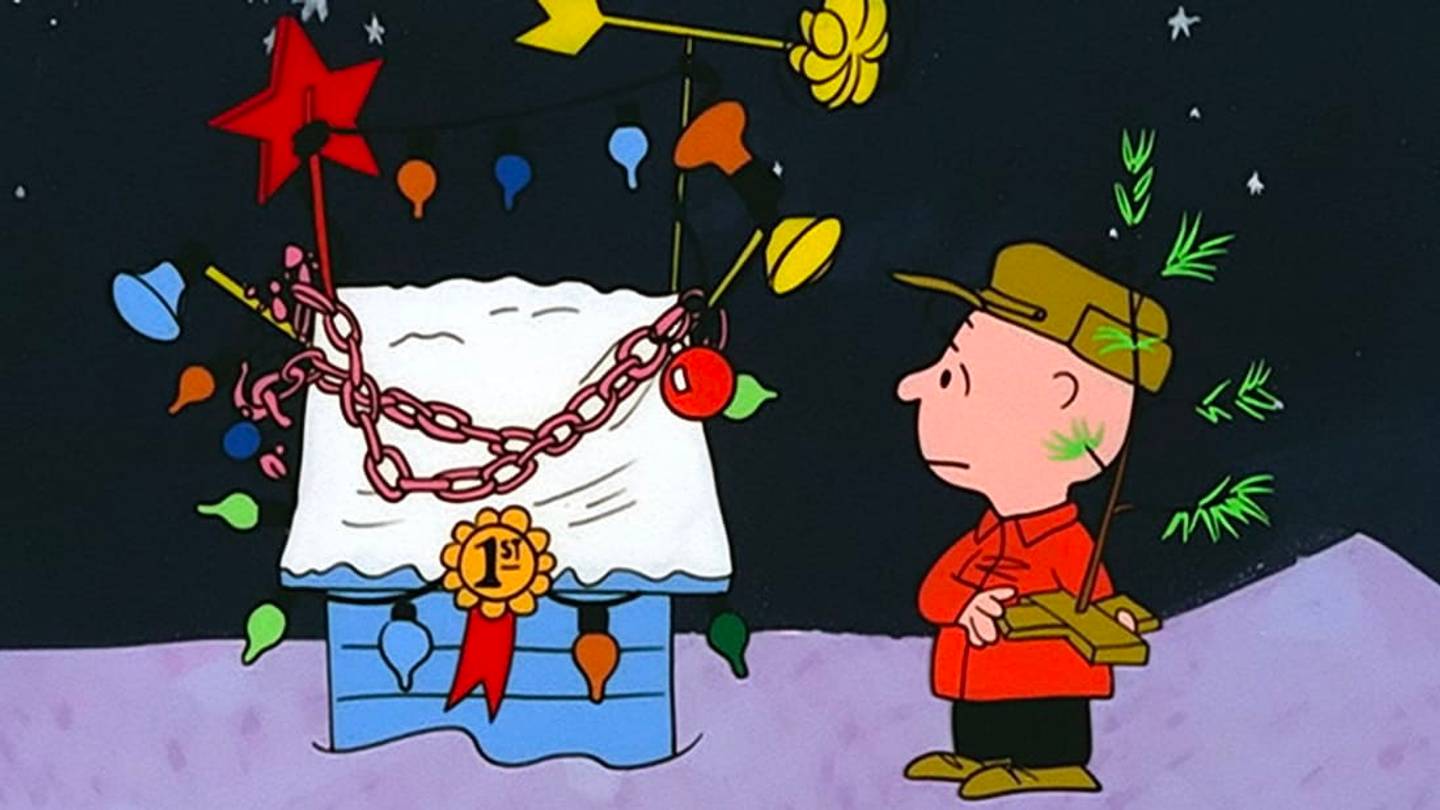
A Charlie Brown Christmas influenced holiday television by proving that a Christmas special did not need to be loud, glossy, or packed with perfect cheer. It could be thoughtful. It could be strange. It could include jazz, awkward silence, a depressed child, a bossy friend charging five cents for psychiatric help, and a dog who decorates his doghouse like he is entering a suburban lighting competition.
The special also helped define the emotional style of Peanuts animation: gentle humor mixed with real melancholy. It made room for holiday stories that admit December is not always easy. Sometimes people feel lonely. Sometimes the season feels too commercial. Sometimes the best tree is the one nobody else wanted.
That is why the special still matters. It does not sell a fantasy of perfect Christmas happiness. It offers something better: the possibility that imperfect people, imperfect friends, and imperfect trees can still make something beautiful together.
Why A Charlie Brown Christmas Still Feels So Personal
Part of the enduring power of A Charlie Brown Christmas is that it understands a truth many holiday stories avoid: Christmas can make people feel complicated. The world says everyone should be cheerful, generous, organized, well-rested, photogenic, and emotionally prepared to wrap gifts with ribbon that curls correctly. Charlie Brown, meanwhile, starts the special by admitting he feels depressed. That honesty is the door that lets the audience in.
Many viewers return to the special not because it is flashy, but because it feels like a calm room during a noisy season. The animation is simple. The music is spacious. The jokes are gentle. Even Lucy’s five-cent psychiatric booth feels oddly comforting, although her customer service skills may need a holiday refresher course.
The special also respects small acts of care. Linus listens. Charlie Brown keeps trying. The kids eventually stop mocking the tree and decorate it. Snoopy, despite his prize-winning display of commercial enthusiasm, joins the final song. Nobody becomes perfect. Nobody gives a grand apology speech. The transformation is modest, which is exactly why it feels believable.
Personal Experiences and Reflections: Watching the Special Like a Holiday Ritual
There is a particular kind of comfort in watching A Charlie Brown Christmas at the end of a long year. It is not the comfort of spectacle, where every house glows like a department-store window and every problem gets solved by snowfall. It is the comfort of recognition. You see Charlie Brown standing apart from the holiday rush, wondering why he does not feel the way everyone says he should feel, and you think, yes, December can be like that.
For many people, the special becomes part of the rhythm of the season. It may play while cookies cool on the counter, while someone untangles lights with the grim determination of a mountain climber, or while a family tree leans slightly to the left and everyone pretends not to notice. The story is short enough to fit into a busy evening, but meaningful enough to leave a mark. In less than half an hour, it can reset the mood of a room.
One of the best experiences connected to the special is hearing the music before even seeing the screen. The first notes of Guaraldi’s piano have a way of changing the temperature of the moment. Suddenly, the room feels softer. The season becomes less about shopping lists and more about memory. The music carries a rare mix of childhood and adulthood: playful enough for kids, reflective enough for grown-ups who now understand Charlie Brown much better than they expected to.
The tree scene is another moment that grows more meaningful with age. As children, viewers may simply laugh at the tiny, drooping tree. As adults, they may see something else: the courage to choose the humble thing, the overlooked thing, the thing that needs care rather than applause. That little tree is funny, yes, but it is also a reminder that beauty is not always obvious at first glance. Sometimes it has to be defended before it can be seen.
The special also encourages a slower kind of holiday experience. It invites viewers to pause, listen, and notice what is real. In a season often packed with pressure—perfect meals, perfect gifts, perfect photos, perfect everything—A Charlie Brown Christmas gently argues for imperfection. It says a meaningful Christmas does not require a flawless plan. It may begin with confusion, disappointment, and one lonely kid trying to do the right thing.
That is why the special remains so easy to revisit. It does not age like a trend. It ages like a family ornament: a little delicate, deeply familiar, and somehow more precious because it has survived so many Decembers. Every viewing feels like returning to a small, snowy stage where the same children are still dancing, the same dog is still stealing scenes, and the same fragile tree is still waiting for someone to believe in it.
In the end, the experience of watching A Charlie Brown Christmas is less about nostalgia than renewal. It reminds us that the holiday spirit is not something we buy, perform, or schedule into submission. It is something we notice in moments of kindness, music, patience, and shared attention. And if a round-headed kid and a nearly bare tree can teach that lesson year after year, maybe Christmas still has a few miracles left after all.
Conclusion
A Charlie Brown Christmas remains a holiday classic because it refuses to be noisy when quiet will do. It is funny without being frantic, sentimental without being syrupy, and wise without acting like it has all the answers. Its 13 lesser-known facts reveal a production that took creative risks at nearly every turn: real children instead of polished adult voices, jazz instead of predictable cartoon music, silence instead of a laugh track, and sincerity instead of seasonal sparkle overload.
What began as a sponsor-driven television project became a timeless reminder that Christmas is not measured by decorations, sales, or perfect cheer. Sometimes it is found in a fragile tree, a familiar song, a friend who speaks at the right moment, and a group of imperfect kids singing together under the snow.