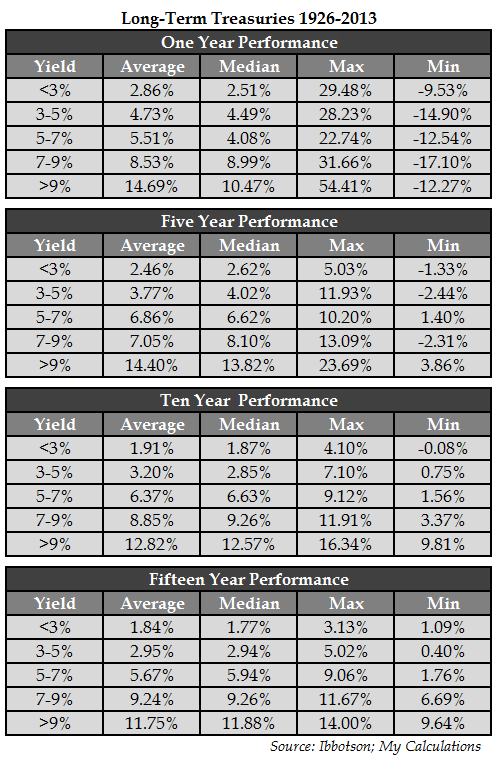
Long-term Treasuries are having one of those “suddenly everyone has an opinion” moments. For years, many investors treated U.S. Treasury bonds as the quiet roommate of the portfolio: dependable, tidy, unlikely to blast music at 2 a.m. Then came inflation, aggressive rate hikes, a bruising bond bear market, and a reminder that long-term government bonds can absolutely throw furniture when interest rates move the wrong way.
So, what returns can investors expect in long-term Treasuries now? The answer is more interesting than “about the yield,” and less mysterious than Wall Street sometimes makes it sound. Starting yields are much higher than they were during the ultra-low-rate 2010s, which improves the long-run return outlook. But long-term Treasuries also carry heavy duration risk, meaning their prices can rise or fall sharply when interest rates shift. In plain English: the income looks attractive, but the ride may still include turbulence, snack-cart shaking, and a few passengers clutching the armrest.
What Are Long-Term Treasuries?
Long-term Treasuries are U.S. government bonds with long maturities, commonly 10 years or longer. The most watched examples are the 10-year Treasury note, the 20-year Treasury bond, and the 30-year Treasury bond. Investors can buy individual Treasury securities directly or through mutual funds and exchange-traded funds such as long-term Treasury bond funds.
The appeal is simple: Treasuries are backed by the U.S. government, so they carry extremely low credit risk compared with corporate bonds, municipal bonds, or high-yield debt. They also provide regular interest income and often act as a portfolio diversifier when stocks fall because of recession fears. However, “low credit risk” does not mean “no risk.” Long-term Treasuries are highly sensitive to changes in interest rates, inflation expectations, Federal Reserve policy, and investor demand for long-duration assets.
The Big Return Driver: Starting Yield
For bond investors, starting yield is not everything, but it is a very big thing. If you buy an individual Treasury bond and hold it to maturity, your return is heavily anchored by the yield to maturity at the time of purchase, assuming the U.S. government makes all payments and you reinvest coupons at similar rates. That does not make the return magical or guaranteed in every practical sense, especially after taxes and inflation, but it gives investors a clearer road map than stocks usually provide.
In today’s market, long-term Treasury yields near the 5% area are meaningfully higher than the yields investors saw through much of the previous decade. That matters. A 30-year Treasury yielding around 5% offers far more income cushion than a 30-year Treasury yielding 2%. When yields are low, even a small rate increase can wipe out years of interest. When yields are higher, investors at least get paid more while waiting for the market to behave itself, which, as history shows, may require patience and possibly herbal tea.
Nominal Returns vs. Real Returns
Investors should separate nominal returns from real returns. A nominal return is the return before adjusting for inflation. A real return is what remains after inflation takes its bite. If a long-term Treasury yields about 5% and inflation runs near 3%, the rough real return is about 2% before taxes. If inflation stays closer to 4%, the real return shrinks. If inflation falls toward the Federal Reserve’s long-run 2% target, long-term Treasuries become more attractive in real terms.
This is why inflation is the villain in the long-bond movie. Long-term Treasuries promise fixed payments. If future dollars buy less than expected, the bond’s real value falls. Investors demand higher yields when they worry inflation will remain sticky, which pushes existing bond prices down. That is why a long-term Treasury can be safe from default and still give investors a very uncomfortable year.
Duration: The Number Investors Cannot Ignore
Duration is the key concept behind long-term Treasury returns. It measures how sensitive a bond or bond fund is to interest-rate changes. A long-term Treasury ETF with an effective duration around 14 to 15 years may lose roughly 14% to 15% in price if yields rise by one percentage point. It may gain roughly the same amount if yields fall by one percentage point. The actual result can differ because of convexity, coupon income, fees, and curve changes, but duration gives a useful first estimate.
Here is a simplified one-year example using a long-term Treasury fund with a starting yield near 5% and duration near 15 years:
| Interest Rate Move | Approximate Price Impact | Income Cushion | Rough One-Year Total Return |
|---|---|---|---|
| Yields rise 1.00% | -15% | +5% | About -10% |
| Yields rise 0.50% | -7.5% | +5% | About -2.5% |
| Yields stay flat | 0% | +5% | About +5% |
| Yields fall 0.50% | +7.5% | +5% | About +12.5% |
| Yields fall 1.00% | +15% | +5% | About +20% |
This table explains why long-term Treasuries can look boring on the surface but behave dramatically in a portfolio. The coupon income is steady, but the price movement can be large. Long bonds are not cash. They are not short-term Treasury bills. They are interest-rate-sensitive instruments wearing a very respectable government-issued suit.
What Returns Can Investors Expect Over Different Time Frames?
Over One Year
Over one year, returns are highly dependent on rate changes. If long-term yields fall because inflation cools, growth weakens, or investors seek safety, long-term Treasuries could deliver strong total returns. If yields rise because inflation remains stubborn, deficits worry investors, or the market demands a higher term premium, returns could be negative even with attractive coupon income.
A reasonable one-year range is wide. Investors could see a modest loss, a mid-single-digit gain, or even a double-digit gain or loss depending on how yields move. That is not a forecast; it is the math of duration. Long-term Treasuries are often purchased for defense, but in the short run, their price behavior can be anything but sleepy.
Over Five to Ten Years
Over longer periods, starting yield becomes more powerful. If an investor buys a diversified long-term Treasury fund with a yield to maturity around 5%, future annualized returns may cluster around that starting yield if rates do not make extreme moves and if the fund’s rolling maturity profile remains similar. However, the path can be bumpy.
For a buy-and-hold investor, the higher starting yield improves the odds of respectable long-term returns compared with the low-yield environment of the 2010s. Even if rates rise somewhat, reinvested income can eventually help. If rates fall, investors may enjoy price gains sooner. The trade-off is that long-term Treasury funds do not mature like an individual bond; they keep rolling into new long-dated bonds, so duration risk remains.
Over Thirty Years
If an investor buys an individual 30-year Treasury and holds it to maturity, the nominal return is largely determined by the purchase yield. A bond bought near a 5% yield should produce a return close to that yield if held to maturity and if coupons are reinvested at similar rates. But the real return depends on inflation. A 5% nominal return is excellent if inflation averages 2%. It is far less exciting if inflation averages 4.5%. In that case, the investor may feel like they ran a marathon and received a participation ribbon made of slightly damp cardboard.
Why Long-Term Treasury Yields Are Elevated
Long-term Treasury yields reflect several forces at once. Inflation expectations matter because investors want compensation for future purchasing-power risk. Federal Reserve policy matters because short-term rates influence the entire yield curve. Economic growth matters because stronger growth can keep rates higher. Government borrowing matters because large deficits mean more Treasury supply. Global demand matters because pension funds, foreign central banks, insurers, and asset managers all influence the market for long-dated U.S. debt.
In recent years, investors have become more sensitive to the combination of sticky inflation and large federal deficits. The U.S. government continues to issue significant debt, and buyers may require higher yields to absorb that supply. That does not mean a debt crisis is around the corner, but it does mean the long end of the Treasury market may not return easily to the ultra-low yields that defined much of the post-2008 period.
Long-Term Treasuries vs. Treasury Bills
Some investors ask why they should bother with long-term Treasuries when Treasury bills and money market funds may offer competitive yields with much less price volatility. That is a fair question. Short-term Treasury bills have low duration risk, so their prices barely move when rates change. They are excellent for cash reserves, near-term spending, and investors who cannot tolerate volatility.
Long-term Treasuries serve a different purpose. They lock in yield for longer. They may rally strongly if interest rates fall. They can provide portfolio ballast during certain equity-market selloffs, especially those driven by recession fears. They are less suitable for money needed soon. If you need cash for a home down payment next year, a 30-year bond fund is probably not your new best friend. It may be charming, but it is not dependable enough for that job.
Individual Bonds vs. Long-Term Treasury Funds
Buying an individual Treasury bond gives investors a maturity date. If you hold the bond to maturity, interim price swings do not matter unless you need to sell early. This can be psychologically helpful. The bond may look ugly on a brokerage statement when rates rise, but the maturity value remains fixed if the issuer pays as promised.
Long-term Treasury funds and ETFs are different. They provide diversification, liquidity, and convenience, but they generally do not have a final maturity date. A long-term Treasury ETF keeps replacing bonds as time passes. That means investors remain exposed to long-duration risk. The fund may be easier to trade, but it does not offer the same “hold to maturity and collect par” experience as a single Treasury bond.
Tax Considerations
Treasury interest is taxable at the federal level but generally exempt from state and local income taxes. That state-tax exemption can make Treasuries more attractive for investors in high-tax states. However, investors should still compare after-tax yields with CDs, municipal bonds, corporate bonds, and money market funds. A high headline yield is nice, but after-tax return is what actually shows up for dinner.
Investors should also remember that Treasury funds can generate taxable income distributions. Selling a Treasury bond or ETF at a gain may create capital gains taxes. Tax rules can get detailed quickly, so investors with large bond allocations should consider professional tax advice rather than relying on cocktail-party wisdom from someone named Gary who “once traded options.”
Who Might Consider Long-Term Treasuries?
Long-term Treasuries may fit investors who want high-quality income, believe long-term rates may fall, need portfolio diversification, or want to lock in yields for an extended period. They may also appeal to retirees or institutions matching long-term liabilities. For example, a pension fund with obligations decades into the future may use long Treasuries to align assets with future payments.
They may be less appropriate for investors with short time horizons, low volatility tolerance, or heavy exposure to other interest-rate-sensitive assets. A portfolio already packed with real estate investment trusts, utilities, dividend stocks, and long bonds may be more rate-sensitive than the owner realizes. Diversification is not just owning many things; it is owning things that do not all panic about the same headline.
Practical Return Expectations for Today’s Investors
For investors buying long-term Treasuries today, a practical expectation is this: long-run nominal returns may be in the neighborhood of current yields, while short-run returns could swing widely based on interest-rate moves. If long-term yields remain around current levels, investors may earn roughly the coupon income. If yields fall meaningfully, total returns could be much higher. If yields rise, price losses could overwhelm income for a time.
In real terms, the outlook depends on inflation. If inflation cools, long-term Treasuries could provide attractive real income and potential price appreciation. If inflation remains elevated, returns may disappoint after adjusting for purchasing power. That is why investors should not look at long-term Treasuries as a one-number decision. The better question is: “What role should they play in my portfolio?”
Risk Checklist Before Buying
1. Interest Rate Risk
This is the big one. Long-term Treasury prices fall when yields rise. The longer the duration, the bigger the move.
2. Inflation Risk
Fixed coupons lose value when inflation runs hot. Investors concerned about inflation may compare nominal Treasuries with Treasury Inflation-Protected Securities, also known as TIPS.
3. Reinvestment Risk
Coupon payments may be reinvested at lower rates if yields fall. That can reduce long-term realized returns.
4. Opportunity Cost
Money placed in long-term Treasuries is money not placed in stocks, shorter bonds, CDs, or other assets. The right choice depends on goals and risk tolerance.
5. Behavioral Risk
Investors often say they can tolerate volatility until volatility knocks on the door holding a clipboard. Selling long bonds after a rate spike can lock in losses that a long-term plan might have absorbed.
Experience-Based Perspective: Lessons From Watching Long-Term Treasuries in Real Portfolios
One of the most useful experiences investors can have with long-term Treasuries is watching how differently they behave across market environments. In calm markets, they may look like an income tool. In recessions or deflation scares, they can become a powerful diversifier as falling yields push prices higher. In inflationary markets, however, they can feel like a luxury umbrella that unfortunately has several dramatic holes.
Many investors learned this lesson during the recent bond-market reset. When yields were extremely low, long-term Treasuries did not offer much income cushion. A small increase in yields caused large price declines. Investors who bought long bonds thinking “Treasury equals safe” discovered that safety has several definitions. Credit safety means getting paid by the issuer. Price safety means not seeing big mark-to-market losses. Long-term Treasuries offer the first, but not always the second.
A practical experience-based approach is to decide in advance why you own them. If the purpose is liability matching, an individual Treasury ladder may make sense. If the purpose is portfolio diversification, a modest allocation to a long-term Treasury ETF may be enough. If the purpose is speculation on falling rates, investors should admit that honestly. There is nothing wrong with a rate view, but pretending it is “just conservative income investing” can lead to confusion when prices move sharply.
Another lesson is that position size matters. A small allocation to long Treasuries can help diversify a stock-heavy portfolio. A very large allocation can dominate the portfolio’s behavior. Investors sometimes focus on the low default risk and ignore the duration. That is like buying a very safe boat and forgetting to check whether you get seasick.
It also helps to compare long-term Treasuries with alternatives. Short-term Treasuries are better for stability. Intermediate-term bonds may offer a more balanced mix of yield and rate sensitivity. TIPS may be better for investors worried about inflation. Corporate bonds may provide higher yields but add credit risk. There is no perfect bond, only a bond that fits a particular job.
For investors building a portfolio today, the experience-based takeaway is simple: long-term Treasuries are more attractive than they were when yields were near historic lows, but they are not automatically easy money. A 5% yield is useful. A 15-year duration is powerful. Put those two facts together and you get an asset that can reward patient investors but punish casual ones.
The best use of long-term Treasuries is usually intentional, not impulsive. Decide your time horizon. Decide whether you can handle price swings. Decide whether you prefer individual bonds or funds. Decide how much inflation risk you are willing to accept. Then size the position so that a bad year does not force a bad decision. Long-term Treasuries can be a smart part of a portfolio, but they should be treated like a serious tool, not a decorative paperweight with a coupon.
Conclusion
Long-term Treasuries now offer investors something they lacked for years: meaningful starting yield. That improves expected long-run returns and gives portfolios a larger income cushion. But the same bonds remain highly sensitive to interest-rate changes. Over short periods, total returns can range from negative to strongly positive depending on whether long-term yields rise or fall. Over longer periods, investors who hold individual bonds to maturity may earn returns close to the purchase yield, while fund investors should expect ongoing duration exposure.
The most realistic answer to “What returns can investors expect in long-term Treasuries?” is this: expect income near current yields, expect volatility from duration, expect real returns to depend on inflation, and expect better results if the allocation matches your actual financial goal. Long-term Treasuries can be useful, but they are not a shortcut. They are a disciplined investment toolmore orchestra cello than casino trumpet.
Note: This article is for educational and informational purposes only. It is not personal financial advice, investment advice, tax advice, or a recommendation to buy or sell any security.