If you have ever wandered through a Minecraft village, spotted a block with a bow-and-arrow design, and thought, “Finally, a magical arrow-making workstation!”welcome to the club. The fletching table looks like it should launch you into advanced archery engineering, but in vanilla Minecraft, its real power is a little more villager-focused. It is simple to craft, easy to place, and surprisingly useful if you know how to turn unemployed villagers into emerald-printing fletchers.
This guide explains how to craft a fletching table in Minecraft, where to find one naturally, what it actually does, what it does not do, and how to use it smartly in Survival mode. We will also cover practical trading strategies, common mistakes, and real gameplay experiences so you can decide whether this humble block deserves a spot in your baseor at least in your village trading hall.
What Is a Fletching Table in Minecraft?
A fletching table is a job site block used by villagers. More specifically, it turns an unemployed villager into a fletcher. A fletcher is the villager profession connected to bows, arrows, crossbows, flint, sticks, and other ranged-combat items.
Unlike the crafting table, smithing table, loom, stonecutter, or cartography table, the fletching table currently does not open a special player interface in vanilla Minecraft. Right-clicking it will not let you craft custom arrows, upgrade bows, or create enchanted crossbows. Yes, the name is slightly misleading. Minecraft looked at the word “fletching” and said, “Villager employment office.”
Still, the block is not useless. In fact, it can become one of the most profitable early-game blocks if you build your economy around fletcher trades.
How to Craft a Fletching Table in Minecraft
The fletching table recipe is wonderfully cheap. You do not need diamonds, obsidian, blaze rods, dragon breath, or a heroic speech. You only need two basic materials:
- 2 flint
- 4 wood planks of any type
The wood planks can be oak, spruce, birch, jungle, acacia, dark oak, mangrove, cherry, bamboo, crimson, warped, or another valid plank type depending on your Minecraft version. As long as the game recognizes them as planks, they should work.
Fletching Table Crafting Recipe
Open a crafting table and arrange the items like this:
- Top row: flint, flint, empty
- Middle row: plank, plank, empty
- Bottom row: plank, plank, empty
This pattern creates one fletching table. The recipe uses a 2-by-3 arrangement, so it fits neatly on the left side of the crafting grid. Once crafted, move the fletching table into your inventory and place it wherever you want a fletcher villager to work.
How to Get Flint for a Fletching Table
Flint comes from gravel. When you break gravel, there is a chance it drops flint instead of the gravel block. If you only get gravel, place it down and break it again. Repeat until the game finally cooperates. Gravel is the Minecraft equivalent of a vending machine that sometimes gives you the snack and sometimes drops the same rock back into your hands.
You can often find gravel near rivers, beaches, caves, ocean floors, and underground patches. If you have a shovel, mining gravel becomes much faster. Later in the game, a Fortune-enchanted tool can make gathering flint easier, but for one fletching table, plain old patience works fine.
Where to Find a Fletching Table Naturally
Fletching tables can generate naturally in some village houses, especially fletcher houses. If you find one during exploration, you can mine it and take it home. Using an axe is the fastest way to break it because it is a wooden block.
Finding one naturally is useful in early Survival worlds because it saves you flint. However, since the crafting recipe is so cheap, most players simply make their own. If you already have a village nearby, placing extra fletching tables can help you create more fletchers for trading.
How to Use a Fletching Table in Minecraft
The main use of a fletching table is assigning the fletcher profession to a villager. To do this, you need an unemployed villager and an unclaimed fletching table.
Step-by-Step: Turn a Villager Into a Fletcher
- Find or breed an unemployed villager.
- Place a fletching table close enough for the villager to detect it.
- Wait for the villager to claim the block during working hours.
- Check the villager’s outfit and trade menu to confirm it became a fletcher.
- Trade with the fletcher if you like the available offers.
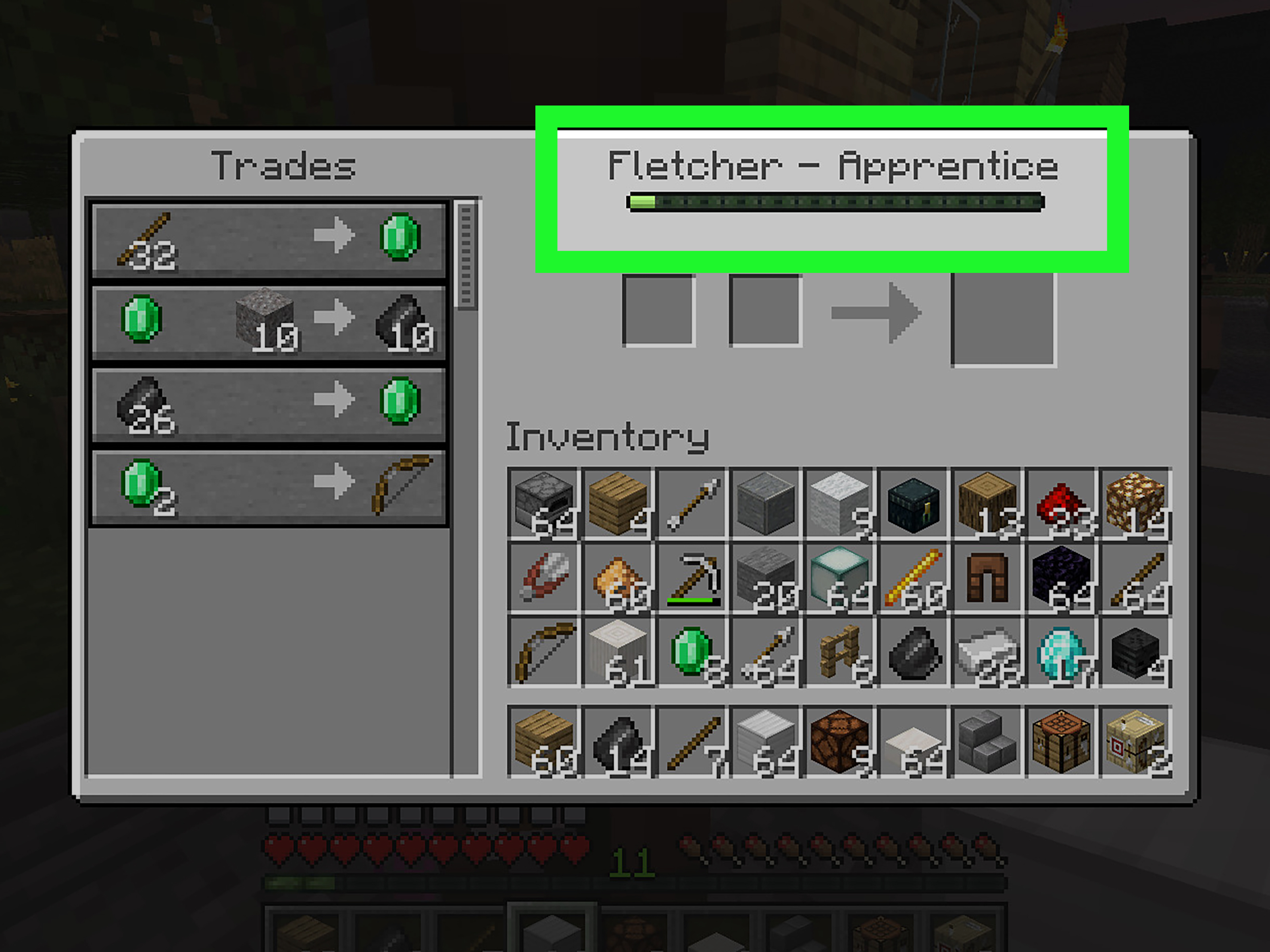
Once a villager becomes a fletcher, you can trade with it for items related to archery and ranged combat. In many worlds, the most famous fletcher trade is sticks for emeralds. Since sticks come from wood, and wood is renewable, this trade is one of the easiest ways to build an emerald supply early in the game.
What Can Fletcher Villagers Trade?
Fletcher villagers can offer several useful trades as they level up. Exact trades may vary slightly depending on Minecraft edition, version, and trade balancing rules, but fletchers are commonly associated with:
- Buying sticks for emeralds
- Selling arrows
- Buying flint
- Selling bows
- Selling crossbows
- Buying string or feathers
- Selling enchanted bows
- Selling enchanted crossbows
- Selling tipped arrows at higher levels
The stick trade is the superstar. If your base is near a forest, a tree farm, or even a pile of logs you “borrowed” from nature without asking, you can convert wood into sticks, sticks into emeralds, and emeralds into whatever your trading hall offers. It is basically medieval finance, but with more blocky noses.
Does the Fletching Table Craft Arrows?
In vanilla Minecraft, the fletching table does not craft arrows directly. Regular arrows are still crafted with flint, sticks, and feathers on a normal crafting table. Tipped arrows and special arrow options also depend on existing vanilla mechanics, not a fletching table interface.
This is one of the most common misunderstandings about the block. The name makes it sound like a specialized arrow workstation, and many players expect it to behave like the stonecutter or loom. At the moment, however, its practical vanilla purpose is mostly villager profession management.
Other Uses for the Fletching Table
Besides villager jobs, the fletching table has a few smaller uses.
Use It as Furnace Fuel
A fletching table can be used as fuel in a furnace. It smelts a small number of items, making it technically useful if you are desperate. That said, burning a fletching table is usually not efficient. Use coal, charcoal, logs, sticks, or lava instead. Burning job-site blocks feels like solving a tiny problem by creating a slightly more annoying one.
Use It With Note Blocks
When placed under a note block, a fletching table helps produce a bass sound. This matters most for players building music machines, redstone songs, or elaborate note block contraptions. If you are not a note block composer, you may never use this feature, but it is a neat detail.
Use It as Decoration
The fletching table has a unique texture with archery-themed patterns. Builders often use it in medieval workshops, armories, ranger cabins, target ranges, hunting lodges, and village market stalls. Even if you never trade with a fletcher, the block looks great in builds that need a practical, rustic feel.
Best Ways to Use a Fletching Table in Survival Mode
The best use of a fletching table is building a fletcher trading setup. A single fletcher can be helpful, but multiple fletchers can transform your economy.
Build a Stick-to-Emerald Farm
If you have access to a steady wood supply, fletchers are excellent emerald sources. Chop trees, craft planks, turn planks into sticks, and trade those sticks for emeralds. Pair this with a simple tree farm, and you have a renewable trade loop.
This strategy works especially well in early and mid-game worlds. Before you have raid farms, iron farms, or complicated trading halls, a few fletchers can help you afford enchanted books, tools, armor, food, maps, and other villager goods.
Use Fletchers for Ranged Gear
Fletchers can sell arrows, bows, crossbows, and sometimes enchanted ranged weapons. If you enjoy bow combat, raids, exploration, or fighting mobs from a safe distance, fletchers can save you crafting time.
This is also convenient if feathers are scarce. Chickens are not always available near spawn, and nobody wants to spend their entire evening chasing birds across a plains biome like a square-shaped cartoon villain.
Combine Fletchers With Librarians
A strong trading hall often includes both fletchers and librarians. Fletchers can generate emeralds through stick trades, while librarians can sell valuable enchanted books. This creates a practical loop: gather wood, trade sticks, earn emeralds, and buy enchantments.
With enough villagers, you can build a base economy that supports gear upgrades, repairs, and supplies without endless mining. It is one of the reasons villager trading is so powerful in Minecraft.
Common Fletching Table Mistakes
Although the fletching table is simple, players often run into a few issues when trying to use it.
Mistake 1: Expecting a Crafting Interface
The fletching table does not open a player crafting menu in vanilla Minecraft. If nothing happens when you interact with it, your game is not broken. That is just how the block currently works.
Mistake 2: Using a Villager That Already Has a Job
A villager with an existing profession will not usually become a fletcher unless its previous job site is removed and its trades are not locked. If you already traded with the villager, its profession is locked in. At that point, placing a fletching table nearby will not magically convert it into an archery merchant.
Mistake 3: Placing the Table Too Far Away
Villagers need access to their job site blocks. If the fletching table is too far away, blocked, or claimed by another villager, your target villager may ignore it. In trading halls, keep job-site blocks close and organized so each villager can connect to the correct workstation.
Mistake 4: Forgetting About Work Hours
Villagers claim and refresh job sites during specific parts of the day. If your villager does not immediately become a fletcher at night, do not panic. Wait until daytime and make sure the villager is not a nitwit. Nitwits cannot take professions, no matter how many tables you place. They are committed to the lifestyle.
Fletching Table in Java vs. Bedrock Edition
The fletching table’s main function is similar across Java Edition and Bedrock Edition: it serves as the job site block for fletcher villagers. However, villager behavior can feel different between editions because pathfinding, job claiming, village detection, and trading mechanics may vary slightly.
If your villager is not linking to the correct fletching table in Bedrock, try moving the block closer, removing extra workstations, giving the villager a clear path, and checking that beds and village mechanics are not causing confusion. In Java, trading halls often rely on tight workstation placement and careful profession locking.
Is the Fletching Table Worth Crafting?
Yes, the fletching table is worth crafting if you use villagers. It is cheap, renewable, and can unlock one of the easiest emerald trades in the game. If you do not use villager trading, it becomes more of a decorative block with minor fuel and note block uses.
For beginners, it is worth crafting at least one fletching table just to learn how fletcher villagers work. For experienced players, it is worth crafting several because fletchers can become the backbone of an efficient emerald economy.
Quick Fletching Table FAQ
Can you use a fletching table to make arrows?
No. In vanilla Minecraft, players cannot use the fletching table to craft arrows through a special interface.
What villager uses a fletching table?
The fletcher villager uses the fletching table as its job site block.
Can a fletching table make tipped arrows?
No. In vanilla Minecraft, the fletching table does not create tipped arrows directly. However, high-level fletchers may sell tipped arrows.
Can nitwit villagers become fletchers?
No. Nitwit villagers cannot take jobs, including the fletcher profession.
What is the best fletcher trade?
For many players, the stick-for-emerald trade is the best because sticks are easy to craft from renewable wood.
Gameplay Experiences: What It Feels Like to Use a Fletching Table
The first time many players craft a fletching table, the experience is mildly hilarious. You gather flint, make planks, place the block proudly in your base, right-click it, and then nothing happens. There is no arrow menu. No bow upgrade screen. No secret ranger workstation. Just silence. Somewhere nearby, a villager is probably staring at you with the professional confidence of someone who understands the block better than you do.
But once you start using the fletching table for villager trading, the disappointment fades quickly. In a fresh Survival world, the ability to turn wood into emeralds is huge. Wood is one of the easiest resources to farm, especially if you settle near oak, spruce, jungle, or mangrove trees. A few minutes of chopping can become stacks of sticks, and those sticks can become emeralds. Suddenly, the fletching table stops feeling like a fake crafting station and starts feeling like a tiny financial institution with legs and eyebrows.
One practical experience is building a small village trading corner early in the game. Place a bed, trap or safely house an unemployed villager, put a fletching table in front of it, and wait for the profession change. Once the villager becomes a fletcher, check the first trades. If you see the stick trade, great. Trade enough to lock it in, and you have a reliable emerald source. If you do not like the first trades and have not traded yet, you can break and replace the workstation to refresh the profession offers.
Another useful experience is combining fletchers with tree farming. Spruce trees are especially satisfying because large spruce trees can produce lots of logs quickly. Turn logs into planks, planks into sticks, and sticks into emeralds. Then walk over to your librarian villager and buy an enchanted book. It feels like turning a forest into knowledge, which sounds poetic until you remember you just deforested half a biome for Mending.
Fletchers are also helpful for players who enjoy ranged combat. If you regularly use bows or crossbows, having a fletcher nearby can reduce the hassle of crafting every arrow yourself. This is useful during raids, Nether preparation, cave exploration, and boss fights. Even if the fletching table itself does not craft arrows, the villager connected to it can support an archery-focused playstyle.
In multiplayer servers, fletching tables can be part of a shared trading hall. One player gathers wood, another breeds villagers, another organizes workstations, and someone else inevitably names every villager something ridiculous. A row of fletchers can provide emeralds for the entire group. It is not glamorous, but it works. Minecraft success often comes from systems that look boring until they quietly make you rich.
The biggest lesson from using a fletching table is this: do not judge Minecraft blocks only by their right-click menu. Some blocks are not made for direct player interaction. They are made to connect systemsvillagers, trading, resources, building, and long-term progression. The fletching table may not be the arrow-crafting workstation players expect, but it is still a valuable block when used correctly.
Conclusion
The fletching table in Minecraft is easy to craft, simple to understand, and much more useful than it first appears. You make it with two flint and four planks, then use it mainly to turn unemployed villagers into fletchers. While it does not currently offer a player-facing crafting interface, it can unlock valuable trades for arrows, bows, crossbows, enchanted ranged weapons, tipped arrows, andmost importantly for many playersemeralds from sticks.
If you are building a Survival base, a village trading hall, or an emerald economy, the fletching table deserves attention. It may not let you design custom arrows, but it can help fund your adventures, support your ranged combat setup, and make your villagers look slightly more employed than usual. In Minecraft, that counts as progress.