History books love a grown-up in a powdered wig, a general on a horse, or a president pointing dramatically at a map. But let’s be honest: sometimes the person who changes the world is shorter, younger, and possibly still being told to clean their room.
Across centuries, children and teenagers have shaped civil rights, education, technology, politics, science, and global culture. They did not always set out to “make history.” Some simply wanted to read. Some wanted to go to school. Some wanted adults to stop ignoring obvious problems. And some, apparently, looked at a plowed field and thought, “You know what this needs? Television.”
This article explores 10 times kids changed history through courage, curiosity, creativity, and stubbornnessthe useful kind, not the “I refuse to wear socks” kind. These stories prove that youth is not a waiting room for importance. Sometimes, it is the spark.
Why Stories of Kids Who Changed History Still Matter
The phrase kids changed history sounds like a motivational poster, but the evidence is real. Young people have challenged unjust laws, invented life-changing tools, influenced international conversations, and forced adults to confront issues they preferred to postpone until “after the next meeting.”
What makes these stories powerful is not that children are magically wiser than adults. They are not. Any parent who has watched a child put a crayon in a toaster knows this. The point is that young people often see problems without the layers of excuse, habit, and political caution that adults build over time. When a rule is unfair, a child may ask the question everyone else learned to swallow: “Why?”
Here are ten unforgettable examples of children and teenagers who changed the worldand left adults scrambling to catch up.
1. Joan of Arc Helped Change the Course of a War
A teenage girl who became a national symbol
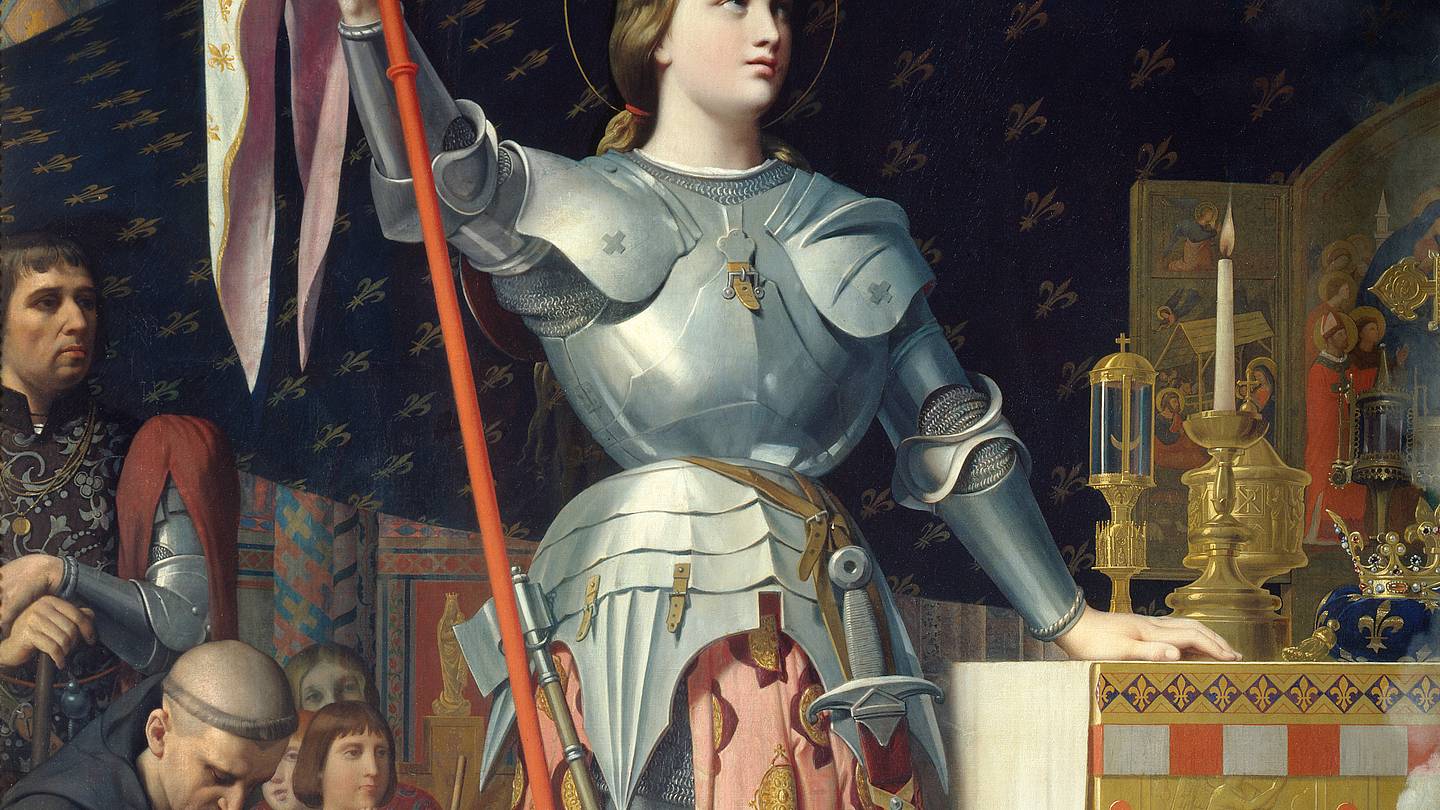
Joan of Arc was not a noblewoman, scholar, or trained military commander. She was a peasant girl from France who believed she had a divine mission to help her country during the Hundred Years’ War. At about 17, she inspired French forces and helped lift the siege of Orléans in 1429, a major turning point in the conflict.
Her story is dramatic enough to make modern movie trailers look shy. A teenage girl walked into a political and military crisis, convinced leaders to listen to her, and became a symbol of French resistance. Whether people focus on her faith, courage, leadership, or tragic trial and execution, Joan’s influence is undeniable.
Joan of Arc changed history because she showed that authority does not always arrive wearing a crown. Sometimes it arrives as a teenager with conviction strong enough to move armies.
2. Louis Braille Created a Reading System That Opened the World
The teenager who transformed literacy for blind people
Louis Braille lost his sight as a child, but he did not accept a world where blindness meant being locked out of books, music, and written communication. As a student in France, he studied earlier tactile systems and, by his teenage years, developed a simpler six-dot code that blind and visually impaired people could use to read and write.
The result became Braille, one of the most important accessibility innovations in history. Imagine inventing something as a teenager that millions of people would still use two centuries later. Most teenagers are proud when they remember to bring home the correct charger.
Braille’s invention changed history because it did more than create a tool. It expanded independence. It gave people access to literature, education, employment, music, mathematics, and personal expression. His work reminds us that inclusion is not charity; it is design done right.
3. Philo Farnsworth Dreamed Up Electronic Television at 14
A farm boy with a very big idea
Philo T. Farnsworth grew up on a farm in Idaho, where plowing fields gave him an unexpected idea. At just 14, he imagined scanning images line by line, similar to how a plow moves across a field. That concept later helped form the basis of electronic television.
Farnsworth eventually became a major inventor with hundreds of patents, but the seed of his breakthrough came when he was still a teenager. The next time someone says daydreaming is a waste of time, remember that a kid staring at farm rows helped shape the future of global media.
Television changed politics, entertainment, education, advertising, sports, and family living rooms forever. Farnsworth’s story is one of the best examples of how young inventors can see patterns adults overlook. Sometimes history changes because someone asks, “What if this ordinary thing works like that extraordinary thing?”
4. Anne Frank Gave the Holocaust a Young Human Voice
A diary that became one of history’s most powerful documents
Anne Frank received her diary on her 13th birthday in 1942. Soon after, she and her family went into hiding in Nazi-occupied Amsterdam. Between the ages of 13 and 15, Anne wrote about fear, hope, family tension, identity, growing up, and the dream of a better future.
Anne did not change history by leading a march or passing a law. She changed history through witness. Her diary helped generations understand the Holocaust not only as a massive historical atrocity, but as the destruction of individual lives, voices, jokes, frustrations, dreams, and ordinary teenage thoughts.
That is the power of writing. A diary can outlive an empire. Anne’s words continue to teach readers that hatred is not abstract. It has names, faces, rooms, silences, and stolen futures. Her story remains essential because it asks every generation to rememberand to do better.
5. Claudette Colvin Refused to Give Up Her Bus Seat
The 15-year-old who challenged segregation before Rosa Parks
In March 1955, nine months before Rosa Parks’ famous protest, 15-year-old Claudette Colvin refused to give up her seat to a white passenger on a segregated bus in Montgomery, Alabama. She was arrested, but her courage became part of the legal and moral pressure that challenged bus segregation.
Colvin later became one of the plaintiffs in Browder v. Gayle, the federal case that helped end segregated bus seating in Montgomery. Her story is often less widely known than Rosa Parks’, but it is central to understanding the civil rights movement. History is not a solo performance. It is a choir, and some voices are only heard clearly when we listen harder.
Claudette Colvin changed history because she acted before the moment was “perfect.” She was young, brave, and very clear about injustice. Her story reminds readers that courage does not need a press release to be real.
6. Ruby Bridges Walked Into an All-White School at Age Six
A first grader who helped desegregate education
In 1960, six-year-old Ruby Bridges became the first African American child to desegregate William Frantz Elementary School in New Orleans. Federal marshals escorted her through angry crowds. Most children that age are trying to master shoelaces; Ruby was helping America confront the broken promises of equality.
Ruby’s walk into school became one of the most iconic moments of the civil rights era. Her bravery helped reveal the cruelty of segregation in a way no legal brief could fully capture. A small child going to class should not have required federal protection, and that was exactly the point.
Ruby Bridges changed history because her presence made injustice visible. She did not give a grand speech that day. She simply entered a classroom. Sometimes the most powerful act is showing up where the world says you do not belong.
7. The Birmingham Children’s Crusade Shifted the Civil Rights Movement
When young protesters forced a nation to look
In May 1963, hundreds of Black children and teenagers joined nonviolent marches in Birmingham, Alabama, during the civil rights campaign against segregation. Many were arrested. Some were attacked with police dogs and fire hoses. Images of young demonstrators facing violence shocked viewers across the United States and around the world.
The Birmingham Children’s Crusade was controversial, even among adults in the movement, because children were placed in danger. But the courage of the young protesters helped change public opinion and increased pressure for federal civil rights legislation.
This was one of the clearest moments when children changed history together. It was not one famous face but a wave of young people saying they were tired of waiting for freedom to arrive politely. Their activism showed that youth movements can become moral turning points.
8. Mary Beth Tinker Helped Define Student Free Speech
A black armband, a school suspension, and a Supreme Court case
In 1965, Mary Beth Tinker was 13 when she and other students wore black armbands to school in Des Moines, Iowa, to protest the Vietnam War. School officials suspended them. The dispute eventually reached the U.S. Supreme Court in Tinker v. Des Moines Independent Community School District.
In 1969, the Court ruled that students do not lose their First Amendment rights at the schoolhouse gate. That decision became a landmark for student speech in public schools. One teenager’s protest helped shape how American schools, courts, and students understand constitutional rights.
Mary Beth Tinker changed history because she proved that young people are not “future citizens.” They are citizens now. Their voices may crack during roll call, but that does not make their rights disappear.
9. Malala Yousafzai Turned a Demand for Education Into a Global Movement
The teenager who refused to be silenced
Malala Yousafzai began speaking out for girls’ education in Pakistan while she was still a child. At 15, she survived an assassination attempt by the Taliban. Instead of disappearing from public life, she became an even stronger global advocate for education.
At 16, she addressed the United Nations. At 17, she became the youngest Nobel Peace Prize laureate, honored for her fight for children’s rights and education. Her message was simple but powerful: every child deserves the chance to learn.
Malala changed history by turning personal danger into international momentum. She reminded the world that education is not a luxury item, like a fancy candle or a phone case that costs too much. Education is power, protection, and possibility.
10. Greta Thunberg Sparked a Global Youth Climate Movement
One school strike that became millions of voices
In 2018, 15-year-old Greta Thunberg began skipping school on Fridays to sit outside the Swedish Parliament and demand stronger action on climate change. Her protest helped inspire Fridays for Future, a youth-led global climate strike movement.
Greta’s activism spread quickly because it captured a frustration shared by young people worldwide: adults had spent decades discussing climate change while the consequences grew more urgent. Her speeches, signs, and direct language helped make youth climate activism a major international force.
Greta Thunberg changed history not by inventing climate science, but by refusing to let leaders treat it as background noise. Her story shows how a single act of protest can become a global chorus when millions recognize the same truth.
Common Traits of Children Who Changed the World
These young history-makers came from different countries, cultures, and centuries, but their stories share important patterns. First, many of them noticed something adults had normalized. Segregated buses. Unequal schools. Barriers to reading. Climate delay. War fever. Silence around genocide. They saw the problem clearly because they had not yet learned to decorate injustice with polite excuses.
Second, they acted with the tools they had. Anne Frank had a diary. Louis Braille had raised dots. Mary Beth Tinker had a black armband. Ruby Bridges had her schoolbooks and astonishing composure. Greta Thunberg had a sign. Claudette Colvin had one bus seat and a backbone made of steel.
Third, none of them worked in a vacuum. Behind every young person who changed history were families, teachers, lawyers, organizers, communities, or later generations who carried the story forward. Kids can spark change, but movements grow when others protect, amplify, and continue the work.
What These Stories Teach Us About Courage
Courage is often misunderstood as fearlessness. These stories suggest something better: courage is doing the necessary thing while fear is very much in the room, possibly sitting in the front row with a clipboard.
Ruby Bridges was not powerful in the usual sense. She was a first grader surrounded by adults who hated what she represented. Claudette Colvin was a teenager facing arrest in a deeply segregated society. Malala Yousafzai faced threats because she insisted girls deserved school. Their courage was not loud for the sake of being loud. It was focused.
That matters for readers today. Most people will not be asked to lead an army or face the Supreme Court as teenagers. But everyone faces moments when silence is easier than honesty. These stories ask a practical question: when the moment comes, what will you do with the influence you have?
Experiences and Reflections: How Kids Changing History Connects to Everyday Life
One of the most useful ways to read stories about kids who changed history is not to place them on a marble pedestal so high that nobody can relate to them. Yes, their actions were extraordinary. But many of their starting points were surprisingly ordinary: a classroom, a bus, a diary, a school hallway, a family conversation, a question about the future. History often begins in places that look completely normal until someone decides normal is not good enough.
In schools, these stories can change the way students see themselves. A lesson about Ruby Bridges is not just a lesson about desegregation. It is also a lesson about walking into hard rooms. A discussion of Mary Beth Tinker is not only about constitutional law. It is about whether young people can speak thoughtfully about war, peace, safety, and justice. When students learn that people their age helped shape major events, they may stop seeing history as something done only by adults with impressive titles and uncomfortable shoes.
Families can also use these stories to start better conversations. Instead of asking only, “What did you learn at school?” parents might ask, “What rule would you change if you could?” or “What problem do you think adults are ignoring?” The answers may be funny, surprising, or wildly impractical. That is fine. Every big idea starts out looking a little underdressed. The point is to teach children that their observations matter and that caring about the world is not a hobby reserved for later.
These examples also offer a reality check for adults. Young people are often told to wait: wait until you are older, wait until you understand, wait until the system is ready. But many systems are never “ready” to be challenged. The civil rights movement did not move forward because segregation politely resigned. Accessibility did not improve because barriers suddenly felt embarrassed. Climate action did not become urgent because everyone agreed at once. Change usually happens because someone insists that waiting has become part of the problem.
At the same time, these stories should not romanticize the burden placed on children. It is inspiring that kids changed history, but it is also sobering. A six-year-old should not have to carry the weight of school desegregation. Teenagers should not have to beg world leaders to protect their future. Young activists need support, safety, education, and restnot just applause. Adults should be inspired by youth courage, but not outsource responsibility to it.
The best lesson is balance. Children can be powerful voices, sharp observers, and brave leaders. Adults can be protectors, mentors, listeners, and partners. When those roles work together, history moves. When they do not, young people often move it anywayand then adults write books about how remarkable they were. Convenient, isn’t it?
For today’s readers, the message is simple: do not underestimate young people. A child’s question can expose a lie. A teenager’s invention can reshape daily life. A student protest can redefine rights. A diary can outlast tyranny. The next person to change history may not be standing behind a podium. They may be sitting in the back of a classroom, doodling in the margins, waiting for someone to take their idea seriously.
Conclusion
The stories of these ten young people prove that history is not reserved for the old, powerful, or perfectly prepared. Joan of Arc helped shift a war. Louis Braille opened reading to millions. Philo Farnsworth imagined television before most adults imagined its possibility. Anne Frank gave the world a voice it could not forget. Claudette Colvin, Ruby Bridges, the Birmingham children, and Mary Beth Tinker challenged injustice in American life. Malala Yousafzai and Greta Thunberg turned youth activism into global pressure.
When kids changed history, they did not do it because they had flawless plans. They did it because they saw something that needed courage, creativity, or truthand they stepped forward. That is why their stories still matter. They remind us that the future is not built only by people old enough to rent a car. Sometimes it is built by young people brave enough to ask why the road is blocked in the first place.