Introducing a baby to a pool can feel like launching a tiny, sunscreen-scented astronaut into a brand-new planet. There is water. There are echoes. There are strangers wearing goggles. And there is your baby, possibly thrilled, possibly suspicious, possibly preparing a dramatic eyebrow raise worthy of a courtroom scene.
The good news? A baby’s first pool experience does not have to be complicated. It should be calm, short, safe, and full of gentle encouragement. The goal is not to create a future Olympic swimmer before snack time. The real goal is to help your baby feel secure around water while you build smart habits that protect them every single time.
This guide explains how to introduce a baby to a pool in 12 practical steps, from choosing the right pool to ending the session before the royal meltdown begins. It also covers what to pack, what to avoid, how to read your baby’s signals, and how to make pool time both fun and responsible.
Editorial note: This article is for general parenting and water-safety education. It does not replace advice from your pediatrician, certified swim instructor, lifeguard, or local pool facility.
Why a Slow Pool Introduction Matters
Babies are not tiny adults with miniature sunglasses. They process temperature, noise, movement, and new sensations differently. A pool can be exciting, but it can also be overwhelming. The splash that looks adorable to an adult may feel like a surprise waterfall to a baby who did not approve this agenda.
A slow introduction helps your baby associate water with comfort instead of fear. It also gives parents time to practice the most important pool habit of all: constant, close, undistracted supervision. For babies and toddlers, that means staying within arm’s reach at all times. Phones, books, long conversations, and “I only looked away for a second” are not part of safe baby pool time.
How to Introduce a Baby to a Pool: 12 Steps
1. Talk to Your Pediatrician First
Before your baby’s first pool visit, ask your pediatrician whether your child is ready. This is especially important if your baby was born prematurely, has skin sensitivity, frequent ear infections, breathing concerns, immune system issues, or any medical condition that could affect pool safety.
Many families begin gentle water play when a baby can hold their head up well and tolerate new environments, but readiness varies. Formal swim lessons are different from playful water introduction. For babies under 1 year old, the focus should be comfort, bonding, and safety routines, not independent swimming skills.
2. Choose the Right Pool Environment
The best first pool is clean, calm, shallow, warm, and not crowded. A busy public pool during cannonball rush hour is not ideal unless your baby already enjoys chaos, whistles, and the acoustics of a small sports arena.
Look for a pool with a dedicated baby or family area, gentle entry steps, visible lifeguards, and good water maintenance. Indoor pools can be helpful because they are often warmer and protected from sun exposure. Outdoor pools can work well too, as long as you plan around heat, sun, and crowd levels.
Avoid hot tubs and spas for babies. Their high temperatures can be unsafe for infants, and strong jets may be too intense. Also be cautious with splash pads. They look simple, but babies can still slip, swallow sprayed water, or get overwhelmed by sudden bursts.
3. Pack the Baby Pool Essentials
A smooth baby pool day begins before you leave home. Pack like a calm person who knows babies are small but somehow require equipment equal to a weekend camping trip.
Bring a well-fitting swim diaper, a backup swim diaper, regular diapers, wipes, a towel, dry clothes, a hat, baby-safe sunscreen if your baby is old enough for it, water for adults, snacks or milk as appropriate, and a soft blanket for breaks. A rash guard with UPF protection is helpful for outdoor swimming. Brightly colored swimwear can also make your baby easier to spot in the water.
Swim diapers are useful, but they are not magic force fields. They help contain solid waste, but they are not completely leak-proof. If your baby has diarrhea, skip the pool entirely. Change swim diapers away from the pool area, wash hands afterward, and follow the facility’s rules.
4. Start With Water Familiarity at Home
Before the pool, help your baby get comfortable with water during bath time. Keep it playful and gentle. Let them kick, splash, and touch water with their hands. Smile, talk softly, and avoid sudden pouring over the face.
You can use phrases such as “water on your toes” or “little splash” so your baby begins connecting words with sensations. This does not train a baby to swim, but it builds trust. Babies love routines, and familiar language can make the pool feel less like a surprise meeting with a giant bathtub.
5. Pick the Right Time of Day
Timing can make or break the first pool experience. Choose a time when your baby is rested, fed, and generally in a good mood. Avoid the pool right before nap time, when your sweet child may transform into a tiny weather system.
For outdoor pools, morning or late afternoon is often more comfortable than midday. The sun is less intense, surfaces may be cooler, and the pool may be quieter. Keep the first visit short. Ten to twenty minutes in the water may be plenty for a baby’s first session.
6. Enter the Pool Slowly While Holding Your Baby Securely
Do not hand your baby to someone already in the pool for a dramatic “welcome to water” moment. Instead, hold your baby close and enter slowly. Let them watch the water first. Sit on the pool edge together. Dip their toes. Wait. Let them decide whether this new liquid universe deserves approval.
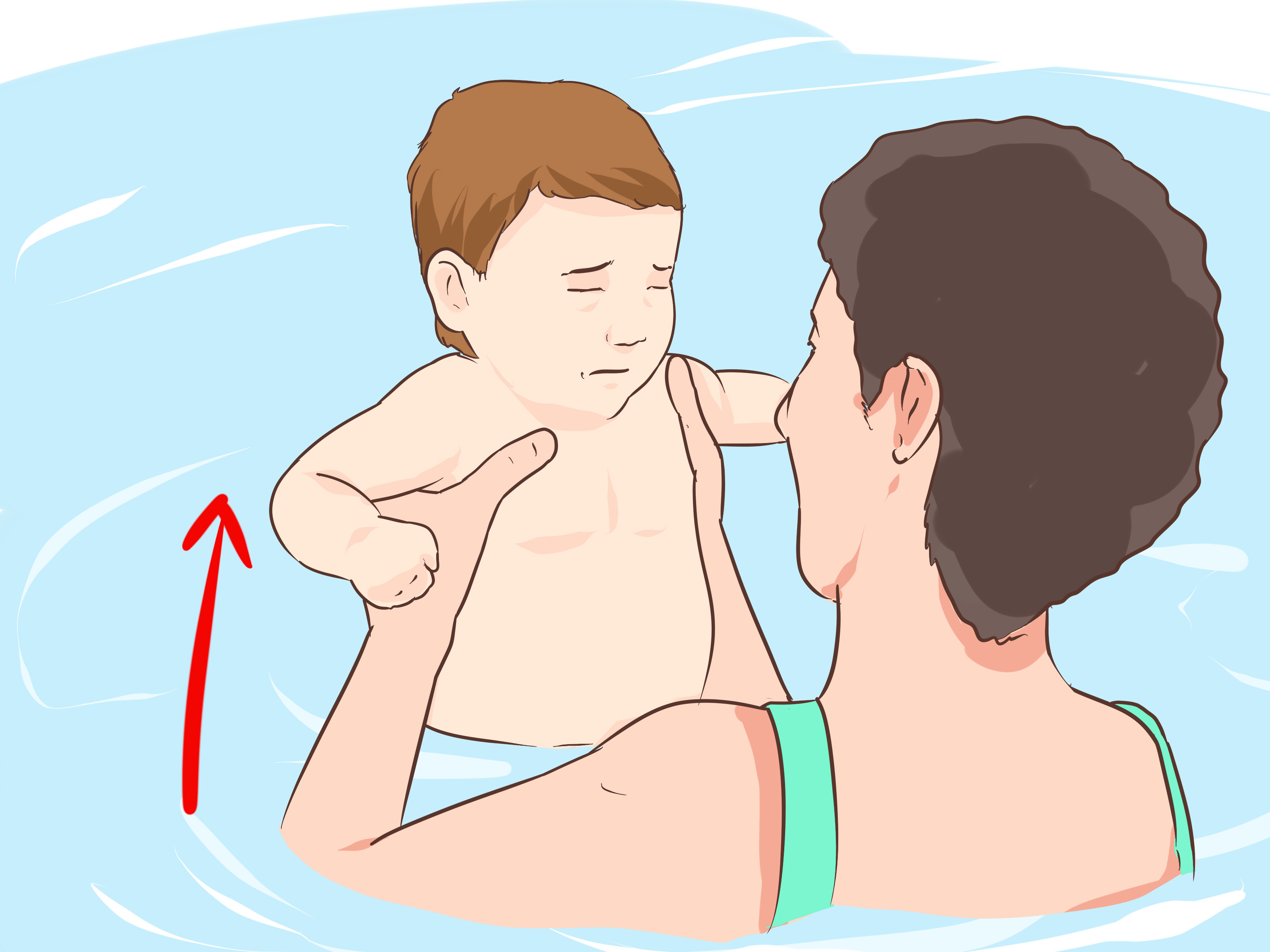
When you enter, keep your baby upright against your chest or supported under the arms with their head above water. Move slowly and confidently. Babies are expert emotional detectives. If you look panicked, they may assume the pool contains sea monsters, tax paperwork, or both.
7. Keep Your Baby Within Arm’s Reach at All Times
This is the rule that matters most. A baby in or near water must have active adult supervision every second. “Active” means watching, holding, and staying close enough to respond immediately. It does not mean scrolling through photos, adjusting a playlist, or having a deep conversation about patio furniture.
Use the “water watcher” idea when several adults are present. One adult is officially responsible for watching the baby, with no distractions. If that person needs a break, they clearly pass the job to another adult. Safety improves when responsibility is specific instead of floating around like a beach ball nobody wants to claim.
8. Use Gentle Games, Not Pressure
Once your baby is comfortable, introduce simple water games. Try bouncing gently, singing a familiar song, moving side to side, or helping your baby make tiny kicks while you support their body. You can float a toy within reach and let your baby touch it while safely held.
Avoid forcing your baby’s face underwater. Avoid surprise dunks. Avoid any activity that makes your baby cough, gag, cry hard, or cling in fear. Some babies love water immediately. Others need several visits before they relax. Both reactions are normal. The goal is progress, not performance.
9. Watch Your Baby’s Temperature and Comfort
Babies can get cold faster than adults. Watch for shivering, bluish lips, clenched fists, fussiness, quietness, or a sudden lack of interest. If your baby seems cold or tired, get out, wrap them in a towel, and take a break.
Also watch for signs of overheating during outdoor pool days. Shade, light clothing, and frequent breaks matter. Babies under 6 months generally need shade and protective clothing as their first sun-defense strategy; ask your pediatrician about sunscreen use based on age and skin needs.
10. Teach Pool Boundaries Early
Even before your baby can understand full rules, start building the routine. Use simple phrases such as “wait for grown-up,” “hold hands,” and “feet first.” Always model safe behavior. Babies learn patterns long before they can explain them.
Never let pool entry become random. Do not allow your baby to crawl or toddle near the edge without being held. As your child grows, teach that water is only for swimming when an adult says yes and is physically present. Pool safety is not one talk; it is a repeated family habit.
11. Avoid Unsafe Floatation Habits
Inflatable arm bands, baby neck floats, and novelty floaties can create a false sense of security. They are not substitutes for adult supervision and may not position a baby safely. If a flotation device is needed for boating or certain water environments, choose a properly fitted U.S. Coast Guard-approved life jacket and use it according to the label.
In a pool introduction session, your arms are the safest “device.” Hold your baby, support them, and stay present. A float may look cute in photos, but safety does not care about cuteness. Safety is the friend who says, “Let’s read the label first.”
12. End on a Happy Note
The best first pool session ends before your baby is exhausted. If your baby smiles, relaxes, splashes a little, or simply stays calm, that is a success. Get out while things are still positive. Wrap them warmly, offer comfort, change into dry clothes, and celebrate the small win.
Ending early helps your baby remember pool time as safe and pleasant. Pushing for “just five more minutes” can turn a good session into a soggy opera. When in doubt, leave while the audience is still clapping.
Common Mistakes to Avoid
Trying to Rush the Process
Some babies need multiple pool visits before they enjoy being in the water. That is not failure. It is normal development. Rushing can make fear worse and delay comfort.
Assuming Swim Lessons Remove Risk
Swim lessons can be an important layer of protection when a child is developmentally ready, often starting around age 1 for many children. But lessons never “drown-proof” a child. Close supervision, barriers, emergency readiness, and safe habits remain essential.
Forgetting Pool Barriers at Home
If you have a pool at home, safety begins long before swim time. A four-sided fence with a self-closing, self-latching gate is one of the most important layers of protection. Door alarms, pool covers, rescue equipment, and clear rules add more protection, but they do not replace supervision.
Letting Toys Stay in the Pool
Pool toys can tempt babies and toddlers toward the water. After swimming, remove toys from the pool and store them out of reach. A rubber duck may look innocent, but to a curious toddler, it is basically a floating invitation.
Signs Your Baby Is Enjoying the Pool
Your baby may show comfort by relaxing their body, making eye contact, smiling, babbling, kicking gently, reaching for toys, or leaning into you calmly. Some babies simply observe quietly. Quiet does not always mean unhappy; it may mean they are studying the pool like a tiny scientist.
Signs your baby needs a break include crying, arching away, shivering, rubbing eyes, turning their face away, coughing after splashes, or becoming unusually still. Respond quickly. Respecting your baby’s signals builds trust.
When to Consider Parent-and-Child Swim Classes
Parent-and-child classes can be helpful when they are age-appropriate, taught by qualified instructors, and focused on safety, comfort, and parent education. For infants, the best classes teach caregivers how to hold, supervise, enter, exit, and play safely in water. They should not promise to make babies drown-proof.
Ask about instructor certification, class size, water temperature, pool cleanliness, emergency procedures, and whether parents are required to be in the water. A good class should feel calm, organized, and respectful of each child’s pace.
Extra Experience Section: Real-Life Pool Introduction Tips Parents Learn the Splashy Way
After many families introduce a baby to a pool, they discover that the tiny details matter more than the grand plan. You may imagine the day like a glossy family photo: everyone smiling, baby giggling, sunlight sparkling, no one accidentally sitting on a wet towel. Reality is often sweeter, funnier, and slightly more damp.
One useful experience is to treat the first visit as a “meet and greet,” not a full swim day. Think of the pool as a new friend your baby is meeting for the first time. You would not hand your baby to a stranger wearing goggles and say, “Good luck, bond quickly.” Instead, you introduce slowly. Let your baby hear the sounds, watch the ripples, touch the water, and stay close to your chest. The first trip may involve only five minutes in the pool. That still counts.
Another practical lesson: bring more towels than you think you need. One towel becomes the baby towel. One becomes the backup baby towel. One becomes the “how did this already get wet?” towel. A dry towel after the pool can turn a fussy baby back into a peaceful little burrito. Warmth and comfort after swimming help make the whole experience feel safe.
Parents also learn that babies react differently to pool temperature. A pool that feels refreshing to an adult may feel chilly to a baby. Start by dipping feet and watching your baby’s face. If their expression says, “Excuse me, who authorized this?” slow down. Hold them against your body and let them adjust gradually. If they shiver or fuss, get out. There is no trophy for staying in cold water with an unhappy baby.
Pool noise can be another surprise. Indoor pools echo. Outdoor pools have whistles, laughter, splashing, and sometimes one energetic child performing what can only be described as competitive shrieking. If your baby is sensitive to sound, choose a quiet time. A peaceful first experience is more valuable than a busy one.
Food and naps matter too. A baby who is hungry, tired, or freshly offended by a missed nap is unlikely to enjoy a new pool. Plan your swim after a nap and feeding, with enough digestion time to avoid discomfort. Keep the water session short, then offer a calm post-pool routine: rinse, dry, change, feed if needed, and rest.
Many parents find that songs work better than instructions. A familiar song gives rhythm to gentle movements and helps your baby feel secure. Singing also keeps adults relaxed. And yes, your singing voice is good enough. The baby is not judging pitch. The baby is judging whether you seem safe, warm, and emotionally available.
The biggest experience-based tip is this: do not compare your baby with another baby. One baby may splash like a delighted duck. Another may cling to a parent with the determination of a tiny mountain climber. Both babies are learning. Confidence grows through repeated, safe, positive exposure. Your job is not to produce a pool prodigy. Your job is to protect, support, and make water familiar without fear.
Finally, parents often realize that the best pool habit starts after leaving the water. Store swim gear, remove toys, lock gates, close doors, and reset every safety layer. Babies become toddlers quickly, and toddlers are fast, curious, and powered by mysterious snack energy. Safe pool routines today become lifesaving family habits tomorrow.
Conclusion
Introducing a baby to a pool is not about rushing milestones. It is about creating a calm first experience, practicing strong supervision, respecting your baby’s comfort, and building water safety into your family routine. Start slowly, keep sessions short, hold your baby securely, and end while the mood is still happy.
With the right preparation, your baby’s first pool experience can be sweet, safe, and memorable. There may be splashes. There may be sunscreen in places sunscreen has no business being. There may be a towel shortage. But with patience and smart safety habits, pool time can become a joyful part of your baby’s world.