Note: This article is written as an original, publish-ready travel and restaurant feature based on real public information about Pane e Acqua in Milan, including its design legacy, neighborhood setting, culinary reputation, and historical context. Travelers should verify current opening hours and booking availability before planning a visit.
A Milan Restaurant Where Dinner Felt Like Walking Into a Design Gallery
Milan is not the kind of city that lets restaurants simply be restaurants. Here, even a plate of pasta may arrive with cheekbones, a tailored jacket, and an opinion about lighting. That is why Pane e Acqua in Milan became such a memorable name among design lovers, food travelers, and anyone who believes a dining room should have more personality than a hotel lobby fern.
Located on Via Matteo Bandello in the Magenta district, Pane e Acqua was more than a place to eat. It was part restaurant, part design experiment, part Milanese mood board. The name means “bread and water,” which sounds almost monastic, but the actual experience was far from punishment. In fact, the name was part of the charm: understated, ironic, and just a little mischievous, like Milan itself when it pretends not to be showing off.
The restaurant was closely associated with the creative world around Spazio Rossana Orlandi, one of Milan’s most influential design destinations. Its interiors were famously shaped by designer and architect Paola Navone, whose style often blends the rustic, the global, the handmade, and the theatrical. The result was a restaurant that felt lived-in and curated at the same time. Imagine walking into a former tobacco shop and discovering a dining room that looks as if an art collector, a chef, and a very stylish antique chair had all agreed to host dinner together.
The First Impression: Not Fancy in the Usual Way
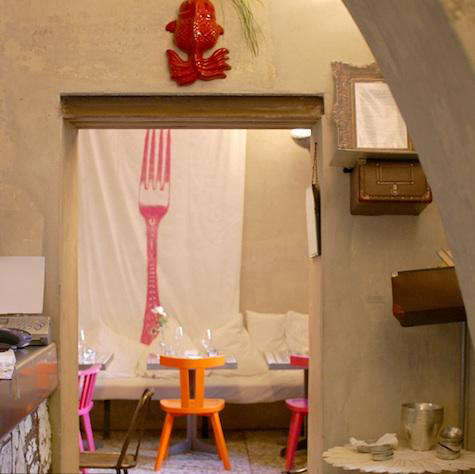
Pane e Acqua did not rely on the predictable language of fine dining: stiff white tablecloths, whispering waiters, and forks arranged like surgical tools. Instead, it leaned into a shabby-chic atmosphere that felt relaxed but highly intentional. White-painted wooden tables, colorful chairs, worn plaster walls, flowers, mismatched objects, and playful details created a room that seemed casual at first glance. Then, after five minutes, you realized every “accident” had probably been planned by someone with a terrifyingly good eye.
This was the magic of the space. It did not scream luxury. It murmured creativity. It invited guests to look around before they even opened the menu. The room had texture, history, humor, and confidence. In a city famous for polished surfaces and fashion-week precision, Pane e Acqua offered something warmer: a sense of controlled imperfection.
For visitors interested in Milan restaurants with beautiful interiors, this was exactly the appeal. Pane e Acqua was a reminder that atmosphere matters. Food can be excellent, but when the room has a soul, dinner becomes a story you keep retelling. And if your chair looks like it has attended more gallery openings than you have, well, welcome to Milan.
Where Pane e Acqua Sat in the Milan Dining Scene
The Magenta district is one of Milan’s most elegant and culturally rich areas. It is close to landmarks, residential streets, historic architecture, and design destinations. Unlike the busiest tourist corridors around the Duomo, this part of the city feels calmer and more local. It is the kind of neighborhood where you can take a slow walk, admire a doorway, pretend you understand Italian real estate prices, and then reward yourself with lunch.
Pane e Acqua fit the neighborhood beautifully. It was not a loud restaurant chasing crowds. It felt tucked away, almost like a secret passed between design lovers and food-minded travelers. The connection with Rossana Orlandi’s design universe gave it a distinct identity. This was not merely “a restaurant near a gallery.” It was part of the same creative ecosystem, where furniture, art objects, textures, and food all belonged to one conversation.
That is why many visitors remember Pane e Acqua as a design restaurant in Milan rather than only as an Italian dining spot. The food mattered, of course, but the setting framed the meal. It told guests: slow down, notice the chair, notice the wall, notice the way the glass catches the light. Milan is a city that rewards attention, and Pane e Acqua was built for people who like to notice things.
The Food: Italian Cooking With a Creative, Seasonal Touch
The kitchen at Pane e Acqua was associated with chef Francesco Passalacqua, whose cooking was often described as modern Italian with respect for regional ingredients. The restaurant’s menu was known for using seasonal produce and traditional Italian foundations such as pasta, risotto, seafood, meat, and carefully chosen vegetables. In other words, it did not try to reinvent Italian cuisine by making spaghetti float in midair. Thank goodness.
Instead, the appeal was refinement without unnecessary drama. Dishes were rooted in Italian flavors but presented with an elegant, contemporary sensibility. A good modern Italian restaurant knows that the ingredient should still be the star. If the fish is excellent, it does not need a motivational speech. If the risotto is properly made, it does not need edible glitter. Pane e Acqua’s reputation rested on that balance: recognizable food, thoughtful technique, and a dining room that made everything feel slightly cinematic.
Past descriptions of the restaurant mention fixed-price lunch options and more elaborate evening tasting menus. That structure made sense for the concept. Lunch could be approachable and stylish, while dinner allowed the kitchen to stretch into a longer, more curated experience. For visitors planning a restaurant visit in Milan, this type of format is especially appealing because it offers two different moods: a civilized midday pause or a full evening event.
What Kind of Meal Would Fit the Setting?
A meal at Pane e Acqua was best approached with curiosity. This was not the place to rush in, inhale a plate of pasta, and leave while still checking email. The room encouraged lingering. A good order might begin with a seasonal starter, perhaps something built around vegetables, seafood, or regional cheeses. Then pasta or risotto would be the natural center of the meal, followed by a meat or fish course for those settling in for the long version.
Wine also played an important role in the experience. Several reviews and guides highlighted the presence of interesting bottles, including natural or organic-leaning selections. That fit the restaurant’s personality: slightly unconventional, quality-focused, and not afraid of character. A glass of wine in a room like Pane e Acqua was not just a beverage. It was part of the set design.
Design Details That Made Pane e Acqua Memorable
The most unforgettable thing about Pane e Acqua may have been how confidently it mixed opposites. The room combined rough walls with delicate lighting, simple tables with expressive chairs, old surfaces with artistic objects, and a casual atmosphere with serious design credibility. It felt spontaneous, but it was far too good to be random.
Paola Navone’s design language often celebrates contrast: humble and refined, local and global, old and new, handmade and theatrical. At Pane e Acqua, this attitude translated into a dining room that felt like an installation you could eat in. For design travelers, that was the real feast. Every corner offered something to examine. The restaurant worked almost like a visual appetizer before the actual appetizer arrived.
One of the most fascinating elements connected with the restaurant was the presence of artistic features and collectible design pieces, including work associated with the Rossana Orlandi world. In this context, furniture was not background. Chairs, walls, lighting, and decorative objects became part of the restaurant’s identity. You did not simply sit down; you joined the composition. Try not to slouch.
Why Pane e Acqua Still Matters
Restaurants come and go, especially in cities as dynamic as Milan. Concepts change, chefs move, leases end, and new openings take over old addresses. Pane e Acqua is best understood not only as a place to book, but also as a chapter in Milan’s design-and-dining history. It represented a moment when restaurants became immersive lifestyle spaces, where interior design could be as talked about as the menu.
This is increasingly common today. Many modern restaurants are built for both the palate and the camera. But Pane e Acqua did it before “Instagrammable restaurant” became a phrase that made everyone slightly tired. Its appeal was not based on neon signs or dessert served in a shoe. It was based on atmosphere, material, personality, and the belief that dining could feel intimate and artistic at the same time.
For anyone researching Pane e Acqua Milan, the important point is context. The restaurant’s legacy is tied to Rossana Orlandi’s creative influence, Paola Navone’s interior design, and Francesco Passalacqua’s modern Italian cooking. Even if travelers need to verify the current operating status before visiting, the restaurant remains a useful reference point for understanding how Milan blends food, design, and culture.
How to Plan a Similar Milan Dining Experience Today
If your goal is to recreate the spirit of a Pane e Acqua visit, look for restaurants that combine thoughtful food with strong design identity. Milan has many dining rooms where interiors are not an afterthought. The best options tend to share a few qualities: a distinctive neighborhood, a clear culinary point of view, seasonal ingredients, a strong wine list, and a space that feels personal rather than manufactured.
Start by exploring neighborhoods beyond the obvious tourist center. Brera, Magenta, Porta Venezia, Isola, Navigli, and the areas around Tortona all offer restaurants with personality. Some are polished and elegant; others are small, eccentric, and relaxed. The trick is to choose a place that matches your mood. Milan rewards diners who care about atmosphere as much as ratings.
When booking, check recent reviews, official websites, and current menus. Milan’s restaurant scene moves quickly, and older recommendations can become outdated. A beautiful article from ten years ago may describe a restaurant that has changed owners, changed chefs, or transformed into something entirely different. That does not make the old recommendation useless. It simply means the smart traveler verifies before showing up hungry and emotionally dependent on risotto.
Who Would Love Pane e Acqua?
Pane e Acqua was ideal for travelers who appreciate restaurants with a point of view. Design lovers, food writers, architects, stylists, couples looking for an atmospheric dinner, and curious visitors who enjoy hidden gems would all understand its appeal. It was not designed for people who only want the fastest pizza near the train station. No judgmentbut also, maybe choose another place.
The restaurant’s charm came from its layered personality. It was romantic without being sugary, artistic without being cold, and refined without being stiff. That is a difficult balance. Many restaurants attempt “eclectic” and accidentally land on “yard sale with candles.” Pane e Acqua managed to feel curated, warm, and genuinely Milanese.
Practical Tips for Visiting Restaurants Like Pane e Acqua in Milan
Book Ahead
Small, design-forward restaurants in Milan can fill quickly, especially during design week, fashion week, major trade fairs, and weekends. If a restaurant is connected to a gallery, boutique, or cultural destination, demand can spike even more. Booking ahead is not just practical; it is emotionally healthy.
Check the Current Menu
Seasonal Italian restaurants often change dishes based on market availability. That is a good thing. It means the kitchen is paying attention. But if you are dreaming about a specific dish mentioned in an old review, confirm before you build your entire personality around it.
Leave Time for the Neighborhood
Part of the pleasure of dining in Milan is the walk before and after the meal. Around Magenta and nearby design districts, the city reveals itself through courtyards, galleries, quiet streets, and unexpected storefronts. A restaurant visit becomes better when it is part of a larger afternoon.
Dress Smart, Not Stiff
Milanese style is polished, but not always formal. For a restaurant with design credentials, smart casual is usually a safe choice. Think clean lines, comfortable shoes, and the confidence of someone who definitely did not spend twenty minutes deciding which jacket looked more “effortless.”
Extra Experience Section: A Personal-Style Walk Through a Pane e Acqua Visit
Imagine arriving at Via Matteo Bandello just as the city begins to soften into evening. Milan in the late afternoon has a particular glow: the buildings look warmer, the sidewalks become livelier, and everyone seems to be walking somewhere important while also looking annoyingly well dressed. You turn away from the busier streets and find yourself near the creative orbit of Rossana Orlandi, where design does not sit behind glass politely waiting to be admired. It spills into the atmosphere.
A visit to Pane e Acqua would begin before the first sip of wine. The entrance itself would set the tone. There is no need for theatrical grandeur; the charm is quieter. You step inside and immediately sense that the room has been allowed to keep its history. The walls do not look freshly scrubbed of character. The furniture does not match like it was ordered in bulk by someone named “Corporate Dining Solutions.” Instead, everything feels collected. A chair here, a table there, a light fixture with a little attitude. It is the kind of room where you want to ask, “Where did that come from?” at least six times.
The host leads you to a table, and you notice the details: glassware catching the light, flowers placed with casual confidence, surfaces that feel tactile rather than polished into anonymity. The menu arrives, and if it is tucked into an unusual holder or presented with a creative flourish, you are not surprised. This is Milan, after all. Even the menu may have a design degree.
The first course sets the pace. Perhaps it is something seasonal and deceptively simple: vegetables with a bright dressing, seafood treated gently, or a small plate that proves Italian cooking can be elegant without becoming fussy. You take a bite and understand the restaurant’s logic. The room may be expressive, but the food does not need to shout. It speaks clearly, with good ingredients and careful technique.
Then comes pasta or risotto, because refusing such a course in Milan requires either a medical certificate or a very convincing explanation. The texture is the point. Proper risotto should move slowly on the plate, not sit there like a brick with ambitions. Pasta should taste like someone cared about timing. In a restaurant like Pane e Acqua, the pleasure comes from the conversation between restraint and creativity. Nothing feels overworked, yet nothing feels lazy.
As the meal continues, the dining room becomes part of the rhythm. Other tables talk softly. Wine is poured. The lighting gets better, because good restaurant lighting is basically emotional architecture. You start to understand why certain places stay in memory even after the menu changes or the restaurant itself becomes part of Milan’s past. It is not only the dish. It is the way the room made you feel while eating it.
By dessert, the visit has become less about checking a restaurant off a list and more about understanding a city. Pane e Acqua represented a very Milanese idea: beauty can be functional, food can be cultural, and a restaurant can be both casual and deeply designed. You leave with the pleasant feeling that you have not just had dinneryou have briefly entered someone’s imagination. That is rare, and it is why Pane e Acqua remains worth writing about.
Conclusion
Restaurant Visit: Pane e Acqua in Milan is more than a simple dining review topic. It is a doorway into Milan’s unique relationship with food, design, creativity, and atmosphere. With its connection to Rossana Orlandi, interiors by Paola Navone, and a culinary identity shaped by modern Italian cooking, Pane e Acqua became a memorable example of how restaurants can become cultural spaces. Whether remembered as a design landmark, a gourmet stop, or an atmospheric address in the Magenta district, it captures something essential about Milan: the city does not separate style from daily life. It puts style at the table, pours it a glass of wine, and asks whether you would like dessert.