Before “maker culture” had a hashtag, before unboxing videos turned cardboard into theater, and before every gadget came sealed like a tiny technological tomb, there was Heathkit. For generations of radio operators, audio fans, engineers, students, computer hobbyists, and curious basement tinkerers, a Heathkit box was not just a product. It was a promise: open this, follow the manual, burn your finger only once or twice, and you might end up with a working oscilloscope, ham radio transceiver, stereo amplifier, color television, computer, or robot.
Remembering Heathkit is really remembering a time when technology felt more personal. A device was not some mysterious black rectangle that glared at you when the battery dropped below 10 percent. It was a collection of resistors, capacitors, tubes, transistors, screws, knobs, wires, and instructions so clear they could make a nervous beginner feel like a serious builder. Heathkit made electronics approachable without making them childish. It invited ordinary people into the machinery of modern life and said, in effect, “You can understand this.”
That message still matters. In an age of glued-together phones, subscription software, and appliances that seem to need therapy after a Wi-Fi update, Heathkit remains a symbol of repairability, confidence, patience, and hands-on learning. Its legacy is not only in the vintage green test gear still humming on workbenches. It is also in the way people think about technology: not as magic, but as something humans design, assemble, troubleshoot, improve, and occasionally whack gently on the side.
The Unlikely Beginning: From Airplanes to Electronics Kits
The Heathkit story did not begin with radios or soldering irons. It began with aviation. The Heath Company traced its roots to early aircraft ventures connected with Edward Bayard Heath, whose Heath Parasol airplane became one of the best-known homebuilt aircraft designs of its era. That detail sounds surprising until you think about it: the spirit behind a kit airplane and a kit oscilloscope is the same. Both say that technology belongs not only to factories and specialists but also to determined people with tools, instructions, and enough nerve to begin.
After World War II, the United States had an enormous supply of surplus electronic parts. Howard Anthony, who had acquired the Heath name, saw an opportunity. Instead of selling parts one by one, Heath packaged them into something more useful: complete electronic kits. In 1947, the company introduced an oscilloscope kit that became a breakthrough product. It offered useful test equipment at a price hobbyists, students, and small repair shops could actually afford.
That first oscilloscope helped define the Heathkit formula. The company would take a desirable piece of equipment, design it so a careful amateur could assemble it, include every part in the box, and provide a manual that explained the process with almost heroic patience. In a postwar America full of radio repair shops, television service technicians, amateur radio operators, and mechanically curious households, the timing was perfect.
Why Heathkit Became a Household Name Among Tinkerers
Heathkit succeeded because it understood something modern technology companies often forget: people enjoy competence. There is a special satisfaction in using equipment you built yourself. A factory-made amplifier may play music beautifully, but a Heathkit amplifier played music with a bonus track: pride.
Heathkit products also made economic sense. In the vacuum tube and early transistor eras, much of electronics manufacturing involved hand assembly. If the customer did that labor at home, the final product could cost less than a comparable factory-built unit. That mattered. A hobbyist could build test equipment for a basement shop. A student could learn electronics without needing a laboratory budget. A ham radio operator could get on the air with gear that felt professional but still had fingerprints under the chassis.
The Manual Was the Real Magic
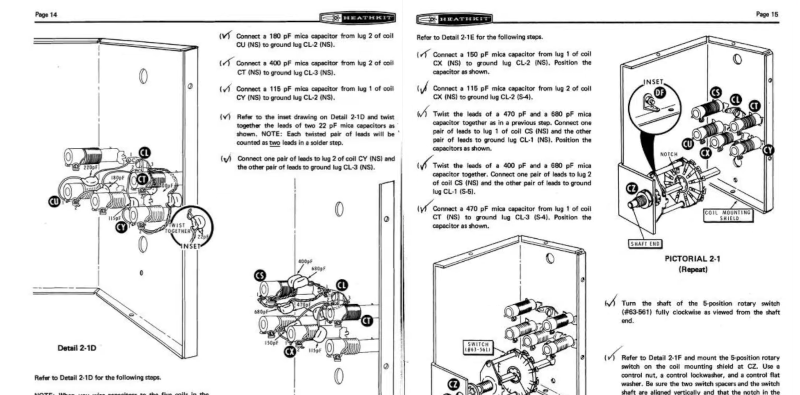
Ask Heathkit fans what made the company special, and many will mention the manuals before the hardware. Heathkit instructions were famous for being clear, logical, and forgiving. They broke assembly into small steps. They showed diagrams. They explained how to identify components. They reminded builders to check their work before moving on. The tone was not “good luck, genius.” It was more like a calm mentor sitting beside you at the bench.
That careful documentation created confidence. Builders learned to read resistor color codes, understand circuit boards, recognize tube sockets, and follow signal paths. Many Heathkit manuals also included theory-of-operation sections, which helped people understand not only where a part went, but why it mattered. That combination of doing and understanding turned a kit into an education.
Heathkit and the Golden Age of Amateur Radio
No discussion of remembering Heathkit is complete without amateur radio. For ham operators, Heathkit became almost a rite of passage. The company produced receivers, transmitters, transceivers, antenna equipment, power supplies, meters, and accessories that filled radio shacks across the country. The familiar green cabinets and clean front panels became part of the visual language of mid-century ham radio.
Popular Heathkit ham gear included models such as the DX series transmitters, the AR and GR receivers, the HW series transceivers, and the admired SB line. The SB-100, SB-101, and SB-102 transceivers became especially memorable because they offered serious high-frequency performance in a package that ambitious amateurs could build and maintain. For many operators, a Heathkit rig was not merely equipment. It was a companion on late-night contacts, contest weekends, and patient attempts to pull a weak signal out of atmospheric noise.
Ham radio and Heathkit fit together naturally. Amateur radio already valued technical curiosity, experimentation, and self-reliance. Heathkit supplied the parts, design, and instructions. The builder supplied time, care, and just enough stubbornness to troubleshoot a cold solder joint at midnight.
Beyond Radio: Audio, Television, Test Gear, and Gadgets
Heathkit was never just a ham radio company. Its catalogs were wonderlands of practical temptation. You could find audio amplifiers, stereo tuners, voltmeters, signal generators, capacitor checkers, oscilloscopes, clocks, weather instruments, automotive electronics, educational trainers, and television sets. Leafing through a Heathkit catalog was like walking through a hardware store designed by an electrical engineer with an optimistic view of weekends.
For audio enthusiasts, Heathkit offered amplifiers and tuners that brought hi-fi performance within reach. For service technicians, Heathkit test equipment became a budget-friendly workhorse. For families with heroic patience, Heathkit television kits turned the living room into both an entertainment center and a manufacturing site. Building a color TV was not a casual afternoon craft project. It was the kind of undertaking that made the dining table unavailable for a suspiciously long time.
The company’s range mattered because it made electronics feel like a broad landscape. A Heathkit builder might start with a simple meter, move to a shortwave receiver, then build a stereo amplifier or ham transmitter. Each successful project made the next one seem possible. That ladder of difficulty helped create a generation of self-taught technicians and engineers.
Heathkit Computers: When the Future Arrived in Pieces
By the late 1970s, personal computing was emerging from hobbyist clubs and laboratory corners into homes, schools, and small businesses. Heathkit entered the market with machines such as the H8, H11, H19 terminal, and H89 all-in-one computer. These systems arrived at a fascinating moment: computers were becoming powerful enough to be useful, but still understandable enough that a motivated person could imagine knowing what was happening inside.
The Heathkit H8, introduced in the late 1970s, used an Intel 8080A processor and had a distinctive front panel with keypad and display. The H11 brought Digital Equipment Corporation’s LSI-11 architecture into kit form. The H89 combined a terminal and computer into a single cabinet and became one of the more memorable Heath/Zenith systems. These computers could run operating systems such as HDOS and CP/M, giving users access to programming, word processing, and business applications.
Compared with today’s laptops, these machines look slow enough to finish a cup of coffee between keystrokes. But at the time, they represented power, possibility, and personal control. Building or using one meant entering the computer age not as a passive consumer but as a participant. You did not simply buy the future. You assembled it, board by board.
The HERO Robot and the Educational Dream
One of Heathkit’s most charming later products was the HERO robot line. Introduced in the early 1980s, HERO stood for Heathkit Educational RObot, and the name captured the company’s teaching mission perfectly. HERO 1 was a mobile robot with sensors, onboard computing, and optional accessories. It looked like a friendly rolling ambassador from a future where robots would be helpful, educational, and only mildly interested in taking over the hallway.
The HERO robots were used in schools and training programs, and they reflected Heathkit’s shift toward education as the electronics market changed. By then, integrated circuits and automated manufacturing were making it harder for kit builders to save money by assembling products at home. But the educational value remained strong. Building, programming, and troubleshooting a robot still taught lessons that no glossy brochure could replace.
Why Heathkit Declined
Heathkit’s decline was not caused by one bad decision or one unlucky product. It was the result of a changing electronics industry. As consumer electronics moved from hand-wired circuits to integrated circuits, custom chips, compact circuit boards, and eventually surface-mount parts, home assembly became less practical. Factory-built products became cheaper, smaller, and more reliable. The old bargain changed. A kit no longer guaranteed big savings.
Consumer expectations changed too. In the 1950s and 1960s, many buyers accepted the idea that a complex device might require adjustment, maintenance, or repair. By the 1980s and 1990s, more people expected electronics to work immediately out of the box. The market shifted from “I built this” to “Why is this not already working?” That is a very different emotional universe.
Heathkit also passed through corporate ownership changes, including the Zenith era, as personal computing reshaped the business. In 1992, the company discontinued its traditional electronic kit business, closing a 45-year chapter that many hobbyists experienced as the end of an American do-it-yourself era.
Why People Still Remember Heathkit So Fondly
Part of the affection is nostalgia, of course. People remember the smell of warm components, the feel of a weighted tuning knob, the glow of tubes, the careful sorting of parts into muffin tins, and the first triumphant moment when a newly built device powered on without smoke. Or at least without much smoke.
But nostalgia alone does not explain Heathkit’s lasting reputation. The deeper reason is that Heathkit gave people agency. It made complex technology less intimidating. It taught builders that devices were made of understandable parts arranged according to understandable principles. That lesson influenced countless careers in engineering, broadcasting, computing, aviation, audio, and electronics repair.
Steve Jobs famously remembered Heathkits as part of his early exposure to electronics. The important idea was not merely that kits were fun. It was that they revealed products as human creations. Once a young person sees that a device is assembled from parts by people, the world becomes less magical in the best possible way. It becomes buildable.
Heathkit’s Modern Relevance
Today, the Heathkit name still carries weight because the problems it addressed have returned in new forms. People are surrounded by technology but often separated from its inner workings. Schools encourage STEM education, but students still need tactile experiences that connect theory to reality. Hobbyists use microcontrollers, 3D printers, software-defined radios, and open-source hardware, yet the core desire remains familiar: to build something real and understand how it works.
Modern maker culture owes a spiritual debt to Heathkit. Arduino projects, Raspberry Pi experiments, robotics kits, ham radio kits, DIY synthesizers, and home electronics labs all continue the same tradition. The tools have changed. The components are smaller. The online forums are faster than mail-order customer support. But the joy of making a circuit come alive is much the same.
Heathkit’s official presence today also reflects continuing interest in buildable products, replacement parts, manuals, vintage support, and educational kits. The brand’s modern story has included revival attempts and new ownership activity, showing that the name still has commercial and emotional value. Few discontinued product lines inspire this level of loyalty decades later. Nobody writes wistful essays titled “Remembering the Generic Plastic Router.” Heathkit earned something deeper.
Lessons from the Heathkit Era
1. Good Instructions Are a Form of Respect
Heathkit manuals respected beginners. They did not assume ignorance was a flaw. They treated learning as part of the product. That is a lesson many modern companies could use. Clear documentation reduces frustration, builds trust, and turns customers into capable users.
2. Repairability Creates Attachment
People loved Heathkits partly because they could repair them. When you know how something is built, you are less likely to throw it away. A repairable product can become part of a person’s life story. A sealed product often becomes e-waste with a charging port.
3. Learning Works Best When It Produces Something Useful
A Heathkit project ended with a working instrument, radio, amplifier, or computer. That usefulness made the learning stick. Abstract theory became sound from a speaker, light on a display, or a signal on a meter. The reward was not a badge on a screen. It was a machine that worked because you made it work.
Experiences Related to Remembering Heathkit
To understand the emotional power of Heathkit, imagine a typical building experience. The box arrives, heavier than expected, with the logo on top and a sense of ceremony inside. You open it carefully. There are bags of resistors, capacitors, screws, washers, knobs, sockets, circuit boards, maybe tubes, maybe a transformer with enough heft to suggest it has opinions. The manual sits on top like a map to buried treasure.
The first hour is not glamorous. You inventory parts. You learn that a 10K resistor and a 100K resistor are not close enough, no matter how confidently you squint at the color bands. You arrange components in little piles. You sharpen a pencil. You tell yourself this project will be neat and organized. Then, within twenty minutes, one lock washer has vanished into another dimension.
Assembly begins slowly. The manual tells you to insert a component, bend the leads, solder the joint, and clip the excess. At first, every solder joint looks suspicious. Too dull? Too lumpy? Too much? Too little? Is that a proper cone shape or a tiny metallic potato? Eventually your hand steadies. The smell of rosin flux becomes part of the memory. You begin to recognize the rhythm: place, solder, inspect, check off the step.
That check mark matters. Heathkit building was full of small victories. One page completed. One board assembled. One cable dressed neatly. One switch mounted straight. The manual turned a large intimidating project into a sequence of manageable actions. This is why so many builders remember the experience fondly. Heathkit did not merely sell electronics. It sold a way through complexity.
Then came the moment of truth: testing. The manual might instruct you to connect a meter, adjust a control, verify a voltage, or watch for a pilot lamp. This was where excitement and dread shook hands. If everything worked, the room gained a new hero. If not, the real education began. Troubleshooting required patience. You checked polarity, solder joints, misplaced parts, loose wires, and the possibility that step 47 had been performed with the confidence of step 46 but the accuracy of a sleepy raccoon.
When the kit finally worked, it felt different from buying something finished. A Heathkit receiver pulling in a distant station was not just receiving radio waves. It was receiving proof. A stereo amplifier playing music was not just reproducing sound. It was announcing that your careful work had become useful. An oscilloscope tracing a waveform was not just a tool. It was a certificate of competence, glowing in green.
Many families had their own Heathkit rituals. A parent and child might build together at a basement bench. A teenager might save money for months to buy a first shortwave receiver. A ham operator might assemble a transceiver and then use it for years of contacts. A future engineer might discover that the intimidating world of electronics was not closed after all. It had doors, and Heathkit manuals showed where the hinges were.
Remembering Heathkit also means remembering a slower relationship with technology. A kit demanded attention. You could not swipe past the difficult part. You had to sit with it, understand it, and fix it. That pace seems almost radical now. Modern devices are convenient, but they often hide their logic. Heathkit did the opposite. It exposed the logic and trusted the builder to rise to the occasion.
That experience is why vintage Heathkit gear still shows up on benches, in radio shacks, at hamfests, in online forums, and in the stories of people who learned by doing. The cabinets may be scratched, the capacitors may need replacing, and the manuals may smell like old paper and ambition, but the spirit remains bright. Heathkit taught that technology is not only something to consume. It is something to enter, question, assemble, and understand.
Conclusion: Heathkit Was More Than a Kit
Remembering Heathkit is not simply an exercise in vintage electronics nostalgia. It is a reminder of a powerful idea: people learn deeply when they build. Heathkit transformed boxes of parts into radios, amplifiers, test instruments, computers, televisions, and robots. More importantly, it transformed uncertain beginners into confident makers.
The company’s greatest product may not have been any single oscilloscope, transceiver, or computer. It may have been the feeling that complexity could be mastered one careful step at a time. That feeling launched careers, filled radio shacks, powered basement workshops, and left behind stories that still glow warmly decades later.
In a world where many devices are sealed, disposable, and deliberately mysterious, the Heathkit legacy feels refreshingly human. It says the best technology does not merely work for us. It teaches us. It invites us in. And if we are lucky, it leaves us with a working gadget, a better understanding of the world, and only one tiny burn mark on the workbench.