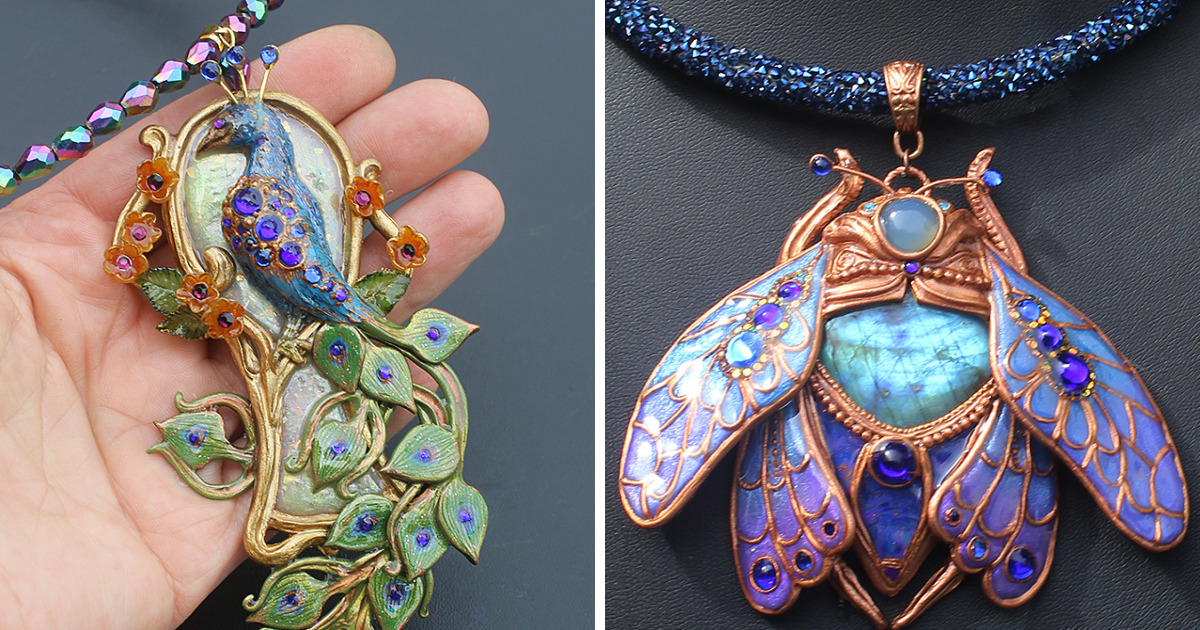
There is something wildly satisfying about turning a small brick of polymer clay into a piece of jewelry that looks like it belongs in a gallery gift shop, an indie fashion editorial, or the treasure box of a very stylish dragon. That is exactly why I keep coming back to this medium. Polymer clay lets me build jewelry that feels artistic, personal, colorful, and gloriously one of a kind. It can be sculpted, sliced, layered, textured, drilled, baked, sanded, and polished into pieces that are both wearable and expressive.
For me, that combination is the magic trick. Jewelry should not just sit politely on the body like a well-behaved lamp. It should say something. It should wink. It should suggest a story. It should make a stranger ask, “Wait, where did you get that?” and make the wearer answer, “Oh, this? It’s handmade.” Polymer clay is perfect for that job because it gives me creative freedom without demanding a full metalsmithing studio, a heroic budget, or the upper-body strength of a blacksmith.
When I use polymer clay to create unique art jewelry, I am not just making accessories. I am building miniature works of wearable art. Some pieces look like painted mosaics. Some resemble carved stone, enamel, or ceramic. Others lean playful and sculptural, with exaggerated petals, abstract shapes, or rich marbled surfaces that make people stare a second longer than they meant to. Honestly, that second stare is the goal.
Why Polymer Clay Works So Well for Art Jewelry
Polymer clay has become a favorite among makers for a simple reason: it is incredibly adaptable. It can be rolled thin for lightweight earrings, shaped into beads for necklaces, pressed into molds for repeatable details, or sculpted freehand for one-off statement pieces. That range matters when your goal is not just to make jewelry, but to make art jewelry.
Art jewelry lives in a sweet spot between adornment and self-expression. It is meant to be worn, but it also carries ideas about color, craft, symbolism, texture, and identity. That is what draws me in. I can make a pair of earrings inspired by stained glass one day, then create a botanical pendant that looks like it wandered out of a sketchbook the next. The medium is flexible enough to support both precision and play, which is basically the dream.
Another reason I love polymer clay is that it invites experimentation. If I want terrazzo-style chips, painterly swirls, faux stone effects, layered cutouts, or dimensional sculpted petals, I can get there without switching to a totally different material system. That freedom keeps the process fresh. It also means my jewelry never feels trapped in one visual lane.
How I Turn a Simple Material Into Wearable Art
I start with color, because color does half the flirting
Before a piece becomes jewelry, it begins as a color mood. Sometimes I want soft and dreamy tones that feel like watercolor. Sometimes I want high-contrast combinations that announce themselves from across the room. Polymer clay is ideal for this stage because it can be mixed and blended in ways that feel almost painterly. I can create custom shades, control how bold or muted a palette feels, and build visual depth long before the piece ever goes into the oven.
That color control is one reason my work leans artistic rather than mass-produced. Factory jewelry often aims for consistency. I am usually chasing character. Tiny shifts in tone, a marbled edge, or a slightly imperfect blend can give a piece the kind of visual life that makes it feel handmade in the best possible way.
Then I add texture, because flat is not always fabulous
Texture changes everything. A smooth oval can be lovely, but a textured oval can feel collected, ancient, or strangely luxurious. I use texture to make polymer clay jewelry feel more dimensional and more memorable. Depending on the design, I might press lace-like patterns into the clay, carve lines into the surface, build raised layers, or create tiny organic irregularities that make the piece look less manufactured and more alive.
This is where art jewelry really begins to emerge. Texture gives the eye something to explore. It invites touch. It turns a pretty object into a tactile experience, and that matters more than people realize. Jewelry sits close to the body, so it should reward close looking.
Finally, I think about movement and wearability
A beautiful piece that is uncomfortable is basically a very small sculpture having an attitude problem. I want my work to look expressive, but I also want it to be wearable. So I pay close attention to scale, weight, balance, and the way a piece moves when someone walks, turns, or tucks their hair behind an ear.
That is one of the biggest joys of polymer clay. It allows me to create bold visual impact without making the wearer feel like they strapped dinner plates to their earlobes. Lightweight material opens the door to larger shapes, layered forms, and playful silhouettes that still feel easy to wear.
My Creative Process, From Idea to Finished Jewelry
Most of my pieces begin with a spark rather than a rigid plan. It could be a butterfly wing, a museum tile, a vintage wallpaper motif, a flower market, an Art Nouveau curve, or the color palette of a stormy sky. I collect those fragments mentally and let them simmer until they start asking to become earrings, pendants, brooches, or charms.
Once I know the mood of the piece, I condition the clay and prepare the colors I want to use. This step sounds boring, but skipping it is like trying to bake cookies with cold butter and bad decisions. Well-conditioned clay is easier to shape, smoother to work with, and less likely to create problems later. From there, I roll, cut, layer, and sculpt until the composition feels balanced.
At this stage, I also think through the jewelry engineering. Will I build connection points directly into the clay? Will I add jump rings later? Do I want the piece to be static and architectural, or do I want it to have a little swing and drama? These decisions affect not just the look of the design, but its personality.
After shaping comes baking. This is the part where polymer clay politely reminds every artist that creativity still has to respect physics. I follow the package instructions for the specific clay line I am using and treat temperature like it matters, because it does. An oven thermometer is one of those unglamorous tools that saves a lot of heartbreak. Underbaked pieces can feel weak or crumbly, while overheated clay can scorch and ruin the finish. Glamour lives in the final result, not in reckless temperature guesses.
After curing, I refine the piece. I smooth rough edges, wet sand when needed, drill or clean openings, and buff surfaces depending on the look I want. This finishing stage is where the jewelry starts to cross the line from crafty to polished. A thoughtful finish can make polymer clay look surprisingly sophisticated, and that transformation never gets old.
What Makes My Polymer Clay Jewelry Unique
Uniqueness is not just about making something that looks different. It is about making something that feels authored. That is the standard I chase. I want each piece to carry evidence of intentional choices: why this color, why this shape, why this surface, why this combination of softness and structure. Even when I create within a collection, I try to leave room for variation so each item feels alive rather than cloned.
One of my favorite things about polymer clay is its ability to imitate other materials while still being itself. I can suggest stone, porcelain, terrazzo, enamel, or painted wood, but I am not trying to trick anyone. I am using illusion as a design language. It adds richness and surprise. Someone sees a piece and thinks, “Is that ceramic?” Then they learn it is polymer clay, and suddenly the conversation gets more interesting.
I also love mixing elegance with play. Art jewelry does not have to be stern to be meaningful. A pair of earrings can be sculptural and funny. A pendant can be romantic and weird. A brooch can feel like a tiny painting with a clasp. Polymer clay gives me permission to keep those moods together instead of forcing them apart.
Design Lessons I Have Learned Along the Way
Less clutter, more intention
When I first started, I had the classic maker problem: I wanted every piece to include every idea I had ever loved. More color, more texture, more layers, more glitter, more everything. The result was not always artful. Sometimes it was just very enthusiastic. Over time, I learned that the strongest pieces usually have one clear idea supported by a few excellent details.
Backs and edges matter
Art jewelry is still jewelry, which means people handle it, wear it, and see it from odd angles in real life. The front cannot be the only part that gets attention. Clean backs, smooth edges, and thoughtfully finished holes or connectors make a piece feel resolved. These details may not be flashy, but they signal quality.
Technique should support emotion
I enjoy trying new polymer clay techniques, but I do not use them just because they exist. I use them when they serve the mood of the piece. Marbling can suggest movement. Speckling can make a design feel earthy. Gloss can create drama. Matte surfaces can feel soft and modern. Technique is most powerful when it reinforces meaning instead of showing off for its own sake.
Common Mistakes I Try to Avoid
The first mistake is rushing the prep. Dust, fingerprints, uneven thickness, and poorly conditioned clay have a sneaky way of becoming permanent roommates. The second is ignoring the mechanics of wear. A lovely shape is not enough if the hole placement is awkward or the piece hangs at a strange angle.
The third mistake is treating finishing as optional. It is not. Sanding, refining, assembling, and checking the final balance are what separate “I made a thing” from “I made a piece of jewelry I would happily sell, gift, or wear.” I say that with love, because I have absolutely made both categories.
Why People Connect With Handmade Art Jewelry
I think people are hungry for objects with personality. In a world full of sameness, handmade jewelry offers texture, authorship, and a little unpredictability. It feels human. When someone buys or wears a piece of polymer clay art jewelry, they are choosing something shaped by hands, not just machines. That story matters.
There is also an emotional pull to wearable art. Jewelry is personal. It travels with the body. It can mark moods, memories, identities, and transitions. A handmade piece becomes part adornment, part conversation, part tiny companion. That emotional closeness is why I take the work seriously, even when the design itself is playful.
500 More Words From My Real Experience Creating Polymer Clay Art Jewelry
My actual day-to-day experience with polymer clay jewelry is a mixture of patience, tiny triumphs, artistic obsession, and the occasional moment of looking at a half-finished earring and whispering, “You had potential.” The medium has taught me to embrace process. Some days everything works. Colors blend beautifully, shapes come out crisp, and the pieces cure exactly as planned. Other days a design that looked brilliant in my head turns into an oddly emotional potato. That contrast is part of the charm.
What keeps me hooked is the sense of discovery. Polymer clay is one of those materials that rewards curiosity. A small change in texture, temperature, layering, or finishing can produce a very different result. Because of that, I am constantly learning. I have learned how much cleaner a design looks when I slow down before baking. I have learned that a subtle texture often feels more sophisticated than a loud one. I have learned that a piece can be technically well made and still need better proportions to truly sing.
I have also learned that inspiration rarely arrives in a straight line. Some of my favorite pieces began as experiments that were never supposed to become finished jewelry. I might be testing a palette inspired by flowers, old tiles, modern art, or antique brooches, and suddenly a shape starts to suggest a pendant. A scrap from one project becomes the focal point of another. A failed component gets cut apart and rebuilt into something much stronger. That flexibility makes the studio feel playful instead of rigid.
Another big part of my experience is realizing how personal jewelry really is. People do not respond to handmade pieces only because they are pretty. They respond because the work feels intimate. Someone may choose a pair of earrings because the colors remind them of a vacation, or a pendant because its shape feels bold in a way they wish to feel that day. When I notice that connection, it changes how I design. I am not just making objects. I am making little carriers of mood and meaning.
Creating polymer clay art jewelry has also sharpened my eye outside the studio. I notice color combinations on walls, in books, in fashion, in nature, even in grocery stores. A pile of citrus can turn into a summer palette. A rainy sidewalk can inspire a marbled gray-and-silver collection. An old museum frame can suggest an entire series of ornate earrings. The material trains you to observe the world as a library of surfaces and shapes.
Perhaps most importantly, this work has shown me that handmade does not have to mean rough, rustic, or limited. Polymer clay can be refined. It can be expressive. It can look contemporary, romantic, sculptural, minimal, or wildly decorative. That range has given me confidence as a maker. I no longer see polymer clay as a beginner material. I see it as a serious artistic tool with a mischievous streak.
And yes, there is still something deeply satisfying about opening the oven and finding that a design survived the heat and came out looking exactly the way I imagined, or even better. It feels a little like alchemy, minus the dramatic cape. That moment never gets old. It reminds me why I keep making these pieces: because wearable art has the power to surprise, delight, and say something personal without speaking at all.
Conclusion
I use polymer clay to create unique art jewelry because it gives me the rare combination every artist wants: freedom and control. I can build color stories, sculpt unusual forms, add texture, experiment with finish, and turn all of it into jewelry that is expressive enough to feel like art and practical enough to wear in real life. That balance is what makes the medium so exciting.
In the end, the best polymer clay jewelry is not just decorative. It is distinctive. It reflects choices, ideas, moods, and craftsmanship. It invites attention without begging for it. It proves that a humble material can become something elegant, bold, playful, and deeply personal. In other words, it proves that art does not always hang on walls. Sometimes it dangles from ears, rests against a collarbone, or brightens an ordinary Tuesday.