Wildfire risk is no longer a seasonal headline that politely waits for summer, behaves itself, and exits before pumpkin spice arrives. Across the American Westand increasingly beyond itwildfire has become a year-round insurance, housing, infrastructure, climate, and community resilience problem. That is why Rep. Scott Peters of California has been pushing a message that sounds almost old-fashioned in Washington: work together, reduce risk before disaster strikes, and stop treating wildfire policy like a partisan campfire argument where everyone brings lighter fluid.
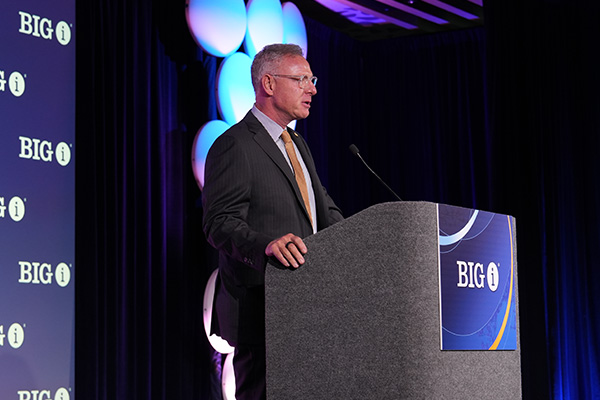
At the 2025 Big “I” Legislative Conference, as reported by IA Magazine, Rep. Peters highlighted bipartisan work on wildfire mitigation, especially H.R. 471, the Fix Our Forests Act of 2025. The bill, led by Rep. Bruce Westerman, Republican of Arkansas, with Peters as a key Democratic partner, aims to improve forest management, reduce catastrophic wildfire risk, and strengthen collaboration among federal, state, tribal, and local partners. In plain English: the idea is to do more prevention, use better data, clear bureaucratic bottlenecks, and protect communities before the sky turns orange.
Why Wildfire Risk Has Become an Insurance Crisis
For independent insurance agents, wildfire is not an abstract policy debate. It shows up as nonrenewal notices, shrinking carrier appetite, higher premiums, confused clients, and homeowners discovering that “coverage availability” can be just as important as “coverage price.” When private markets retreat from high-risk areas, homeowners often turn to last-resort options such as California’s FAIR Plan, which has grown sharply as fires have become more destructive and insurers have pulled back from some wildfire-prone communities.
The financial stakes are enormous. Verisk estimated insured property losses from the Palisades and Eaton fires in Los Angeles at $28 billion to $35 billion, with the Palisades fire alone estimated at $20 billion to $25 billion and the Eaton fire at $8 billion to $10 billion. Those are not spreadsheet numbers; they represent destroyed homes, overwhelmed claims teams, displaced families, and communities forced to rebuild while still smelling smoke in the curtains.
The insurance market reacts to repeated catastrophe losses in predictable ways. Carriers reassess risk models. Reinsurers raise prices. Underwriting becomes stricter. Consumers get fewer choices. Agents get harder conversations. And regulators face the unpleasant task of balancing affordability with solvency. Nobody wins when risk becomes so high that the market can no longer price it comfortably.
Who Is Rep. Scott Peters, and Why Does His Role Matter?
Rep. Scott Peters represents California’s 50th Congressional District, which includes parts of San Diego County. His district understands wildfire exposure, housing pressure, coastal climate risk, and infrastructure vulnerability. That gives his advocacy a practical edge. He is not talking about wildfire from a distant committee room; he is speaking for communities where risk is visible on maps, in premiums, and sometimes in the air.
Peters has also built a reputation as a pragmatic Democrat willing to work across party lines. IA Magazine noted his involvement with bipartisan wildfire legislation and his connection to the Problem Solvers Caucus. In a political environment where even naming a post office can feel like a cage match, bipartisan wildfire mitigation is notable because fire does not check voter registration before jumping a road.
The Fix Our Forests Act: What the Bill Tries to Do
The Fix Our Forests Act of 2025 is designed to address wildfire before it becomes a catastrophe. Congress.gov summarizes H.R. 471 as a bill that establishes requirements for managing federal forests, reducing wildfire threats, expediting reviews for certain forest management projects, and implementing wildfire-related activities. The bill also includes fireshed management, interagency coordination, and tools intended to help agencies assess and predict fire risk.
The House passed H.R. 471 on January 23, 2025, by a bipartisan vote of 279–141. That vote matters because wildfire policy often gets trapped between competing priorities: environmental protection, timber management, public safety, climate adaptation, local control, and federal permitting. A broad House vote does not mean everyone agrees on every detail, but it does suggest that catastrophic wildfire has become too costly to ignore.
Key Policy Themes in the Bill
First, the legislation focuses on forest management and fuels reduction. Supporters argue that overgrown forests, accumulated vegetation, disease, drought, and insect infestations can create dangerous fuel conditions. Strategic thinning, prescribed fire, and restoration projects may reduce the severity of future fires when carefully planned and scientifically guided.
Second, the bill emphasizes faster environmental review for certain projects. That is one of the most debated parts of the proposal. Supporters say delay can leave communities exposed while paperwork moves at the speed of a sleepy turtle. Critics worry that streamlining could weaken environmental safeguards or allow excessive logging under the banner of fire prevention. A balanced approach must avoid both paralysis and recklessness.
Third, the proposal encourages federal, state, tribal, and local collaboration. Wildfire does not respect jurisdictional boundaries. A fire can start on federal land, race toward private homes, threaten tribal resources, damage utility infrastructure, and force county evacuationsall before lunch. Better coordination is not a luxury; it is the operating system of modern wildfire defense.
Fourth, the bill recognizes the importance of critical infrastructure. Powerlines, roads, water systems, communications networks, and evacuation routes can all become failure points during extreme fire events. Hardening infrastructure and managing vegetation around key assets can reduce ignition risk and improve emergency response.
Why Insurers and Independent Agents Care
The insurance industry is built on risk transfer, but wildfire is testing the limits of what can be transferred affordably. When the probability and severity of losses rise together, insurance becomes more expensive. When uncertainty rises too, availability suffers. Independent agents stand in the middle, translating carrier decisions into human conversations. That is not always glamorous work. Sometimes it means explaining to a homeowner why the policy that existed last year is now gone, which is roughly as fun as explaining printer settings to a raccoon.
For agents, mitigation is more than a public policy buzzword. It can help preserve insurability. A home with defensible space, ember-resistant vents, a Class A roof, cleared gutters, and a noncombustible zone near the structure may present a better risk than a home surrounded by dry vegetation and wooden clutter. Mitigation does not guarantee coverage, but it can improve the conversation.
Organizations such as the Insurance Institute for Business & Home Safety have emphasized science-based steps for wildfire resilience. IBHS highlights measures such as flame- and ember-resistant vents, a 0–5 foot noncombustible zone, defensible space, roof maintenance, and upgrades that reduce ignition risk. These details matter because many homes ignite not from a wall of flame, but from embers that travel ahead of the fire and find something combustible to enjoy.
Wildfire Prevention Starts Before the Flames
Federal policy is important, but homeowners and communities also have roles to play. The U.S. Department of the Interior has noted that nearly nine out of ten wildfires are caused by people. That means prevention is not only about forests; it is about behavior. Campfires, equipment sparks, vehicles parked on dry grass, dragging trailer chains, fireworks, and debris burning can all turn a normal day into an incident command briefing.
Community-level planning is equally important. Local governments can strengthen building codes, improve evacuation routes, support fuel breaks, maintain emergency communications, and encourage neighborhood-scale defensible space. The National Fire Protection Association’s Firewise USA program has long promoted the idea that wildfire resilience works best when neighbors act together. One well-prepared home helps. A prepared street helps more. A prepared community is where risk reduction starts to look serious.
The Debate: Forest Management Is Not a Magic Wand
Any honest article about the Fix Our Forests Act should acknowledge the debate. Supporters see the bill as a practical answer to delayed forest restoration and dangerous fuel buildup. Critics argue that some provisions could weaken environmental review, expand logging, or focus too heavily on forests far from where homes actually burn. The strongest wildfire strategy likely needs both landscape management and home-hardening. Choosing only one is like wearing a helmet but no seatbelt, or a seatbelt but no brakes. Technically something is happening, but please do not call it a complete safety plan.
Research and post-fire investigations often point to the home ignition zone as a decisive factor in structure survival. Wind-driven embers can ignite mulch, leaves, wooden fences, decks, vents, and debris. That means policy should not stop at federal land treatments. It should also help homeowners retrofit properties, support local fire-safe councils, improve building standards, and make mitigation financially realistic for middle-income families.
Tariffs, Housing Costs, and the Insurance Connection
IA Magazine also reported that Rep. Peters raised concerns about tariffs and their possible impact on construction materials such as lumber and drywall. That point deserves attention. Insurance rates are influenced not only by disaster frequency but also by the cost to rebuild. If labor, lumber, roofing, drywall, electrical equipment, and concrete become more expensive, claim severity increases. Higher reconstruction costs can push premiums upward even when the number of claims stays flat.
This is especially important in California and other high-cost housing markets. A wildfire does not destroy a home at yesterday’s building price. It destroys a home that must be rebuilt in today’s market, under today’s codes, with today’s labor shortages, supply constraints, and permitting realities. When reconstruction inflation rises, underinsurance becomes a hidden danger. Homeowners may think they are protected until the estimate arrives wearing steel-toed boots.
NOAA, Data, and Risk Modeling
Peters also emphasized the importance of federal data resources, including NOAA’s role in weather and climate information. Insurers, reinsurers, public agencies, and local planners rely on credible data to understand risk. Wildfire modeling requires information about weather, drought, vegetation, wind, topography, development patterns, and historical losses. Without strong data, risk pricing becomes foggier, and fog is not a business model.
Better data can support smarter underwriting, better land-use planning, targeted mitigation grants, and more accurate public communication. It can also help identify where investments will have the greatest effect. A dollar spent clearing the wrong hillside is just landscaping with a press release. A dollar spent on the right fuel break, home-hardening program, or evacuation improvement can save lives and reduce losses.
What Bipartisan Wildfire Policy Should Include
A durable wildfire strategy should combine several tools. It should support active forest management where science shows it reduces risk. It should protect environmental values and avoid treating every tree as guilty until proven innocent. It should help homeowners create defensible space and upgrade vulnerable building features. It should invest in firefighters, local planning, tribal stewardship, prescribed fire capacity, and post-fire recovery. It should also recognize that insurance availability is now part of the resilience conversation.
For independent agents, the message is clear: mitigation is becoming part of the insurance value proposition. Agents who understand wildfire risk can help clients document improvements, review replacement cost limits, consider extended replacement cost coverage, evaluate ordinance or law coverage, and understand exclusions. They can also connect clients with local mitigation resources. The best agents are no longer just policy translators; they are risk coaches with better coffee.
Experience-Based Insights: What Wildfire Risk Looks Like on the Ground
In real communities, wildfire risk rarely feels like a congressional phrase. It feels like a homeowner standing in the driveway wondering whether the shrubs planted twenty years ago are now a fuse. It feels like an agent receiving a carrier notice and knowing five clients will call before lunch. It feels like a contractor explaining that rebuilding costs have changed, a firefighter pointing at an overgrown canyon, or a family packing documents during a red flag warning.
One practical experience from wildfire-prone communities is that people often underestimate embers. Many homeowners imagine wildfire as a giant flame front marching toward the house like a villain in a disaster movie. In reality, embers can travel ahead of the main fire and ignite small fuels near the home. A pile of leaves in a gutter, dry mulch against siding, a wooden fence connected directly to the house, or a vent without proper screening can become the weak link. That is why the 0–5 foot zone around a structure is so important. It is not glamorous. Nobody brags at a barbecue about moving mulch. But during a wildfire, boring maintenance can become heroic.
Another lesson is that mitigation works best when it is visible and documented. Homeowners should take photos of cleared defensible space, roof upgrades, vent replacements, tree trimming, and noncombustible landscaping. They should keep receipts and inspection records. When insurance markets tighten, documentation can help agents tell a better risk story. It may not guarantee a preferred policy, but it gives underwriters something concrete to evaluate. In insurance, “trust me, bro” is not a file format.
Community action also matters. A single hardened home surrounded by unmanaged neighboring lots remains vulnerable. Fire-safe councils, homeowners associations, neighborhood clean-up days, and local chipping programs can turn individual effort into collective protection. Residents are more likely to act when the work is practical: clear this zone, trim that branch, move that woodpile, screen that vent, update that evacuation plan. Wildfire preparedness becomes less intimidating when it is broken into weekend-sized chores.
Agents have a unique role in these conversations because they are trusted local advisors. They hear the frustration when premiums rise. They see the confusion when coverage changes. They also know which clients have not reviewed replacement cost values in years. A strong agency can host a wildfire preparedness webinar, share mitigation checklists, partner with local fire officials, and remind clients that resilience is not only a government responsibility. It is also a household habit.
Policymakers, meanwhile, should remember that mitigation must be affordable. Telling homeowners to retrofit roofs, remove vegetation, upgrade vents, and replace decks is easy from a podium. Paying for it is another matter. Grants, tax incentives, insurance discounts, low-interest loans, and local technical assistance can make the difference between good advice and actual change. The best wildfire policy is not the one that sounds toughest in a hearing. It is the one that gets work done before the wind shifts.
Rep. Peters’ bipartisan approach is important because wildfire risk is too complex for slogan-based governing. Forest health, climate conditions, housing development, insurance markets, construction costs, local preparedness, and federal data all overlap. The Fix Our Forests Act is not the entire answer, and no serious person should pretend it is. But it is part of a broader recognition that waiting for disasters and then arguing about blame is a very expensive hobby. The smarter path is prevention, resilience, and cooperationpreferably before the smoke column is visible from the freeway.
Conclusion
Rep. Scott Peters’ work on bipartisan wildfire solutions reflects a larger shift in how the United States must think about disaster risk. Wildfire is no longer just a land management issue. It is an insurance issue, a housing issue, a climate issue, an infrastructure issue, and a household safety issue. The Fix Our Forests Act of 2025 shows that lawmakers from different parties can still find common ground when the threat is urgent enough. The challenge now is to build a complete resilience strategy: healthier forests, stronger homes, better data, fair insurance markets, and communities prepared long before evacuation alerts arrive.
For independent agents, homeowners, and policymakers, the lesson is refreshingly practical: reduce risk where you can, document what you do, support smarter public policy, and stop waiting for catastrophe to be the project manager. Wildfire may be a force of nature, but disaster losses are shaped by human decisions. The more those decisions are made before the flames, the better chance communities have to survive, recover, and remain insurable.