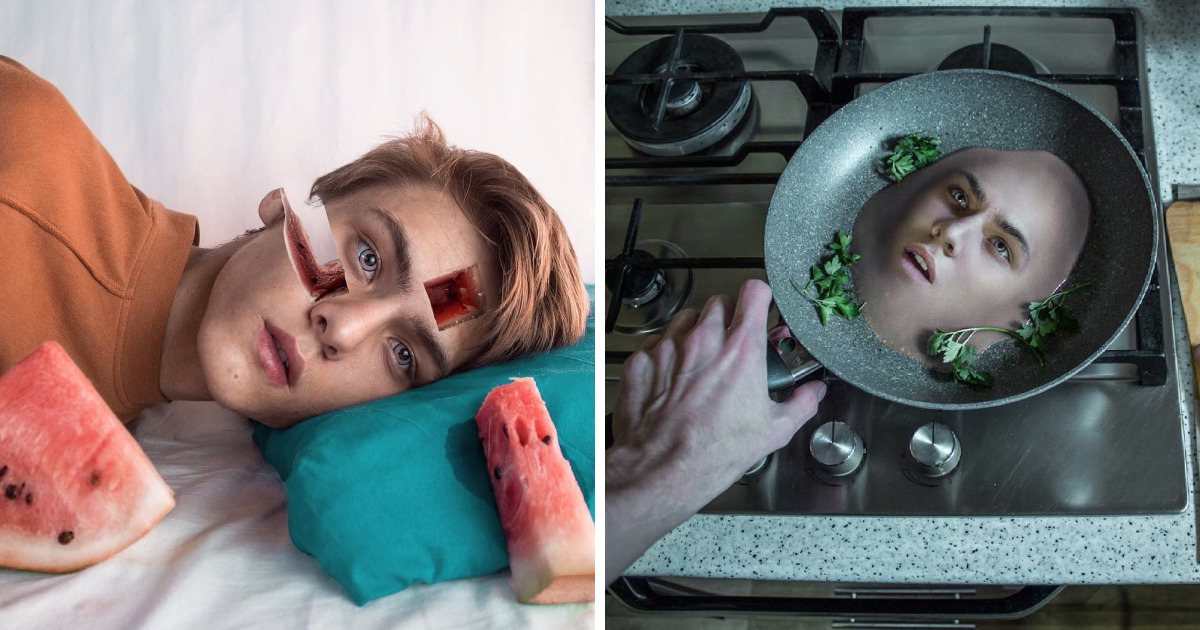
Some artists paint sunsets. Some photograph coffee cups. And then there is Andrey Tyurin, the young Russian digital artist whose dark surrealist art looks like it crawled out of a dream, checked the weather, and decided to stay in your bedroom at 3 a.m.
At just 18 years old, Tyurin gained attention online for combining photography and Photoshop into haunting, beautifully disturbing images. His work does not simply ask viewers to look. It dares them to keep looking. Faces stretch into impossible forms, ordinary bodies become strange symbols, and familiar scenes twist into visual riddles that feel both elegant and deeply unsettling.
That is the secret power of dark surrealist art: it does not need cheap jump scares. It works more like a whisper from the corner of the room. The images are polished, stylish, and often oddly graceful, but something inside them is always wrong in the most fascinating way possible.
Who Is Andrey Tyurin?
Andrey Tyurin is a Russian artist known online for surreal digital compositions that blend photography, fantasy, and psychological horror. His rise became widely discussed after his images appeared on viral art and culture platforms, where viewers quickly noticed the maturity of his visual style despite his young age.
What makes his work stand out is not only the darkness. Plenty of people can make an image gloomy by lowering the brightness and adding fog. Congratulations, you have invented “basement.” Tyurin’s images feel more deliberate. He uses digital editing to reshape reality rather than simply decorate it. A portrait becomes a puzzle. A body becomes a metaphor. A face becomes a doorway to a place where the rules of biology have politely resigned.
His art sits at the intersection of photography and photo manipulation. Instead of painting every element from scratch, he appears to use photographic foundations and then transforms them through compositing, masking, retouching, and surreal digital construction. The result is a style that feels realistic enough to disturb us and impossible enough to fascinate us.
What Makes His Dark Surrealist Art So Disturbing?
Tyurin’s work taps into one of the oldest tricks in surrealism: take something familiar and make it slightly, elegantly wrong. Human figures are powerful subjects because viewers instinctively recognize bodies and faces. When an artist changes those forms, even subtly, the brain pays attention. When the change is extreme, the brain starts packing an emergency bag.
Many of his images use the human body as the main stage. Instead of relying on monsters from folklore, he turns ordinary people into strange symbolic beings. The horror comes from recognition. We know what a person should look like. We know where eyes, mouths, hands, and shadows belong. When those expectations are broken, the image becomes uncomfortable in a way that is difficult to ignore.
This is why his art can feel nightmarish without being messy or violent. The fear is not always about danger. Sometimes it is about uncertainty. A viewer may not know whether the figure is suffering, transforming, hiding, or becoming something else entirely. That ambiguity is where the nightmare lives.
The Surrealist Tradition Behind the Nightmares
Surrealism has always been interested in dreams, the unconscious mind, and impossible combinations. The movement became famous in the early 20th century through artists and writers who wanted to break free from strict rational thought. Instead of making art that explained the world clearly, surrealists explored what happens when logic goes out for lunch and never comes back.
Classic surrealism often used strange juxtapositions: melting clocks, floating objects, hybrid creatures, empty rooms, masked figures, and landscapes that looked real but behaved like dreams. Tyurin’s digital work continues that tradition through a modern lens. His tools are different from the oil paint and collage methods of earlier surrealists, but the emotional engine is similar. He creates images that feel like the unconscious mind has opened a design studio.
The difference is speed and reach. A young artist today can build an image digitally, share it online, and reach a global audience without waiting for a gallery invitation printed on expensive paper. This is one reason artists like Tyurin can become visible so early. The internet rewards images that stop the scroll, and dark surrealism is very good at grabbing people by the eyeballs.
Photography Meets Photoshop: The Craft Behind the Creepiness
Dark surrealist digital art may look effortless when finished, but convincing photo manipulation requires technical control. If a shadow falls in the wrong direction, the illusion collapses. If skin texture is over-smoothed, the image looks artificial. If the lighting does not match, the viewer may not know why the image feels fake, but they will feel it.
Tyurin’s strongest pieces work because they maintain enough realism to keep the viewer grounded. The lighting, anatomy, textures, and photographic details often remain believable even when the concept is impossible. That contrast is essential. A floating head in a cartoon is silly. A floating head rendered with photographic realism is suddenly a meeting you would like to reschedule.
Tools like Photoshop allow artists to combine multiple images, use layer masks, blend textures, reshape forms, and create seamless composites. But software alone does not create art. Photoshop is a tool, not a personality. The real artistry lies in knowing what to distort, what to preserve, and when to stop before an image becomes visual soup.
Why Young Digital Artists Are Changing Surrealism
The rise of young digital artists has changed how surrealism looks and how audiences discover it. In the past, many artists needed formal exhibitions, magazine coverage, or institutional support to reach viewers. Today, platforms such as Instagram, Behance, TikTok, and online art communities allow emerging artists to build an audience directly.
This shift has helped surrealism evolve into a highly shareable visual language. Dark surrealist art works especially well online because it creates instant emotional impact. Viewers do not need a museum label to understand that something strange is happening. The image hits first; interpretation comes later.
Young artists also tend to remix influences freely. A single digital artwork might contain traces of horror cinema, fashion photography, classical portraiture, internet memes, video game aesthetics, and old surrealist ideas. Tyurin’s work feels connected to that culture of remixing. It is polished enough for fine art conversation, but weird enough to live comfortably on the internet, where people say things like, “This is beautiful,” and “I will never sleep again,” often under the same post.
The Beauty of Being Uncomfortable
One of the most interesting things about Tyurin’s art is that it is not ugly in the traditional sense. Many pieces are carefully composed, visually balanced, and even graceful. The nightmare quality comes from the subject matter and transformation, not from a lack of beauty.
This combination makes the work more memorable. Pure horror can push viewers away. Pure beauty can become decorative. But beauty mixed with unease creates tension. It makes the viewer wonder why something so disturbing is also so visually satisfying.
That tension is central to dark surrealism. The best images do not simply say, “Look at this scary thing.” They say, “Look at this beautiful thing that may also be a warning.” That is a much more interesting conversation, even if the conversation happens while your lamp is on and your closet door is definitely, absolutely closed.
Common Themes in Tyurin’s Surreal Digital Art
Transformation
Many surreal images focus on bodies or identities in transition. A figure may appear to be changing into something else, dissolving, splitting, or merging with an object. This theme works because transformation is both fascinating and frightening. It suggests that identity is not fixed, which is a thrilling idea until the mirror starts getting creative.
Isolation
Dark surrealist portraits often feature solitary figures. The emptiness around them adds emotional weight. A single person in a strange environment can feel more haunting than a crowded scene because there is nowhere for the eye to escape.
Distorted Anatomy
Altered faces, stretched limbs, missing features, and impossible body structures create immediate psychological tension. These details trigger discomfort because they disrupt our expectations of human form.
Dream Logic
In dreams, things make sense until we wake up and realize they absolutely did not. Tyurin’s art often follows this kind of dream logic. The image may feel emotionally clear even when it is visually impossible.
Why This Art Spreads So Quickly Online
Dark surrealist art is made for the age of scrolling. It has instant impact, strong contrast, and emotional mystery. A viewer can understand the mood in seconds, but the meaning takes longer to unpack. That makes people pause, share, comment, and return.
It also invites interpretation. One person may see anxiety. Another may see identity crisis. Someone else may see a very accurate portrait of Monday morning. Because the images are symbolic rather than literal, viewers can project their own fears, memories, and jokes onto them.
This flexibility is valuable for SEO and social engagement. Articles about artists like Tyurin attract readers interested in surreal art, digital art, Photoshop manipulation, Russian artists, horror aesthetics, contemporary photography, and unusual internet discoveries. The topic naturally connects multiple search interests without needing to stuff keywords like a suitcase before a suspiciously cheap flight.
How His Work Compares to Classic Surrealism
Tyurin’s work differs from classic surrealism in medium, but not in spirit. Earlier surrealists explored dreams through painting, collage, writing, sculpture, and film. Digital artists now use cameras, editing software, tablets, and online platforms to pursue similar questions: What hides beneath ordinary reality? What does fear look like? What happens when the human body becomes a symbol instead of a fixed object?
Classic surrealism often had philosophical ambitions. It was not merely weird for weirdness’s sake. It challenged the dominance of reason and explored unconscious desire, fear, and imagination. Tyurin’s art may not arrive with a manifesto tucked under its arm, but it still participates in that tradition by making viewers question what they are seeing and why it affects them.
The modern twist is that digital surrealism often feels more immediate. Because it uses photographic realism, it can trick the eye faster. The viewer sees something that looks like it came from the real world, then realizes the real world has been edited into a bad dream with excellent lighting.
What Emerging Artists Can Learn From Andrey Tyurin
Tyurin’s rise offers useful lessons for young digital artists. First, a strong concept matters. Technical skill is important, but technique without imagination is just a very shiny toolbox. His images stand out because they have clear moods and memorable visual ideas.
Second, consistency helps. Artists who build recognizable worlds are easier to remember. Tyurin’s dark, surreal, photographic style gives viewers a reason to associate his name with a specific feeling.
Third, emotional impact wins attention. Online audiences see thousands of images. The ones they remember usually make them feel something quickly: wonder, fear, curiosity, humor, discomfort, or the sudden urge to check whether the hallway light is still working.
Finally, digital tools should serve the idea. The best photo manipulation does not scream, “Look how many effects I used.” It makes the impossible feel intentional.
Experiences Related to Dark Surrealist Art and Why It Stays With Us
Looking at dark surrealist art is a strange experience because it feels both private and public. You are staring at an image someone else created, but the reaction often feels like it belongs entirely to you. One viewer might laugh nervously. Another might feel a chill. Another might stare silently for a full minute, which on the internet is basically a long-term relationship.
The most memorable experience comes from the way this kind of art follows you after you stop looking. A normal picture ends when you close the tab. A strong surreal image keeps rearranging itself in your mind. You remember the impossible face, the strange posture, the shadow that looked too intelligent, or the body that seemed caught between human and object. It becomes mental wallpaper, which is unfortunate if you were hoping for a peaceful evening.
Dark surrealist art also changes how you notice ordinary things. After seeing enough of it, a coat hanging on a chair becomes suspicious. A reflection in a dark window becomes dramatic. A hallway at night suddenly has the emotional range of an independent horror film. That is part of the fun. The art trains the imagination to see hidden stories in everyday objects.
For many viewers, the appeal is not simply fear. It is recognition. The distorted bodies and impossible rooms can feel like visual metaphors for stress, loneliness, anxiety, creativity, or growing up. Teenagers and young adults especially may connect with this kind of imagery because it captures the feeling of being in transition. You are yourself, but not finished. You are changing, but not always gracefully. Sometimes your brain feels like a browser with 47 tabs open, three of them playing music, and none of them labeled.
That is why an 18-year-old artist creating nightmare-like surrealism feels so compelling. Youth is often marketed as bright, clean, and optimistic, but real youth is more complicated. It contains uncertainty, pressure, imagination, fear, and enormous creative energy. Tyurin’s art seems to understand that the inner world of a young person can be just as intense as any haunted castle.
There is also a technical experience for people who make art themselves. When artists look at Tyurin’s images, they may feel inspired and slightly attacked. Inspired because the work proves how powerful photography and editing can be. Attacked because someone so young already developed such a distinct visual mood. This is the classic creative reaction: “Amazing work,” followed immediately by “I should practice more,” followed by a snack.
For casual viewers, the experience is simpler but no less powerful. The images are strange enough to entertain, polished enough to admire, and eerie enough to remember. They give the pleasure of being scared safely. Nobody is in danger. The monster is inside the frame. The nightmare is beautifully lit. You can close the image whenever you want, although your imagination may file an appeal.
In that sense, Tyurin’s dark surrealist art does what memorable art has always done. It interrupts routine. It makes the familiar unfamiliar. It invites us to look at fear not as something to avoid, but as something that can be shaped, styled, and turned into visual poetry. Creepy visual poetry, yesbut poetry nonetheless.
Conclusion
Andrey Tyurin’s dark surrealist art proves that nightmares do not need to be loud to be powerful. At only 18, the Russian digital artist captured attention by blending photography and Photoshop into haunting images that feel elegant, strange, and psychologically sharp.
His work belongs to a larger tradition of surrealism while also feeling unmistakably modern. It uses digital tools, internet culture, and photographic realism to explore old questions about dreams, identity, fear, and transformation. The result is art that can disturb, impress, amuse, and inspiresometimes all before breakfast.
Whether you see his images as horror, fantasy, digital photography, or surreal visual storytelling, one thing is clear: Tyurin understands how to make viewers pause. And in an online world where attention disappears faster than a phone charger in a shared apartment, that is a rare talent.
Note: This article is written as an original editorial feature based on publicly available information about Andrey Tyurin, dark surrealism, digital photo manipulation, and the broader history of surrealist art.