Note: This publish-ready article is written in standard American English and synthesized from reputable U.S. gardening, university extension, florist, and home-care guidance.
Valentine’s Day roses have a dramatic entrance. They arrive wrapped in tissue, tied with ribbon, and surrounded by the kind of romantic pressure usually reserved for movie proposals and dessert menus. Then, three days later, one rose starts leaning like it just heard bad news. Another drops a petal. The water turns cloudy. Suddenly, your beautiful bouquet looks less like “true love” and more like “forgotten science project.”
The good news? Roses are not doomed to a short, tragic vase life. With the right care, your Valentine’s Day roses can stay fresh, perky, and photo-worthy for several extra days. The secret is not magic, and it is definitely not dumping random pantry items into the vase like you are making salad dressing for flowers. The real formula is simple: clean water, clean tools, proper trimming, flower food, cool placement, and a tiny bit of daily attention.
This guide covers seven practical ways to make Valentine’s Day roses last longer, plus extra real-life experience tips at the end for anyone who has ever received roses, panicked, and whispered, “Please don’t die before the weekend.”
Why Valentine’s Day Roses Wilt So Quickly
Cut roses are living flowers without roots. That means they can no longer pull water and nutrients from the soil. Once they are cut, they depend entirely on the vase environment you create. If the stems cannot drink properly, the water is dirty, or the bouquet sits near heat, the roses age faster.
Valentine’s Day roses also have a busy journey before they reach your table. They may be harvested, chilled, packed, shipped, unpacked, arranged, delivered, and finally placed in your home. By the time you receive them, they may already be a few days into their post-harvest life. That does not mean they are bad roses. It simply means they need a proper reset as soon as possible.
1. Start With a Spotless Vase
The first way to make Valentine’s Day roses last longer is almost embarrassingly unromantic: wash the vase. A clean vase is the difference between a luxury spa day for your roses and a swamp vacation they did not book.
Even a vase that looks clean can contain bacteria from previous arrangements. Bacteria multiply in water and can clog rose stems, making it harder for the flowers to absorb moisture. When roses cannot drink, their heads droop, petals soften, and the bouquet fades early.
How to clean the vase properly
Wash the vase with warm water and dish soap. Scrub the inside, especially near the bottom where old residue likes to hide. Rinse thoroughly so no soap remains. If the vase has a narrow neck, use a bottle brush. Do not simply swirl water around and call it a day. Roses are fancy, but they are not fooled by lazy housekeeping.
Before adding flowers, make sure the vase is large enough. Roses need room. If the stems are jammed tightly into a narrow vase, airflow is reduced and leaves may sit below the waterline. A taller vase also helps support long-stem roses, preventing them from flopping over like they lost an argument with gravity.
2. Trim the Stems at a 45-Degree Angle
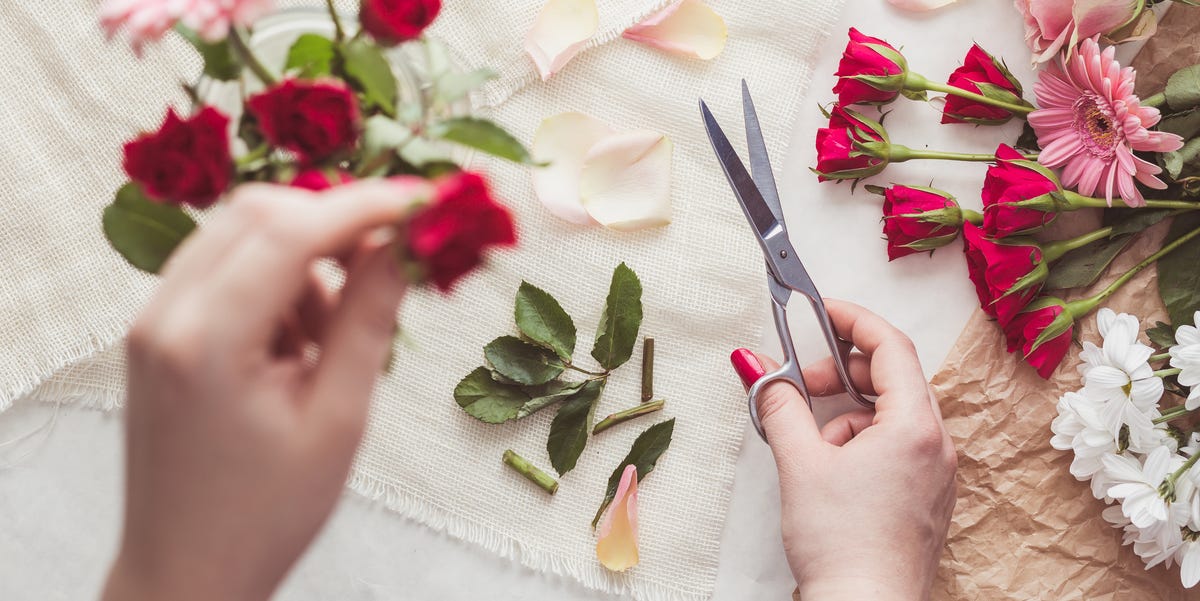
Freshly cutting rose stems is one of the most important steps in rose bouquet care. When stems are exposed to air, the cut ends can seal or dry out, making water uptake more difficult. A fresh cut opens the stem again and helps the flower drink.
Cut each stem at about a 45-degree angle using sharp, clean scissors, floral shears, or a knife. The angled cut increases the surface area for water absorption and helps keep the stem from sitting flat against the bottom of the vase. A flat stem pressed against glass can block water intake, which is basically the floral version of trying to drink a smoothie through a bent straw.
Should you cut roses under water?
If possible, trim the stems under water or immediately place them into water after cutting. This helps reduce air entering the stem. You do not need a laboratory setup. A clean sink, bowl, or pitcher can work. The key is speed: cut, then hydrate.
Remove about one inch from the bottom of each stem when the bouquet first arrives. After that, re-trim the stems every two to three days. This small habit can make a major difference, especially if your roses begin to droop.
3. Remove Leaves Below the Waterline
Leaves are lovely above the vase. Below the waterline, they are trouble. Any leaves sitting in vase water will decay, encourage bacterial growth, and make the water cloudy. That cloudy water is not “natural charm.” It is your bouquet sending a tiny distress signal.
Before arranging your Valentine’s Day roses, strip off any leaves that would fall below the water level. Be gentle. Do not rip downward in a way that tears the stem. Use clean scissors or pinch carefully near the base of the leaf.
What about guard petals?
Some roses arrive with outer petals that look slightly bruised, wrinkled, or darker than the inner petals. These are often called guard petals. They protect the bloom during shipping and handling. You can carefully remove a few unattractive outer petals if they bother you, but do not peel aggressively. Removing too many petals can shorten the visual fullness of the rose.
Think of guard petals like the packaging on a fancy phone screen. Not glamorous, but useful. Once the bouquet is safely displayed, a little cleanup can make the roses look fresher.
4. Use Flower Food the Right Way
Most Valentine’s Day bouquets come with a small packet of flower food. Do not toss it into a drawer with old soy sauce packets and mystery batteries. Use it. Commercial flower food is designed to help cut flowers last longer by supporting hydration, feeding the blooms, and slowing bacterial growth.
Flower food usually contains three helpful components: a sugar source for energy, an acidifier to improve water movement, and an antimicrobial ingredient to keep bacteria under control. The balance matters. That is why commercial packets are more reliable than random DIY vase experiments.
Follow the packet directions
More flower food is not better. Too much can harm the roses or create an unhealthy vase environment. Mix the packet with the amount of water recommended on the label. If the packet says one quart, use one quart. If you only fill a tiny vase and dump in the whole packet, your roses may not thank you.
If you do not have flower food, clean water is still better than a wild cocktail of sugar, soda, aspirin, pennies, vodka, and wishful thinking. Some homemade mixtures can work when measured carefully, but they can also feed bacteria if the ratio is wrong. For most people, the safest choice is commercial flower food or fresh water changed regularly.
5. Change the Water Every Two Days
Fresh water is the easiest maintenance habit for long-lasting roses. Over time, vase water collects bacteria, plant debris, and residue from stems. Even with flower food, the water should not be left alone for a week while everyone hopes for the best.
Every two days, remove the roses, rinse the vase, refill it with fresh water, and add new flower food if you have it. While the flowers are out of the vase, re-cut the stems slightly at an angle. This gives the roses a clean drinking surface again.
How much water do roses need?
Roses are thirsty flowers. Fill the vase high enough so the stems have plenty of water, but keep leaves out of it. For many rose arrangements, filling the vase about two-thirds to three-quarters full works well. Check the level daily because roses can drink more than you expect, especially in a warm room.
If the water smells bad or looks cloudy before the two-day mark, change it sooner. Your nose is a surprisingly useful flower-care tool. If the vase smells like an old pond wearing perfume, it is time for fresh water.
6. Keep Roses Cool and Away From Heat
Roses last longer in a cool environment. Heat speeds up water loss and aging. Direct sunlight, heating vents, fireplaces, radiators, warm windowsills, and kitchen appliances can all shorten vase life.
Place your Valentine’s Day roses in a cool spot with indirect light. A dining table, bedroom dresser, or shaded entryway often works better than a sunny windowsill. The bouquet may look gorgeous in a beam of sunlight for an Instagram photo, but after the photo, move it somewhere gentler. Roses enjoy admiration. They do not enjoy being roasted.
Can you refrigerate roses overnight?
If you have space, you can place roses in the refrigerator overnight to slow aging. This is especially helpful before an event or dinner. Keep them away from fruits and vegetables, and make sure the bouquet is not crushed by leftovers. Romantic roses do not pair well with a container of garlic pasta sitting on their petals.
Do not freeze them, and do not place them in an extremely cold garage if temperatures drop too low. Cool is good. Frozen is funeral.
7. Keep Roses Away From Ripening Fruit
This tip surprises many people: do not place your roses beside a fruit bowl. Ripening fruits such as apples, bananas, pears, and avocados release ethylene gas, a natural plant hormone that can speed up aging in flowers. Your roses may look elegant next to a bowl of bananas, but the bananas are secretly bad roommates.
For longer-lasting roses, keep the bouquet away from fruit, cigarette smoke, strong drafts, and high-traffic spots where stems may be bumped. Roses also dislike being placed near ceiling fans or air conditioners blowing directly on them, because moving air can dry petals faster.
Best places to display Valentine’s Day roses
Choose a stable, cool, shaded area where the bouquet can be enjoyed without stress. A coffee table away from direct sun, a nightstand not touching a heat vent, or a console table in a cool hallway can all work beautifully. The goal is simple: let the roses be seen, but not stressed.
Quick Rose Rescue: What to Do If Roses Start Drooping
If your Valentine’s Day roses begin to droop, do not panic. Drooping often means the stems are struggling to take up water. Remove the roses from the vase, clean the vase, refill it with fresh water and flower food, then re-cut the stems at an angle. Remove any damaged leaves or petals, and place the bouquet in a cool room for a few hours.
Some roses perk up after this refresh. Others may be too far along, but it is still worth trying. At minimum, remove any flower that is clearly fading so it does not affect the rest of the bouquet. One tired rose should not be allowed to bring down the whole team.
Common Mistakes That Shorten the Life of Valentine’s Day Roses
Many people accidentally shorten the life of their roses with good intentions. The biggest mistake is leaving the bouquet wrapped for too long. Roses need water quickly, especially if they arrive in a box or paper wrap. Another common mistake is placing the arrangement in a decorative vase without washing it first.
Other problems include using dull scissors that crush stems, forgetting to remove submerged leaves, adding too much flower food, placing roses in direct sun, and never changing the water. The roses may still look beautiful on day one, but poor care catches up fast.
Also, avoid relying too heavily on viral hacks. A penny in the vase, a splash of soda, aspirin tablets, or sugar water may sound clever, but results vary. The basics work better: clean vase, fresh cut, clean water, correct flower food, and cool placement.
Extra Experience: Real-Life Lessons From Keeping Valentine’s Day Roses Fresh
Here is the honest experience most flower-care guides do not mention: the first 20 minutes matter more than people think. When roses arrive, everyone wants to admire them, take photos, read the card, text a friend, and maybe dramatically place them in the center of the room. That is understandable. But after the romantic moment, the bouquet needs water quickly. The best habit is to enjoy the surprise, then switch into “rose rescue mode.”
One practical experience is to prepare the vase before trimming the stems. Fill it with fresh water and properly mixed flower food first. Then trim each stem and place it directly into the vase. This avoids the awkward situation where freshly cut stems sit on the counter drying out while you search for a vase that somehow vanished since last Valentine’s Day.
Another lesson: not every rose in the bouquet ages at the same speed. Some blooms open beautifully and last for days. Others fade faster because they were more mature when cut or experienced more stress during transport. Instead of waiting for the entire arrangement to decline, remove weak stems early. The bouquet will instantly look cleaner, and the remaining roses get more space.
It also helps to rotate the vase every day. Roses tend to open toward light, and rotating the arrangement keeps the bouquet looking balanced. This is especially useful if the roses are displayed against a wall or near a window. A small turn can prevent one side from looking like the “good side” and the other like the behind-the-scenes footage.
For special dinners, photos, or weekend plans, overnight cooling can make a noticeable difference. Put the bouquet in a cool room or refrigerator for several hours, then bring it out before guests arrive. The roses often look firmer and fresher. Just remember to keep them away from fruit. A refrigerator full of apples and bananas is not a flower spa; it is a tiny ethylene gas party.
Another experience-based tip is to use the right vase shape. Long-stem roses need support. If the vase is too short, the blooms may lean outward and stress the stems. If the opening is too wide, the roses spread too much and lose that lush, gathered look. A medium-to-tall vase with a moderately narrow opening usually works best for a dozen roses.
Finally, do not wait until the water looks disgusting to change it. By the time water is cloudy, bacteria have already been busy. A two-day schedule is easy to remember: refresh the water, rinse the vase, re-cut the stems, and remove anything wilted. It takes less time than choosing a Valentine’s Day caption, and the payoff is much better.
Conclusion
Making Valentine’s Day roses last longer is not about complicated tricks. It is about giving cut roses the clean, cool, hydrated environment they need. Start with a spotless vase, trim stems at a 45-degree angle, remove leaves below the waterline, use flower food correctly, change the water regularly, keep the bouquet away from heat, and avoid ripening fruit.
With these seven simple habits, your roses can stay beautiful well beyond the first romantic reveal. They may not last forever, but they can last long enough to brighten your home, decorate your dinner table, and remind you that love is wonderfuland also occasionally requires dish soap, sharp scissors, and fresh water.