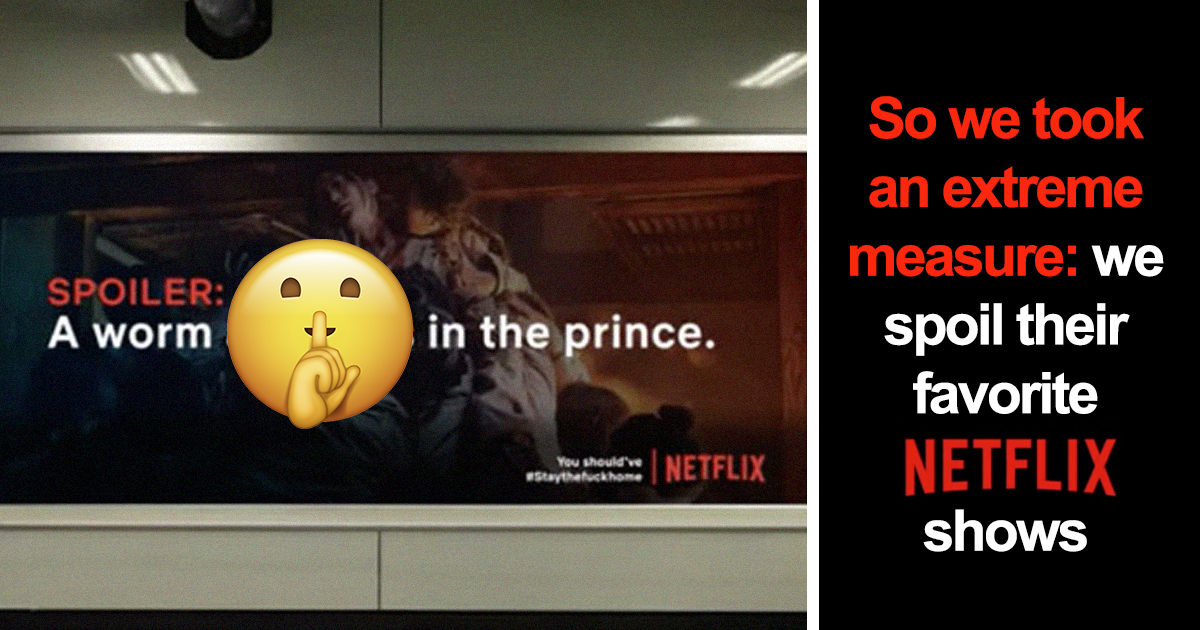
Imagine stepping outside for “just a quick walk,” only to be punished by a giant billboard revealing a twist from your favorite Netflix show. Not a parking ticket. Not a lecture from your neighbor. A spoiler. Brutal? Yes. Effective? Weirdly, maybe.
That was the deliciously evil idea behind The Spoiler Billboard, a viral student advertising concept created during the early days of the COVID-19 pandemic. The premise was simple: if public health warnings were not enough to keep people indoors, maybe the fear of having Stranger Things, Love Is Blind, Narcos, Kingdom, or Money Heist spoiled would do the job.
The campaign looked so polished that many people believed Netflix had actually launched it. In reality, it was a spec campaign created by Miami Ad School Europe students Seine Kongruangkit and Matithorn Prachuabmoh Chaimoungkalo. Still, the concept spread fast because it touched a nerve: people may debate rules, ignore posters, and pretend they “just needed fresh air,” but spoil a finale and suddenly everyone becomes a law-abiding indoor citizen.
What Were the Netflix Spoiler Billboards?
The Netflix spoiler billboards were mock outdoor ads designed to discourage unnecessary trips outside during lockdown. The ads imagined public spaces filled with huge warnings that revealed major plot points from popular Netflix shows. Each billboard carried the same basic message: if you leave home for no good reason, your entertainment peace is officially in danger.
The idea blended three powerful ingredients: pandemic anxiety, binge-watching culture, and the internet’s almost religious hatred of spoilers. Instead of saying, “Please practice social distancing,” the campaign essentially said, “Stay home, or we will ruin your queue.” It was public health messaging wearing a villain cape.
The campaign was never an official Netflix advertising campaign. It did not run on real billboards as a paid brand activation. The images were digital mockups, but they were convincing enough to fool many social media users and even some casual readers. That confusion became part of the campaign’s fame. If an idea feels so true to a brand that people assume it is real, the creative team has probably done something right.
The 5 Shows Used in the Spoiler Billboard Concept
The viral concept centered on five Netflix titles that were popular, conversation-worthy, and dangerously spoilable. These shows worked because they had passionate audiences who cared deeply about twists, deaths, couples, betrayals, and dramatic endings. In other words, perfect emotional blackmail material.
1. Stranger Things
Stranger Things was one of the strongest choices for the campaign because its fan base is massive and emotionally invested. A billboard hinting at a major character’s fate could stop a fan in their tracks faster than a Demogorgon in a hallway. The show’s mystery-box storytelling makes spoilers especially painful because half the fun is wondering who survives, who returns, and what strange new nightmare is crawling out of the Upside Down.
2. Love Is Blind
Love Is Blind brought a totally different type of spoiler threat. Instead of monsters, drugs, or royal zombies, the danger here was romance. Who says “I do”? Who runs? Who makes viewers scream at the screen while eating snacks in judgmental silence? The billboard concept used the show’s wedding outcomes as a weapon, proving that reality TV spoilers can be just as devastating as scripted drama twists.
3. Narcos
Narcos was another natural fit because the series is built on power, betrayal, violence, and historical tension. Even though some viewers may know the broad real-world history behind the story, the show’s dramatic pacing still makes specific outcomes feel suspenseful. A billboard revealing a character’s fate would be like someone leaning over during episode one and whispering the ending. Extremely rude. Possibly unforgivable.
4. Kingdom
Kingdom, the Korean period zombie thriller, added international flavor and high-stakes horror to the mix. Its blend of political intrigue, survival drama, and undead chaos makes it exactly the kind of series viewers want to experience without advance warning. Spoiling Kingdom is not just revealing a plot point; it is stealing the shock from a show that thrives on dread, surprise, and beautifully dressed people making terrible decisions near zombies.
5. Money Heist
Money Heist is practically built out of cliffhangers. The Spanish crime drama became a global streaming phenomenon because viewers wanted to know who would escape, who would betray whom, and whether the Professor’s plans would hold together. A billboard spoiling a major turn in Money Heist would be cruel, efficient, and very on-brand for a campaign designed to make people rethink that unnecessary coffee run.
Why the Idea Went Viral
The spoiler billboard campaign exploded online because it was funny, dark, timely, and instantly understandable. Great viral ideas usually do not need a long explanation. This one could be summarized in one sentence: “Stay home or Netflix gets spoiled.” That is the kind of concept people can share in three seconds, argue about for three hours, and remember years later.
It also arrived at a moment when people were exhausted by serious warnings. During the early pandemic, public health messages were everywhere. Stay home. Wash your hands. Avoid crowds. Flatten the curve. These messages were necessary, but repetition can make even important information fade into background noise. The spoiler billboard concept cut through that noise by using humor and fear in a fresh way.
The campaign also understood something very specific about modern audiences: entertainment is personal. People build routines, friendships, memes, group chats, and emotional identities around shows. Spoilers are not merely information; they are social crimes. Spoiling a beloved show can feel like someone opened your birthday present, ate the cake, and then explained the magic trick before the magician arrived.
Why People Praised the Campaign as a Good Idea
People praised the Netflix spoiler billboards because the campaign turned a public health instruction into a culturally relevant joke. It did not sound like a government poster. It sounded like the internet talking to itself. That made it more shareable and, for many people, more persuasive.
The best part was the psychological insight. The campaign did not assume people were rational. It accepted that humans are strange little goblins who sometimes care more about fictional characters than abstract risk. That may sound harsh, but good advertising often works because it understands what people actually feel, not what they claim to believe.
By threatening something immediate and emotionally annoying, the billboards made the cost of leaving home feel personal. A virus can seem invisible. A spoiled season finale is painfully visible. Of course, the real-world stakes of COVID-19 were far more serious than TV spoilers. But the campaign’s cleverness came from using a low-stakes cultural fear to support a high-stakes public behavior.
Was It Ethical to Threaten People With Spoilers?
That is the big question, and the answer depends on how seriously you treat the concept. As a student spec campaign, it was a provocative creative exercise. It was not actually plastering spoilers across cities. The goal was to spark conversation and promote staying home, not to ruin entertainment for unsuspecting pedestrians.
If a brand had truly launched the idea at scale, the ethics would be trickier. Spoilers can annoy people, and public ads are impossible to opt out of. A person could be outside for a legitimate reason, such as buying medicine, commuting to essential work, or caring for family. Punishing those people with giant plot reveals would feel less clever and more like being mugged by a marketing department.
That said, the concept worked as satire because it exaggerated the frustration many people felt at rule-breakers. It gave the internet a fantasy punishment for people who ignored safety advice: not jail, not fines, just the emotional devastation of knowing too much about episode eight.
The Marketing Lesson Behind the Spoiler Billboards
The campaign is a textbook example of strong out-of-home advertising thinking. Outdoor ads have only a few seconds to make an impact. Drivers, pedestrians, and commuters are not going to read a paragraph while moving through public space. A billboard has to land fast. The spoiler concept did exactly that.
It also connected the medium to the message. Billboards live outside. The campaign wanted people to stay inside. That tension made the idea sharper. The outdoor placement was not random; it was the trap. If you saw the ad, you had already failed the campaign’s test. Congratulations, you left the house. Here is your punishment: plot damage.
For SEO and digital marketing professionals, the campaign also shows the power of earned media. The ads were not real paid placements, but the concept earned coverage because it was unusual and easy to discuss. People shared screenshots, debated whether Netflix was involved, and praised the idea across social platforms. A smart concept can travel further than a large media budget when it hits the right cultural moment.
Why It Felt Like Something Netflix Might Actually Do
One reason the campaign fooled people is that Netflix has long been known for playful, self-aware marketing. The brand often speaks in the language of fandom, memes, and online conversation. A cheeky spoiler-based campaign did not feel wildly out of character. It felt like the kind of slightly chaotic idea a streaming platform might try if the legal department briefly stepped away for coffee.
The billboards also matched Netflix’s relationship with binge-watching. Netflix helped normalize the idea of consuming an entire season quickly, which made spoiler anxiety more intense. When whole seasons drop at once, viewers are suddenly in a race against coworkers, friends, social media, and random headlines. The spoiler billboard campaign turned that race into a public safety joke.
In that sense, the idea was not only about COVID-19. It was about how entertainment culture had changed. We no longer simply watch shows; we defend our right to watch them unspoiled. The campaign understood that perfectly.
The Real-World Public Health Context
The campaign appeared during a period when social distancing and stay-at-home guidance were major public health priorities. Governments, health agencies, businesses, schools, and communities were all trying to reduce unnecessary contact. Messaging had to move quickly, and not every audience responded to the same tone.
Some people needed clear medical information. Others needed practical instructions. And some, apparently, needed to be threatened with the fate of fictional characters. That is not a criticism; it is a reminder that communication works best when it meets people where they are. Sometimes that place is a serious news briefing. Sometimes it is a meme about Love Is Blind.
What Brands Can Learn From This Viral Idea
First, timing matters. The spoiler billboards made sense because they responded to a specific cultural and social moment. A similar campaign launched at a random time would have felt mean or gimmicky. During lockdown, however, the idea had context. It spoke directly to a shared frustration.
Second, specificity wins. The campaign did not say “popular shows.” It used recognizable titles with passionate fan bases. That specificity made the threat feel real. A generic spoiler is forgettable. A spoiler from the exact show you planned to watch tonight is personal.
Third, clarity beats complexity. The idea was simple enough to explain in a headline. That is why it spread. The internet loves concepts that people can understand immediately and then add their own jokes to. The spoiler billboard campaign was basically a meme with an outdoor media budget it never actually had.
Finally, brands should be careful with confusion. Many people thought the campaign was official. That helped it go viral, but it also created credit issues for the students behind it. Spec work can showcase talent, but when it looks too real, the brand may get the applause while the creators have to chase attribution.
Experience: What This Campaign Feels Like From a Viewer’s Point of View
Picture this: you have been indoors for days. Your sweatpants have become your business casual. Your fridge is somehow both full and empty. You finally decide to step outside because you “need air,” which is adult language for “I am losing an argument with my own walls.” You turn the corner, and there it is: a giant Netflix-style billboard threatening your favorite show.
Your first reaction would probably be disbelief. Surely this cannot be real. Surely no civilized society would allow a billboard to reveal what happens in a show you have carefully avoided reading about. But then your eyes betray you. You read the first words. Your brain processes the names. Your soul leaves your body carrying a tiny remote control.
That emotional reaction is exactly why the idea works. Spoilers create a tiny panic. Not real danger, of course, but a very specific kind of entertainment panic. It is the panic of hearing someone say, “Wait until you see who dies,” when you are only on episode two. It is the panic of opening social media after a finale and realizing the internet has become a crime scene.
In everyday life, spoilers have become part of how we negotiate relationships. Friends ask, “What episode are you on?” before speaking. Group chats create rules. Couples make promises not to watch ahead. Families develop fragile peace treaties around streaming schedules. A spoiler can break trust faster than eating someone else’s labeled leftovers from the office fridge.
The billboard campaign understood that emotional contract. It used the shared etiquette of spoiler avoidance as a playful enforcement tool. If you stayed home, your shows stayed safe. If you wandered outside for no essential reason, you entered the spoiler zone. It was ridiculous, but it made sense in the strange logic of lockdown life.
For many viewers, the idea probably felt satisfying because it gave consequences to behavior that seemed careless. During the pandemic, people who followed rules often felt frustrated watching others treat public health guidance like a casual suggestion. The spoiler billboards offered a fantasy version of justice. Nobody gets hurt. Nobody gets arrested. But your favorite plot twist? Gone. Reduced to atoms.
There is also something funny about how accurately the campaign ranked human priorities. A public announcement might say, “Help protect your community,” and some people shrug. A billboard says, “We are about to ruin Money Heist,” and suddenly everyone remembers they have laundry to fold at home. It is absurd, but advertising often lives in that absurd space between what people should care about and what they actually respond to.
From a personal viewing perspective, the threat would absolutely work on the right person. If someone had three episodes left of Stranger Things, they might cross the street, cover their eyes, and sprint home like they were being chased by government agents and a very angry spoiler monster. The campaign did not need to change everyone’s behavior. It only needed to be memorable enough to make people pause.
That pause is the real experience. A good public message does not always force action immediately. Sometimes it interrupts autopilot. It makes a person ask, “Do I really need to go out?” If the answer is no, the campaign has already won. And if the reason they turn around is partly because they fear a billboard with a Netflix logo and zero mercy, well, public health has had stranger allies.
Conclusion
The Netflix spoiler billboards became famous because they transformed a serious public message into a sharp cultural joke. They were not an official Netflix campaign, and they were not actually installed as real spoiler traps across cities. But as a creative concept, they were memorable, timely, and strangely persuasive.
The idea worked because it understood the audience. People hate spoilers. People love Netflix. People were tired of being told to stay home in the same old language. By combining all three truths, the students behind The Spoiler Billboard created a campaign that felt funny, slightly evil, and surprisingly smart.
Would it be risky as a real campaign? Absolutely. Would some innocent grocery shoppers be emotionally damaged by learning too much about their favorite series? Probably. But as a viral advertising idea, it remains a brilliant example of how creativity can turn even a simple instruction into a conversation people actually want to share.
Note: This article is based on publicly reported information about The Spoiler Billboard, a student spec campaign created during the COVID-19 pandemic. The campaign was not an official Netflix billboard rollout.