Note: This article is based on publicly reported information from reputable U.S. entertainment, media, news, and film-industry coverage. Source links are intentionally not inserted into the article per publishing requirements.
Every so often, the internet receives a gift so perfectly wrapped in accidental comedy that no one knows whether to laugh, sigh, or gently hand someone a DVD case and explain how movies work. That was the general mood in 2018 when Fox News published a piece questioning why Jamie Lee Curtis, a well-known supporter of gun reform, appeared with firearms in the rebooted Halloween movie. The headline essentially asked: how can an actress support gun control in real life and still play Laurie Strode, a fictional woman defending herself from Michael Myers, a fictional masked killer who has been ruining babysitters’ evenings since 1978?
The internet responded with the speed of Michael Myers walking slowly yet somehow arriving before everyone else. Social media users, comedians, film critics, and even Dictionary.com jumped in to remind everyone of one tiny detail: acting exists. Movies are pretend. Props are not policy platforms. And Jamie Lee Curtis is not actually Laurie Strode, just as Josh Brolin is not personally responsible for half the universe disappearing because Thanos had a shiny glove and poor conflict-resolution skills.
The result was a hilarious viral roast that turned a political culture-war take into a lesson in media literacy, celebrity activism, horror movies, and the sacred art of not confusing actors with the characters they play. Let’s unpack why this moment exploded online, why the criticism missed the target, and why the internet’s jokes landed with the precision of a final girl swinging a frying pan.
The Fox News Article That Started The Roast
In October 2018, just before the release of David Gordon Green’s Halloween, Fox News ran an entertainment article pointing out that Jamie Lee Curtis’ character uses firearms in the film despite Curtis’ public support for gun control. The piece framed this as a contradiction, arguing that Curtis’ “on-screen actions” seemed to clash with her “real-life persona” as someone who had advocated for stronger gun laws after mass shootings.
On paper, the argument was simple: Curtis supports gun reform, Curtis appears in movies where characters use guns, therefore hypocrisy. The problem is that this logic has the structural integrity of a haunted house built by raccoons. An actor portraying a character is not the same thing as the actor endorsing every choice, object, crime, hairstyle, or supernatural disaster that appears in the script.
In the 2018 Halloween, Curtis reprises Laurie Strode, the survivor of Michael Myers’ original killing spree. Forty years later, Laurie is traumatized, isolated, heavily prepared, and waiting for the nightmare to return. Her use of weapons is not a glamorous action-hero fantasy. It is part of a story about survival, fear, trauma, and one woman trying to protect her family from an almost mythic killer. In other words, this was not a campaign ad. It was a horror movie.
Jamie Lee Curtis Responded Calmly, Which Is Impressive
Jamie Lee Curtis did not respond by screaming into the void, although frankly, no jury of movie fans would have convicted her. Instead, she clarified her views in a measured interview. Curtis explained that she supports the Second Amendment while also backing common-sense gun safety measures such as background checks, licensing, waiting periods, and bans on assault weapons and bump stocks.
That distinction matters. “Gun control” does not automatically mean “no fictional character may touch a prop gun in a movie ever again.” It also does not mean a person believes no one should own firearms under any circumstances. Curtis’ position was more nuanced: trained, licensed, responsible ownership with legal safeguards. That is a policy stance, not a magical force field that prevents movie props from entering a screenplay.
Curtis also said she was clear with the filmmakers that Laurie Strode should use weapons for self-defense and family protection, not as a flashy celebration of violence. In the film, Laurie’s firearms are locked away and treated as tools in a desperate survival situation. She is not strolling through Haddonfield yelling, “Sponsored by irresponsible gun culture!” She is trying to stop a masked killer who, historically speaking, does not respond well to polite conversation.
Why The Internet Roasted The Take So Hard
The internet loves a bad take the way Michael Myers loves standing ominously in doorways. This one had everything: a famous actress, a hot-button political issue, a horror franchise, and a headline that seemed to forget what acting is. Within hours, social media users began parodying the logic by applying it to other movies.
The Best Kind Of Roast: Taking The Logic Literally
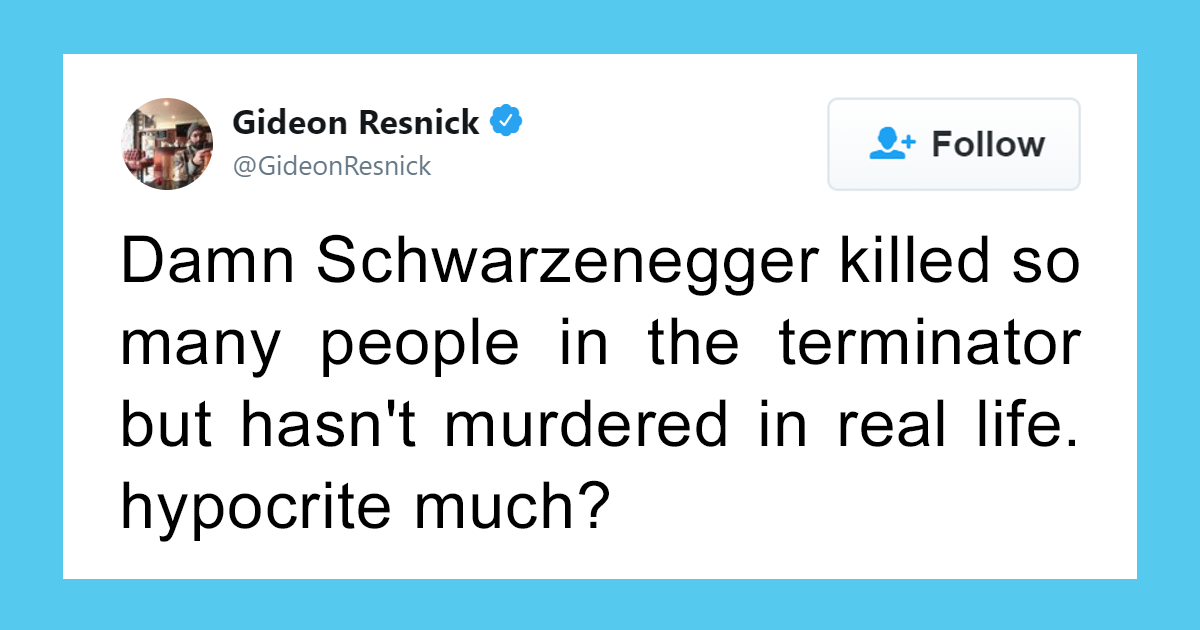
People joked that if Jamie Lee Curtis was hypocritical for using a gun on screen, then every actor in every role must be personally guilty of fictional behavior. By that standard, Johnny Depp should be questioned for having scissors for hands despite supporting human fingers. Josh Brolin should be investigated for wielding the Infinity Gauntlet despite opposing mass genocide. Tim Allen should answer for taking Santa’s job in The Santa Clause. Gary Sinise would need to explain why Lieutenant Dan lost his legs in Forrest Gump while the actor himself continued walking around like nothing happened.
The jokes worked because they revealed the flaw instantly. Acting requires pretending. A performer can portray a murderer, alien, superhero, pirate, ghost, corrupt politician, dragon rider, zombie hunter, or emotionally unavailable chef without signing a real-life endorsement contract with those activities. That is the entire job. If actors could only play characters who perfectly matched their personal beliefs, Hollywood would be reduced to documentaries about people checking their email.
Dictionary.com Delivered The Most Elegant Drag
One of the funniest responses came from Dictionary.com, which posted a definition of “acting” and connected it directly to Jamie Lee Curtis in Halloween. It was simple, dry, and devastating. No shouting. No essay. Just the calm energy of a teacher sliding a worksheet across the desk after someone forgets the lesson title.
That response went viral because it captured the internet’s collective reaction: the issue was not complicated. This was not a graduate seminar in film ethics. It was a reminder that an actress playing a fictional role is, in fact, acting. The internet did not need a chainsaw to dismantle the argument. A dictionary entry did the job nicely.
The Bigger Problem: Confusing Characters With Actors
This viral moment was funny, but it also touched on a broader media problem. Public discussions about film and celebrity often blur the line between art, performance, and personal belief. Sometimes that confusion is harmless, like fans calling actors by their character names at conventions. Other times, it becomes a culture-war shortcut: take a fictional scene, attach it to a real person’s politics, and declare contradiction.
But art does not work that way. Movies are full of tension between what characters do and what creators believe. A film can show violence without endorsing violence. A horror movie can depict fear without recommending fear as a lifestyle brand. An actor can play a villain without becoming morally responsible for the villain’s crimes. Anthony Hopkins is not Hannibal Lecter. Bryan Cranston is not Walter White. Meryl Streep has not personally lived every life she has performed, although given her range, it sometimes feels possible.
The Halloween controversy became a perfect media-literacy case study because the gap was so obvious. Laurie Strode is a fictional survivor in an extreme fictional scenario. Jamie Lee Curtis is a real actress with real political views. The two overlap professionally, emotionally, and culturally, but they are not the same person.
Why Laurie Strode’s Gun Use Was Part Of The Story
In the 2018 Halloween, Laurie Strode is not written as a casual action hero. She is a woman shaped by trauma. She has spent decades preparing for Michael Myers’ possible return, and that preparation has damaged her relationships, especially with her daughter and granddaughter. Her fortified home and weapons are not presented as simple empowerment props. They are symbols of survival, obsession, fear, and the cost of never feeling safe.
That is why the Fox News criticism felt especially thin to many viewers. Laurie’s firearms were not random accessories. They were narrative tools. The movie asks what happens when a survivor builds her entire life around the possibility of facing evil again. Whether the audience sees Laurie as prepared, paranoid, heroic, tragic, or all of the above, the weapons serve the story. They do not erase Curtis’ real-life views on gun legislation.
In fact, Curtis argued that Laurie’s use of firearms was consistent with her own belief in trained, locked, self-defense-oriented gun ownership. That answer did something the original criticism did not: it allowed room for nuance. In a world addicted to binary arguments, nuance can feel like someone brought a salad to a monster-truck rally, but it matters.
The Internet Turned A Culture-War Take Into Comedy
The best online jokes often work because they compress an argument into a punchline. Instead of writing a 900-word rebuttal, users simply invented parallel headlines that exposed the absurdity. “Actor does thing in movie despite not doing thing in real life” became the template, and the results were gloriously silly.
That template also traveled well because everyone understands movies. Most people do not need to be told that Robert Downey Jr. cannot fly in a metal suit, that Daniel Radcliffe is not a licensed wizard, or that Sigourney Weaver’s conflict with aliens should not be used as evidence of her immigration views. The roast was democratic in the best internet sense: anyone could join, because the joke was obvious and the target was overextended logic.
For publishers and commentators, the episode offered a useful warning. Outrage may attract clicks, but if the premise is weak, the backlash may become the bigger story. In this case, the attempt to frame Curtis as hypocritical produced more laughter than persuasion. The internet did not merely disagree; it turned the argument into a meme format.
What The Moment Says About Celebrity Activism
Celebrity activism is always a magnet for scrutiny. When actors speak about politics, social issues, or public safety, critics often examine their film roles, wealth, security arrangements, and public statements for inconsistency. Some criticism can be fair. Celebrities have influence, and their arguments should be examined like anyone else’s. But the criticism has to make sense.
Pointing to a fictional role as proof of real-life hypocrisy is usually lazy. It treats acting as confession rather than craft. A better question would be: does the celebrity’s public stance align with their real-world actions, donations, endorsements, business decisions, or advocacy? That would be a serious discussion. Asking why a horror actress uses a prop weapon while being chased by Michael Myers is less serious. It is the media equivalent of yelling at a haunted-house skeleton for poor calcium intake.
Jamie Lee Curtis’ answer made the distinction clear. She was not saying firearms can never exist. She was supporting laws meant to reduce harm while acknowledging the fictional and self-defense context of the film. That may not satisfy everyone in America’s gun debate, but it is a coherent position. More coherent, certainly, than pretending Laurie Strode’s shotgun is a campaign finance disclosure.
Why This Story Still Feels Relevant
Although the viral roast happened in 2018, the lesson still applies today. Online culture continues to reward fast reactions, headline outrage, and simplified moral scoring. Movies, TV shows, and celebrity interviews are constantly pulled into political debates. Sometimes that produces valuable criticism. Other times, it produces takes so wobbly they need a stunt double.
The Fox News and Jamie Lee Curtis moment endures because it is both funny and instructive. It reminds readers to ask basic questions before accepting an outrage frame. Is this person acting? Is the scene fictional? Is the criticism about the artist’s real-world choices or about a character’s scripted behavior? Is Michael Myers real? If the answer to the last one is “yes,” please stop reading and call someone with a flashlight and better cardio.
Good media literacy does not mean refusing to criticize art or celebrities. It means criticizing the right thing. If a film glamorizes violence, that can be discussed. If a celebrity’s activism conflicts with their real-world behavior, that can be examined. But if the entire argument depends on pretending a slasher movie is a documentary, the internet will notice. And it will bring jokes.
Experiences And Reflections: When The Internet Becomes The World’s Funniest Film Class
One of the most relatable parts of this whole saga is that nearly everyone has experienced some version of “confusing the actor with the character.” Maybe it happened when a child saw a villain from a movie on a talk show and felt suspicious. Maybe it happened when a soap-opera actor got scolded in public because their character cheated on someone. Maybe it happened when a fan met an actor from a crime show and half-expected them to solve a murder before dessert. We laugh, but the instinct is real: powerful performances make fictional people feel alive.
The difference is that most of us grow out of the confusion somewhere around the time we learn that stage blood is syrupy, dragons are expensive computers, and actors do not remain vampires between takes. That is why the Fox News article became such easy roast material. It sounded like a grown-up version of a kid asking why the bad guy is allowed at the awards show. Charming from a child. Less charming from a national media outlet.
The online reaction also showed how humor can be a sharp form of criticism. People did not need to write policy papers to explain the distinction between gun reform and movie props. They simply extended the logic until it collapsed under its own silliness. If Jamie Lee Curtis cannot use a gun in Halloween, then Chris Evans must be personally responsible for vibranium shield regulations. If actors must only play people who match their beliefs, then every casting director in Los Angeles should prepare for the world’s most boring audition notice: “Seeking real accountant to play accountant who agrees with actor’s tax philosophy.”
There is also something delightful about the internet briefly agreeing on a basic fact. Social media is usually a blender full of opinions, grudges, fan theories, and people arguing about whether a hot dog is a sandwich. Yet in this case, many users reached the same conclusion: movies are not real life. That shared understanding created a rare comedic pile-on that felt less cruel than corrective. The jokes were not just insults; they were miniature lessons in performance, context, and common sense.
For writers, editors, and bloggers, the episode is a useful reminder to respect the audience. Readers are smart enough to spot a forced outrage angle. They know when a headline is reaching. They also know when a cultural debate is being flattened into bait. If a story requires ignoring the basic premise of acting, fiction, and horror-movie survival, perhaps the story needs another draft.
The best personal takeaway is simple: before getting angry at a movie scene, pause and ask what the scene is doing. Is it endorsing an idea, exploring a fear, building a character, or just giving the audience a thrilling moment before someone inevitably opens the wrong closet? Context changes everything. Laurie Strode using a gun against Michael Myers is not the same as Jamie Lee Curtis making a political speech. One belongs to a fictional showdown; the other belongs to public debate. Mixing them up is how you end up being corrected by Dictionary.com, which is both educational and spiritually devastating.
In the end, the internet roast worked because it defended a very basic truth with maximum comedy: actors act. Fiction is fiction. Props are props. And if your argument can be defeated by someone saying, “Michael Myers isn’t real,” maybe it deserves to be chased down the street by a thousand memes.
Conclusion
The viral roasting of Fox News over Jamie Lee Curtis and Halloween was more than a quick internet laugh. It became a neat little snapshot of how media framing, celebrity politics, and pop culture collide online. Fox News tried to portray Curtis’ role as Laurie Strode as a contradiction of her support for gun reform. The internet responded by pointing out that actors portray fictional characters and that fictional survival horror is not the same thing as real-world policy advocacy.
Jamie Lee Curtis’ calm response added nuance to the conversation. She clarified that she supports the Second Amendment while also supporting common-sense gun laws, training, licensing, background checks, and safe storage. Meanwhile, the internet did what it does best: transformed a shaky argument into a comedy festival. The jokes were memorable because they were true. Movies are not real life, and confusing the two is a fast way to become the day’s main character online.
Ultimately, the whole episode remains funny because it was so avoidable. Before accusing an actor of hypocrisy for acting, remember the ancient wisdom passed down by film teachers, dictionary editors, and people who have watched at least one movie: pretending is the job.