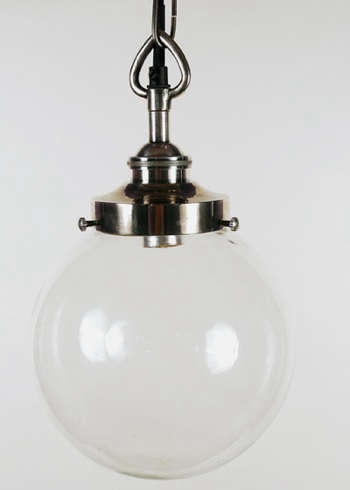
Some light fixtures politely illuminate a room. Others arrive wearing imaginary deck shoes, carrying a brass compass, and acting as though your kitchen island is about to depart for Nantucket. Anthropologie’s Mariner’s Pendant belonged firmly to the second group.
Originally highlighted in 2009, the Mariner’s Pendant was an 11-inch-high fixture made from glass and steel and priced at $398. It represented an especially appealing chapter in Anthropologie lighting: decorative enough to become a focal point, industrial enough to avoid looking precious, and nautical without plastering tiny anchors across everything in sight.
Although the original model appears to be discontinued, its design remains relevant. Today’s homeowners are still searching for nautical pendant lighting, vintage-style glass fixtures, industrial kitchen lights, and character-rich alternatives to generic builder-grade ceiling fixtures. The Mariner’s Pendant offers a useful case study in how one relatively small light can steer an entire roompun regrettably intended.
What Was the Mariner’s Pendant?
The Mariner’s Pendant was introduced during an era when industrial and maritime design were moving from docks, workshops, and salvage yards into polished residential interiors. Its glass-and-steel construction gave it the practical visual language of a working lamp rather than an overly decorated chandelier.
The name “Mariner” suggested a connection to ship lighting, harbor buildings, old coastal hotels, and equipment designed to withstand years of honest use. The appeal was not about turning a dining room into a seafood restaurant. Instead, it captured a more restrained version of coastal style: strong materials, visible construction, compact proportions, and a silhouette that felt collected rather than mass-produced.
At 11 inches high, the fixture was small enough to work in modest rooms but substantial enough to register visually. That made it suitable for a breakfast nook, a narrow kitchen counter, a utility room, an entryway, or a pair of pendants over a compact island. It was the lighting equivalent of a good denim jacketnoticeable, useful, and surprisingly compatible with almost everything.
Why the Design Still Works
It Used Honest Materials
Glass and steel rarely need an elaborate sales pitch. Glass allows light to travel through the fixture, while steel provides definition, structure, and contrast. Together, the materials can look industrial, traditional, coastal, or transitional depending on the surrounding finishes.
This material combination also gives a pendant visual durability. Even when design trends change, glass and metal tend to age more gracefully than highly specific novelty finishes. A fixture with seashell fringe might enjoy a dramatic six months on social media. A steel-and-glass pendant can still look sensible after everyone has moved on to mushroom lamps, paper lanterns, or whatever shape the internet declares essential next Tuesday.
It Suggested Nautical Style Without Becoming a Theme
The strongest coastal interiors rarely rely on obvious symbols. They use weathered woods, woven fibers, painted cabinetry, natural stone, aged metal, linen, and practical objects with maritime roots. The Mariner’s Pendant fit comfortably into that approach.
Placed in a white kitchen with oak floors, it could feel breezy and coastal. Installed over a dark stone counter, it could lean industrial. Paired with paneled walls and traditional hardware, it could suggest an old East Coast cottage. Against flat-front cabinetry, it could become an intentionally vintage interruption in a modern room.
Its Compact Size Made It Flexible
Large statement fixtures are wonderful until the ceiling is eight feet high and everyone at the dinner table develops a close personal relationship with the lampshade. A smaller pendant offers more freedom. It can be installed alone, repeated in a row, or used to light a concentrated work area without dominating the architecture.
Compact pendants are particularly effective in older homes, apartments, galley kitchens, and rooms where the ceiling cannot support a visually massive fixture. The important word is “compact,” not “timid.” A small fixture made from contrasting materials can have more personality than a chandelier twice its diameter.
Where a Mariner-Style Pendant Works Best
Over a Kitchen Sink
A single nautical pendant above a kitchen sink creates a clear focal point and provides useful task lighting. It works especially well when the sink faces a window because the pendant visually frames the area without competing with the view.
Clear or lightly textured glass allows more light to reach the counter. If glare becomes an issue, a frosted bulb or lower-lumen LED can soften the effect. A dimmer adds flexibility, allowing bright light for dishwashing and a gentler glow after dinner when the sink is full of plates you have courageously decided to deal with tomorrow.
Above a Small Island or Peninsula
For an island measuring around four to six feet long, two compact pendants often provide a balanced arrangement. A single fixture may be enough over a small square island, particularly when recessed or under-cabinet lighting already handles most of the practical illumination.
Spacing matters more than following a fashionable fixture count. Pendants should feel centered over the work surface, evenly distributed, and far enough from the edges that they do not appear to be escaping.
Over a Breakfast Table
A Mariner-style light can make a casual breakfast area feel deliberately designed. The industrial character prevents a small dining nook from becoming too sweet, while the glass creates a sense of openness.
For a round table, center one pendant directly above the middle. Over a rectangular table, a pair may work better if the fixtures are small. The overall arrangement should relate to the table rather than the room alone, since the furniture beneath visually anchors the light.
In an Entryway or Mudroom
Maritime lighting naturally suits hardworking transition spaces. A steel-and-glass pendant can bring character to a mudroom filled with hooks, baskets, boots, backpacks, and the mysterious single glove that no household can permanently eliminate.
In an entryway, prioritize head clearance. The bottom of a fixture installed over an open walking path should generally remain at least seven feet above the floor. If the ceiling is low, a semi-flush fixture inspired by the same nautical vocabulary may be a safer choice.
In a Bathroom
A compact pendant can look striking beside a vanity or above a freestanding tub, but bathroom installation requires more than aesthetic confidence. The fixture must be appropriately rated for the location, and local electrical requirements should be followed. A decorative indoor pendant should never be assumed suitable for damp or wet conditions simply because its name sounds as though it has survived several Atlantic storms.
How High Should a Pendant Hang?
Over a kitchen island, dining table, or counter, a useful starting point is approximately 30 to 36 inches between the bottom of the fixture and the surface below. Some rooms look better near the lower end of that range; others need additional height to preserve sightlines.
The people using the room matter. Sit and stand around the island before finalizing the height. The fixture should illuminate the surface without shining directly into anyone’s eyes or blocking conversation across the counter. A cardboard template or balloon tied to a string can help test the position before installation.
For pendants hanging over an open floor rather than furniture, aim for at least 70 to 84 inches of clearance, depending on the room and the height of the household. Seven feet is a common safety-minded target for circulation areas.
Spacing Multiple Pendants
Multiple fixtures should be evenly arranged, with consistent gaps between each pendant and reasonable space at both ends of the island or table. Many lighting guides recommend roughly 24 to 36 inches between fixture centers or about 26 to 30 inches between pendants, but the correct measurement depends on shade diameter.
Wide pendants require more breathing room. Narrow mini pendants can sit closer together. Before drilling anything, mark the proposed centers with painter’s tape and view the arrangement from several parts of the room. This ten-minute exercise can prevent years of quietly resenting a pendant that sits two inches too far to the left.
Choosing the Right Bulb
The original Mariner’s Pendant predates today’s broad selection of decorative LED bulbs, but a modern LED would be the practical choice for a similar fixture. LEDs use far less energy than traditional incandescent bulbs and are available in many shapes, brightness levels, and color temperatures.
Focus on lumens rather than watts. Lumens describe the amount of light produced; watts describe energy consumption. Around 800 lumens is commonly treated as the approximate brightness replacement for a traditional 60-watt incandescent bulb, although an exposed or clear-glass fixture may feel brighter because the bulb is directly visible.
For a warm residential atmosphere, choose a bulb between 2700K and 3000K. A 2700K bulb creates a soft, familiar glow, while 3000K appears slightly cleaner and can work well in kitchens. Cooler light may be useful for specific tasks, but it can make vintage steel-and-glass lighting feel more commercial than cozy.
Decorative Bulbs Versus Diffused Bulbs
A clear filament-style bulb reinforces the historic appearance of a maritime pendant, but it can create glare. A frosted LED sacrifices some visible-bulb drama in exchange for more comfortable illumination. The best choice depends on whether the pendant is primarily decorative, functional, or expected to perform both jobs without complaint.
Use a compatible dimmer whenever possible. Dimming allows one fixture to provide brighter task lighting during meal preparation and softer atmospheric light later in the evening.
How to Style the Mariner’s Pendant Look
Pair It With Warm Wood
Steel can appear cold when surrounded exclusively by gray surfaces. Natural oak, walnut, pine, or reclaimed wood adds warmth and makes the fixture feel less mechanical. Even a small wooden stool or cutting board can create enough contrast to soften an industrial pendant.
Repeat the Metal Finish Carefully
The pendant does not need to match every cabinet pull, faucet, hinge, and appliance. In fact, aggressively matching all metal finishes can make a room feel like a hardware showroom. Repeating the steel tone once or twiceperhaps in a shelf bracket, framed mirror, or black window sashis usually enough to create continuity.
Add Texture Instead of More Nautical Symbols
Woven baskets, linen curtains, rope details, striped textiles, and handmade ceramics support the maritime mood without turning the room into a costume. Avoid combining the pendant with anchor-patterned wallpaper, ship wheels, model sailboats, and a sign reading “Life Is Better at the Beach” unless subtlety has personally offended you.
Use Contrast in Modern Rooms
A vintage-style pendant often looks best where it is slightly unexpected. Install one above sleek cabinetry, polished concrete, or a minimalist table. The contrast creates depth and prevents a newly renovated room from looking as though every object arrived in one coordinated delivery truck.
How It Compares With Current Anthropologie Lighting
Anthropologie’s current pendant collection emphasizes a broader decorative range, including sculptural glass, milk glass, ceramic, jute, rattan, wood, velvet, alabaster, and brass. Many contemporary models lean romantic, organic, or handcrafted, while the Mariner’s Pendant represented a more direct industrial-nautical aesthetic.
That difference explains why the archived design still attracts interest. It offers a cleaner, tougher counterpoint to highly ornamental lighting. Shoppers trying to recreate the look should search by characteristics rather than relying on the discontinued product name alone. Useful phrases include nautical glass pendant, marine-style ceiling light, industrial cage pendant, steel and glass hanging light, ship-inspired pendant, and vintage bulkhead lighting.
Look for proportion and construction before chasing an exact copy. A convincing alternative should have a compact silhouette, visible metalwork, a substantial glass component, and a finish that feels aged or utilitarian rather than glossy and theatrical.
Buying an Original or Vintage Alternative
Because the Mariner’s Pendant is an archival fixture, an original may occasionally appear through resale marketplaces, architectural salvage dealers, estate sales, or secondhand design shops. Confirm the dimensions, condition, wiring, mounting hardware, and bulb-base type before purchasing.
Older fixtures should be inspected by a qualified professional, particularly if the wiring history is unknown. Missing canopies, mounting plates, chains, or proprietary glass parts may be difficult to replace. A bargain stops feeling triumphant when it arrives as one beautiful shade accompanied by a bag of mysterious screws and no safe method of attaching it to the ceiling.
For new alternatives, verify whether the fixture is hardwired, dimmer-compatible, approved for sloped ceilings, and rated for the intended environment. Professional installation is advisable whenever the electrical box, fixture weight, wiring, or ceiling structure raises questions.
Final Verdict: Why the Mariner’s Pendant Still Deserves Attention
Anthropologie’s Mariner’s Pendant is a reminder that memorable lighting does not need to be enormous, glittering, or complicated. Its strength came from scale, material, and suggestion. Glass and steel created the visual authority of a working object, while the nautical reference added romance without demanding an ocean view.
The fixture also demonstrates a reliable decorating principle: one distinctive overhead light can organize an entire room. It can introduce contrast, establish a design direction, define a table or work zone, and make ordinary architecture feel more intentional.
Living With a Mariner-Style Pendant: The Practical Experience
The first noticeable change after installing a pendant like this is not necessarily brightness. It is focus. A previously vague corner suddenly has a center. The breakfast table becomes a destination rather than a place where unopened mail forms a small paper mountain. The kitchen sink feels framed. A narrow hallway gains a visual endpoint.
During the day, the glass and metalwork behave almost like a small architectural object. Natural light reflects from the shade, while the steel outline remains visible against the ceiling. This is one reason compact pendants can be so effective: they contribute to the room even when switched off. A successful fixture earns its ceiling space around the clock.
At night, bulb selection becomes the main character. A warm, dimmable LED produces the most comfortable experience for dining and conversation. With the light turned high, the pendant can illuminate chopping, reading, homework, or the careful examination of a recipe that casually uses the phrase “meanwhile, make the stock.” Lower the dimmer, and the same fixture becomes atmospheric, emphasizing reflections in the glass and soft pools of light on the surface below.
Clear glass does require occasional cleaning. Kitchen grease, dust, and fingerprints are impressively committed to becoming visible on transparent shades. Turning off the fixture, allowing the bulb to cool, and wiping the glass with a soft cloth keeps it looking crisp. The process is not difficult, though it may briefly reveal that the rest of the room has also been requesting attention.
Height adjustment has the greatest effect on long-term satisfaction. Too low, and the pendant interrupts sightlines or causes glare. Too high, and it loses intimacy and begins hovering near the ceiling like a nervous balloon. Testing the height before shortening a cord or chain is worth the extra effort. The ideal position feels visually connected to the table or counter while leaving faces, views, and daily movement unobstructed.
A mariner-style fixture also becomes surprisingly adaptable as the room evolves. Replace blue-and-white textiles with earth tones, and it shifts from coastal to industrial. Add paneled cabinetry and antique brass, and it feels traditional. Surround it with concrete, blackened metal, and flat-front cabinets, and it becomes a vintage accent in a modern composition.
That flexibility is the real legacy of the Mariner’s Pendant at Anthropologie. It was not memorable merely because it referenced ships or appeared in a fashionable catalog. It worked because it balanced story with restraint. The design had personality, but it left enough room for the homeowner’s architecture, furniture, and daily life to remain part of the conversation.
For anyone searching for nautical pendant lighting today, the smartest goal is not necessarily to locate a perfect duplicate. It is to recreate the qualities that made the original compelling: useful scale, honest materials, warm illumination, visible craftsmanship, and just enough maritime character to make the room feel adventurouseven when the farthest voyage planned is from the kitchen island to the refrigerator.