Every profession has a secret drawer full of bizarre questions. Teachers get asked whether they live at school. Park rangers get asked things that make bear safety briefings suddenly feel very urgent. Museum workers hear sentences so strange they sound like rejected titles from a modern art exhibit. And somewhere, a meteorologist has probably stared at an email and whispered, “That is not how tornadoes work.”
The viral story behind “Person Goes Around Asking Professionals What Weird Questions They Have Been Asked, Delivers A List Of The 12 Best Ones” proves something surprisingly wholesome: weird questions are often not dumb questions. They are usually tiny windows into how people are tryingsometimes awkwardly, sometimes hilariouslyto understand the world. The result is a collection of funny professional stories, strange customer questions, odd classroom moments, and unexpected lessons in curiosity.
Below is a rewritten, expanded, and SEO-friendly look at the 12 best kinds of weird questions professionals have been asked, along with what these moments reveal about learning, public service, and the brave art of raising your hand when your brain is doing cartwheels.
Why Weird Questions Are So Memorable
A normal question asks for information. A weird question arrives wearing roller skates and holding a kazoo. It does not always follow the expected path, but that is exactly why professionals remember it years later.
For educators, librarians, scientists, park rangers, zookeepers, museum docents, and customer-facing experts, odd questions often reveal a gap between what the professional assumes everyone knows and what the public is actually trying to figure out. That gap is not embarrassing. It is the place where learning begins.
In fact, many professionals are trained to take unusual questions seriously. A librarian does not laugh when someone remembers only “a yellow book about love and drinking.” A teacher does not panic when a student asks a wildly specific question about Thanksgiving arguments. A ranger does not ignore a visitor who misunderstands wildlife safety. The professional instinct is to translate confusion into clarity.
The 12 Best Weird Questions Professionals Have Been Asked
1. The Museum Question That Sounded Like a Poem
One museum worker reportedly heard a visitor ask for help finding “someone,” and if that person could not be found, then help finding someone who could. On paper, that sounds like an information desk request. In the air, it sounds like a line from a melancholy indie film.
The beauty of this question is that it is both practical and mysterious. The visitor probably needed assistance locating a staff member. But the wording turned a simple request into something almost philosophical: Who helps the helper? Where does the chain of assistance end? Is customer service just a hallway of increasingly helpful people? Somewhere, a painting is jealous it did not get that title first.
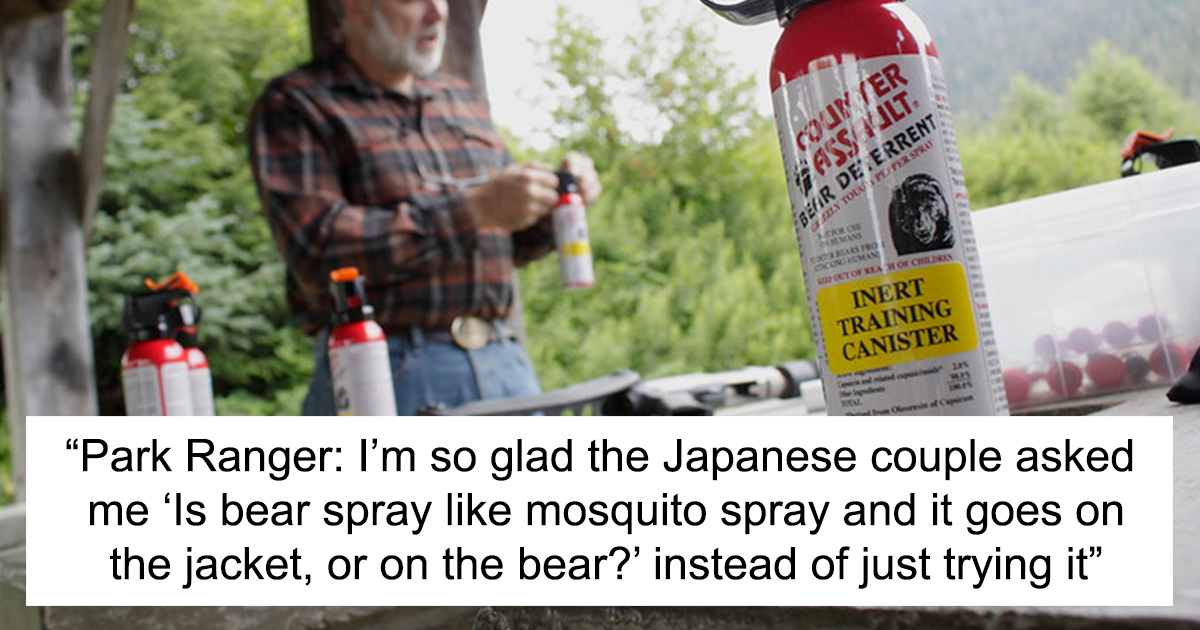
2. The Bear Spray Mix-Up
A park ranger once encountered visitors who were not entirely sure how wildlife safety spray worked. Their confusion was memorable because it showed how dangerous misunderstandings can become when outdoor gear sounds similar to everyday products.
This is exactly why rangers repeat safety information with saint-level patience. In a national park, a “small misunderstanding” can turn into a very large problem with fur. The funny part is the innocent logic: if mosquito spray goes on people, maybe other sprays work the same way. The serious part is that asking first was the smartest thing those visitors could have done.
3. The Hawk That Was “Extinct”
A zookeeper presenting a live red-tailed hawk was once asked whether the bird was extinct. The answer, of course, was visible, feathered, and very much present. But the deeper issue was vocabulary. The visitor likely meant “endangered,” not “extinct.”
This is a classic professional moment: the question is technically wrong, but the curiosity underneath it is real. Animal educators deal with this constantly. People mix up extinct, endangered, threatened, invasive, domesticated, wild, and “that thing I saw in a cartoon once.” The job is not to shame the question. The job is to turn it into a better one.
4. The Teacher Who Apparently Lives at School
Many elementary teachers have heard some version of this question: “Where do you sleep at night?” To young children, teachers exist in the classroom the same way furniture does. The desks are there. The whiteboard is there. The teacher is there. Obviously, when the lights go out, the teacher must fold themselves into a storage closet like a cardigan.
It is funny because it exposes how children understand roles before they understand whole lives. A teacher is not yet a person with groceries, laundry, hobbies, and a favorite coffee mug. A teacher is “school person.” That strange question is actually a developmental milestone wearing tiny sneakers.
5. The Philosophy Question With Thanksgiving Energy
A professor once received a question from a student who wanted to know how a lesson in rhetoric or philosophy could be used in a real family argumentspecifically, the kind involving a relative who has had too much wine and too many opinions.
That question is weird only because it is honest. Students are often told that philosophy sharpens thinking, but this student wanted the field test. Can Aristotle survive Thanksgiving dinner? Can logic make it through dessert? Can rhetoric politely dodge a casserole-fueled rant? The professor reportedly found the question useful because it connected theory to real life. That is good teaching: when ancient concepts suddenly have to sit next to cranberry sauce.
6. The Million vs. Billion Question
A natural history docent once met a visitor who needed help understanding the difference between a million and a billion. At first, that may sound like a basic math question. But in context, it became something much bigger: a person trying to rebuild their understanding of time, Earth history, and science from the ground up.
This is one of the most moving examples because it reminds us that people arrive at museums with wildly different backgrounds. Some are experts. Some are tourists. Some are starting over intellectually after years of limited information. A good docent does more than recite facts. They meet people at the doorway of what they do not know and walk with them for a while.
7. The “Is My Dog Part Hyena?” Question
Zookeepers and animal professionals often receive calls from people convinced they have discovered an exotic creature in an extremely ordinary place. A spotted dog becomes a possible hyena. A large husky becomes a wolf. A backyard noise becomes, depending on the caller’s confidence level, either a bobcat, a demon, or a trash can with ambition.
Still, animal experts take these calls seriously because every once in a while, the impossible turns out to be real. Escaped exotic animals do happen. Misidentified wildlife can create safety concerns. So the professional response is usually a careful balance of “Let’s not panic” and “Please describe the animal without screaming.”
8. The Tornado and the Box Fan
A meteorologist reportedly received a question about whether a tornado could be made to spin the opposite way with enough fanning. The mental image is unforgettable: one human, one box fan, one enormous weather system, and a level of confidence best described as “garage scientist during a power outage.”
The charm of this question is that it starts from a real ideaair movement matters in weatherbut scales it up to cartoon physics. Meteorologists must constantly explain invisible forces: pressure, rotation, moisture, fronts, wind shear. A strange question can become a teaching moment about how storms form and why personal appliances should not be treated as climate control for the sky.
9. The Yellowstone Supervolcano Question
During talks about volcanoes, rangers and geologists sometimes hear questions that reveal how difficult it is to imagine Earth processes. One visitor wondered whether a major eruption would leave the planet hollowed out.
This is the kind of question that makes a science communicator take a quiet breath and mentally rearrange an entire lecture. The visitor understood that volcanic eruptions involve material coming from below the surface. The missing piece was scale, structure, and how Earth’s crust actually works. Weird? Yes. Useful? Also yes. It tells the educator exactly where the explanation needs to begin.
10. The T. Rex Dinner Question
One of the best strange questions reportedly asked a natural history team what a Tyrannosaurus rex might have tasted like if someone had a time machine, cooked it, and survived long enough to regret every choice that led there.
Instead of dismissing it, the professionals treated the question like a miniature research project. They considered diet, muscle, fat, food-chain chemistry, and comparisons with living animals. That is the secret sauce of great public education: a ridiculous question can become a serious inquiry if experts are playful enough to follow it.
Would a T. rex steak become the next trendy restaurant item? Almost certainly not. Would the discussion teach people about paleontology, ecology, and biology? Absolutely. Sometimes the silly door opens into a very smart room.
11. The “What Book Am I Thinking Of?” Library Mystery
Librarians routinely get questions that sound impossible: “I read a book years ago, I do not remember the title, the author, or the plot, but the cover might have been yellow.” Somehow, librarians often solve these mysteries with the intensity of detectives and the emotional calm of people who have seen everything.
This kind of weird question is beautiful because it proves how human memory works. People remember fragments: a color, a feeling, one character, a scene near a lake, a dog that may or may not have talked. Reference professionals know how to gather clues, narrow possibilities, and ask better follow-up questions. Basically, librarians are search engines with cardigans and better judgment.
12. The “Do You Actually Know Everything?” Question
Many professionals, especially teachers and public educators, get treated as walking encyclopedias. Visitors and students assume that if someone works near a subject, they must know every detail connected to it. A museum docent must know all history. A zookeeper must identify every animal sound. A professor must be able to solve both Plato and printer problems.
The funniest version of this is not one exact question but a pattern: people ask experts things outside their field simply because the expert looks official. A ranger may be asked about hotel Wi-Fi. A biology teacher may be asked about a phone charger. A librarian may be asked for tax advice, computer repair, genealogy help, and emotional support before lunch.
The lesson is simple: professionalism often means knowing the answer, knowing how to find the answer, or knowing who should be asked next.
What These Weird Questions Teach Us About Curiosity
Weird questions are funny because they surprise us, but they are valuable because they expose hidden assumptions. Experts forget what beginners do not know. Beginners often do not know how to phrase what they are trying to understand. Between those two realities sits the perfect educational moment.
A student asking how rhetoric applies to a family argument is not being silly. They are asking for practical relevance. A visitor confusing extinct and endangered is not failing science. They are reaching for the right category. A child asking where the teacher sleeps is not being absurd. They are building a model of adult life and have not yet installed the “teachers go home” update.
Professionals who handle strange questions well usually share three qualities. First, they listen for the real question underneath the odd wording. Second, they respond without humiliation. Third, they recognize that curiosity often arrives in messy packaging.
Why Professionals Remember the Weird Ones
Ask any teacher, nurse, ranger, librarian, cashier, tour guide, mechanic, or help desk worker about their strangest question, and their eyes will light up before the story even starts. Why? Because unusual questions break the routine. They turn a normal Tuesday into folklore.
The best weird questions also reveal the emotional side of expertise. Professionals are not just answering facts; they are helping people feel less lost. Sometimes the person asking is confused. Sometimes they are nervous. Sometimes they are embarrassed. Sometimes they are a child trying to understand why the person who teaches math is allowed to exist outside the math room.
Handled kindly, a weird question can become a memory instead of a moment of shame. That matters. People who feel safe asking questions become better learners, better visitors, better students, and occasionally better prepared around bears.
Experience-Based Reflections: What It Feels Like to Hear a Truly Weird Question
Anyone who has worked with the public knows that weird questions have their own rhythm. First comes the pause. The professional hears the question, smiles politely, and waits for the brain to finish buffering. Then comes the internal sorting process: Is this a joke? Is this a safety issue? Is this a vocabulary problem? Is this person asking about a real thing using the only words they have available?
For example, a retail employee might hear, “Can I return this if my cat hates it?” That sounds funny, but the real question is about return policy. A tech support worker might hear, “Is the cloud above my house?” That is not a failure of intelligence; it is a metaphor that became too successful for its own good. A librarian might hear, “Do you have the book with the sad blue cover?” and, against all odds, begin narrowing the search like a literary bloodhound.
The experience teaches patience. It also teaches humility. Every professional has deep knowledge in one area and embarrassing confusion in another. The meteorologist who understands storm rotation may still have to ask a mechanic what that dashboard light means. The museum docent who explains ancient civilizations may still need help setting up a new router. Nobody is universally brilliant. We are all geniuses in one room and confused raccoons in another.
That is why the best professionals do not treat weird questions as interruptions. They treat them as clues. A strange question shows where the explanation should begin. It reveals what the person is picturing. It shows which word is missing, which concept is upside down, and which assumption needs a gentle nudge.
There is also a special joy in questions that are weird but oddly excellent. “What would a dinosaur taste like?” sounds like nonsense until scientists start discussing diet, muscle structure, evolutionary relatives, and environmental chemistry. “How do I use philosophy at Thanksgiving?” sounds like a joke until it becomes a lesson in persuasion, conflict, and emotional intelligence. “Where does the teacher sleep?” sounds adorable until it reminds adults that children build reality from observation, not from HR paperwork.
In many workplaces, these stories become social glue. Staff repeat them in break rooms, training sessions, and end-of-day conversations. Not to mock people, ideally, but to celebrate the astonishing variety of human curiosity. A good weird question is a souvenir from the front lines of public knowledge. It says, “Today someone tried to understand something, and the route they took was scenic.”
The biggest experience-based lesson is this: the question that sounds ridiculous may be the one most worth answering. It may prevent a mistake. It may unlock a lesson. It may help someone who is starting from zero. And at the very least, it may give a professional a story they will lovingly retell for the next decade.
Conclusion
The viral list of weird questions asked to professionals is funny because the questions are unexpected, but it is popular because the heart underneath is sincere. People ask odd things when they are curious, confused, nervous, imaginative, or standing in front of a hawk and reaching for the wrong vocabulary.
From museum hosts and park rangers to zookeepers, teachers, professors, librarians, and scientists, professionals hear the public thinking out loud. Sometimes that thinking comes out polished. Sometimes it arrives sideways with a box fan and a tornado theory. Either way, the best response is not mockery. It is patience, humor, and a willingness to answer the question behind the question.
So the next time you worry that your question is too weird, ask it anywayrespectfully, safely, and at the appropriate time. You might learn something. The professional might get a new favorite story. Everybody wins, except perhaps the imaginary T. rex dinner party.
Note: This article is an original, fully rewritten feature inspired by real public-facing professional anecdotes and broader research on curiosity, education, reference work, and question-based learning. It is designed for web publication with SEO structure, natural keyword use, and no copied source text.