War has always had a soundtrack. Sometimes it is artillery, sometimes propaganda, and sometimes it is a faint Morse signal fighting its way through static at 2 a.m. Long before satellites stared down from orbit and algorithms chewed through terabytes of battlefield video, radio hobbyists were already doing something surprisingly modern: turning a scattered community into a human sensor network.
That is the story behind crowdsourcing SIGINT, or signals intelligence gathered through the monitoring and analysis of radio emissions. In peacetime, ham radio is a mix of engineering, public service, friendly chatter, contesting, and the occasional heroic effort to make a wire in a tree behave like a respectable antenna. In wartime, however, the same skills that help amateurs pull a weak signal from the noise can become strategically valuable. The key difference is not only technical; it is legal, ethical, and sometimes life-or-death.
This article looks at how amateur radio operators contributed to wartime listening efforts, how modern software-defined radio changed the scale of radio monitoring, and why today’s radio-curious citizens must be careful not to confuse public interest with battlefield participation. The magic is real. So are the risks.
What Does “Crowdsourcing SIGINT” Mean?
SIGINT is intelligence derived from signals: radio transmissions, radar emissions, telemetry, satellite links, and other electronic communications. Traditionally, it has belonged to governments with listening stations, trained analysts, classified databases, and antennas large enough to make the neighbors ask uncomfortable questions.
Crowdsourced SIGINT is different. It happens when many distributed listeners contribute observations, logs, recordings, or pattern recognition. One person may hear only a fragment. A network of listeners can notice timing, repetition, geography, modulation type, language, and changes in activity. That is the power of a crowd: not one superhero with headphones, but thousands of patient people noticing small things.
Still, crowdsourced SIGINT is not the same as casual ham radio. Amateur radio is a licensed service with rules, traditions, and public-service values. In the United States, FCC Part 97 defines amateur radio as a voluntary, noncommercial communication service, especially useful for emergency communications, technical training, and advancing the radio art. It also restricts certain transmissions, including communications for compensation and other prohibited uses.
The WWII Blueprint: Britain’s Voluntary Interceptors
One of the clearest historical examples of crowdsourced radio intelligence came from Britain during World War II. At the outbreak of the war, British authorities needed to detect and monitor enemy radio transmissions. The Radio Security Service, originally linked to MI5, recruited skilled amateur radio operators and shortwave listeners through the Radio Society of Great Britain. These volunteers became known as Voluntary Interceptors.
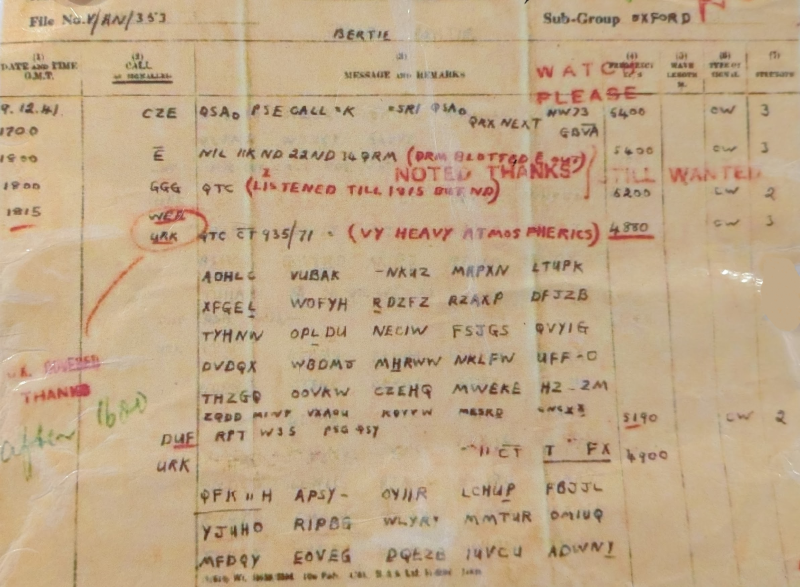
The idea was simple and brilliant: Britain already had people who knew Morse code, understood shortwave behavior, owned receivers, and had the patience of monks with soldering irons. Their transmitters were restricted during wartime, but their ears still worked. These listeners copied coded enemy traffic, logged details, and passed material into a larger intelligence pipeline that connected to Bletchley Park and other wartime analysis centers.
They were not glamorous movie spies. They were often ordinary civilians sitting in bedrooms, sheds, and spare rooms, wearing headphones and chasing signals through fading, noise, and interference. It was less James Bond, more “Dad has been in the attic for four hours and says nobody should touch the dial.” Yet their work mattered because encrypted messages are useless to codebreakers until someone first captures them.
Why Hams Were So Useful
Amateur radio operators had three valuable traits. First, they had technical skill. They knew how receivers behaved, how atmospheric conditions affected shortwave propagation, and how to copy weak Morse under miserable conditions. Second, they were geographically distributed, which gave intelligence services broader listening coverage. Third, they were disciplined hobbyists. A serious operator could sit for hours waiting for a signal that might appear briefly, vanish, and return later wearing a different hat.
In modern language, the Voluntary Interceptors were a distributed collection layer. They were not “the intelligence agency” by themselves. They were the front end of a system: collect, report, collate, analyze, decrypt, interpret, act. That chain is important. Crowdsourcing works best when the crowd gathers observations and the final judgment is handled by trained analysts with context.
The American Side: The FCC Radio Intelligence Division
The United States also recognized that radio monitoring mattered. The FCC’s Radio Intelligence Division operated during the World War II era, and the National Archives lists records for the division from 1940 to 1947. Its work included monitoring, locating, and investigating suspicious radio activity.
American wartime radio controls were strict. Historical accounts describe limits on amateur operations before and during the war, including restrictions designed to reduce the possibility of unauthorized communications. Hackaday’s account of the FCC’s wartime radio intelligence history notes that U.S. amateur operators were restricted from international contacts in 1940, and later faced additional requirements.
Direction finding, sometimes nicknamed “fox hunting” in amateur circles, also became a serious wartime tool. In hobby form, fox hunting is a radio scavenger hunt with antennas. In wartime form, it is a way to locate unauthorized transmitters. The same basic physics applies: compare signal strength, bearing, timing, and location until the source becomes less mysterious and more likely to receive a visit from people with official badges.
From Crystal Sets to SDR: The Modern Listening Revolution
Today, the tools have changed dramatically. A World War II listener needed a receiver, headphones, notebooks, and excellent ears. A modern listener may use a software-defined radio, or SDR, where much of the filtering, tuning, demodulation, and visualization happens in software rather than fixed analog circuits. ARRL describes SDR as the use of digital signal processing to detect radio signals.
Web-connected receivers expanded this even further. A WebSDR is an internet-connected SDR receiver that lets many listeners tune and listen simultaneously through a browser. OpenWebRX similarly provides browser-based access to SDR receivers without requiring special client software.
This means a person in one country can listen to radio conditions from another region, compare reception reports, or study propagation without owning a tower, a farm, or a suspiciously enthusiastic spouse who approves of roof antennas. It also means that radio monitoring is no longer limited to people with expensive gear. Accessibility has exploded, and with it, the temptation to treat the airwaves as a real-time war dashboard.
Ukraine, OSINT, and the New Civilian Sensor Problem
The Russia-Ukraine war made open-source intelligence a mainstream topic. Satellite images, social media videos, public flight data, drone footage, and intercepted communications have all shaped public understanding of the conflict. Reuters reported early in the invasion that Russia was likely targeting Ukraine’s communications infrastructure to reduce access to reliable news and information.
Amateur radio was affected too. In February 2022, ARRL reported that Ukraine’s state of emergency included regulation of TV and radio activities and a ban on operating amateur radio transmitters for personal and collective use. The same report quoted IARU Region 1 emphasizing that radio amateurs should follow national laws and regulations.
This is where the romance of wartime listening meets the brick wall of reality. Transmitting from a conflict zone can reveal a location. Publishing call signs, frequencies, or timing patterns can expose people. Even well-meaning hobbyists can accidentally create danger. In war, “interesting” information may also be targeting information.
OSINT Is Powerful, But It Is Not a Game
Open-source intelligence can help journalists, researchers, humanitarian groups, and investigators document events. RAND describes OSINT as publicly available information used for intelligence purposes, with ongoing questions about reliability, ethics, and integration with traditional intelligence. Scientific American has also warned that wartime OSINT communities often underplay ethical questions and safety risks.
The problem is not that citizens notice things. The problem is what happens next. Posting unverified radio claims can spread misinformation. Sharing real-time observations can endanger civilians or combatants. Recording and rebroadcasting sensitive traffic can raise legal issues. Turning tragedy into entertainment is not analysis; it is doomscrolling with a waterfall display.
Ham Radio’s Ethical Line in Wartime
Ham radio has a proud public-service tradition. Operators support disaster response, relay health-and-welfare messages, experiment with antennas, teach electronics, and maintain skills that work when cell towers nap on the job. But amateur radio is not a private military network. It is not a mercenary communications service. It is not a magic loophole for wartime intelligence collection.
In the United States, amateur radio rules emphasize noncommercial operation and prohibit certain transmissions. Many other countries have similar restrictions, and in emergencies or war, national authorities may impose additional controls. The lesson is straightforward: listen legally, transmit lawfully, publish carefully, and never treat someone else’s safety as content.
For writers, researchers, and radio hobbyists, the safest and most useful approach is historical, educational, and analytical. Study how signals intelligence evolved. Learn how propagation works. Understand why Morse code remained useful for so long. Explore SDR using legal signals such as amateur transmissions, shortwave broadcasts, weather satellites where permitted, aviation broadcasts where legal, or public emergency-information channels. Keep the war-room fantasies in the drawer next to the broken PL-259 connectors.
Why Crowdsourcing Works So Well for Radio
Radio is naturally distributed. Signals travel unevenly. A station unheard in New York may boom into Arizona. A weak shortwave signal may skip across oceans at night and vanish after sunrise. Mountains, weather, antennas, solar activity, and noise floors all matter. That makes many listeners more useful than one listener.
Crowdsourcing also helps with pattern recognition. One listener may hear a burst and shrug. Another may notice that it happens at the same time daily. A third may identify the mode. A fourth may compare it with public records. When responsibly organized, the crowd can transform scattered observations into knowledge.
But crowdsourcing also multiplies mistakes. A bad assumption can spread faster than a clean signal on 20 meters. A mislabeled recording can become “proof.” A joke can become a rumor. A rumor can become a headline. In radio, as in life, the loudest signal is not always the correct one.
Lessons From Ham Radio At War
1. Skills Matter Before the Emergency
Wartime listening networks did not appear from nowhere. They relied on people who had already spent years learning radio. Morse proficiency, receiver handling, logging discipline, and patience cannot be downloaded five minutes before history gets spicy.
2. Collection Is Not Analysis
Capturing a signal is only the beginning. Without context, validation, and careful interpretation, raw information can mislead. The Voluntary Interceptors worked because their logs fed into a larger system. Modern OSINT faces the same challenge.
3. Secrecy Can Protect Lives
In peacetime, hams love sharing contacts, call signs, and signal reports. In wartime, those same habits can become dangerous. Silence is sometimes the most responsible transmission.
4. Technology Lowers Barriers, Not Responsibilities
SDR tools make radio monitoring easier, cheaper, and more visual. They do not remove legal limits or ethical duties. A $30 receiver does not come with diplomatic immunity, despite what your Amazon cart may imply.
Experience Notes: What This Topic Teaches in the Real World
Anyone who spends time around ham radio eventually learns that the hobby is part engineering lab, part neighborhood watch, part social club, and part weather-dependent comedy routine. You build an antenna, the noise floor laughs at you. You finally hear a distant station, then someone turns on a cheap power supply nearby and the band fills with electronic bees. It is humbling, and that humility is exactly why radio people can be useful in emergencies.
The first practical experience related to crowdsourced SIGINT is learning to listen without jumping to conclusions. A beginner hears an unfamiliar signal and immediately wants to label it “military,” “spy,” or “secret.” Experienced operators are more cautious. They ask: Is it legal to monitor? Is it actually unusual? Could it be a digital mode, a beacon, a utility station, a broadcast spur, or local interference from a toaster with emotional issues? Radio rewards curiosity, but it punishes overconfidence.
The second lesson is logging. Good radio notes are boring in the best possible way. Time, date, general band, signal quality, mode, language if obvious, and reception conditions matter. A dramatic claim with no log is just a campfire story wearing headphones. Historical intercept work depended on disciplined logs, and modern research does too. The glamour is in the result; the value is in the notebook.
The third experience is community verification. Ham radio people compare reception reports constantly. One operator hears a weak signal; another confirms it from a different region; a third explains the propagation. This cooperative habit is the heart of crowdsourcing. It is also a safeguard against nonsense. In wartime topics, that safeguard becomes even more important because misinformation can travel faster than fact and cause real harm.
The fourth lesson is restraint. The most responsible radio operator is not always the one who publishes first. Sometimes the best decision is to keep sensitive details private, share only historical or generalized analysis, or say, “I do not know.” That sentence deserves a medal. In online spaces, certainty gets applause, but uncertainty often tells the truth.
Finally, this topic shows why ham radio remains relevant. Not because every operator is a secret agentmost are more likely to be comparing coax losses than chasing spiesbut because the hobby preserves rare skills. It teaches people how signals behave, how infrastructure fails, how to communicate when networks are stressed, and how to think technically under pressure. In war, disaster, and public emergencies, those skills can matter. The trick is using them wisely, legally, and humanely.
Conclusion: The Crowd Can Listen, But It Must Think
Crowdsourcing SIGINT: Ham Radio At War is not just a tale of clever operators and mysterious signals. It is a reminder that technology is only half the story. The other half is judgment.
During World War II, skilled amateur listeners helped governments monitor enemy radio traffic. In the modern era, SDRs, WebSDRs, and OSINT communities have made radio observation more accessible than ever. But access is not permission, and curiosity is not a substitute for ethics. The best tradition of ham radio is service: disciplined, lawful, technically curious, and aware that behind every signal may be a human life.
So yes, the crowd can listen. It can learn. It can preserve history, support emergency readiness, and explain the invisible world of radio to a generation raised on apps. But when war enters the spectrum, the responsible operator remembers the oldest rule of radio: before you transmit, before you post, before you amplify, think.
Note: This article is written for educational and historical publication. It avoids active frequencies, tactical instructions, and real-time interception guidance. It synthesizes public information from amateur radio, regulatory, historical, SDR, OSINT, and news sources.