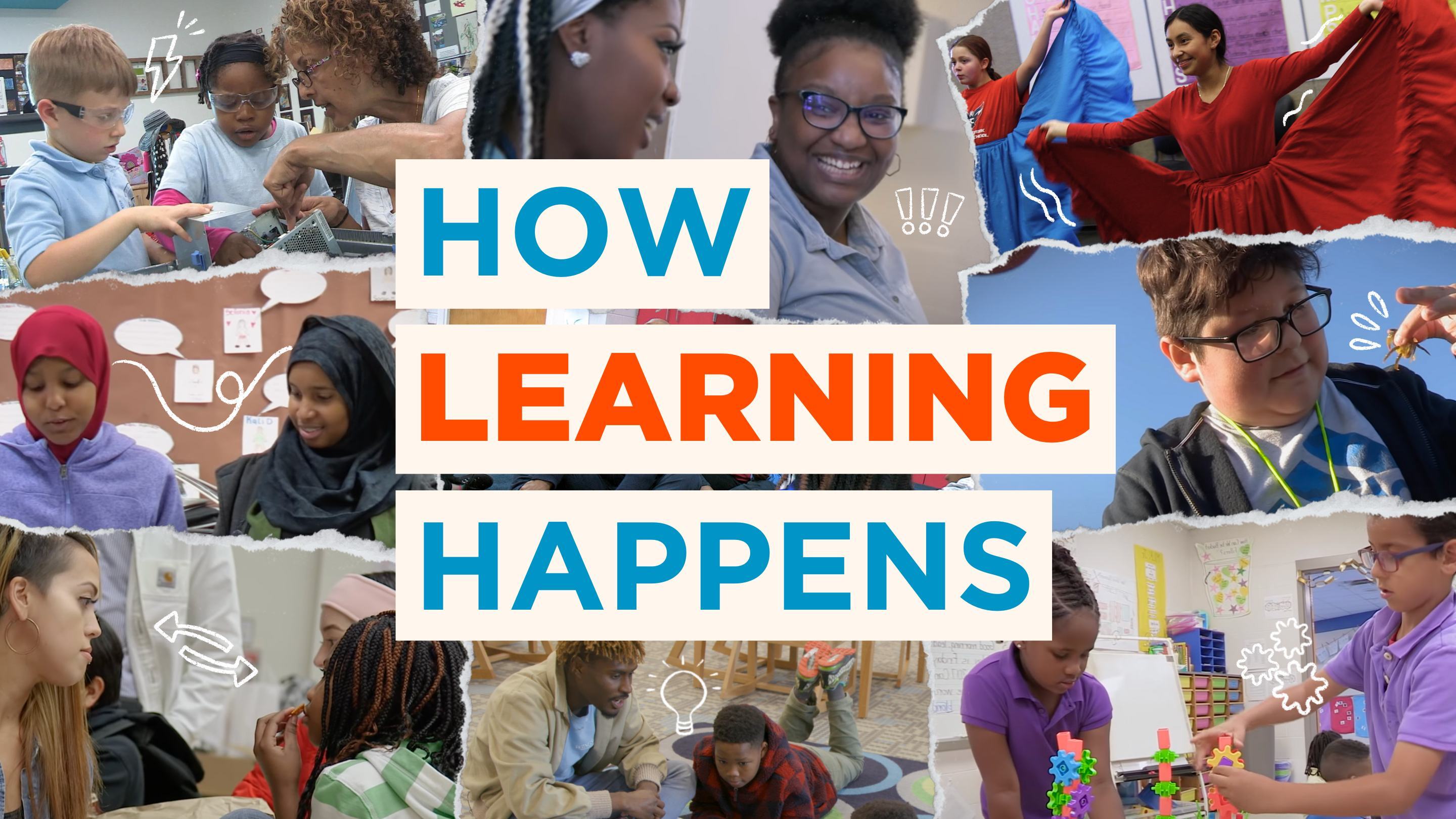
Learning looks simple from the outside. Someone explains a concept, a student nods, a notebook fills up, and everyone hopes wisdom has entered the chat. But real learning is messier, slower, and far more interesting than that. It is not a photocopier for facts. It is a process of attention, memory, meaning-making, practice, reflection, and revision. In plain English: learning happens when the brain does something with information, not when information merely passes by wearing a tie.
That matters because many people still confuse exposure with mastery. Reading a chapter is not the same as understanding it. Hearing a lecture is not the same as remembering it. Highlighting half a textbook in aggressive neon is not the same as being prepared for the test. Real learning happens when new ideas connect to what we already know, when we actively retrieve and use knowledge, when feedback helps us adjust, and when time, rest, and repetition strengthen the result.
Whether you are a teacher, parent, student, manager, or curious human who has ever forgotten a password five seconds after creating it, understanding how learning happens can change the way you study, teach, and work. It can also save you from wasting energy on strategies that feel productive but do not stick. So let’s open the hood and look at the engine.
Learning Starts Before the Lesson Starts
Prior knowledge is the launchpad
No one learns from absolute zero. Every learner walks into a classroom, training session, or YouTube tutorial carrying prior knowledge, assumptions, vocabulary, habits, and misconceptions. That background can help learning move faster, or it can quietly send it into a ditch. When new information fits into an existing mental framework, the brain has something to attach it to. When it clashes with flawed prior knowledge, confusion follows.
Think about a student learning photosynthesis. If that student already understands that plants need light, water, and carbon dioxide, the new concept has a place to land. But if the student believes plants “eat dirt,” the lesson has to do extra work. Learning is not just about adding information. It is often about reorganizing what is already there.
That is why the best teaching begins with questions, examples, and diagnostic checks. Great instructors do not assume the class is a blank page. They figure out what learners know, what they think they know, and what they confidently know wrong. It is not glamorous, but it is powerful. You cannot build a sturdy second floor on a first floor made of pudding.
Misconceptions are sticky for a reason
Misconceptions are hard to replace because they often feel intuitive. If a math student thinks dividing always makes numbers smaller, that rule seems fine until fractions arrive and ruin the party. If a history student thinks every event has one simple cause, deeper analysis becomes difficult. Learning happens more effectively when misconceptions are surfaced early and corrected through examples, comparison, explanation, and practice.
Attention Is the Front Door of Learning
You cannot learn what you do not notice
Attention is the entry point for learning. Information has to be noticed and mentally processed before it can be remembered. That sounds obvious, but attention is fragile. It gets hijacked by noise, stress, boredom, multitasking, fatigue, and the irresistible urge to check one notification that turns into twelve.
The brain is selective. It does not record every detail equally. Learners are far more likely to remember what they think about deeply, what feels meaningful, and what they actively work with. That means teaching and studying should focus less on covering massive amounts of content and more on making important ideas visible, organized, and mentally engaging.
Working memory is helpful, but tiny
Once information gets our attention, it moves into working memory, the mental workspace where we hold and manipulate information for a short time. Working memory is incredibly useful, but it is not built like an aircraft hangar. It is more like a crowded kitchen counter. Put too much on it, and something falls off.
This is why overloaded slides, confusing instructions, and long explanations without pauses can crush learning. When students are asked to juggle new vocabulary, unfamiliar ideas, directions, and examples all at once, working memory becomes overwhelmed. Good teaching reduces unnecessary mental clutter. Good studying breaks complex material into manageable chunks. Good learners do not try to swallow the whole textbook in one bite like a cartoon goat.
Memory Is Built, Not Bottled
Encoding happens through meaning
Memory is not created by mere repetition alone. It becomes stronger when learners make sense of ideas, connect them to prior knowledge, organize them, explain them, and use them in context. Memorization has value, especially for foundational knowledge, but durable learning usually depends on more than repetition. It depends on elaboration.
For example, a student learning the causes of the American Revolution will remember more when comparing multiple causes, explaining relationships among them, and discussing why different groups saw events differently. A nursing student learning anatomy will remember more by applying terms to case scenarios than by repeating definitions in isolation. A music student improves faster when linking technique to sound, expression, and feedback rather than mindlessly repeating a passage until the neighbors file a complaint.
Retrieval practice is one of learning’s superpowers
One of the most reliable findings in learning science is that trying to remember information strengthens learning better than simply reviewing it again and again. This is called retrieval practice. In real life, it means self-quizzing, low-stakes practice tests, flashcards used properly, writing what you remember from a lesson, or explaining a concept without looking at notes.
Why does this work? Because retrieval is not just a way to measure learning. It is a way to create it. Pulling information out of memory strengthens the pathways that make future retrieval easier. Rereading feels smooth because it is familiar. Retrieval feels harder because it is doing actual work. That difficulty is often a feature, not a bug.
A student who closes the book and explains mitosis from memory is usually learning more than a student who rereads the same page three times and says, “Yep, looks familiar.” Familiarity is sneaky. It often impersonates mastery.
Spacing beats cramming
Learning also improves when practice is spread out over time. This is called spaced practice. Cramming can produce short-term performance, especially when the goal is to survive tomorrow morning’s quiz with dignity intact. But spacing supports longer-term retention. When learners revisit material after some forgetting has happened, the act of retrieving it becomes more effortful and more beneficial.
That is why a student studying vocabulary for ten minutes across six days will usually retain more than a student who studies for an hour once and then celebrates too early. The same principle works in classrooms, language learning, corporate training, and skill development. Short, repeated contact with important material beats one heroic last-minute session powered by panic and caffeine.
Interleaving helps the brain discriminate
Another helpful strategy is interleaving, which means mixing related topics or problem types instead of practicing one kind in a single block. A math student who alternates between slope, graphing, and equations learns to identify which method fits which problem. A tennis player who practices different serves and returns must keep adjusting rather than repeating a single motion on autopilot.
Interleaving can feel less comfortable than blocked practice, but comfort is not always the best sign of learning. Sometimes the brain grows stronger when it has to notice differences, make choices, and retrieve the right approach at the right moment.
Emotion, Motivation, and Curiosity Matter More Than People Think
Learning is cognitive, but also emotional
Learning is not a purely mechanical process. Emotions shape attention, persistence, risk-taking, and memory. Supportive relationships and psychologically safe environments make it easier for learners to ask questions, make mistakes, and keep going. Chronic stress, fear of embarrassment, and constant threat can interfere with attention and working memory, making learning harder even for capable students.
This is one reason encouragement matters when it is honest and specific. Learners do better when they believe improvement is possible, effort is meaningful, and mistakes are part of progress. Empty praise is not useful. But clear messages like “You are getting better at organizing evidence” or “Your first draft improved because you used feedback” help students connect effort to growth.
Curiosity is fuel
Motivation gets stronger when learners see purpose, relevance, and challenge. Curiosity helps because it turns information from a burden into a puzzle. A student who wonders why the moon changes shape is more likely to remember the explanation than a student forced to memorize lunar phases with all the enthusiasm of a damp sock.
When teachers connect content to real problems, surprising questions, student goals, or meaningful choices, learning becomes more durable. Relevance is not fluff. It is glue.
Feedback Turns Effort into Improvement
Good feedback is specific, timely, and usable
Feedback matters because practice alone can reinforce mistakes. Learners improve when feedback tells them where they are, what they did well, what still needs work, and what to do next. The best feedback is not a vague “good job” or a discouraging red-ink avalanche. It is targeted, tied to clear goals, and delivered in time for the learner to use it.
Imagine two students writing essays. One gets a B-minus and shrugs sadly into the void. The other gets comments like, “Your thesis is clear, but your evidence needs explanation in paragraphs two and three. Add one sentence after each quote showing how it supports your argument.” The second student has a map. The first has a weather report.
Feedback works best when learners get a chance to apply it. Revision is not extra work attached to learning. Revision is often where learning becomes visible.
Metacognition Is Learning How to Learn
Strong learners monitor themselves
Metacognition means thinking about your thinking. It includes planning, monitoring understanding, checking progress, and adjusting strategies. Good learners do not just study harder. They study smarter because they notice when something is not working.
A student with metacognitive skill might ask: Do I really understand this, or do I only recognize it? Can I explain it without notes? What errors keep showing up? Which strategy helped most last time? That self-awareness is a quiet superpower.
Without metacognition, learners often overestimate their understanding. They reread, highlight, or review familiar material and assume learning happened because it felt smooth. With metacognition, they test themselves, reflect on mistakes, and shift tactics. They stop measuring study by time spent and start measuring it by what they can actually do.
Reflection makes knowledge more transferable
Reflection also helps transfer, which is the ability to apply learning in a new situation. It is one thing to memorize a formula. It is another to know when to use it. When learners explain their reasoning, compare strategies, or reflect on what changed in their thinking, they become more flexible and better prepared for unfamiliar problems.
Sleep, Rest, and Breaks Are Part of Learning Too
The brain’s night shift is real
Sleep is not the enemy of productivity. It is part of learning itself. During sleep, the brain supports memory formation and helps stabilize what was learned during the day. Without enough sleep, attention suffers, memory weakens, and thinking gets foggier. That heroic all-nighter may feel dramatic, but it is often educational self-sabotage wearing a hoodie.
Even short breaks can help. Rest periods give the brain space to process and consolidate information. That is why stepping away from a problem and returning later can sometimes lead to better recall or a clearer solution. Breaks are not laziness when they support learning. They are maintenance.
Learning Is Social, Active, and Designed for Use
People learn by doing and discussing
Active learning matters because people learn more effectively when they engage with ideas instead of only receiving them. Discussion, writing, explaining, solving, comparing, debating, teaching others, and working through examples all deepen learning. Passive exposure may introduce content, but active use helps secure it.
Social learning adds another layer. When learners explain ideas to peers, hear alternative interpretations, and collaborate on tasks, they often strengthen understanding. This does not mean every group project is magical. Some are chaotic enough to deserve a documentary. But thoughtful collaboration can reveal blind spots and expand thinking.
The final goal is transfer
Learning is most valuable when it can travel. The real test is not whether someone can repeat information in the original setting, but whether they can use it somewhere new. Can the science student apply a concept in a lab? Can the writer transfer argument skills from English class to history? Can the employee use training in a real customer interaction?
That kind of learning develops when knowledge is organized, practiced in different contexts, and connected to underlying principles instead of memorized as isolated facts. In other words, learning happens best when the brain understands both the “what” and the “why.”
What Learners and Teachers Can Do Tomorrow
So what does all of this mean in practice? Start small and practical. Activate prior knowledge before introducing new material. Reduce overload by chunking information. Use retrieval practice instead of only rereading. Spread review over time. Mix problem types. Give specific feedback that learners can use. Build reflection into studying and teaching. Protect sleep. Use examples, questions, writing, and discussion to make thinking visible.
Most of all, stop equating ease with learning. Real learning often feels effortful because it requires attention, memory, adjustment, and persistence. The goal is not to make everything easy. The goal is to make effort productive.
Experiences That Show How Learning Really Happens
I have seen the truth about learning in ordinary moments more than in dramatic ones. It appears in the student who swears she is “bad at math” until someone asks her to talk through one problem out loud. Suddenly, the issue is not intelligence at all. She knew more than she thought, skipped a key step, got confused, and decided confusion meant inability. Once she slowed down, retrieved what she knew, and received specific feedback, her confidence changed. Not overnight, not with fireworks, but in that steady way real learning usually happens.
I have seen it in language learners too. At first, they want to memorize everything perfectly before speaking. Then they realize that speaking badly is often the price of speaking well later. They forget words, mix tenses, and accidentally say things that make native speakers blink twice. But every retrieval attempt strengthens memory. Every correction adds structure. Every conversation turns passive knowledge into usable skill. The learner who keeps showing up improves, while the learner waiting to feel fully ready often stays parked at the curb.
Children show this process beautifully. Watch a child learning to ride a bike. There is prior knowledge from running, balancing, and steering smaller toys. There is attention focused on the road, the pedals, and the terrifying idea of gravity. There is working memory overload at first because every action feels conscious. Then practice begins to wire those actions together. Feedback arrives instantly from wobbling, turning, and falling. Rest helps. Confidence grows. Eventually, what once required total concentration becomes smooth enough for the child to ride one-handed and make questionable life choices.
Adults are not so different, just more polite about it. In workplaces, people often sit through training sessions, nod seriously, and then forget most of the content because they never use it. But when training includes examples, recall, discussion, coaching, and repeated use on the job, people actually improve. The difference is not whether information was delivered. The difference is whether learning was designed to happen.
One of the clearest patterns across these experiences is that mistakes are not interruptions to learning. They are often the material of learning. A wrong answer can reveal a misconception. A failed draft can show where structure is weak. A poor presentation can expose unclear thinking. When learners are ashamed of mistakes, they hide them. When they are taught to study mistakes, they can grow from them.
Another pattern is that motivation rises when progress becomes visible. Learners keep going when they can see improvement, even small improvement. A student who once could not summarize a chapter can now explain the main argument. A pianist who stumbled through four measures can now play eight cleanly. A new employee who needed help with every task now solves routine problems independently. Progress is motivating because it proves effort is doing something.
That may be the most encouraging truth of all: learning is not reserved for a lucky few with perfect memories and flawless focus. It is a human process shaped by strategy, environment, practice, and support. People learn when they pay attention, connect ideas, retrieve knowledge, reflect on errors, receive useful feedback, and keep returning to the work. It is less like magic and more like construction. Slow, sometimes dusty, occasionally frustrating construction. But give it time, and suddenly there is a building where there used to be a pile of parts.
Conclusion
How learning happens is no longer a mystery wrapped in a textbook and guarded by caffeine. We know that learning depends on prior knowledge, attention, working memory, memory retrieval, spacing, feedback, motivation, reflection, and sleep. We know that active engagement beats passive exposure. We know that struggle can be productive when it is guided. And we know that understanding grows best in environments where learners feel supported enough to try, fail, think, revise, and try again.
The takeaway is simple but powerful: learning is not about stuffing more information into the brain. It is about helping the brain build, organize, strengthen, and use knowledge over time. Once people understand that, they stop asking only, “How can I cover this?” and start asking the better question: “How can I make it stick?” That is where better teaching begins, better studying improves, and real learning finally gets the respect it deserves.