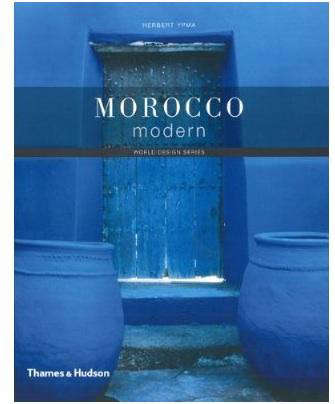
If coffee-table books had passports, Morocco Modern by Herbert Ypma would come back with a suspiciously glamorous stamp history and a carry-on full of tile envy. This is the kind of design book that makes you rethink walls, light, courtyards, color, and possibly your entire relationship with beige. It is lush without being fluffy, informed without sounding like a lecture, and stylish without acting like it discovered style five minutes ago. In other words, it earns its place on the shelf.
Ypma’s book is often treated like visual candy, and yes, it absolutely delivers the good stuff: rich color, sculptural interiors, handcrafted surfaces, dramatic courtyards, and rooms that seem to have been designed by people who understand that shadows are part of the furniture plan. But the real charm of Morocco Modern is that it does more than show beautiful spaces. It explains why they feel the way they do. It traces the conversation between tradition and modernity in Moroccan design, and that makes the book much more than a decorative object pretending to be literature.
That is why Morocco Modern still feels relevant. A lot of design books age like old fruitcake: expensive-looking, hard to chew, and mostly preserved for sentimental reasons. This one has staying power because its central idea remains fresh. Morocco’s visual world is not a museum piece frozen in amber. It is a living design language built from craft, climate, ritual, geometry, and invention. Ypma understands that the story is not old versus new. It is old meeting new in a courtyard, ordering mint tea, and deciding to collaborate.
What Morocco Modern Actually Does So Well
At its best, the book works like a visual translator. It helps readers see that Moroccan interiors are not just “colorful” or “exotic,” two words that tend to flatten everything into a travel brochure. Ypma instead treats Moroccan design as a sophisticated system of materials, techniques, and spatial ideas. The book connects decorative detail to architectural meaning. A tiled wall is not just a tiled wall. A courtyard is not just an outdoor room. A carved screen is not just a pretty pattern. Everything has purpose, and everything participates in atmosphere.
That is a big reason the book remains required reading for design lovers, stylists, architects, travelers, and even homeowners who simply want to understand why certain rooms feel calm, seductive, and impossibly alive. Ypma has a gift for showing how Moroccan spaces balance opposites without turning that balance into a cliché. Interiors can be ornate yet disciplined. Rooms can feel intimate yet expansive. Walls can be spare, and then suddenly a surface of tile or plaster steals the entire scene like a fabulous supporting actor who knows exactly when to make an entrance.
There is also an editorial intelligence at work here. Ypma does not present Morocco as one giant mood board. He shows range. He moves between villas, riads, gardens, artisan traditions, and more contemporary interpretations, allowing readers to understand that “Moroccan style” is not a single look. It is a family of ideas. That difference matters. When a design book narrows a culture into a handful of predictable visual tricks, it becomes decoration in the worst way. When it opens a wider lens, it becomes useful. Morocco Modern is useful.
The Big Design Lesson: Morocco Is Not Stuck in the Past
One of the smartest things about the book is right there in the title. Not Morocco Traditional. Not Morocco Nostalgic. Morocco Modern. That choice is the thesis. Ypma is interested in how old artisan practices survive not by sitting politely behind glass, but by being used, adapted, and reinterpreted in contemporary life.
This matters because Morocco is often reduced to shorthand: souks, lanterns, rugs, spice colors, dramatic doorways, maybe a dreamy rooftop if the algorithm is feeling generous. Ypma pushes past that postcard version. He shows a design culture in which ancient craftsmanship continues to shape modern architecture and interiors. Weavers, woodworkers, plaster artisans, tile makers, and metalworkers are not relics in this story. They are active contributors to how Moroccan spaces look and feel right now.
The result is a refreshing corrective to lazy design tourism. The book argues, visually and intellectually, that Moroccan modernism is not imported slickness pasted over heritage. It is something more layered. It is an ongoing dialogue between craft and contemporary living. That is part of why the rooms in this book feel so persuasive. They are not chasing trend cycles. They are built from practices with memory.
A Crash Course in the Moroccan Design Vocabulary
Riads: Privacy as Luxury
One of the recurring ideas behind Moroccan design is inwardness. The classic riad, usually arranged around a central courtyard, does not reveal much from the street. That modest exterior can open into a rich interior world of fountains, shade, tile, trees, and filtered light. It is architecture that rewards entry. And in a very loud modern world, there is something downright thrilling about a building that keeps its best lines to itself until you are invited inside.
Ypma gets this. He understands that the courtyard is not simply picturesque. It is social, climatic, spiritual, and emotional. It cools the home, organizes circulation, creates privacy, and gives architecture a quiet center of gravity. In a design culture obsessed with giant windows and public performance, the riad offers another model: a home can be introspective and still feel expansive.
Zellige: Geometry With Pulse
Then there is zellige, the hand-cut tilework that gives Moroccan surfaces their unmistakable shimmer and rhythm. In lesser hands, geometric pattern can feel stiff. In Moroccan design, it often feels musical. Repetition becomes movement. Precision becomes warmth. The eye never quite stops wandering, which is part of the pleasure.
Morocco Modern helps readers understand that geometry in Moroccan design is not decorative overkill. It is structure, logic, and emotion at once. These patterns create order, yes, but they also create energy. They are meditative without being sleepy. They keep a room awake.
Tadelakt: When Walls Stop Being Background
If zellige is pattern doing the most, tadelakt is texture playing the long game. This polished lime plaster has depth, softness, and a subtle sheen that can make an ordinary wall look like it has secrets. It catches light rather than simply wearing paint. In Moroccan interiors, tadelakt often turns the envelope of a room into the experience itself. The wall is not a passive surface. It becomes atmosphere.
This is one of the book’s quiet strengths: it teaches readers to look at finish as feeling. Moroccan interiors are so memorable not just because of color, but because materials behave beautifully in light. That sounds obvious until you realize how many contemporary interiors are photographed to death and still manage to feel emotionally flat.
Color: Bold, But Not Random
Moroccan design has a reputation for fearless color, and fair enough. But Ypma’s lens makes clear that the best examples are not chaotic. The strongest spaces use color with control. Deep blues, clay reds, saffron tones, dusty pinks, chalk whites, emeralds, inky neutrals, and flashes of brass or black all work because they are grounded in material, place, and proportion. Even exuberance has discipline.
That lesson alone makes the book worth revisiting. It reminds readers that color is more effective when it emerges from texture, craft, and architecture rather than just from a shopping cart full of “statement pieces.”
Why Herbert Ypma Is the Right Guide
Ypma is not an accidental tourist here. He has long been associated with visually driven publishing that blends design, travel, and atmosphere. His HIP Hotels work helped shape a whole genre of travel publishing, and that experience shows. He knows how to frame place as more than location. He understands mood, point of view, and the difference between a stylish image and a meaningful one.
That background gives Morocco Modern a particular advantage. The book never feels like it is merely cataloging objects. It is curating relationships: between architecture and craft, between old forms and modern life, between the built world and the traveler’s eye. Ypma knows that good design writing is not just about saying a room is beautiful. It is about helping readers understand what kind of intelligence made that beauty possible.
And thankfully, he avoids turning Morocco into a fantasy set for outsiders. The book is admiring, yes, but it is most compelling when it focuses on workmanship, continuity, reinvention, and the local design language that gives these spaces their power. Admiration is easy. Attention is harder. Ypma brings attention.
The Charles Boccara Chapter Is a Big Deal
One of the most interesting aspects of the book is its attention to architect Charles Boccara, whose work becomes a kind of bridge between inherited Moroccan forms and strikingly modern interpretation. That is a smart editorial move because it gives the book a forward tilt. Instead of ending with preservation, it ends with transformation.
Boccara’s presence reinforces the book’s core idea: Moroccan design can be deeply rooted without becoming rigid. Traditional materials, craftsmanship, and spatial conventions do not need to be copied literally to remain meaningful. They can be re-read. Re-scaled. Reframed. Modernized. That is how design cultures stay alive.
For readers, this section is especially valuable because it breaks the lazy assumption that authenticity only exists in untouched old spaces. Sometimes authenticity is reinterpretation done well. Sometimes it is a new building that understands the old grammar so thoroughly that it can write a fresh sentence without losing the language.
Why the Book Still Feels Fresh Now
Design culture in the social-media era is full of flattened references. A single arch, a brass lantern, a patterned tile, and suddenly something gets called “Moroccan-inspired.” Morocco Modern is a useful antidote because it restores depth. It asks readers to think in systems instead of fragments.
That makes the book surprisingly current. Today’s best designers are once again paying attention to craftsmanship, local making, tactile surfaces, slow materials, and architecture that responds to climate and ritual. Moroccan design has been doing that for ages. Ypma’s book shows that what looks romantic is often highly practical. Courtyards manage heat and privacy. Thick walls hold quiet. Screens filter light. Tile cools and reflects. Plaster softens and glows. Beauty is doing real work.
In that sense, the book is not just inspirational. It is instructive. It encourages readers to move past copy-paste styling and think about why certain design traditions endure. The answer is usually not trendiness. It is intelligence plus craft plus time.
Who Should Read Morocco Modern?
Interior designers should read it because it sharpens material awareness. Architects should read it because it demonstrates how ornament and geometry can coexist with clarity. Stylists should read it because it is a master class in layered visual storytelling. Travelers should read it because it teaches the eye how to see what might otherwise be reduced to “pretty.” And homeowners should read it because it proves that atmosphere is built from decisions, not just purchases.
Even readers who never plan to visit Morocco can get a lot from the book. At a time when so many interiors are polished into personality-free perfection, Morocco Modern is a reminder that rooms can be soulful, tactile, moody, and alive. They can be elegant without being sterile. They can feel collected rather than staged. They can whisper instead of shouting. Or, on certain pages, they can absolutely purr.
A Reader’s Experience: What It Feels Like to Live With This Book
Now for the part that design reviews sometimes forget: the experience of actually spending time with the book. Not flipping through it once. Not photographing the cover for evidence of sophistication. Actually living with it.
Morocco Modern is one of those books that changes depending on your mood. Open it when you are tired of overdesigned, overexposed interiors, and it feels restorative. Open it when your own home feels visually flat, and it starts making dangerous suggestions. Suddenly you are noticing corners. Light. Texture. The sad emotional condition of your walls. You may find yourself staring at a plain bathroom and thinking, “This room has no poetry.” That is both the gift and the hazard.
There is also a transportive quality to the book that is hard to fake. Some design books merely document rooms. This one creates a climate in your imagination. You can almost feel the coolness of plaster, the hush around a courtyard fountain, the softness of filtered daylight, the dry warmth of sun on stone, the visual snap of tile against matte surfaces. It does not just show spaces; it lets them linger. The pages have aftertaste.
And because Ypma does not treat Moroccan design as a bundle of clichés, the reading experience becomes richer over time. On the first pass, you notice beauty. On the second, you notice composition. On the third, you notice discipline: how geometry steadies color, how texture softens grandeur, how privacy creates drama, how craft gives modernism a pulse. The book rewards rereading because it rewards slower looking.
That is rare. Many design books are front-loaded with impact and then fade. Morocco Modern opens up. It teaches your eye, and once your eye learns something, ordinary interiors become harder to tolerate. Again, a gift and a hazard.
There is a very specific pleasure in reading a book that makes you want to travel, redecorate, and learn at the same time. Usually you get one of those urges, maybe two if the book is feeling ambitious. Ypma manages all three. You want to revisit Marrakech, or finally go. You want to understand the logic of riads, the seduction of zellige, the softness of tadelakt, the discipline of geometric ornament. And you want to bring at least one of those lessons home without turning your living room into a theme restaurant.
That last part is important. The book’s deepest lesson is not imitation. It is sensitivity. It encourages readers to borrow principles rather than costumes: respect for craft, delight in material, attention to light, love of enclosure, confidence with color, and the belief that decoration can be intelligent. Those are transferable ideas. They travel well.
So yes, Morocco Modern is beautiful on a table. But it is better in your hands and best when it starts altering the way you see. That is when a design book stops being an accessory and becomes what the title of this review already claims it is: required reading.
Conclusion
Morocco Modern by Herbert Ypma remains a standout because it does not simply admire Moroccan design; it interprets it. It reveals how craft traditions, geometric intelligence, courtyard architecture, rich materials, and modern reinvention work together to produce spaces that still feel thrillingly relevant. The book is visually indulgent, yes, but it also has brains, discipline, and curiosity. That combination is why it still matters.
If you care about interiors that feel timeless without becoming stale, layered without becoming cluttered, and culturally rooted without becoming frozen, this book deserves a permanent spot in your reading stack. Some books decorate a room. This one sharpens your eye. Much better value, honestly.