Note: This article is an original, fully rewritten synthesis based on publicly available U.S. research about household labor, mental load, parenting stress, relationship satisfaction, and modern marriage dynamics.
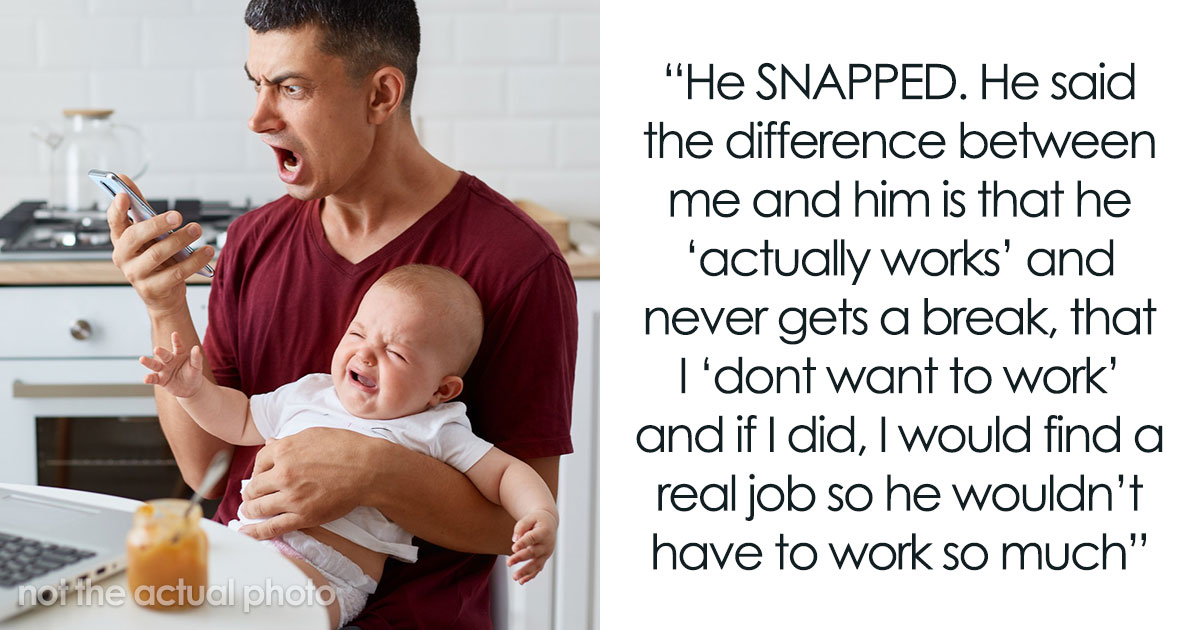
There are few words more dangerous in a marriage than “lazy,” especially when the person saying it has not touched a laundry basket since the Obama administration. In one viral relationship story, a woman described falling out of love with her husband after years of feeling unsupported at home, emotionally abandoned after childbirth, and then insulted for supposedly not doing enough. The comment that pushed everything over the edge? Her husband called her lazy while she was juggling childcare, chores, recovery, and the invisible work of keeping the household from turning into a national disaster zone.
The story hit a nerve because it was not really about one messy kitchen or one unfair argument. It was about the slow erosion of affection when one partner becomes the default parent, default cleaner, default planner, default emotional sponge, and default emergency-response team. At some point, love can stop feeling romantic and start feeling like unpaid management with occasional criticism from the person creating half the mess.
Across the United States, research continues to show that women still carry a larger share of housework, childcare, and mental load in many heterosexual relationships. Pew Research Center has reported that even in marriages where husbands and wives earn similar amounts, wives still tend to spend more time on caregiving and housework, while husbands often have more leisure time. The U.S. Bureau of Labor Statistics’ American Time Use Survey also shows that women are more likely than men to spend time on household activities on an average day. In other words, this is not just “internet drama.” It is a kitchen-table version of a national pattern.
Why Being Called “Lazy” Can Break Something That Chores Alone Don’t
Chores are annoying, but they are rarely the true villain. Dishes do not destroy marriages by themselves. Socks on the floor do not file divorce papers. The real damage happens when one partner’s labor is invisible, dismissed, or treated as less valuable because it happens inside the home.
In the viral story, the woman was not simply upset because her husband failed to help. She was upset because he seemed unable, or unwilling, to understand the size of what she was carrying. Caring for a baby, managing a home, recovering physically and emotionally, and trying to maintain a small business are not “doing nothing.” Anyone who thinks a baby’s nap equals a vacation has clearly never tried to eat lunch, shower, answer messages, fold laundry, and cry quietly into a granola bar during a 37-minute sleep window.
Calling a partner “lazy” in that context becomes more than an insult. It becomes a verdict. It says, “I do not see your effort.” It says, “I believe my contribution counts more than yours.” It says, “Your exhaustion is suspicious, but mine is legitimate.” Once that message lands, affection can begin to change shape. Respect cools. Trust shrinks. Desire quietly packs a bag.
The Mental Load: The Work Nobody Claps For
Household labor is not just the visible stuff, like washing bottles, sweeping crumbs, or wiping mysterious sticky patches off the counter. There is also the mental load: remembering appointments, tracking groceries, noticing when diapers are low, planning meals, scheduling repairs, buying birthday gifts, organizing school forms, managing family routines, and knowing which tiny human will emotionally collapse if the blue cup is unavailable.
Cleveland Clinic describes mental load as the constant stream of decisions, obligations, and to-dos people carry in their minds. Kaiser Permanente similarly defines it as the unpaid, often invisible work involved in running a household and caring for family members. Research from the University of Bath found that mothers in the United States manage a much larger share of household mental-load tasks, including planning, scheduling, organizing, and everyday childcare-related thinking.
This matters because mental load is not “just thinking.” It is project management without a paycheck, performance review, or lunch break. When one partner says, “Just tell me what to do,” it may sound helpful, but it often means the other partner still has to be the manager. That is not equal partnership. That is one adult becoming the household CEO while the other waits for shift instructions like a confused intern holding a mop.
When Unequal Labor Turns Into Emotional Distance
Many people assume falling out of love happens dramatically: a betrayal, a screaming fight, a suitcase by the door. But in domestic-labor conflicts, love often fades quietly. It fades when she asks for help and gets defensiveness. It fades when she explains the problem for the tenth time and he calls it nagging. It fades when she stops expecting support because disappointment has become more predictable than teamwork.
Relationship experts often point out that contempt, criticism, defensiveness, and stonewalling can deeply damage connection. A partner who repeatedly dismisses household work or mocks the person doing it can create a climate of resentment. And resentment is not a dramatic thunderstorm. It is more like mold behind the wall: invisible at first, but eventually the whole structure smells weird.
In this kind of marriage, the woman may not wake up one morning and suddenly stop loving her husband. Instead, she may slowly stop feeling emotionally safe with him. She may stop sharing small thoughts. She may stop laughing at his jokes. She may stop wanting his touch because her body remembers that he rested while she drowned. By the time she says, “I don’t love him anymore,” the relationship may have been quietly starving for years.
Why “Helping” Is the Wrong Word
One of the biggest problems in household conflict is the word “help.” When a husband says he “helps” around the house, it can sound positive. But the word also implies that the home is primarily her responsibility and he is generously assisting, like a guest who brought ice to a barbecue.
A shared home is not one partner’s workplace and the other partner’s lounge. If both adults live there, both adults are responsible for keeping it functional. That includes the boring things: dishes, laundry, floors, trash, meals, bills, appointments, childcare, pet care, and the eternal mystery of why there is always one wet towel abandoned somewhere tragic.
Research and surveys from organizations such as Pew Research Center and Gallup have repeatedly shown that women are more likely to report doing more household chores, while men are more likely to perceive chores as equally shared. This perception gap can be a relationship grenade. If she feels overwhelmed and he feels unfairly criticized, both partners may believe they are the reasonable one. But the house itself usually tells the truth. Someone knows where the clean pajamas are. Someone remembers the pediatrician’s name. Someone notices the fridge is empty before dinner becomes “ketchup and vibes.”
The Stay-at-Home Parent Trap
Stay-at-home parents are often especially vulnerable to being misunderstood. Because their labor does not arrive with a salary, some partners treat it as less real. But unpaid does not mean effortless. It means the economy is quietly benefiting from work that would be extremely expensive if outsourced.
Childcare, cooking, cleaning, shopping, scheduling, emotional soothing, early education, transportation, household inventory, and crisis management are all valuable forms of labor. If a family paid separate professionals for every role a stay-at-home parent performs, the bill would look like it had been personally designed by a villain.
In the viral story, the husband reportedly became frustrated after only a short period of caring for the baby. That detail resonated with many readers because it revealed a familiar imbalance: the work was supposedly easy until he had to do it. Suddenly, the baby was not “just napping.” Suddenly, the constant interruptions, crying, feeding, soothing, and mess became visible.
Why Appreciation Matters Almost as Much as Labor
Equal contribution is important, but appreciation is also crucial. A partner can survive hard seasons when they feel seen. New babies, tight finances, illness, job stress, and messy homes are all survivable when both people believe they are on the same team. What becomes unbearable is suffering beside someone who treats your exhaustion as a character flaw.
A simple “I see how much you did today” can soften resentment. A genuine “I’ll take the baby; go rest” can rebuild trust. A partner who notices the invisible work can turn a routine Tuesday into emotional repair. No grand violin section required.
But appreciation cannot be a substitute for action. Complimenting someone while they do everything is not partnership. It is commentary. Imagine sitting beside a person carrying a couch upstairs and saying, “Wow, you’re so strong,” while holding a smoothie. Eventually, they are not going to feel admired. They are going to feel like dropping the couch on your foot.
How Couples Can Fix the Chore Imbalance Before Love Leaves the Building
Make the Invisible Visible
The first step is writing everything down. Not just “cleaning,” but every tiny task inside cleaning: noticing the mess, buying supplies, wiping counters, sweeping, mopping, sorting laundry, folding clothes, putting clothes away, changing sheets, cleaning bathrooms, and remembering that towels become biological experiments if ignored too long.
Do the same for childcare, meals, finances, pets, social planning, family communication, and appointments. The goal is not to create a courtroom exhibit. The goal is to reveal the full workload so both partners stop arguing from fantasy and start discussing reality.
Own Tasks From Start to Finish
A useful household rule is full ownership. If one partner is responsible for dinner, that means planning the meal, checking ingredients, shopping if needed, cooking, and cleaning up. If one partner handles school paperwork, that means reading the emails, tracking deadlines, completing forms, and remembering theme day, even if theme day is “dress like your favorite vegetable,” because apparently schools enjoy chaos.
Full ownership prevents one partner from becoming the household manager. It also builds competence. Adults are highly capable of learning where the extra wipes are stored. We believe in them.
Stop Treating Rest as Something One Person Must Earn
In unequal relationships, one partner often rests by default while the other rests only when every task is finished. But household work is never truly finished. There is always another dish, another crumb, another email, another sock staging a rebellion under the couch.
Healthy couples protect each other’s downtime. Both people need sleep, leisure, hobbies, friendships, and time to stare at a wall without being asked where the scissors are. Rest should not be a luxury item granted to the person with the higher paycheck.
Why Online Readers Reacted So Strongly
The internet can be dramatic, but the reaction to this story made sense. Many readers recognized the pattern immediately: a woman overwhelmed by domestic labor, a husband underestimating it, a cruel insult, and then surprise when her feelings disappear. People were not just responding to one couple. They were responding to the cultural habit of treating women’s exhaustion as normal and men’s occasional participation as heroic.
For many women, the story sounded familiar because they have lived a version of it. Maybe their partner did not call them lazy, but he asked what they did all day. Maybe he praised himself for “babysitting” his own child. Maybe he expected intimacy after ignoring her requests for help. Maybe he thought taking out the trash once deserved a parade, a medal, and possibly a small municipal holiday.
The emotional math is simple: when one partner feels like a servant, roommate, mother, and complaint department, it becomes very hard to also feel like a lover.
When Is It Too Late?
Not every relationship with chore imbalance is doomed. Many couples can recover if both partners are willing to be honest, humble, and consistent. The key word is consistent. One apology after one explosive fight is not enough. Neither is doing dishes angrily for three days and then retiring forever like a champion athlete.
Repair requires changed behavior over time. It requires the under-contributing partner to stop debating whether the other person is “too sensitive” and start asking what life has actually felt like for them. It requires practical redistribution of labor, emotional accountability, and often professional counseling if the resentment has become deep.
But sometimes, love has been neglected for too long. When a partner has begged for help, explained the pain, carried the family, absorbed insults, and finally detached emotionally, the late apology may not land. That does not make the person cold. It means the emotional account may be overdrawn.
Experiences Related to This Topic: What Many Women Describe Behind Closed Doors
Many women who relate to this story describe a similar timeline. At first, they ask nicely. They say, “Can you please help more with the baby?” or “Could you take care of the dishes tonight?” The request seems small, but underneath it is a much bigger plea: “Please notice that I am exhausted. Please act like this home belongs to both of us. Please do not make me carry everything alone.”
When nothing changes, the requests become more emotional. She may start explaining why she is tired, listing everything she did that day, or pointing out that he had time to relax while she moved from one task to another. He may hear this as criticism. She may experience his defensiveness as proof that he cares more about protecting his image than protecting her well-being. Now the conflict is no longer about dishes. It is about whether her reality is allowed to exist.
A common experience is the “temporary improvement cycle.” After a big argument, he helps for a few days. He loads the dishwasher, changes a diaper, maybe even wipes a counter with the confidence of a man defusing a bomb. She feels a flicker of hope. Then, gradually, the old pattern returns. He waits to be asked. He forgets. He says he was busy. He says she has higher standards. She realizes she is not only doing the work; she is supervising his short-term performance plan.
Another common experience is emotional shutdown. This is when a woman stops arguing because arguing has started to feel pointless. To the partner who has not been paying attention, her silence may seem like peace. In reality, it may be grief. She is grieving the marriage she thought she had, the teammate she needed, and the version of herself who used to believe that enough explaining would make him understand.
There are also women who describe losing attraction, not because their partners are physically different, but because dependence has replaced partnership. It is difficult to feel romantic toward someone who creates extra work, avoids responsibility, and then expects affection. Desire often grows where there is respect, emotional safety, and mutual care. When those disappear, attraction can fade even if love once felt strong.
Some couples do turn things around. The turning point usually comes when the under-involved partner stops asking, “What do you want me to do?” and starts noticing what needs to be done. He learns the routines. He takes initiative. He owns tasks completely. He apologizes without adding a courtroom defense. Most importantly, he accepts that the damage was not caused by one argument. It was caused by a long pattern of making his partner feel alone while standing right next to her.
For readers in similar situations, the lesson is not that every overwhelmed spouse should immediately leave. The lesson is that domestic labor is emotional labor, relational labor, and trust-building labor. A clean kitchen is nice, but a partner who notices, participates, and appreciates is better. Nobody falls out of love because of one dirty plate. But years of dirty plates, ignored pleas, and insults disguised as opinions can absolutely bury a marriage one crumb at a time.
Conclusion: Love Needs More Than WordsIt Needs Partnership
The story of a woman falling out of love after being called lazy is powerful because it exposes a truth many couples avoid: love cannot thrive where one person is drowning and the other is critiquing their swimming technique. Household labor may seem ordinary, but it is one of the daily places where respect is either built or broken.
A strong marriage is not about perfectly splitting every task down the middle. It is about fairness, awareness, flexibility, and care. It is about noticing when your partner is tired before they have to collapse. It is about understanding that childcare is work, housework is work, planning is work, and emotional support is work. Most of all, it is about refusing to insult the person who has been quietly holding the whole system together.
Calling an overwhelmed partner “lazy” may feel like one angry sentence in the moment. But to the person who has been carrying the invisible weight of the home, it can sound like the final confirmation that they are not seen. And once someone stops feeling seen, loved, and respected, falling out of love may not be sudden at all. It may be the most logical thing their heart has done in years.