Mary Mallon is remembered by a nickname she never chose: Typhoid Mary. More than a century after her case made headlines, the name still describes someone who spreads illness while appearing perfectly healthy. That linguistic immortality is impressive, although it is probably not the sort of personal branding anyone would request.
The familiar version of the story is simple: an Irish cook carried typhoid fever, infected numerous people, refused to cooperate with health authorities, and spent decades quarantined on an island. The real history is considerably more complicated. It involves a newly understood form of disease transmission, inconsistent laboratory results, sensational journalism, economic hardship, immigrant prejudice, civil-liberties questions, and public-health officials working without anything resembling a modern crisis-management handbook.
Mary was unquestionably capable of transmitting Salmonella Typhi, the bacterium that causes typhoid fever. She also continued preparing food after being warned of the danger. Yet she was neither the city’s only healthy carrier nor its deadliest one. Her story is less a tidy tale of hero versus villain than a historical pressure cooker in which science, fear, personality, class, and government power were all simmering at once.
1. “Typhoid Mary” Was an Irish Immigrant Named Mary Mallon
Mary Mallon was born on September 23, 1869, in Cookstown, County Tyrone, in what is now Northern Ireland. She traveled to the United States as a teenager, arriving in New York during the early 1880s. Like many young immigrant women with limited money and connections, she entered domestic service.
Mallon eventually became a private cook, a position that offered better wages and more prestige than laundry or general household work. She reportedly developed a reputation as a capable kitchen professional and found employment with affluent New York families. Her birthplace, Cookstown, seems almost suspiciously appropriate, but history occasionally writes its jokes with a very thick pen.
The nickname that replaced her identity came later. Newspapers and public-health commentators turned her into “Typhoid Mary,” transforming a complicated human being into a memorable symbol of invisible contagion. Today, many people recognize the phrase without knowing that Mary Mallon was a real working woman navigating the narrow employment options available to an unmarried Irish immigrant.
2. She Appeared Completely Healthy
Mallon was the first person identified in the United States as an asymptomatic carrier of typhoid fever. She did not experience the sustained fever, weakness, stomach problems, headache, or other obvious symptoms associated with the disease. By her own account, she had never suffered from typhoid at all.
That made the accusation against her sound absurd from her perspective. Imagine feeling energetic enough to run a demanding household kitchen while strangers insist that invisible organisms inside your body are making other people gravely ill. Germ theory was gaining scientific acceptance, but the concept of a healthy carrier was still unfamiliar to much of the publicand even relatively new to medicine.
Modern science recognizes that some people can continue carrying and shedding Salmonella Typhi after an infection, sometimes for years. The bacteria may persist in the gallbladder, particularly in association with gallstones. Current CDC guidance estimates that a small percentage of treated typhoid patients become chronic carriers. Mallon’s symptom-free condition was therefore biologically possible, even though it seemed almost supernatural in 1907.
3. Her Famous Outbreaks Occurred in Wealthy Households
Typhoid fever was commonly associated with crowded neighborhoods, contaminated water, poor sewage systems, and poverty. That is why a 1906 outbreak in Oyster Bay, Long Island, caused such alarm. Oyster Bay was a fashionable summer destination, not the sort of place where wealthy vacationers expected a sanitation-related disease to join them for dessert.
Mary had been hired as a temporary cook for the family of banker Charles Henry Warren. Within weeks, six members of the household became ill. Investigators examined the home’s water, plumbing, milk, shellfish, and other possible sources, but none provided a convincing explanation.
The property owner was particularly motivated to solve the mystery. A summer rental linked to typhoid was about as marketable as a beach house advertised with complimentary mosquitoes and an unexplained basement odor. Sanitary engineer George Soper was hired to investigate, and his attention eventually shifted from the building to the household staff.
Soper reconstructed Mallon’s work history and found a disturbing pattern. Typhoid cases had appeared in multiple homes soon after she began cooking there. His original investigation connected her with 22 illnesses across several households, including at least one death.
4. The Man Who Tracked Her Was a Sanitary Engineer, Not a Physician
George Soper is frequently called a doctor in popular retellings, but he was primarily a civil and sanitary engineer with expertise in tracing disease outbreaks. In modern language, he performed the work of a field epidemiologist: examining patterns, comparing locations, interviewing witnesses, and following the evidence through time.
Soper noticed that outbreaks followed Mallon from job to job. His reasoning was impressive, especially when laboratory-based epidemiology was still developing. His bedsideor kitchen-sidemanner was less impressive.
When he confronted Mallon in 1907, he asked her to provide blood, urine, and stool samples. From Soper’s scientific perspective, this was a sensible request. From Mary’s perspective, an unfamiliar man had entered her workplace, accused her of causing deadly illnesses, questioned her cleanliness, and requested extremely personal specimens. She reportedly responded by advancing toward him with a carving fork.
The fork incident became one of the story’s most colorful details, but it also reveals the communication failure at the center of the case. Soper approached Mary as a disease source to be examined, not as a frightened person who needed an understandable explanation, legal guidance, and a realistic plan for earning a living.
5. Peach Ice Cream May Have Been One of the Transmission Vehicles
Cooking usually involves heat, and sufficient heat kills Salmonella Typhi. This created a puzzle: if Mallon transmitted bacteria while cooking, why did her hot meals not destroy the organism before anyone ate them?
Soper focused on foods that Mary prepared and served without reheating. One frequently mentioned dish was ice cream containing freshly cut peaches. If bacteria were transferred from improperly washed hands to the fruit, freezing would not reliably make the dessert safe. The result could have been a delicious-looking delivery system for something decidedly less delightful.
It is important not to declare peach ice cream the proven cause of every outbreak. Investigators did not have today’s food-testing technology, and the dish became partly famous because Soper highlighted it in his account. Still, the theory illustrated an essential principle of food safety: cooked ingredients can be contaminated again when handled after heating.
The episode also helped public-health experts explain why handwashing mattered even when a cook looked healthy and used apparently fresh ingredients. Clean water, sanitation, safe food handling, and careful hand hygiene would eventually become central tools in typhoid prevention.
6. Her Laboratory Results Were Not as Simple as the Legend Suggests
After health officials detained Mallon, repeated testing found typhoid bacteria in many of her stool specimens. However, not every sample was positive. Some tests returned negative results, and private testing arranged on her behalf also produced findings she believed supported her innocence.
Intermittent shedding is common among chronic carriers. A negative specimen does not necessarily mean that the organism has permanently disappeared. That explanation makes sense today, but it was hardly reassuring to Mary. She saw different laboratories producing different answers while the government used the positive results to justify taking away her freedom.
Doctors attempted several treatments and proposed removing her gallbladder, a procedure that might have reduced carriage if the organ was the bacterial reservoir. Mallon refused surgery. Considering the risks of abdominal surgery in the early 1900s, her refusal was not automatically irrational. Antibiotics capable of reliably treating chronic typhoid carriage were not yet available.
The disagreement was therefore not merely “science versus ignorance.” It involved evolving science, imperfect testing, dangerous treatment options, poor communication, and a patient who deeply distrusted the people controlling her life.
7. The Media Helped Turn Her Into a Monster
The expression “Typhoid Mary” began circulating while Mallon was still fighting for her release. A notorious 1909 newspaper illustration showed her dropping skulls into a frying pan, presenting her less as an unwitting carrier than as a supernatural cook serving death by the ladleful.
Sensational coverage made a difficult public-health case easier to understand but harder to discuss fairly. A memorable villain sold newspapers better than a nuanced examination of bacterial carriage, sanitation policy, labor conditions, and due process.
The nickname also stripped Mallon of individuality. People infected with typhoid became victims, investigators became disease detectives, and Mary became the menace. Her anger, refusal to cooperate, and eventual return to cooking certainly contributed to public hostility. Yet the language used against her was also influenced by stereotypes concerning immigrants, domestic workers, poverty, gender, and supposed personal cleanliness.
Her name eventually became an idiom for any person who spreads trouble, disease, computer malware, misinformation, or office gossip. That is a remarkable cultural legacy for someone who spent much of her life insisting that the identity assigned to her was false.
8. She Challenged Her Confinement in Court
Mallon was forcibly isolated on North Brother Island in 1907. She lived in a small cottage near Riverside Hospital and remained there for approximately three years during her first confinement.
In 1909, she petitioned for release, arguing that she was healthy and had been deprived of liberty without a criminal trial. Her personal letter from this period describes loneliness, repeated medical examinations, conflicting laboratory findings, and the humiliation of being treated as a public spectacle.
There has long been speculation that newspaper publisher William Randolph Hearst helped finance her legal challenge because the case generated attention for his newspapers. The financial arrangement is not conclusively documented, but the theory fits Hearst’s history of supporting headline-friendly legal battles.
The court upheld the health department’s authority. In 1910, however, a new health commissioner released Mallon after she agreed to follow hygiene rules, report regularly, and never work as a cook again. The government helped place her in laundry work, but laundry paid less and removed the professional status she had earned in private kitchens. Public safety had a plan for her bacteria; it had a much weaker plan for her rent.
9. She Was Not New York’s Deadliest Typhoid Carrier
Estimates differ regarding the number of illnesses connected to Mallon. Depending on the historical source and the standard of proof used, the total is often placed between 47 and 57 cases, with three confirmed deaths.
Those numbers are serious, but they do not support the popular image of Mary single-handedly creating a massive citywide epidemic. Her early record consisted mainly of smaller household clusters spread over several years. A modern historical analysis has even argued that labeling her a “superspreader” can be misleading because she did not generate one enormous outbreak.
Other known carriers caused more illnesses. A New York food worker named Tony Labella was reportedly connected to outbreaks involving more than 100 cases and five deaths. By the late 1930s, New York authorities knew of hundreds of typhoid carriers, most of whom were monitored rather than permanently isolated.
Why, then, did Mary become the symbol? She was the first identified carrier of her kind in the country, she fought officials dramatically, she worked in food preparation, she returned to cooking after promising not to, and the press gave her an unforgettable nickname. History does not always select its symbols by spreadsheet.
10. Her Second Quarantine Was Different From Her First
After her 1910 release, Mallon initially worked outside professional kitchens. The health department eventually lost contact with her. By 1914, she had returned to cooking under the name Mary Brown.
In early 1915, a typhoid outbreak occurred at Sloane Maternity Hospital in Manhattan. Twenty-five people became ill, and two died. Investigators identified the hospital cook as Mary Mallon. Her decision to prepare food againthis time in a medical institutiondestroyed much of the public sympathy she had received during her first confinement.
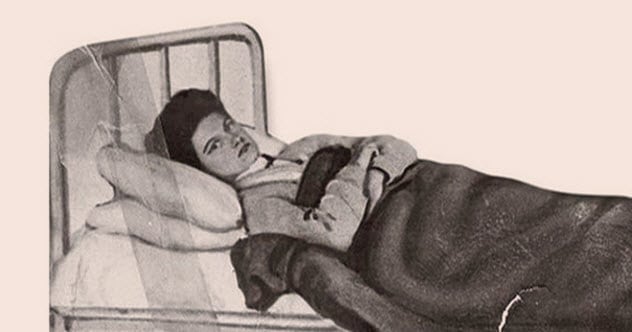
She was returned to North Brother Island, where she remained for the final 23 years of her life. However, her later existence was not continuous solitary confinement. She baked, made crafts, received limited permission for trips, and eventually performed support work in the hospital laboratory, including cleaning equipment and recording information.
Mallon suffered a major stroke in 1932 and spent her remaining years largely bedridden. She died on November 11, 1938, at age 69. Pneumonia is commonly listed as the immediate cause of death.
Another little-known twist concerns the popular claim that an autopsy discovered typhoid bacteria in her gallstones. Some medical histories repeat that story, while other researchers maintain that no autopsy occurred. The disagreement is a useful reminder that even famous historical “facts” can acquire an extra layer of seasoning during retelling.
Was Typhoid Mary a Villain or a Victim?
Mary Mallon was both responsible for dangerous decisions and subjected to an unusually harsh response. After her release, she knew that officials considered her capable of spreading typhoid. Returning to commercial cooking under another name exposed people to a risk she had been explicitly warned about. The Sloane Maternity Hospital outbreak made permanent restrictions much easier to defend.
At the same time, her first detention occurred before officials had made a serious effort to earn her trust, provide independent medical advice, protect her income, or establish clear legal procedures for healthy carriers. Other carriers were later handled through monitoring, work restrictions, education, and financial assistance rather than decades of island confinement.
The case remains important precisely because it resists an easy verdict. Public health sometimes requires restrictions to prevent serious harm. Those restrictions are most legitimate when they are based on strong evidence, applied consistently, regularly reviewed, explained clearly, and paired with practical support for the people whose freedom or livelihood is affected.
Experience and Perspective: What the Typhoid Mary Story Feels Like From the Inside
Historical facts become more meaningful when we pause the timeline and consider the experiences of the people trapped inside it. The Mallon case looks very different depending on which kitchen dooror laboratory dooryou enter.
The Experience of a Household
Picture a prosperous family spending the summer in Oyster Bay. The water appears clean, the house is comfortable, and the new cook prepares excellent meals. Then one person develops a fever. Another becomes weak. Within days, several members of the household are seriously ill. No one knows whether the problem is the well, the milk, the seafood, the plumbing, or something carried into the home.
Typhoid fever before modern antibiotics could continue for weeks and cause intestinal bleeding, perforation, delirium, or death. For affected families, identifying the source was not an abstract scientific exercise. They wanted the danger stopped before another child, servant, or relative became sick.
The Experience of an Investigator
Now consider Soper’s position. He reviewed household after household and saw the same unusual pattern: Mary arrived, typhoid followed, and Mary departed. The statistical trail was compelling even before laboratory confirmation. To him, every day without testing created the possibility of another outbreak.
His frustration is understandable. Yet his experience also demonstrates that being correct about the evidence does not guarantee success with people. A technically brilliant investigation can collapse at the communication stage when the person being investigated feels cornered, insulted, or dehumanized.
The Experience of Mary Mallon
From Mary’s side, the accusations challenged everything she understood about illness. She felt healthy. She had cooked for households in which no documented outbreak occurred. Some of her test results were negative. Officials followed her, confronted her at work, forcibly transported her, collected intimate specimens, and confined her without a conventional criminal proceeding.
Cooking was also more than a hobby. It was her profession, financial security, and place of competence in a society that offered immigrant women few respectable routes to independence. Being told to become a laundress was not a minor career adjustment. It meant harder work, lower pay, and the loss of an identity she had built over years.
The Experience of a Public-Health Official
Health authorities faced an equally uncomfortable reality. They could not wait for Mary to develop symptoms because she might never develop them. They could not allow a confirmed carrier to handle food for dozens of people. They also lacked effective antibiotics, reliable long-term treatment, standardized carrier policies, and a social-support system designed for someone permanently barred from her occupation.
The choice was not between a perfect solution and a cruel one. It was among several flawed options, some of which placed Mary at risk and others that placed the public at risk.
The Experience of a Modern Reader
For modern readers, the most valuable experience is the discomfort of holding two ideas at once. Mary deserved dignity, due process, clear explanations, and consistent treatment. The people eating food she prepared also deserved protection from a potentially fatal infection.
The story warns us against turning patients into monsters, but it also warns us against treating personal disbelief as a substitute for evidence. It shows why public trust must be built before a crisis, why isolation without economic support can fail, and why health rules must be applied consistently rather than selectively.
More than a century later, Mary Mallon’s experience remains relevant because infectious disease is never purely biological. It moves through workplaces, kitchens, laws, rumors, paychecks, prejudices, and human relationships. Bacteria may be microscopic, but the social consequences are usually enormous.