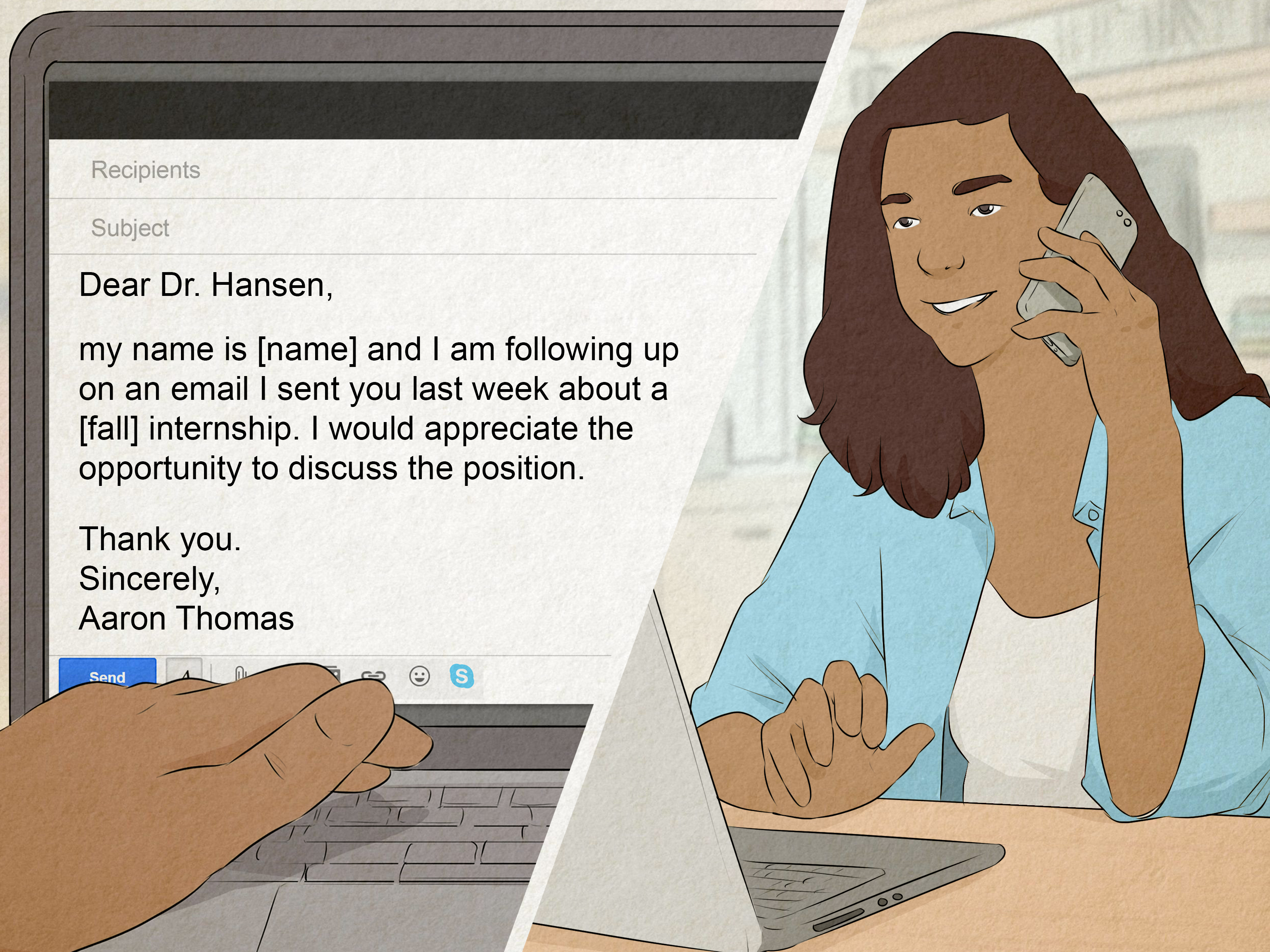
Writing an email asking for an internship can feel strangely dramatic. You type three sentences, reread them 14 times, replace “Hello” with “Dear,” change it back, and briefly consider abandoning your career to raise alpacas.
Fortunately, an effective internship request email does not require literary genius or heroic confidence. It requires research, a clear purpose, a professional tone, and enough personalization to prove that you did not send the same message to 200 companies before breakfast.
This guide explains how to write an email asking for an internship, whom to contact, what to include, how to follow up, and which mistakes can send an otherwise promising message directly into the digital wilderness.
What Is an Internship Request Email?
An internship request email is a professional message sent to an employer, recruiter, manager, professor, or professional contact to express interest in an internship opportunity. You may use one to apply for an advertised position, ask about unlisted opportunities, request an informational conversation, or introduce yourself before a future recruiting cycle.
The message is not merely a miniature cover letter. Its immediate job is to start a conversation. Your email should help the recipient understand who you are, why you contacted this particular organization, what you could contribute, and what you would like them to do next.
Cold emailing is widely accepted as a professional networking method when the message is respectful, relevant, and concise. University career centers also emphasize that networking conversations can reveal opportunities that have not yet been publicly advertised.
Do Your Homework Before Writing
A strong internship inquiry begins before the greeting. Spending 15 or 20 minutes researching the organization can prevent vague statements, embarrassing errors, and questions already answered in enormous letters on the company’s careers page.
Confirm Whether an Application Process Already Exists
Visit the employer’s careers page, LinkedIn profile, internship portal, and recent job listings. Search for application dates, eligibility requirements, requested documents, program duration, and instructions about whom to contact.
When an organization has a formal process, follow it. An email can support your application, but it should not be used to leap over clearly stated requirements like an ambitious squirrel attempting to bypass airport security.
Find the Right Recipient
Whenever possible, address your message to a specific person rather than sending it to a general inbox. Suitable contacts may include:
- An internship coordinator
- A campus recruiter or hiring manager
- The manager of the department you hope to join
- An alumnus who works at the organization
- A small-business owner or nonprofit director
- A professor leading a relevant research project
Look on the company website, LinkedIn, an alumni directory, or your university’s career platform. If you cannot identify the hiring contact, a department manager is often a better choice than the chief executive of a large corporation.
Study the Organization’s Work
Read enough to identify one specific reason you are interested. It might be a recent campaign, research initiative, software product, community program, design approach, or business problem.
“Your company is very successful” could describe thousands of organizations. “I was interested in your recent project expanding financial-literacy workshops for first-generation students” sounds like you chose the recipient deliberately.
Identify What You Can Offer
Internship applicants often worry that they lack professional experience. Employers understand that interns are still learning. Your evidence can come from coursework, volunteer service, campus organizations, part-time jobs, independent projects, competitions, portfolios, or research assignments.
Choose one or two experiences that demonstrate skills relevant to the organization. A class project analyzing consumer data may support a marketing application. Managing a student club’s budget can demonstrate organization and financial responsibility. Building a personal website can show initiative, even if the website’s current monthly traffic consists of you and your mother.
How to Structure an Email Asking for an Internship
The best internship emails are usually brief enough to read in less than a minute. They contain a clear subject line, personalized greeting, focused introduction, evidence of fit, specific request, and professional closing.
1. Write a Clear Subject Line
Your subject line should tell the recipient why you are writing without sounding like an advertisement or emergency broadcast.
Effective internship email subject lines include:
- Summer Marketing Internship Inquiry Jordan Lee
- Computer Science Student Interested in Fall Internship
- Referred by Professor Adams Research Internship Inquiry
- Application for Communications Internship Maya Patel
- University of Michigan Junior Seeking Design Internship
Avoid subjects such as “Please Help,” “Internship,” “Important Opportunity,” or “You Won’t Want to Miss This.” The last one sounds less like a student and more like someone selling suspicious waterfront property.
2. Use a Professional Greeting
Use “Dear Ms. Rivera,” “Hello Dr. Thompson,” or “Hello Marcus,” depending on the organization’s culture and your existing relationship with the recipient.
Check the person’s name, title, and spelling carefully. Do not assume gendered titles when you are uncertain. “Hello Taylor Morgan” is safer than confidently promoting Taylor to “Mr.” or “Ms.” based on a profile photo taken from 40 feet away.
3. Introduce Yourself Immediately
Your opening should answer three questions:
- Who are you?
- What are you studying or pursuing?
- Why are you contacting this person?
For example:
I am a junior studying environmental science at Arizona State University, and I am writing to ask whether Green Horizon may offer research internships for summer 2027.
This introduction is more useful than “My name is Alex, and I hope this email finds you well.” Politeness is welcome, but the recipient probably wants to discover why Alex has entered the inbox.
4. Explain Why You Chose the Organization
Add one or two sentences showing that your interest is specific. Mention a project, department, value, product, or professional specialty that genuinely attracted you.
I was especially interested in your team’s work developing low-cost water-quality sensors for rural communities. My environmental chemistry coursework has made me eager to learn how field data can support practical public-health solutions.
Career guidance from major universities consistently recommends establishing context or common ground, explaining why you selected the recipient, and keeping outreach personal rather than generic.
5. Connect Your Skills to Their Needs
Briefly explain what you could contribute. Do not paste your entire resume into the message. Select the strongest evidence and connect it to the employer’s work.
Through a semester-long research project, I gained experience cleaning field data in Excel, preparing concise literature reviews, and presenting findings to a five-person faculty panel.
Notice that this sentence uses evidence. “I am hardworking, passionate, motivated, detail-oriented, innovative, collaborative, and approximately 17 other adjectives” is less convincing than one concrete example.
6. Make a Specific Request
Tell the recipient what you are asking for. Depending on the situation, you might request:
- Information about upcoming internship openings
- Consideration for an advertised internship
- A short informational conversation
- Guidance about the appropriate application process
- Permission to send additional materials
A practical request might read:
Would your team be open to considering an undergraduate intern for June through August? I would be glad to speak for 15 minutes at a convenient time or submit materials through your preferred application process.
Be direct without demanding an immediate decision. When no internship is advertised, asking for a short conversation or information about future opportunities may feel more reasonable than asking a stranger to manufacture a position before lunch.
7. Mention Your Attachments
Attach a tailored resume unless the employer’s instructions say otherwise. Include a portfolio or writing sample only when it is relevant or requested.
Name files professionally:
- Jordan-Lee-Resume.pdf
- Maya-Patel-Writing-Sample.pdf
- Chris-Wong-Design-Portfolio.pdf
Avoid filenames like “resume-final-FINAL-really-final2.pdf.” Recruiters do not need a documentary series about your editing journey.
8. Close Politely
Thank the recipient and provide a simple signature containing your full name, school, program, graduation year, phone number, email address, and optional LinkedIn or portfolio link.
Professional correspondence guidance recommends concise, positive language, active phrasing, careful proofreading, and application materials tailored to the particular employer.
Internship Request Email Template
Cold Email for an Unadvertised Internship
Subject: Summer Data Analytics Internship Inquiry Taylor Brooks
Dear Ms. Hernandez,
I am a junior studying statistics at the University of Texas at Austin, and I am writing to ask whether BrightPath Health may consider undergraduate interns for summer 2027.
I became interested in your organization after reading about its work using patient-feedback data to improve access to community health services. In a recent university project, I cleaned and analyzed a 12,000-row dataset using Python and created a dashboard summarizing the results for a nontechnical audience.
I would welcome the opportunity to support your analytics team while developing a deeper understanding of data-informed health programs. Would you be available for a brief conversation, or could you direct me to the appropriate person regarding internship opportunities?
I have attached my resume for context. Thank you for your time and consideration.
Sincerely,
Taylor Brooks
B.S. Statistics, Class of 2028
University of Texas at Austin
[email protected]
555-012-3456
Email When Someone Referred You
Subject: Referred by Dana Lewis Communications Internship Inquiry
Hello Mr. Grant,
Dana Lewis, my faculty adviser at Ohio State University, suggested that I contact you because of my interest in nonprofit communications.
I am a sophomore studying public relations and currently manage social media for a campus food-security initiative. During the past semester, I developed a content calendar, interviewed student volunteers, and helped increase event registrations through targeted email and social campaigns.
I admire Community Table’s practical approach to reducing food insecurity and would appreciate learning whether your communications team expects to host interns this fall. I have attached my resume and would be grateful for the opportunity to speak briefly.
Thank you for your consideration.
Best,
Morgan Davis
Email Requesting an Informational Interview
Subject: Architecture Student Seeking Career Advice
Dear Ms. Chen,
I am a second-year architecture student at the University of Washington. I found your profile through our alumni directory and was interested in your transition from sustainable-design research into urban planning.
I am exploring internships that combine environmental design and public-space development. Would you be willing to speak with me for 20 minutes about your career path and the skills students should build before applying to firms in this area?
I understand that your schedule may be busy, and I appreciate your consideration.
Best regards,
Avery Johnson
Informational-interview guidance commonly recommends introducing yourself, explaining why you selected the professional, requesting a limited amount of time, and thanking the person for considering the request.
How to Follow Up on an Internship Email
If you receive no response, wait approximately five to seven business days before following up. Reply within the original email thread so the recipient can see your first message.
Dear Ms. Hernandez,
I am following up on my message regarding potential summer internship opportunities with BrightPath Health. I remain very interested in your organization’s analytics work and would appreciate any guidance about the appropriate application process.
I understand that you may have a busy schedule. Thank you again for your time.
Best,
Taylor Brooks
One follow-up is usually appropriate. A second may be reasonable when an application deadline is approaching or the recipient previously invited you to reconnect. Daily reminders, calendar invitations, and messages reading “Just bumping this again!!!” tend to communicate persistence’s unruly cousin: panic.
Berkeley’s career guidance recommends maintaining control of follow-up by stating when you plan to reconnect and then honoring that commitment.
Common Internship Email Mistakes
Sending a Generic Message
An email that could be sent unchanged to any employer rarely creates interest. Replace broad praise with a specific connection to the organization’s work.
Making the Email Too Long
Your life story, every course you have completed, and the emotional origin of your interest in spreadsheets can wait for the interview. Keep the first message focused.
Focusing Only on What You Want
Internships are learning experiences, but employers also need help completing meaningful work. Balance your learning goals with the skills, energy, or perspective you can contribute.
Using an Unprofessional Email Address
Use your university address or a professional personal account based on your name. Retire addresses created during middle school, particularly those involving “DragonLord,” excessive underscores, or a passionate declaration about a band that separated in 2014.
Forgetting the Attachment
Attach your resume before writing the message. This reverses the classic routine of promising an attachment, clicking Send, and immediately experiencing a full-body flashback.
Ignoring Instructions
If the employer asks applicants to use a portal, submit a PDF, include a specific subject line, or provide a writing sample, follow those directions exactly. Attention to instructions is itself evidence of professionalism.
Using AI-Generated Language Without Editing It
Writing tools can help you brainstorm or proofread, but your final email should sound like a real person. Remove exaggerated claims, generic enthusiasm, invented familiarity, and phrases you would never say aloud. “I am profoundly captivated by your organization’s unparalleled operational ecosystem” is a memorable sentence, but not in the way you hoped.
Final Checklist Before You Click Send
- Is the recipient’s name and title correct?
- Does the subject line explain the purpose of the email?
- Have you introduced yourself clearly?
- Did you mention a specific reason for contacting this organization?
- Did you connect one or two relevant experiences to its work?
- Is your request specific and reasonable?
- Is the email concise and easy to scan?
- Have you checked grammar, spelling, and dates?
- Is your resume attached and correctly named?
- Does your signature contain accurate contact information?
Experience-Based Lessons From Internship Outreach
The following composite experiences reflect patterns students commonly encounter when contacting employers. They are useful because internship outreach rarely produces a perfect movie-scene ending in which a recruiter replies within 12 seconds and announces that the company has been waiting specifically for you.
Experience One: Specificity Beats a Perfect Resume
A journalism student once prepared a beautifully formatted email for several local publications. The message contained no errors, the resume looked polished, and the tone was professional. Unfortunately, every publication received nearly identical wording: “I admire your organization and would love the opportunity to contribute.”
The response rate was approximately the sound of an empty hallway.
The student then changed the approach. Each new email mentioned a particular article, editorial project, or audience served by the publication. The student also proposed two realistic ways to help, including researching local events and preparing short community-news briefs.
The resume had not changed. The relevance had. Editors could suddenly imagine where the applicant might fit, which made responding easier.
Experience Two: Class Projects Count as Evidence
An engineering student delayed contacting companies because he believed he had “no experience.” He had never held an engineering job, but he had designed a low-cost irrigation controller for a class, tested three prototypes, documented technical problems, and presented the final model.
Once those details were included in his internship email, he no longer sounded inexperienced. He sounded like an early-career candidate who had already practiced testing, troubleshooting, documentation, and presentation.
The lesson is not to inflate school assignments into corporate achievements. It is to describe what you actually did and explain why those actions are relevant.
Experience Three: A Smaller Request Can Open a Bigger Door
A psychology student contacted a nonprofit with no advertised internship program. Her first draft asked whether the director could create a summer internship involving research, counseling observation, event planning, and community outreach. That was a large request from a stranger.
She revised the message and asked for a 15-minute conversation about how undergraduates could prepare for work in community mental-health programs. During the conversation, the director learned about her volunteer experience and later introduced her to a program coordinator who needed summer assistance.
The student did not hide her interest in an internship. She simply began with a request the recipient could answer without reorganizing the entire organization.
Experience Four: Silence Is Not Always Rejection
A finance student sent a carefully researched email to a small advisory firm and received no reply. Six business days later, she sent a short follow-up in the same thread. The manager responded that the original message had arrived during quarterly reporting and had been buried.
The follow-up led to a conversation and eventually an interview. Had the student sent three impatient reminders in 48 hours, the outcome might have been different. Had she never followed up, the message might have remained buried forever.
Professional persistence means making it easier for someone to revisit your request, not making the person regret possessing an email account.
Experience Five: Every Message Builds a Skill
Not every internship email receives a response, and not every response produces an offer. However, each well-researched message improves your ability to introduce yourself, explain your interests, identify useful skills, and communicate with professionals.
Those abilities matter far beyond internships. They later appear in job applications, networking conversations, graduate-school outreach, client communication, and salary negotiations. Even an unsuccessful email can be useful practice when you review what worked, improve the wording, and continue thoughtfully.
Conclusion
Learning how to write an email asking for an internship is largely about reducing uncertainty for the reader. Explain who you are, why you selected the organization, what relevant value you offer, and what action you are requesting.
Research before writing, personalize the message, keep it concise, attach a tailored resume, and follow up once with patience. You do not need to sound like a senior executive trapped in a college student’s body. You need to sound prepared, curious, capable, and genuinely interested.
The best internship email may not produce an immediate offer. It can, however, begin a useful conversationand many careers have started with something just that simple.