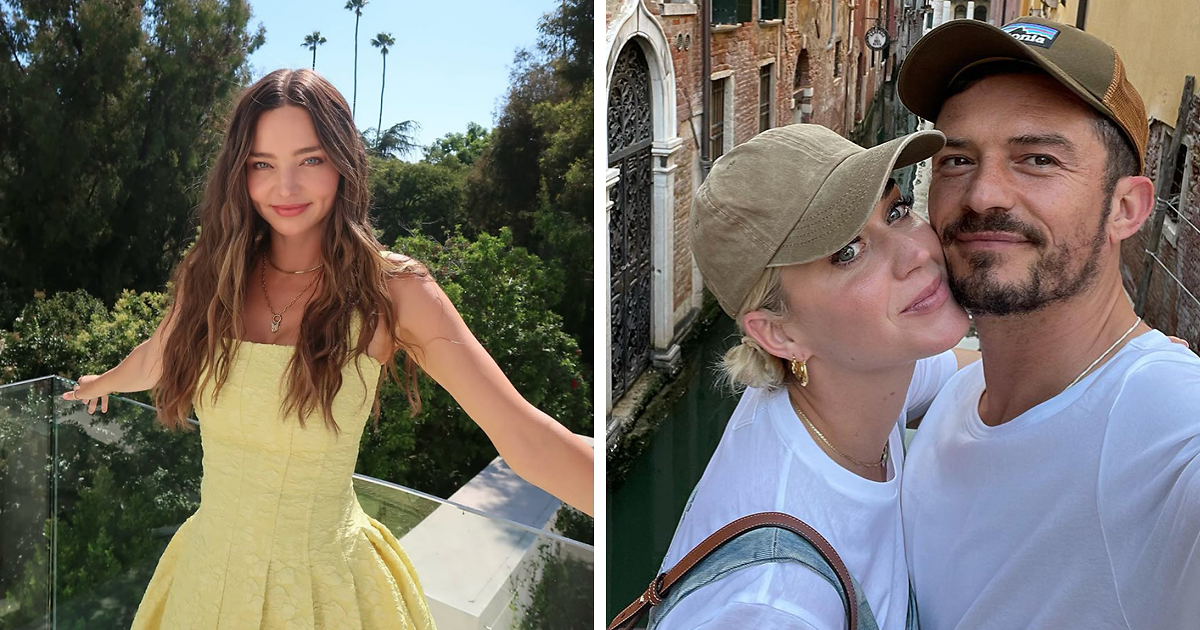
Hollywood breakups usually come with one of two accessories: a vague “we remain friends” statement or a revenge outfit so sharp it could slice a paparazzi lens. So when Miranda Kerr casually dropped, “We were celebrating,” while talking about her ex Orlando Bloom’s breakup with Katy Perry, it landed like a rare celebrity unicornsparkly, surprisingly calm, and somehow… practical.
Because that one phrase doesn’t just mean someone had cake. It signals a whole approach to modern co-parenting: the kind where you can show up for the kid, stand next to the ex, and keep the emotional weather mild enough that nobody needs an umbrellaor a lawyer.
What Miranda Kerr Actually Said (And Why People Heard It Loud and Clear)
In early September 2025, Kerr addressed Bloom and Perry’s split publicly for the first time during a radio interview. The headline line was refreshingly direct: the breakup was amicable, and she’d recently seen them together.
“I actually just saw them both on the weekend. We were celebrating Daisy’s birthday… We’re one big, happy family.”
That’s it. No dramatic pauses. No “sources close to the situation.” No metaphors about seasons changing. Just a grown-up update delivered with the energy of someone describing a normal weekendbecause, in her version of reality, it kind of is.
The subtext behind the simplicity
- The split isn’t a war. If everyone can share space at a child’s birthday, the relationship shift is clearly not an open-fire situation.
- The kids are the headline. Kerr’s phrasing keeps the focus on Daisy and the family structure, not adult drama.
- Blended families can be intentional. She’s not selling a fantasy; she’s describing a choice.
A Quick Timeline (So Your Brain Stops Trying to Remember 2016)
Celebrity relationship timelines are basically group projects nobody asked for, but here’s the clean version:
- Miranda Kerr and Orlando Bloom were married and later separated, sharing a son together.
- Orlando Bloom and Katy Perry dated for nearly a decade, got engaged, and welcomed a daughter, Daisy Dove.
- July 2025 brought public confirmation that Bloom and Perry had shifted away from romance and toward co-parenting.
- September 2025 Kerr comments, framing the dynamic as amicable and family-centered.
The point of the timeline isn’t to play “who dated who when.” It’s to understand what makes Kerr’s quote stand out: it’s not just commentary on a breakupit’s commentary on a system they’ve built around the kids.
Why “We Were Celebrating” Is More Than a Cute Quote
1) It’s proof of concept
Anyone can say “we’re fine.” Showing up in the same room is the real-life receipt. A birthday party is also the most emotionally complicated “neutral zone” imaginable: nostalgia, family members, cameras, and tiny humans fueled by frosting and chaos. If you can do that peacefully, you can probably handle drop-offs and parent-teacher conferences without a courtroom cameo.
2) It quietly shuts down the drama machine
Celebrity news cycles love conflict because conflict is clickable. Kerr’s line doesn’t give the machine much to chew on. No accusations. No shading. No “I wish them the best” that secretly means “I blocked them on everything.” It’s disarmingly normal, which is the opposite of what most gossip thrives on.
3) It reframes “breakup” as “restructure”
When parents split, the relationship doesn’t necessarily endit changes shape. Kerr’s statement reads like a public reminder that romantic endings don’t have to become parenting disasters. The adults can separate while still showing up as a team for the kids. That’s not always possible in every situation, but it’s a powerful model when it is.
The Blended Family Playbook: What They’ve Been Signaling for Years
Kerr didn’t invent this vibe in September 2025. The “one big, happy family” language matches years of public moments that hinted their blended-family setup wasn’t just PRit was practice.
Family vacations and shared time
Long before the breakup headlines, Kerr described their dynamic as a blended family, including spending time together and even going on vacations. That matters because “we’re friendly” is easy to say; planning a trip with multiple adults and children is the relationship Olympics. If you can coordinate snacks, schedules, and sleep routines across households, you’re doing advanced-level cooperation.
Public warmth between Kerr and Perry
Kerr and Perry have also publicly spoken about each other with unusually positive energy. When two women share an ex and still manage to sound like they’d actually sit together at dinner by choice, it’s notablebecause it’s rare, and because it’s quietly reassuring for the kids involved.
Holiday traditions as the “real” test
After big announcements fade, what remains is logistics: holidays, birthdays, school events, the unglamorous but important moments. Kerr has spoken about the family leaning into togetherness during holidayscooking, gathering, spending time in ways that keep the children’s experience stable.
Translation: the goal isn’t to pretend everyone is still dating. The goal is to protect the kids from feeling like love disappears when adults change chapters.
What Orlando Bloom and Katy Perry Have Said (And What They Haven’t)
Public breakups often include statements that sound like they were written by a committee of attorneys and meditation app subscriptions. In July 2025, the messaging around Bloom and Perry leaned heavily toward co-parenting and respectessentially: we’re still a family, just in a different format.
Bloom later addressed the breakup in a brief, appreciative way, emphasizing gratitude and love, and keeping the focus on their daughter. Perry, meanwhile, has largely kept her comments minimal in formal interviews, even as the public tried to read her tour setlists like they were court documents.
The overall pattern: keep it calm, keep it kid-forward, keep it brief. Not because feelings don’t existbecause feelings don’t need to be a press release.
PR Reality Check: Amicable Doesn’t Mean “Nobody Cried”
Let’s be real for a second: an amicable split isn’t the same as an easy split. It means the people involved are choosing restraint and respect even if it hurts. Kerr’s message doesn’t deny pain; it refuses to turn pain into spectacle.
Also, “one big, happy family” doesn’t mean “no boundaries.” In fact, healthy blended families usually run on boundaries. The secret sauce is often:
- Clear expectations (who handles what, when, and why)
- Respectful communication (no surprise schedule bombs)
- Consistency for the kids (routines that don’t vanish when adults disagree)
- Emotional maturity (the unsexy superpower)
Kerr’s comments also align with something she’s emphasized elsewhere: harmony isn’t just for the childrenit’s also for the adults, because carrying animosity is exhausting and expensive (emotionally, mentally, andif we’re honestfinancially).
Why This Story Resonates Beyond Celebrity Culture
People didn’t latch onto this quote because they desperately needed another celebrity update. They latched onto it because it shows a version of family life many people want but don’t often see modeled publicly: ex-partners acting like adults, new partners not being treated as enemies, and kids getting to keep their sense of safety.
Even if you don’t live in a mansion or attend a gala, the emotional math is familiar:
- How do you show up for your child without reopening old wounds?
- How do you keep a co-parent relationship functional when romance is over?
- How do you build a blended family that feels stable instead of tense?
Kerr’s “we were celebrating” is basically a short answer to all three: you focus on the kid, you keep it respectful, and you don’t let the past drive the car.
Practical Takeaways: If You’re Building a “One Big Happy Family” (Or Trying To)
1) Put “kid logistics” in writing
Not because you don’t trust each otherbecause you don’t want misunderstandings. Calendars, shared notes, and clear expectations reduce conflict.
2) Create neutral rituals
Birthdays are a great example: one event, one celebration, one child-centered purpose. Neutral rituals keep the focus where it belongs.
3) Keep adult emotions out of kid moments
You can process your feelings later with friends, therapy, or a long walk where you dramatically stare into the distance. Not at the birthday table.
4) Respect the new partners
If new partners are safe and caring, treating them like villains creates instability for kids. A polite, cooperative dynamic is a gift to the childeven if it takes work.
5) Remember: harmony is a strategy
It’s not pretending. It’s choosing peace because it’s healthier than war.
Extra: of Real-World “We Were Celebrating” Experiences (Because This Is Where It Gets Real)
Experience #1: The Birthday Party Truce
The first shared birthday after a breakup can feel like walking into a room where the air remembers everything. People rehearse smiles like they’re auditioning for a role called “Totally Fine Adult.” The most successful parties usually have a plan: arrive at a set time, keep the event short, focus on the child, and avoid corner conversations that start with “So… about what happened.” When it works, the kid remembers balloons and cakenot tension. That’s the win.
Experience #2: The Group Chat That Should Be Boring
Healthy co-parenting group chats are aggressively uninteresting. They’re all: “Pickup at 4,” “Doctor appointment moved,” “Do we have enough sneakers?” The moment a chat becomes emotional, it stops being a tool and becomes a trap. A good rule: if the message would make sense in a workplace Slack channel, it’s probably safe for co-parenting. If it sounds like song lyrics, save it for therapy.
Experience #3: The Holiday Schedule Negotiation
Holidays are where “amicable” gets stress-tested. Everyone wants traditions, nobody wants conflict, and the kids just want to wake up feeling like their world isn’t splitting in half. Families who handle this well often rotate holidays fairly, keep transitions predictable, and avoid last-minute changes. The secret isn’t perfectionit’s consistency. Children can handle two homes. What they struggle with is uncertainty.
Experience #4: The New-Partner Introduction
Introducing a new partner is less about romance and more about stability. The best approach is slow, respectful, and child-centered. It’s not a dramatic “meet my boyfriend!” moment; it’s more like “this is someone important to me, and we’re all going to be kind.” When co-parents treat new partners with basic decency, kids don’t feel pressured to pick sides. They get permission to like people without feeling disloyal.
Experience #5: The Unexpected Emotion at a School Event
School plays, sports games, and award ceremonies have a way of bringing up old feelingspride, nostalgia, even grief. The healthiest co-parents treat those emotions like weather: you notice them, you don’t deny them, but you also don’t let them flood the event. You clap for the kid. You take the photo. You keep it civil. Then you process privately later. Children shouldn’t have to carry their parents’ emotional leftovers.
Experience #6: The Boundary That Saves the Relationship
People think boundaries are harsh. In reality, boundaries are what make cooperation sustainable. “Please don’t change plans the day of,” “Let’s keep conversations about school and schedules,” “We’ll celebrate together for two hours, then we’ll split.” Boundaries reduce resentment, which protects the long-term co-parenting relationship. Harmony isn’t a personality traitit’s a structure you build.
Conclusion: A Calm Quote With a Big Message
Miranda Kerr’s “We were celebrating” may sound small, but it points to something huge: a redefinition of what family can look like after a breakup. It suggests that respect can outlast romance, that children can remain the priority without adults becoming martyrs, and that a blended family can be more than a headlineit can be a lived, practiced reality.
In a celebrity culture that often rewards chaos, Kerr’s approach is almost rebellious: show up, be kind, keep it harmonious, and let the kids keep their joy. Sometimes the most shocking thing a celebrity can do is act like a stable grown-up.