A Thermowood bath mat is the kind of bathroom upgrade that quietly says, “Yes, I have my life together,” even if there is still a shampoo bottle from 2021 hiding in the shower corner. Unlike the soft fabric bath mat that drinks water like it is training for a marathon, a wooden bath mat made from thermally modified wood is designed to stand above moisture, let air move, and bring a clean spa-like look to the room.
The Thermowood bath mat has become popular with people who want a bathroom accessory that is practical, natural, and more refined than a soggy rug. It is especially appealing in modern, Scandinavian, Japanese-inspired, sauna-style, and minimalist bathrooms. The look is simple: slatted wood, warm color, clean lines, and no unnecessary fluff. Literally, no fluff. That is part of the charm.
But this mat is not only about looks. Thermowood, also called thermally modified wood, is treated with heat in a controlled environment to improve stability and reduce moisture absorption. That matters in a bathroom, where steam, splashes, humidity, and wet feet are part of the daily drama. A good Thermowood bath mat gives your feet a dry, firm landing while helping water drain instead of pooling under a fabric rug.
What Is a Thermowood Bath Mat?
A Thermowood bath mat is a wooden bath mat made from wood that has been thermally modified. In simple terms, the wood is heated to high temperatures in a controlled, low-oxygen environment. This process changes the wood’s structure, making it less likely to swell, shrink, or absorb water compared with untreated wood.
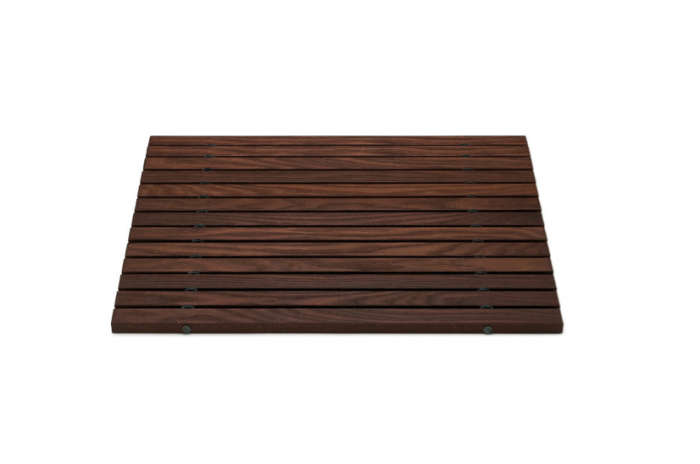
One well-known version is the Thermowood Bath Mat associated with Manufactum and featured by Remodelista. That design uses rectangular Thermowood slats, oiled ash Thermowood, and small silicone rings between the slats to help reduce slipping. The result is a mat that looks like a miniature spa deck for your bathroom floor.
Instead of absorbing water like cotton or microfiber, a slatted Thermowood bath mat allows moisture to pass through and air to circulate. This makes it different from a traditional bath rug. It is closer to a small platform, which is why similar wooden mats are often used near saunas, outdoor showers, pools, spas, and hot tubs.
Why Thermowood Works Well in the Bathroom
Bathrooms are tough on materials. Heat, humidity, water droplets, soap residue, and constant foot traffic can turn a pretty accessory into a science experiment if it is not chosen carefully. Thermowood is attractive for this environment because thermal modification helps reduce the wood’s tendency to absorb moisture.
When wood absorbs water, it can swell. When it dries, it can shrink. Repeat that cycle every day and regular wood may warp, crack, cup, or lose its smooth appearance. Thermowood is more dimensionally stable, so it is better suited to places where moisture levels change often. Your bathroom may not be a rainforest, but after a hot shower with the door closed, it can certainly audition for the role.
The thermal process also gives the wood a rich, darker tone that can resemble tropical hardwoods. This is one reason Thermowood bath mats look more premium than many basic bamboo or plastic mats. The color feels warm and architectural, especially against white tile, stone floors, concrete, or matte black fixtures.
Thermowood vs. Teak, Bamboo, Cotton, and Stone Bath Mats
Thermowood vs. Teak
Teak is famous for bathroom and boat use because it naturally contains oils that help resist water. A teak bath mat is often sturdy, attractive, and long-lasting. Thermowood offers a different advantage: it uses a heat-treatment process to improve moisture behavior and stability. It can deliver a similar warm wooden look without relying on tropical hardwood sourcing.
Teak usually has a golden-brown tone, while Thermowood often appears darker and more roasted. Think of teak as sunlit honey and Thermowood as toasted espresso. Both can look beautiful, but Thermowood may be the better match for darker, moodier, spa-inspired bathrooms.
Thermowood vs. Bamboo
Bamboo bath mats are affordable, lightweight, and widely available. Many have slatted designs and rubber feet, making them practical for everyday use. However, bamboo can vary in quality, finish, and durability. Cheaper bamboo mats may split, discolor, or lose their coating over time if they stay wet too long.
A Thermowood bath mat typically feels more substantial and furniture-like. It is less “budget bathroom accessory” and more “tiny architectural object that happens to catch your feet.” That said, bamboo can still be a smart choice for renters or anyone testing the wooden bath mat lifestyle before investing in a higher-end option.
Thermowood vs. Cotton or Microfiber
Cotton and microfiber bath mats are soft, absorbent, and easy to toss into the washing machine. They are great if your main goal is plush comfort. The downside is that they hold moisture. If they are not washed and dried regularly, they can develop odors, mildew, or a permanently tired look.
Thermowood is not plush. It will not give you that “stepping onto a cloud” feeling. Instead, it gives you a clean, elevated, quick-draining surface. It is ideal for people who dislike damp rugs or want a bathroom floor that dries faster after a shower.
Thermowood vs. Stone Bath Mats
Stone bath mats, especially diatomaceous earth mats, absorb water quickly and dry fast. They are sleek and low-profile, but they can feel hard, cold, or brittle. Some require sanding or careful cleaning to maintain performance.
Thermowood feels warmer underfoot and has a more organic look. If a stone mat feels like a modern hotel, a Thermowood bath mat feels like a sauna retreat. Both are stylish; the better choice depends on whether you prefer mineral minimalism or natural wood warmth.
Design Benefits: Small Mat, Big Bathroom Energy
A Thermowood bath mat is one of those small details that changes the entire mood of a bathroom. Place it outside a walk-in shower and suddenly the room feels intentional. Add it near a freestanding tub and it looks like you hired a designer, even if your design process was mostly “I saw this online and panicked beautifully.”
The slatted construction adds texture without clutter. In bathrooms full of smooth tile, glass, chrome, and porcelain, wood introduces warmth. It softens hard surfaces and makes the space feel more human. This is especially useful in white bathrooms, which can sometimes drift from “clean and serene” into “surgical waiting room with towels.”
Thermowood also works well with many interior styles:
- Scandinavian bathrooms: Pair it with white walls, pale towels, and simple storage.
- Japanese-inspired bathrooms: Use it with stone, hinoki-style accents, and minimal clutter.
- Modern farmhouse bathrooms: Match it with warm metals, linen curtains, and neutral tile.
- Luxury spa bathrooms: Combine it with candles, plants, a rainfall shower, and thick towels.
- Industrial bathrooms: Let it warm up concrete, black fixtures, and exposed shelving.
Is a Thermowood Bath Mat Safe?
Safety depends on the design of the mat and the surface underneath it. A wooden bath mat should have anti-slip features such as silicone spacers, rubber feet, textured contact points, or a stable base. The slats should be smooth, evenly spaced, and strong enough to support normal daily use.
Bathrooms are common places for slips and falls, so grip matters. A Thermowood bath mat should not slide around on slick tile like a hockey puck with spa ambitions. Before buying, look for details such as non-slip feet, silicone rings, rubber backing, or a design that stays stable when stepped on with wet feet.
For households with older adults, children, mobility concerns, or very glossy tile floors, test the mat carefully. A wooden mat outside the shower can be useful, but it is not a substitute for grab bars, non-slip shower strips, proper lighting, or keeping the bathroom floor dry.
How to Choose the Best Thermowood Bath Mat
1. Check the Wood Species
Thermowood can be made from different species, including ash, pine, spruce, or other woods. Oiled ash Thermowood is especially attractive for bath accessories because it has a strong grain, rich color, and refined appearance. The species affects weight, texture, color, and durability.
2. Look at the Slat Design
A good wooden bath mat should allow water to drain through the slats. Narrow gaps can look elegant, but they should still permit airflow. Too little airflow means water may sit underneath, which defeats the purpose. The design should also feel comfortable under bare feet.
3. Confirm Anti-Slip Features
Silicone rings, rubber feet, or non-slip pads are important. They help keep the mat stable and also lift the wood slightly off the floor, improving drying. If the mat has no grip support, think twice before placing it on polished tile.
4. Measure Your Space
Measure the area outside your shower, tub, sauna, or vanity. A mat that is too small may look awkward. A mat that is too large may block doors or sit unevenly near fixtures. Common wooden bath mat sizes range from compact single-person mats to larger spa-style platforms.
5. Consider Maintenance
Thermowood is lower-maintenance than many untreated woods, but it is not magic. It still needs cleaning, drying, and occasional care. If you want a mat you can throw into the washer and forget, a cotton bath mat may suit you better. If you like natural materials and do not mind a quick wipe-down routine, Thermowood is easy to live with.
How to Clean a Thermowood Bath Mat
Cleaning a Thermowood bath mat is refreshingly simple. Most of the time, you only need to shake it out, wipe it down, and let it dry fully. Avoid soaking it for long periods, using harsh bleach, or scrubbing with anything that damages the finish.
For weekly cleaning, lift the mat and clean both the mat and the floor underneath. Dust, hair, soap residue, and moisture can collect below the slats. Use a damp cloth with mild soap if needed, then rinse lightly with a clean cloth and dry it upright or in a well-ventilated area.
For deeper cleaning, use a soft brush to reach between the slats. If the mat has an oiled finish, occasional re-oiling may help maintain the color and surface. Always follow the manufacturer’s care instructions because finishes vary.
Moisture Control: The Secret to Making It Last
The best bath mat in the world still needs a bathroom that can dry out. Moisture control is the real boss battle. After showers, run the exhaust fan, open the door, or crack a window if possible. Let air move. Your bathroom should not feel like a sealed dumpling basket after every shower.
Keep the mat lifted or upright occasionally so the underside can dry. If water collects beneath it, wipe the floor. If your bathroom has poor ventilation, consider using a dehumidifier or upgrading the fan. Mold and mildew love damp, still spaces. A Thermowood bath mat resists moisture better than ordinary wood, but it should not be abandoned in a puddle like a forgotten canoe.
Where to Use a Thermowood Bath Mat
The most obvious place is outside the shower or tub. However, Thermowood bath mats can also work near a sauna, pool entry, outdoor shower, spa room, laundry sink, mudroom rinse station, or hot tub area. The warm wood look makes it versatile, especially in spaces where water and bare feet meet regularly.
It is not ideal for inside every shower, unless the product is specifically designed for that use and has secure traction. Smooth shower floors can be slippery, and standing water may shorten the life of any wood product. For inside-shower use, choose a mat made and labeled for wet shower conditions.
Pros and Cons of a Thermowood Bath Mat
Pros
- Warm, spa-like appearance
- Better dimensional stability than untreated wood
- Slatted design encourages drainage and airflow
- Does not become soggy like fabric rugs
- Works with modern, rustic, Scandinavian, and sauna-inspired bathrooms
- Can be easier to wipe clean than thick textile mats
Cons
- Not soft or plush underfoot
- May cost more than cotton or bamboo mats
- Still requires drying and occasional maintenance
- Needs anti-slip features for safe use on tile
- May not absorb water the way fabric mats do
Who Should Buy a Thermowood Bath Mat?
A Thermowood bath mat is best for someone who values design, natural materials, and a clean bathroom routine. It is a smart choice if you dislike damp fabric rugs, love sauna-inspired interiors, or want a long-lasting bath accessory that feels more like furniture than laundry.
It is also ideal for people who want a low-profile bathroom upgrade without remodeling. You do not need to retile the shower, replace the vanity, or explain to your family why the bathroom budget now resembles a small car payment. A wooden bath mat can give the room a fresh look in five seconds.
However, it may not be perfect for everyone. If you want a soft landing, choose cotton or memory foam. If you need maximum slip protection for an elderly family member, look for certified non-slip mats and consider additional safety supports. If you want instant water absorption, stone or fabric may work better.
Real-Life Experience: Living With a Thermowood Bath Mat
The first thing you notice about a Thermowood bath mat is that it changes the sound of the bathroom. Fabric mats are silent and squishy. Wood mats give a soft, solid little tap when you step down. It feels intentional, like your feet have arrived at a tiny private sauna instead of a regular Tuesday morning shower.
In daily use, the biggest difference is the lack of sogginess. With a cotton mat, the first person out of the shower enjoys softness. The second person gets a damp handshake from the floor. A Thermowood bath mat does not absorb water in the same way, so it usually feels cleaner and less swampy between uses. Water drips through the slats, and the surface dries more quickly when the room has decent airflow.
Another pleasant surprise is how much cleaner the bathroom can look. A wet fabric mat often wrinkles, bunches, or shows every footprint. A Thermowood mat stays structured. It makes the shower area look organized even when the rest of the room is dealing with toothpaste splatter, rogue hair ties, and that one towel nobody admits is theirs.
There are practical habits to learn. You need to lift the mat occasionally and wipe underneath. If you never clean below it, dust and moisture can collect there. Once a week is a good rhythm for most bathrooms. In humid climates or shared bathrooms, check it more often. The mat itself may be low-drama, but the floor underneath still deserves attention.
The feel underfoot is firm, not soft. Some people love that because it feels stable and spa-like. Others may miss the cushioned feel of a plush rug. If you are used to stepping onto memory foam, Thermowood will feel more architectural than cozy. It is comfortable in a different way, like standing on a smooth deck rather than a towel.
In a guest bathroom, a Thermowood bath mat can be a conversation starter. People notice it. They may ask if it is teak, bamboo, sauna wood, or “one of those fancy hotel things.” That is when you can casually say, “It is thermally modified wood,” and enjoy sounding like you own both a design magazine subscription and a humidity meter.
Long-term, the best experience comes from treating the mat like a natural product. Let it dry, clean it gently, avoid harsh chemicals, and refresh the finish when needed. Do not leave it sitting in a puddle for days. Do not use it as a plant stand unless you enjoy mysterious rings. Do not expect it to behave like plastic. Its appeal is that it is real wood, with warmth, grain, and character.
For many homes, the Thermowood bath mat hits a sweet spot. It is attractive without being flashy, practical without looking clinical, and natural without feeling fragile. It brings a small spa ritual into everyday life. And honestly, anything that makes getting out of the shower feel slightly more luxurious deserves a little applause.
Final Thoughts
A Thermowood bath mat is a stylish, functional alternative to traditional fabric bath rugs. Its thermally modified wood construction offers improved stability, reduced moisture absorption, and a warm natural look that works beautifully in modern bathrooms. It will not replace every type of bath mat, but for the right space, it can be a smart and surprisingly satisfying upgrade.
Choose a design with strong slats, anti-slip support, good airflow, and a finish suited to wet environments. Keep it clean, let it dry, and pair it with proper bathroom ventilation. Do that, and your Thermowood bath mat can turn the humble act of stepping out of the shower into a small daily spa moment. Not bad for something that lives on the floor.