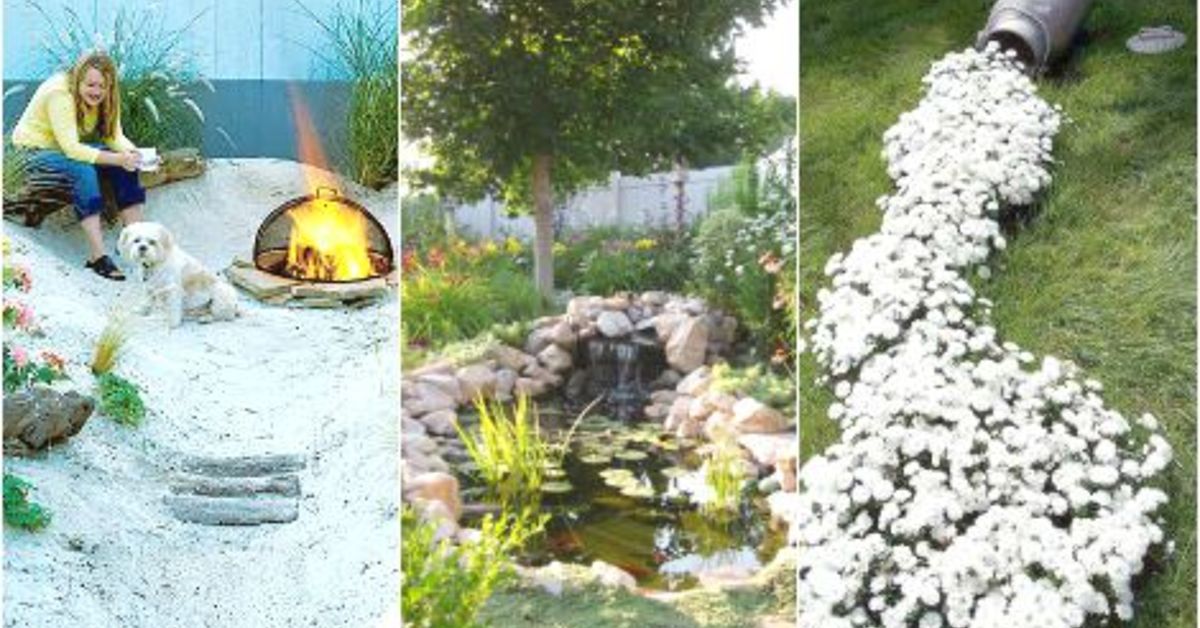
Flat yards get all the attention, but sloped yards are the real overachievers. They create natural levels, dramatic views, built-in privacy, and the kind of landscaping opportunities that make ordinary backyards look a little… emotionally flat. While a hillside can absolutely bring challenges like runoff, erosion, and tricky mowing, it also opens the door to terraced gardens, stone steps, layered planting, rain-smart design, and outdoor rooms with serious personality.
That is the magic of hillside landscaping: a grade change turns into design energy. Instead of forcing a sloped yard to behave like a pancake, the smartest landscapes work with the land. Retaining walls can carve out useful spaces. Deep-rooted plants and ground cover can stabilize soil. Curving pathways can make a steep site feel inviting. Rain gardens and swales can help manage water while adding beauty. In other words, a sloped yard is not a problem to apologize for. It is a feature to show off.
This guide walks through 11 gorgeous picture-worthy scenes that prove sloped yards are better, plus the practical design lessons behind each one. So yes, this is eye candy. But it is eye candy with good drainage.
Why sloped yards have the advantage
Beauty, structure, and smarter use of space
A flat yard often needs extra effort to feel dynamic. A sloped yard starts with dimension built right in. Elevation changes create natural focal points, separate activity zones, and let plants, steps, stone, and lighting work harder visually. Even better, a slope can encourage better landscape planning. Homeowners tend to think carefully about runoff, planting, and access, which often leads to a more intentional outdoor design.
That is why the best sloped yards rarely look accidental. They look composed. Every terrace, pathway, retaining wall, shrub mass, and seating nook has a purpose. The result can feel more luxurious, more customized, and more memorable than a wide-open flat lawn that mostly says, “I guess we mow here.”
Picture 1: A layered stone terrace filled with flowers
Photo placeholder: A sloped backyard transformed into two or three stone terraces, overflowing with perennials, ornamental grasses, and clipped shrubs.
Why this picture wins
Terracing is the superstar move for hillside landscaping. It turns a steep, awkward grade into a series of usable garden rooms. Instead of one long incline that sheds water and tests your ankle stability, you get level planting areas with visual rhythm. Stone or block retaining walls add structure, while layered blooms soften the hardscape so the whole thing feels lush instead of engineering-heavy.
This kind of scene proves a sloped yard can be more interesting than a flat one because it gives your landscape vertical storytelling. Your eye moves from level to level, discovering color, texture, and shape along the way. It is a backyard that asks to be admired twice.
Picture 2: Wide garden steps cutting through the hillside
Photo placeholder: Broad stone or timber steps bordered by thyme, sedum, dwarf shrubs, and low spill-over flowers.
Why this picture wins
Steps do more than get you from point A to point B. In a sloped yard, they become sculpture. Wide, gently scaled stairs make a hillside feel welcoming and organized, and they visually slow the grade so the space feels less steep. Add plants along the edges and suddenly the path becomes a garden feature instead of a practical necessity.
There is also a hidden benefit: access. A hillside is easier to maintain when you can move through it comfortably. A good path makes weeding, planting, watering, and admiring your own brilliant decisions much easier. This is one of the clearest cases where form and function become best friends.
Picture 3: A no-mow slope covered in flowering ground cover
Photo placeholder: A sunny incline planted with creeping thyme, sedum, meadow grasses, and drought-tolerant perennials instead of turf.
Why this picture wins
Trying to mow a steep hill is an excellent way to become angry at grass. Replacing turf with ground cover is often one of the smartest sloped yard ideas because it reduces maintenance and helps protect the soil. Dense plantings also create a softer, more natural look than a patchy hillside lawn that always seems one rainstorm away from drama.
This kind of planting can feel especially luxurious because it trades constant labor for layered beauty. The slope becomes a tapestry rather than a chore. And when blooms, grasses, and evergreen mats spill together, the yard looks designed on purpose instead of managed out of obligation.
Picture 4: A hillside seating area with a view
Photo placeholder: A tucked-away patio or gravel terrace halfway up a slope, framed by shrubs and looking out over the rest of the yard.
Why this picture wins
Flat yards can have patios. Sloped yards can have overlooks. That is a different level of backyard drama. When a slope allows you to perch a bench, fire pit area, or café table above the main yard, you create a destination. It feels private, elevated, and just a little smug in the best possible way.
These spaces work especially well when they are supported by a retaining wall and softened with plantings. The view down the hill becomes part of the design, which is something a flat lot often cannot offer. A good sloped yard does not just give you more landscaping options. It gives you perspective.
Picture 5: A dry creek bed or swale that looks like art
Photo placeholder: A winding drainage swale lined with river rock, boulders, grasses, and moisture-tolerant plants.
Why this picture wins
Water management is where sloped yards get serious, but it does not have to look serious. A dry creek bed or planted swale can guide runoff while doubling as a landscape feature. Instead of pretending water is not part of the site, this design embraces it. The result looks natural, sculptural, and smart.
This picture proves a sloped yard can outperform a flat one because the grade gives water somewhere to go and gives designers a chance to make that journey beautiful. Rocks, gravel, and native plantings bring texture even in the dry season, while heavy rain reveals the feature’s real job. Pretty and practical is a very powerful combination.
Picture 6: A rain garden at the base of the hill
Photo placeholder: A lower planting basin filled with native flowers, rushes, and grasses catching runoff from the upper slope.
Why this picture wins
A rain garden is one of the most elegant ways to handle runoff in a sloped yard. Positioned in the right place, it can help slow and soak water while giving the landscape a softer, more ecological feel. In visual terms, it turns the bottom of the hill from “the soggy place nobody understands” into a focal point with purpose.
More importantly, this kind of design shows that sloped yards can be environmentally savvy. Instead of sending every drop racing downhill, the landscape can absorb and filter part of that water through planted areas. That is the kind of backyard intelligence that looks good in photos and performs well in real life.
Picture 7: A front yard hillside with dramatic curb appeal
Photo placeholder: A sloped front yard with terraced beds, stone edging, evergreens, and seasonal color leading up to the entry.
Why this picture wins
In front yards, a slope can create instant grandeur. Terraced planting beds lift the eye toward the house and make even a modest facade feel more established. Add stone edging, repeated plant masses, and a clear stair or walkway sequence, and the approach becomes memorable in a way a flat lawn rarely manages.
This is where sloped yards shine for curb appeal. They give a home a sense of arrival. Instead of one horizontal plane, you get layers, shadows, and scale. It feels curated. It feels architectural. It feels like the house and the landscape actually know each other.
Picture 8: A hillside vegetable garden in raised terraces
Photo placeholder: Narrow terraced raised beds stepping down a sunny slope, planted with herbs, tomatoes, greens, and flowers.
Why this picture wins
Here is where a sloped yard gets annoyingly talented. It can be gorgeous and productive. Terraced raised beds make steep ground usable for kitchen gardening while helping reduce erosion and organize the space. Each level becomes easier to reach, easier to irrigate, and far more charming than a random patch of vegetables wedged into a flat lawn corner.
The visual payoff is huge: orderly rows, stepping paths, vertical structure, and edible abundance. The functional payoff is even better. When a slope is turned into a garden staircase full of herbs and tomatoes, it stops looking difficult and starts looking like a very clever design move.
Picture 9: Boulders and ornamental grasses on a natural hillside
Photo placeholder: A dry slope with large boulders, native grasses, low shrubs, and a naturalistic planting palette.
Why this picture wins
Not every sloped yard needs walls and formal beds. Sometimes the best answer is to lean into a more natural landscape style. Boulders anchor the hill visually, ornamental grasses add movement, and massed shrubs create year-round structure. The result feels grounded, regional, and lower maintenance than a high-drama flower border.
This picture works because it respects the land instead of trying to over-control it. A naturalistic hillside often looks better over time, especially in dry climates or on hot exposures. It can also be a strong erosion-control strategy when plant roots are allowed to do what they do best: hold things together without asking for applause.
Picture 10: A stepped fence and layered privacy planting
Photo placeholder: A backyard boundary on a slope with a stepped fence, evergreen screening, and layered shrubs below.
Why this picture wins
One underrated strength of a sloped yard is how beautifully it handles privacy. A change in elevation plus a smart fence line plus layered plantings can make the yard feel enclosed without becoming boxed in. On a flat lot, privacy often depends on one tall hedge or one tall fence. On a slope, the layers do some of the work for you.
Visually, that means more depth and more softness. Functionally, it means the site can feel intimate while still letting light and views through where you want them. This kind of composition makes the whole yard look more expensive, even when the plants are still working their way toward full maturity.
Picture 11: A nighttime slope with path lighting and uplights
Photo placeholder: A hillside garden at dusk with lit steps, glowing grasses, and uplights washing over stone walls and small trees.
Why this picture wins
Lighting loves a sloped yard. Changes in elevation create shadows, highlights, and layers that make landscape lighting more dramatic after dark. Step lights improve safety, uplights emphasize planting and structure, and terraced levels glow in stages instead of flattening into one dark backyard rectangle.
This final image seals the case: sloped yards are not just better during the day. They can become more theatrical at night. A little lighting turns the whole hillside into a scene, and suddenly your yard feels less like outdoor space and more like an experience.
What all 11 pictures have in common
Good slopes are beautiful because they are well planned
The prettiest sloped yards are not just lucky. They solve real site issues beautifully. They control runoff, support soil, and make movement easy. They use deep-rooted plants, terraces, paths, steps, and drainage details with intention. They also avoid the big mistake of fighting the hill too hard. A slope usually responds better when you shape it thoughtfully than when you try to erase it.
If you are designing your own hillside landscape, start with the basics: understand where water moves, identify sunny and shady areas, decide where access is needed, and choose whether the yard should feel formal, natural, or somewhere in between. That foundation matters more than any single plant or retaining wall block. Beauty follows function surprisingly often in landscape design. Convenient, right?
Experiences from real-life sloped yards
What homeowners learn once the hill becomes a feature, not a flaw
One of the most common experiences people report with sloped yards is that the yard becomes more useful only after they stop thinking of it as one giant surface. The breakthrough usually happens when the space is divided into zones. Maybe the top becomes a seating area, the middle becomes planting, and the bottom becomes lawn or a rain garden. Once that mental shift happens, the yard stops feeling difficult and starts feeling full of possibilities.
Another common experience is the discovery that maintenance gets easier when the right plants replace turf. Many homeowners begin with a steep grassy bank because that is what came with the property. Then comes the mowing, the slipping, the scalping of grass, the patchy summer browning, and the annual promise that next year will somehow be different. It is rarely different. Replacing all or part of that slope with ground cover, shrubs, ornamental grasses, or native perennials often changes the relationship entirely. Suddenly, the hill feels calmer, greener, and less demanding.
People also tend to notice that sloped yards create stronger emotional experiences. A bench halfway up a hill feels more special than a bench dropped into the middle of a flat lawn. A set of stone steps feels like an invitation. A terraced herb garden feels curated and personal. Even a simple path can make the yard feel larger because the eye moves through it in stages. That sense of journey is something homeowners often fall in love with once the design begins to take shape.
Of course, the practical lessons arrive quickly too. Water always tells the truth. If drainage is ignored, a sloped yard will make that mistake obvious in a hurry. Homeowners learn to watch where water exits downspouts, where mulch washes out, where puddles form below the hill, and where soil starts to creep. The good news is that these observations often lead to smarter improvements: a swale here, a dry creek bed there, a better planting mix, a more stable edge, or a rain garden in the right location. Over time, the yard becomes more resilient because the site teaches you how it wants to work.
There is also a surprising design confidence that comes from living with a slope. People who once worried that their yard was a limitation often become proud of it. Guests notice the terraces. Neighbors compliment the steps. The layers look intentional in photos. The yard feels distinctive. A flat lot can be lovely, but a well-designed hillside tends to stick in people’s memory. It has shape, mood, and a little bit of drama, which most beautiful spaces need.
And perhaps that is the biggest real-world lesson of all: a sloped yard rewards patience. It may take time to stabilize planting, refine circulation, and balance the hardscape with softer materials. But once those pieces come together, the result can feel richer than a conventional yard because the land itself contributes to the design. The hill becomes the reason the space is beautiful, not the obstacle that had to be overcome.
Conclusion
The hill was never the problem
These 11 gorgeous pictures prove that sloped yards can be more dramatic, more layered, and more memorable than flat ones. They offer space for terraces, better views, smarter planting, and creative water management. Most of all, they invite design that feels intentional. When you work with the grade instead of against it, a hillside becomes one of the most valuable features in the landscape.
So the next time someone complains about a sloped yard, feel free to nod politely while standing in your terraced garden, looking down from your cozy hillside seating nook, surrounded by flowers, stonework, and superior scenery. The hill was not the problem. It was the upgrade.