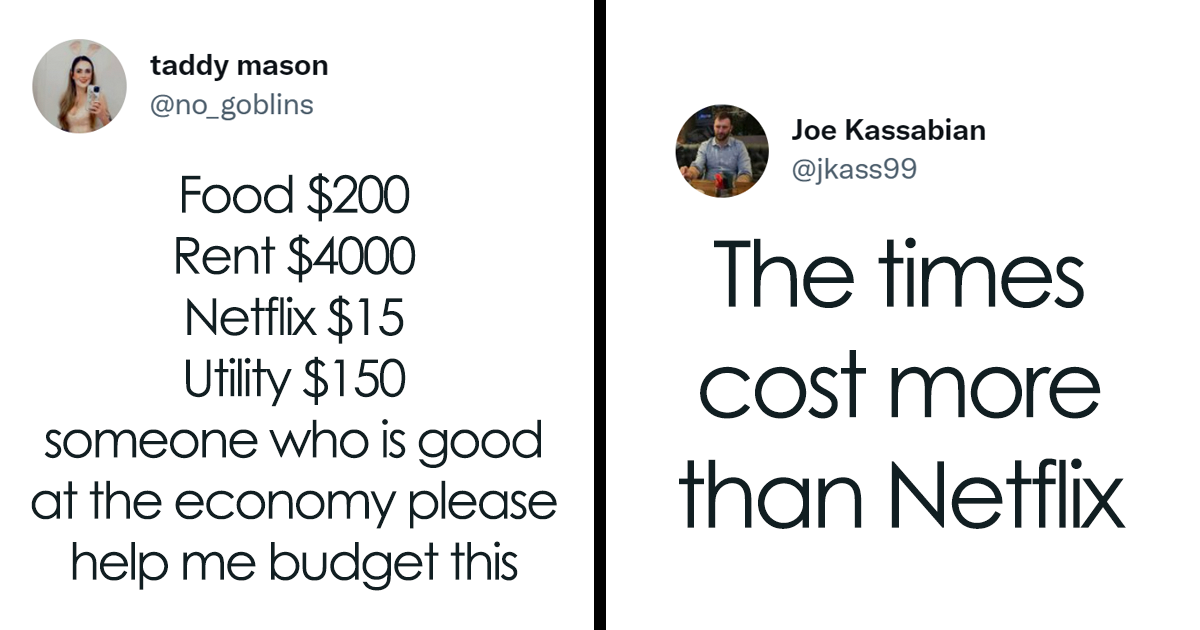
Every few months, the internet rediscovers one of its favorite generational wrestling matches: why can’t millennials afford homes? On one side, some older adults point to familiar suspectsNetflix subscriptions, takeout, iced coffee, food delivery, vacations, smartphones, and the occasional avocado toast that apparently has the financial power of a Wall Street derivative. On the other side, millennials respond with screenshots, sarcasm, and the exhausted energy of people who have already done the math three hundred times.
The viral debate behind “Some Boomers Think That Netflix Subscriptions And Takeout Are The Main Reasons Why Millennials Can’t Afford Homes, Millennials React (31 Tweets)” became popular because it turned a serious housing affordability crisis into a brutally funny online argument. The jokes were sharp, but the frustration underneath them was real. For many millennials, the problem is not that they spend $15 on streaming or $24 on Thai takeout after a long workday. The problem is that home prices, mortgage rates, rent, student debt, childcare, healthcare, and stagnant purchasing power have turned the starter home into something that feels less like a milestone and more like a mythical creature.
So, are Netflix subscriptions and takeout really the main reasons millennials can’t afford homes? Let’s be kind, fair, and honest: budgeting matters. A person who spends wildly without tracking money will have a harder time saving. But blaming streaming and delivery apps for an entire generation’s housing struggle is like blaming a leaky faucet for a flooded city. Technically, water is involved. Practically, you are missing the hurricane.
The Viral Argument: “Just Cancel Netflix and Stop Ordering Takeout”
The original online conversation grew from a familiar claim: young people could buy homes if they stopped spending on small luxuries. In the viral reactions, millennials pushed back with humor. Some joked that canceling Netflix would save enough for a down payment in approximately four decades. Others pointed out that many of them were using a parent’s streaming account anyway, which made the advice both financially useless and socially awkward. A few responses came from Gen Xers, who basically popped into the room to say, “Please stop pretending this only happened to millennials. We are also tired, and our retirement plan is mostly vibes.”
That is why the “31 Tweets” angle resonated. The tweets were not simply jokes about Netflix. They were jokes about being lectured by people who bought homes in a completely different economic environment. A boomer who purchased a house decades ago may have faced high interest rates, recessions, or job insecurity, but many also entered the market when home prices were dramatically lower relative to income. Millennials, by contrast, came of age through the Great Recession, rising tuition, a gig-heavy labor market, the pandemic economy, record rent pressure, and a housing market where even modest homes can require six-figure household income.
Why the Netflix-and-Takeout Theory Feels So Convenient
The theory is popular because it is simple. If young people cannot buy homes because they are careless with money, then the solution is easy: spend less. No need to talk about zoning, housing supply, wage growth, investor activity, mortgage rates, inflation, student loans, or regional inequality. Just delete the app, brew coffee at home, and wait for the house fairy to deliver a three-bedroom colonial with a fixed-rate mortgage.
Personal responsibility is a comforting story because it gives everyone a villain they can understand. A $19 streaming service is visible. A decades-long shortage of affordable housing is abstract. A burrito bowl has a receipt. A broken starter-home pipeline requires charts. A DoorDash order can be judged in ten seconds. A national affordability crisis requires patience, context, and probably a second cup of coffeehomemade, of course, so nobody yells.
The Math: Small Luxuries Don’t Explain a Giant Housing Gap
Let’s run a basic example. Suppose a millennial spends $20 per month on Netflix and $200 per month on takeout beyond what they would spend cooking at home. That is $220 per month, or $2,640 per year. Is that nothing? No. For many households, $2,640 matters. It can pay down debt, build an emergency fund, or cover part of a moving cost. But does it explain why a buyer cannot afford a $400,000 home with closing costs, a down payment, insurance, taxes, maintenance, and a mortgage payment shaped by today’s rates? Not even close.
A traditional 20% down payment on a $400,000 home is $80,000 before closing costs. Even a lower-down-payment mortgage still requires cash reserves, decent credit, stable income, and the ability to survive a monthly payment that may be much higher than rent. Saving $2,640 per year would help, but it would not magically erase the gap. At that pace, and ignoring rising prices, it would take more than 30 years to save $80,000. By then, the “starter home” may be old enough to have its own podcast.
This is where the millennial reactions hit their target. The jokes are funny because the math is absurd. Canceling a subscription can improve a budget, but it cannot reverse years of housing inflation. Cooking at home can help a savings plan, but it cannot single-handedly solve a market where many first-time buyers are competing against wealthier repeat buyers, cash buyers, investors, and older homeowners with existing equity.
Home Prices Have Outrun the “Just Save More” Advice
One of the biggest reasons millennials struggle to buy homes is that prices rose faster than many people’s ability to save. The median sales price of houses sold in the United States remained above $400,000 in late 2025, according to federal housing data. In many metro areas, that price is not buying a mansion with a marble fountain and a kitchen island the size of Delaware. It may buy a modest home, a fixer-upper, or a property far from major job centers.
That matters because down payments are tied to prices. When home prices rise, buyers need more cash upfront. Renters trying to save face a double challenge: they must build savings while paying rent that has also increased in many places. It is hard to save for a down payment when your rent behaves like it just discovered weightlifting.
Many millennials also entered adulthood with student loans. Not every millennial has student debt, and not every borrower is blocked from buying. Still, monthly debt payments can affect debt-to-income ratios, credit decisions, and how much cash remains for savings. Add car payments, insurance, medical costs, childcare, and groceries, and the picture becomes much more complicated than “too many lattes.”
Mortgage Rates Changed the Game
Even when prices stop climbing quickly, mortgage rates can keep homes unaffordable. A home at 3% interest and the same home at 6% or 7% interest create very different monthly payments. That difference can decide whether a buyer qualifies for a mortgage at all.
This is a key part of the millennial argument. Many older homeowners refinanced or purchased during lower-rate windows. Some now have monthly payments that look almost unreal compared with what a first-time buyer would face today. Meanwhile, younger buyers are looking at the same house, a higher price, a higher rate, and the privilege of being told that the real problem is pad Thai.
The result is a “locked-in” housing market. Existing owners with low mortgage rates may avoid selling because buying another home would mean taking on a much higher payment. That reduces available inventory. Low inventory keeps competition alive. Competition keeps prices sticky. And first-time buyers are left standing outside the market, holding a spreadsheet and a suspiciously expensive grocery receipt.
First-Time Buyers Are Getting Older
Another clue that this is bigger than subscription spending: first-time homebuyers are getting older. Recent housing reports show the typical first-time buyer has reached a record-high age, while the share of first-time buyers in the market has fallen sharply. That is not what you would expect if the main barrier were a few convenience purchases. That pattern suggests a structural problem.
For previous generations, buying a first home in the late 20s or early 30s was difficult but often realistic for middle-income households in many areas. For millennials, the timeline has shifted. Many delayed buying because of student debt, recessions, unstable early-career income, high rent, expensive childcare, and home prices that pulled away faster than savings could catch up.
Some millennials did buy homes, of course. The generation is not one financial stereotype. Older millennials are now in their 40s, and many own homes, have kids, run businesses, and worry about roof repairs with the same passion previous generations reserved for lawn care. But the path has been uneven. Those with family help, higher incomes, dual earners, or access to lower-cost regions often had a better chance. Those without those advantages faced a much steeper climb.
Why Millennials React So Hard to the Boomer Take
The emotional reaction is not just about money. It is about being misunderstood. Millennials have heard for years that they ruined restaurants, diamonds, department stores, napkins, cable TV, and the housing market. That is a lot of destruction for a generation that supposedly cannot afford anything. Impressive work, really.
When boomers or media commentators blame Netflix and takeout, many millennials hear a moral judgment: you are immature, unserious, and bad with money. But plenty of millennials are budgeting carefully. They use cash-back apps, shop at discount stores, meal prep, share housing, delay children, drive older cars, freelance after hours, and still cannot close the gap. Being told to cancel entertainment after doing all that feels less like advice and more like a joke without the fun part.
The Real Problem: Housing Became a Wealth Filter
Homeownership has long been one of America’s major wealth-building tools. Owners can build equity, benefit from appreciation, stabilize housing costs, and pass wealth to children. Renters, meanwhile, may have flexibility but often do not get the same long-term asset growth. When entry into homeownership becomes harder, wealth gaps widen.
This is why the debate matters beyond memes. If young adults cannot buy until much later, they lose years of equity building. They may also delay family formation, move away from expensive job markets, or spend more of their income on rent. Over time, that affects neighborhoods, schools, retirement security, and social mobility.
The housing market increasingly rewards people who already have assets. Repeat buyers can use equity from a previous home. Cash buyers can move quickly. Families with wealth can help children with down payments. Renters without family help must save from wages while competing against buyers who are bringing decades of accumulated equity to the table. That is not a fair race. It is more like a marathon where some runners start at mile 20 in a golf cart.
Yes, Spending Choices Still Matter
Now for the part nobody on the internet wants to hear because nuance gets fewer likes: spending choices do matter. If someone orders delivery every night, pays for six streaming services, upgrades their phone constantly, and has no savings plan, cutting expenses could make a real difference. Financial habits are not irrelevant just because the housing market is unfair.
The better argument is not “takeout doesn’t matter.” The better argument is “takeout is not the main cause.” A realistic budget can help millennials build emergency savings, reduce debt, improve credit, and prepare for homeownership. But it should be presented as a tool, not a moral scolding. Advice works better when it respects the scale of the problem.
For example, a helpful version of the takeout conversation might sound like this: “Food delivery fees can add up quickly, so if you are saving for a home, try setting a monthly restaurant budget and moving the difference into a high-yield savings account.” That is practical. The unhelpful version sounds like this: “You would own a house if you stopped enjoying dinner.” That is how you get ratioed by 31 tweets and possibly your own children.
What the 31 Tweets Got Right
The viral millennial reactions were funny because they exposed weak logic. Many of the jokes boiled down to a simple point: small consumer habits cannot explain a massive affordability crisis. A subscription is not a down payment. A coffee is not a mortgage. A burrito is not a zoning policy. A vacation is not the reason starter homes disappeared from many high-opportunity areas.
The tweets also captured something important about generational memory. People often compare today’s young adults with their own younger selves, but they forget the economic background changed. A boomer may remember working hard, saving money, and buying a house. That work was real. But the home price, wage environment, pension landscape, interest-rate context, and cost of education were different. Hard work still matters, but the same effort does not always produce the same result in a different economy.
What Boomers May Be Missing
Some boomers are not trying to be cruel. Many genuinely believe in thrift because thrift helped them. They learned to save, avoid debt, repair things, cook at home, and delay gratification. Those lessons are still valuable. But when older advice ignores current numbers, it becomes outdated. Telling a millennial to solve a six-figure affordability gap with a streaming cancellation is not wisdom. It is a calculator error wearing sensible shoes.
What older homeowners may miss is how much leverage home equity created for them. Buying earlier often meant benefiting from decades of appreciation. That wealth could support retirement, fund moves, help children, or provide security during emergencies. Millennials who are locked out of ownership do not simply miss a house; they miss the compounding benefits attached to owning one.
What Millennials Should Take From the Debate
The takeaway is not that millennials should ignore personal finance. The takeaway is that they should reject shame-based advice while still using practical strategies. Track spending, yes. Reduce high-interest debt, yes. Build credit, yes. Cook at home when it helps, yes. Cancel subscriptions you do not use, absolutely. But do not internalize the idea that a national housing crisis is your personal failure because you once ordered tacos after a 10-hour workday.
Millennials can be realistic without being hopeless. Some are buying homes through down-payment assistance programs, relocation, house hacking, co-buying, smaller properties, fixer-uppers, and patient saving. Others are choosing to rent longer because buying does not make sense in their market. Both paths can be responsible. Homeownership is a tool, not a personality test.
Conclusion: The Joke Is Funny Because the Math Isn’t
The debate over Netflix, takeout, and millennial homeownership keeps going viral because it compresses a huge economic problem into one ridiculous image: a young person trying to trade a streaming password for a house key. It is funny. It is also deeply frustrating.
Yes, everyday spending affects savings. But no, Netflix subscriptions and takeout are not the main reasons millennials cannot afford homes. The bigger forces are home prices, mortgage rates, rent pressure, debt burdens, limited starter-home supply, wage growth, and unequal access to family wealth. The millennial reaction is not just defensiveness. It is a demand for the conversation to grow up.
So by all means, cancel the subscription you forgot you had. Learn to cook a decent pasta. Stop paying delivery fees when you can pick up the food yourself. But let’s not pretend that skipping a few comforts will fix a housing market that has become brutally expensive for first-time buyers. The real solution requires more housing, smarter policy, better wages, fair lending access, and a little less finger-wagging from people who bought before the starter home turned into a luxury collectible.
Additional Experiences Related to the Topic
One of the most common millennial experiences in this debate is the “budget spreadsheet heartbreak.” Many young adults have sat down with good intentions, opened a clean spreadsheet, listed income, subtracted rent, utilities, groceries, insurance, transportation, student loans, and minimum savings, then stared at the leftover number like it personally insulted them. The result is often not wild overspending. It is a painful realization that even a disciplined budget may leave only a small amount for a down payment. A person can cancel three subscriptions, skip restaurants, and still watch home prices rise faster than their savings account.
Another familiar experience is the awkward family conversation. A parent or older relative says, “When I was your age, I bought my first house.” The millennial replies, politely at first, “That’s great. How much was it?” The number arrives like a museum artifact. Then the millennial checks the current price of similar homes in the same area and discovers that the modern equivalent costs several times more. The conversation usually ends with someone mentioning interest rates, someone else mentioning wages, and everyone pretending dessert needs urgent attention.
There is also the open-house experience. Millennials show up to a “starter home” expecting something simple but livable. Instead, they find a tiny house with mysterious stains, a roof nearing retirement, a kitchen last updated when flip phones were impressive, and a price that requires two strong incomes and emotional support. Then they learn there are multiple offers, one of them all cash. At that moment, takeout is not the enemy. The enemy is the sentence, “Best and final offers due by Monday.”
For renters, the experience can feel like running on a treadmill that keeps speeding up. You save money, then rent increases. You get a raise, then groceries rise. You pay down a credit card, then your car needs repairs. You move farther from the city to save money, then transportation costs increase. The idea that one lifestyle tweak can solve all of this feels disconnected from daily life. It is not that millennials think small savings are meaningless. They know exactly how meaningful small amounts are because they are constantly juggling them.
At the same time, many millennials have learned useful habits from the pressure. They compare mortgage calculators, understand credit scores, research assistance programs, split streaming accounts legally within household rules, meal prep on Sundays, and discuss money with friends more openly than older generations often did. They are not allergic to responsibility. They are allergic to bad math disguised as moral wisdom.
The best personal lesson from the viral “31 Tweets” moment is this: humor can be a survival tool, but numbers should guide the conversation. Millennials are laughing because the alternative is screaming into a throw pillow from a rental apartment with thin walls. The jokes make the frustration shareable. The data makes the frustration understandable. Together, they tell a clearer story than the old “just cancel Netflix” lecture ever could.