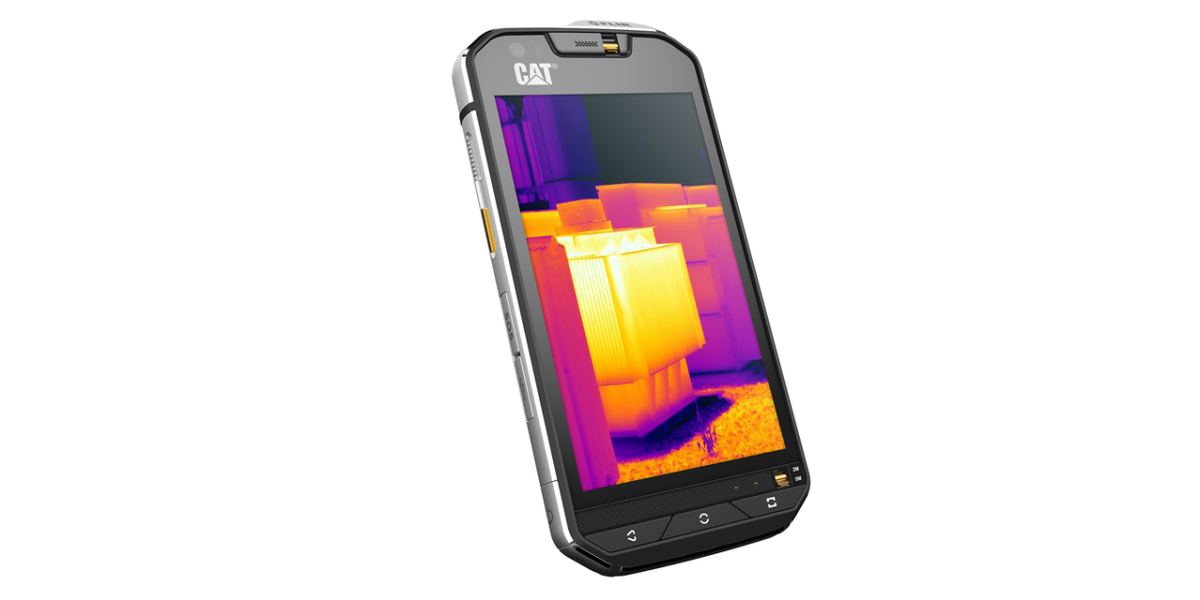
Smartphones usually brag about the same things: brighter screens, faster chips, thinner bodies, and cameras that promise to make your lunch look like fine art. Then the Cat S60 showed up and basically said, “That’s cute, but I can spot a hot pipe in a wall.” Suddenly, the phone conversation got a lot more interesting.
The Cat S60 was not built to win a beauty pageant against a shiny flagship. It was built to survive work sites, wet weather, rough handling, and the kind of people who treat a phone more like a wrench than a precious little rectangle. Its headline feature was a built-in FLIR thermal camera, which gave the device a very sci-fi reputation and inspired more than a few “Predator vision” jokes. Fair enough. If a phone can show heat signatures, people are going to get dramatic.
But the real story is more useful than cinematic. The Cat S60 mattered because it turned thermal imaging from a specialized tool or clunky add-on into something you could carry in your pocket every day. That was a big deal in 2016, and it still feels a little wild now. It was a rugged smartphone, yes, but it was also an experiment in making phones do practical, job-ready work instead of merely looking sleek on a coffee table.
Why the Cat S60 Turned Heads So Fast
A phone that tried to be a tool, not just a toy
The Cat S60 arrived with a pitch that was refreshingly blunt: this was a rugged Android phone with an integrated thermal imaging camera. Not a case. Not a dongle. Not an accessory you forgot in a toolbox somewhere. The thermal tech was built in. That alone separated it from the sea of ordinary smartphones fighting over selfies and benchmark scores.
Cat phones, produced under Caterpillar branding by Bullitt, were already known for durability. The S60 took that identity and bolted on something genuinely different. Instead of chasing mainstream glamour, it chased utility. Contractors, electricians, plumbers, inspectors, emergency responders, and outdoor workers were the obvious audience. If your job involved leaks, hot spots, drafts, overheated equipment, or murky environments, this phone wasn’t trying to entertain you. It was trying to help.
Thermal imaging moved from niche gadget to pocket device
Before the S60, FLIR had already introduced thermal imaging to smartphone users through external accessories. Those worked, but they were still add-ons. The Cat S60 made the next leap by integrating FLIR’s Lepton microcamera directly into the handset. That move turned thermal imaging from a clever extra into the phone’s core identity.
And that identity was instantly memorable. A lot of phones claim innovation while quietly changing the shape of the camera bump. The Cat S60 showed up with literal heat vision. You did not need a marketing team, a whiteboard, and three espresso shots to understand the appeal.
What the “Heat-Vision” Actually Did
It was real thermal imaging, not a fake filter
Let’s clear up the biggest point first: the Cat S60’s thermal view was not some goofy color effect pretending to be advanced tech. It used a genuine FLIR thermal sensor that could capture heat differences in the environment. Official specs described a thermal module with an 80×60 thermal resolution, paired with a standard visual camera. That means it was reading heat, not merely guessing based on visible light.
Of course, thermal images alone can look soft and blobby. That is where FLIR’s MSX technology came in. MSX overlays edge detail from the visible-light camera onto the thermal image, making it easier to tell what you are actually looking at. In plain English: instead of staring at a fuzzy heat cloud and wondering if it was a person, a radiator, or your very committed golden retriever, you got more visual structure and context.
It could help with everyday professional problems
The useful applications were not hard to imagine. A building inspector could look for heat loss around windows and doors. A plumber could trace warm water lines or investigate suspicious temperature patterns near a leak. An electrician could check for overheating connections or overloaded components. A first responder might use thermal contrast in smoky or low-visibility conditions to gain a little extra awareness. Even a homeowner could use it to hunt down drafts, missing insulation, or the mystery hot spot behind an appliance that definitely should not be auditioning for a disaster movie.
The phone could capture thermal images, measure surface temperatures, and record video. That matters because the value of thermal tech is not just seeing something unusual in the moment. It is also documenting it. When you can save a thermal image and share it with a client, coworker, or repair team, the phone becomes part inspection tool, part evidence machine.
The Predator comparison was fun, but a little generous
Yes, the Cat S60 let you see heat signatures. Yes, that sounds like movie-villain superpowers. But no, it was not magic. It did not turn a smartphone into a military-grade sci-fi visor that could see through every wall, identify targets from orbit, and whisper ominous one-liners. The thermal camera was practical, not supernatural.
That distinction matters because the Cat S60 worked best when users treated it like a specialized tool. It was excellent for spotting temperature differences and heat-related anomalies. It was not a replacement for professional high-end thermal equipment in demanding industrial workflows, and it definitely was not x-ray vision. The headline wrote itself, but the reality was smarter than the joke.
The Rest of the Hardware Was Built Like a Brick With a Resume
Rugged design was the point, not a side note
The Cat S60 was designed to take abuse. It had a strengthened die-cast frame, Gorilla Glass 4, glove-friendly and wet-finger screen support, and serious waterproofing credentials for its time. Cat marketed it as waterproof to depths of 5 meters for up to an hour when the appropriate protective locks were engaged. It was also rated for drops onto concrete from up to 1.8 meters.
In other words, this was not the kind of phone that panicked when introduced to rain, dust, mud, or an accidental meeting with a workshop floor. You could use it with wet hands. You could treat it more like equipment than jewelry. That alone gave it a rare kind of charm. Most phones spend their lives hiding inside cases. The Cat S60 acted like it was the case.
Its core specs were solid, not flashy
Outside the thermal party trick and rugged shell, the S60 was a midrange Android phone of its era. It shipped with Android Marshmallow, a Snapdragon 617 processor, 3GB of RAM, 32GB of storage, and a 3,800mAh battery. It had a 4.7-inch HD display, a 13MP rear camera, and a 5MP front camera.
Those numbers were respectable, but not glamorous. That was the tradeoff. If you wanted the slimmest body, the sharpest display, or the fastest benchmark result, this probably was not your dream date. But if you wanted a phone that could keep working while you were on a ladder, in a garage, on a job site, or near water, the Cat S60 started looking a lot more attractive.
Reviewers at the time generally agreed on the basic formula: the thermal camera and durability were the stars, while overall performance and photography were more ordinary. That is actually part of the phone’s appeal in retrospect. It knew exactly what it wanted to be. There was no identity crisis here.
Where the Cat S60 Shined, and Where It Didn’t
The brilliant part: usefulness you could explain in one sentence
The best gadgets often have an immediate “oh, I get it” quality. The Cat S60 absolutely had that. Show someone a phone that can reveal hot and cold zones in real time, and they instantly start inventing use cases. Drafty window? Check. Warm engine? Check. Suspect fuse box? Check. Weird patch on a wall? Check. Nighttime animal spotting? Also check, though maybe your raccoon neighbors will find that invasive.
That kind of instant usefulness is rare in consumer tech. It made the S60 feel less like a gimmick and more like a category experiment that actually made sense.
The compromise: not everyone needed it
The Cat S60’s challenge was never whether thermal imaging was cool. Obviously it was cool. The question was whether enough people needed it enough to choose a bulky, rugged midrange phone over a more polished flagship. For the average buyer, the answer was probably no.
If your daily routine involved offices, coffee shops, couches, and the occasional dramatic text message, the S60 was overkill. You might enjoy taking thermal selfies for a weekend, but that would not justify living with a thicker phone and more modest performance. The S60 was aimed at people whose work or hobbies could actually benefit from thermal data and durability. Everyone else was mostly invited to admire the weirdness from a safe distance.
That was also its strength
Oddly enough, the Cat S60 became more interesting because it was not trying to be everything for everyone. It was niche on purpose. It chose a lane and drove a bulldozer through it. In a market full of safe, polished, copycat devices, that confidence gave the phone personality.
Why the Cat S60 Still Matters
It proved smartphones could specialize
The S60 arrived during a period when most major phones were converging toward the same general shape and feature set. Glass slab, decent camera, fast processor, marketing words, repeat. The Cat S60 challenged that pattern by showing that a smartphone could be something more specialized: a rugged, field-ready instrument with built-in thermal capability.
That idea matters even now. We still talk about phones as if they should all follow one template, but the S60 was evidence that there is room for devices built around specific professions and use cases. It was not a mass-market superstar. It was a statement that utility can be a feature, not an afterthought.
It helped define a mini-category
Later rugged devices and successors built on the same philosophy, but the Cat S60 deserves credit for making the concept famous. It brought thermal imaging into mainstream gadget conversation in a way earlier accessories never quite did. Even people who would never buy one understood the pitch. That is how you know a gadget has broken through.
It also hinted at a broader truth: smartphone innovation does not always have to mean prettier photos of brunch. Sometimes innovation means giving workers, inspectors, rescue crews, and hands-on problem-solvers a genuinely useful new perspective on the world. In this case, that perspective was literally glowing.
Experience: What Living With the Cat S60 Would Actually Feel Like
Using a phone like the Cat S60 would feel very different from using a normal consumer handset, because it changes what you expect a phone to do. With most smartphones, you reach for them to communicate, scroll, stream, and take photos. With the S60, you would also start reaching for it whenever something looked suspiciously warm, strangely cold, or just plain mysterious. That changes the rhythm of ownership in a surprisingly fun way.
Imagine walking through an older house on a winter evening. A normal phone would help you text the contractor. The Cat S60 would help you point at a window frame and say, “Aha, there’s the draft.” In a garage, it could help you compare the heat around engine parts after a drive. On a camping trip, it could make nighttime curiosity a lot more interesting. In a workshop, it could become the quickest way to check whether a machine or outlet is running hotter than it should. The experience is not just about seeing colors on a display. It is about turning invisible information into something obvious.
There is also a little thrill factor, and denying that would be silly. Thermal imaging makes ordinary spaces feel new again. Walls, floors, pipes, pets, appliances, parked cars, coffee mugs, and even the seat cushion you just stood up from suddenly become visual stories. Heat lingers. Cold pools. Rooms reveal habits. A staircase might show where sunlight warmed one side of the house. A laptop charger might look like it is plotting revenge. Your dog might glow like a toasted marshmallow with opinions.
That said, the experience would not be all movie-trailer drama. After the first wave of novelty, the S60 would probably settle into a more practical role. You would learn that thermal imaging is most impressive when it answers a question. Where is the leak? Which surface is hottest? Is that vent actually working? Did that fuse box just get warmer than it should have? The phone becomes more satisfying when the answer saves time, points to a fix, or confirms a suspicion.
You would also notice the tradeoffs. The device is thicker than mainstream phones, and it carries itself like a rugged little tank. That can feel reassuring if you are outdoors or on the move, but less elegant if your entire day happens between a desk and a couch. The regular smartphone experience would be competent rather than luxurious. You would not buy the Cat S60 because it was the prettiest or fastest device on the shelf. You would buy it because it could survive rough conditions and do one remarkably useful thing that other phones simply could not.
In the end, the experience of the Cat S60 would be part work tool, part conversation starter, and part daily reminder that smartphones do not have to be boring. It would not turn every owner into the Predator. But it would make plenty of people feel like they had a superpower tucked into a pocket, and honestly, that is not a bad trick for a phone.
Final Verdict
The Cat S60 was one of those rare gadgets that sounded like a joke until you realized it had a serious point. A phone with thermal imaging sounds ridiculous right up until you remember how often people need to find leaks, hot spots, bad insulation, overheating parts, or hidden trouble in dark or smoky environments. Then it starts to sound less like a stunt and more like one of the smartest niche ideas of its era.
Was it perfect? Not even close. It was chunkier than mainstream rivals, slower than flagship phones, and clearly aimed at a specific audience. But that audience was real, and the utility was real. The Cat S60 was rugged, memorable, and unapologetically practical. Most phones want to be glamorous. This one wanted to be useful. That is exactly why people still remember it.