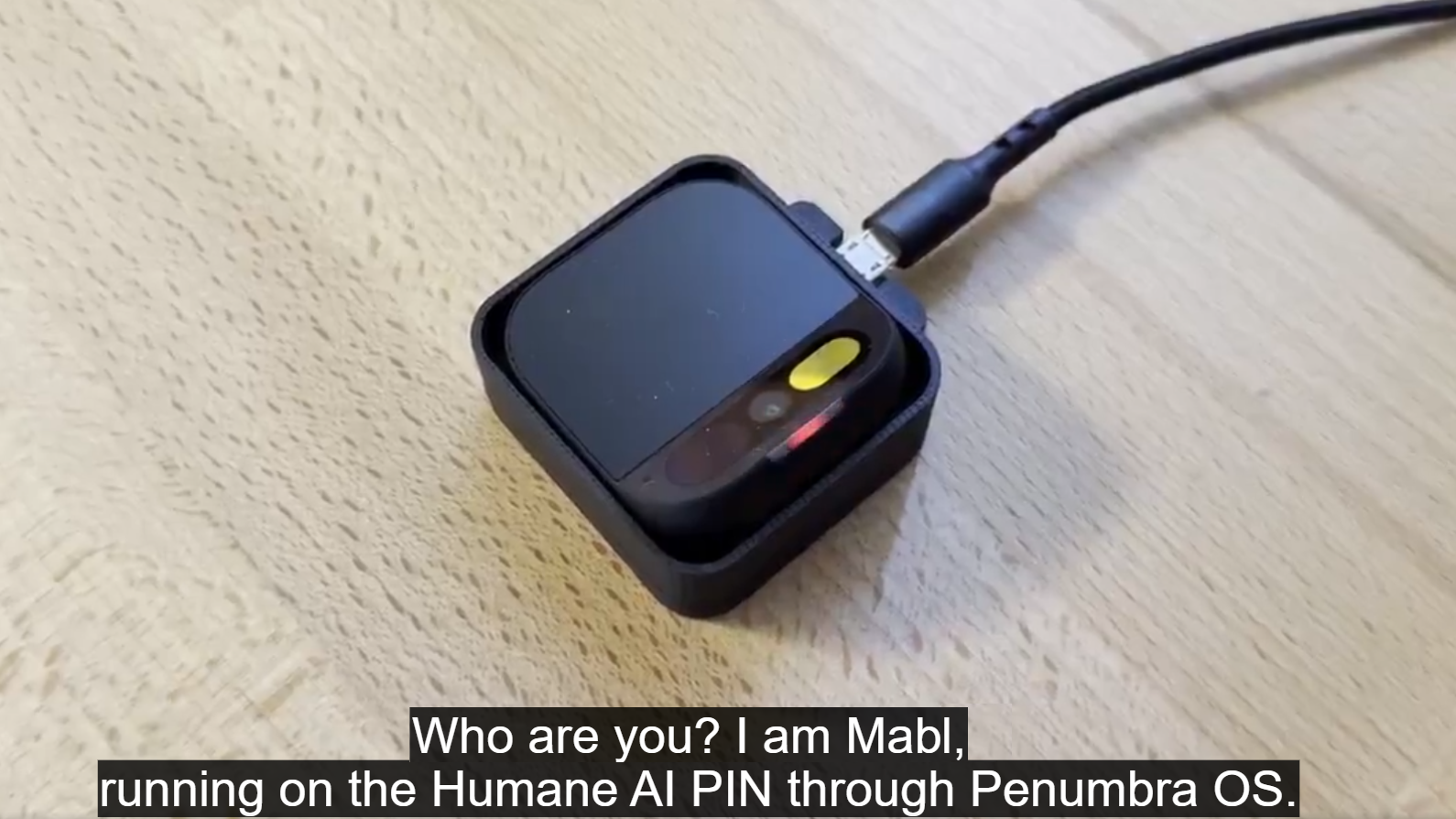
Tech loves a comeback story, especially when the original plot involved a dramatic face-plant. That is why the Humane AI Pin saga has become weirdly fascinating all over again. Not long ago, the AI Pin was supposed to usher in a bold post-smartphone future: a tiny wearable clipped to your shirt, powered by voice, cameras, AI models, and a laser-projected interface on your hand. Instead, it became one of the most mocked consumer tech launches in recent memory. Now, in a twist nobody would have predicted during the product’s awkward launch window, the flopped Humane AI Pin has picked up an experimental SDK through a community-led resurrection effort.
And honestly? That may be the most interesting thing that has ever happened to it.
The new development platform does not magically erase the AI Pin’s failures. It does not rewrite history, refund disappointed buyers, or pretend the product was secretly misunderstood genius. What it does do is something more useful: it turns a famously locked-down, cloud-dependent gadget into a potentially hackable playground for developers. In other words, the AI Pin may have failed as a polished consumer product, but it might still find a second life as a nerd magnet.
From buzzy “phone replacement” to cautionary tale
The Humane AI Pin arrived with huge ambition and even bigger marketing energy. Created by former Apple employees, the device was pitched as a screenless wearable computer that could handle calls, messages, AI queries, translation, music, and contextual computing without requiring you to stare at a slab of glass all day. The idea was sleek. The demos were cinematic. The vibes were aggressively futuristic.
Then real people used it.
Early reviews were brutal for reasons that were painfully consistent. Reviewers complained about slow responses, questionable answer quality, overheating issues, limited functionality, awkward gesture controls, and a projector interface that struggled in bright light. The AI Pin looked like tomorrow, but too often behaved like a beta test wrapped in premium aluminum. It was also expensive enough to make buyers expect far more polish than they got. Humane initially charged $699 for the device and required a $24 monthly subscription, which made the Pin feel less like a bold experiment and more like an expensive gym membership for disappointment.
That combination was toxic. If you are asking people to believe they are buying the future, you cannot hand them lag, thermal drama, and a user interface that seems to work best indoors, in shade, with patience, and perhaps divine intervention.
Why the Humane AI Pin flopped so hard
1. The product promised liberation but delivered friction
The Humane AI Pin was sold as a device that would reduce phone dependence. In practice, it often added extra steps. Tasks that are effortless on a phone became slower, less predictable, or less intuitive on the Pin. Consumers will tolerate quirks from a cheap gadget. They are less forgiving when the product costs hundreds of dollars and asks to replace something as deeply embedded in everyday life as a smartphone.
2. Cloud dependence made the device feel fragile
The AI Pin’s vision depended heavily on cloud connectivity. That can be fine when the service works and the company is stable. But it becomes terrifying when the hardware is expensive and the company is young. Buyers were not just purchasing a gadget; they were effectively buying into Humane’s ongoing existence. As events later proved, that was a risky bet.
3. Hardware and safety issues piled on
As if poor reviews were not enough, Humane later cut the price of the AI Pin, signaling weak demand. Its Charge Case Accessory was also recalled over a lithium battery fire hazard. At that point, the company was no longer just fighting bad buzz. It was fighting the kind of credibility problem that makes consumers clutch their wallets and back away slowly.
4. The market was not convinced it needed this category
The AI Pin also ran into a deeper problem: maybe the world was not actually waiting for a shirt-mounted AI box. Plenty of people are interested in wearable AI. Far fewer are eager to replace a powerful, familiar smartphone with a first-generation device that feels slower, weirder, and less reliable. Humane was not just launching a product. It was trying to change user behavior. That is hard even when the product is excellent. It is almost impossible when the product is merely intriguing.
The collapse: shutdown, sale, and digital paperweights
By early 2025, the story had gone from “troubled launch” to “please play taps softly.” Humane sold key AI assets to HP in a deal centered on its CosmOS platform, technical talent, and intellectual property. HP moved on with the software and talent side of the business. The AI Pin itself did not survive the transition.
Humane shut down the service supporting the wearable, which meant previously sold units lost the cloud-based features that made them function like actual AI Pins. Calling, messaging, AI queries, and cloud access essentially disappeared. A device that once tried to be the future became a very expensive reminder that cloud-connected hardware can turn into decorative regret at shocking speed.
That part of the story irritated a lot of people, and not just owners. It crystallized a broader fear around modern consumer electronics: when a company controls the servers, the software, the authentication, and the experience, your “owned” device can end up feeling suspiciously rented.
Then came the hackers, tinkerers, and stubborn optimists
Here is where the plot gets more fun. After Humane shut the lights off, a group of enthusiasts began poking at the AI Pin to see whether it could be revived. This was not just nostalgia for a failed gadget. The hardware itself remained interesting. Even critics admitted the AI Pin contained some intriguing engineering choices, from its form factor to its sensors and projection ideas. The problem had always been the product experience, not the basic fact that the hardware existed.
That led to a hacker and developer community trying to unbrick the device and reclaim it from its original limitations. The result was not a miracle cure. It was something arguably more valuable: a pathway.
What the experimental SDK actually is
The new SDK is tied to PenumbraOS, a community effort to turn the abandoned Humane AI Pin into a usable development platform. The keyword here is experimental. This is not a polished consumer relaunch with easy setup and cheerful onboarding screens. It is a developer-first, work-in-progress environment aimed at people who enjoy sentences like “rootless init system” and do not consider reverse engineering a cry for help.
According to the project materials, the PenumbraOS SDK is designed to expose useful interfaces on the AI Pin so developers can treat it more like a specialized Android device. That includes access paths for networking, touchpad input, hand gestures, speech recognition, shell tunneling, eSIM configuration, and settings management. There is also a user-facing app called MABL, which acts as a modular assistant layer. The architecture is intentionally flexible: different plugins can handle large language models, text-to-speech, speech-to-text, and other task-specific features.
Translation: the AI Pin is being reframed not as a doomed phone replacement, but as a strange little wearable computer with unique input and interaction methods. That shift matters. It lowers expectations in a healthy way. Nobody needs this thing to kill the iPhone anymore. It just needs to become useful, hackable, and interesting.
Why this SDK matters more than the original sales pitch
It gives dead hardware a second chance
One of the best arguments for an experimental SDK is simple: it keeps the AI Pin from becoming instant e-waste. Consumer tech history is littered with devices that died because their business model died first. A community-led software layer does not solve every problem, but it can extend the useful life of hardware that would otherwise sit in drawers like expensive fossils.
It changes the product’s audience
The AI Pin failed as a mainstream consumer product. That does not mean it cannot succeed as a niche developer platform. Those are different games with different rules. Mainstream buyers want reliability, simplicity, and obvious value. Developers and tinkerers can tolerate rough edges if the hardware is compelling and the sandbox is interesting enough.
It turns a flop into a case study
The experimental SDK also gives the industry something it rarely gets: a live autopsy with a pulse. Instead of merely debating why Humane failed, developers can now test what the hardware can do once the original software assumptions are stripped away. Was the form factor the problem? The latency? The cloud dependence? The locked-down architecture? The PenumbraOS effort could help answer those questions in a way product reviews never could.
Can the AI Pin actually become good now?
That depends on what “good” means.
If “good” means becoming the mass-market AI wearable Humane originally promised, then probably not. The device still carries the baggage of its design compromises. Its display concept remains unconventional. Its ergonomics are still unusual. Its original identity crisis does not vanish just because developers now have better tools.
But if “good” means becoming a compelling platform for experimentation, prototyping, and alternative wearable interfaces, then yes, maybe. That is a much more realistic goal. An experimental SDK opens the door to new uses that are smaller, stranger, and more practical: custom assistants, context-aware utilities, speech-driven tools, quick capture workflows, accessibility experiments, or even research projects exploring post-screen interaction.
Ironically, the AI Pin may end up being more valuable as an open-ended platform than it ever was as a heavily curated product. There is a lesson in that, and it is not subtle.
The bigger lesson for AI hardware companies
The Humane AI Pin story is not just about one device. It is about the risks of launching AI hardware before the user experience is truly ready. Tech companies love the phrase “early days,” but consumers tend to prefer “works properly.” AI can make demos look magical while making daily use feel maddening. That gap is where hype goes to die.
The SDK revival highlights another lesson: people are often more forgiving of experimental technology when it openly admits it is experimental. Humane sold a premium consumer vision. PenumbraOS offers an openly rough developer playground. Weirdly enough, the second framing may be more honest and more sustainable.
There is also a governance lesson here. If a device relies on cloud infrastructure to perform core tasks, buyers need to understand the durability risk. The AI Pin’s shutdown turned abstract concerns about “server dependency” into a real-world consumer cautionary tale. Future wearable AI companies will have to address that trust problem head-on, whether through longer support guarantees, offline capabilities, repairability, or clearer product commitments.
The experience of watching the AI Pin fail, then mutate into something more interesting
The most fascinating part of the AI Pin story is the emotional whiplash. First came curiosity. A lot of people genuinely wanted Humane to pull this off. The pitch was clean, ambitious, and just strange enough to feel visionary rather than boring. In a tech market stuffed with iterative rectangles, the AI Pin looked like somebody had at least attempted an original thought.
Then came the actual experience, and that is where the mood shifted from intrigue to disbelief. Reviewers described interactions that felt slower and clumsier than the phone-based habits the Pin claimed it would replace. Owners were not just testing a new gadget; they were wrestling with a new behavior model that demanded patience every few minutes. The experience many people expected was “ambient intelligence.” The experience many people got was more like “ambient inconvenience.”
There was also the social awkwardness. Wearing a camera-and-AI device on your chest was always going to raise eyebrows, and the Pin never became useful enough to offset that weirdness. When a product asks you to change how you move, speak, gesture, and appear in public, it needs to deliver obvious payoff. The AI Pin often seemed to ask for lifestyle adaptation before it had earned the right.
For buyers, the shutdown phase added a different kind of experience: betrayal mixed with resignation. One day the device was a pricey piece of futuristic hardware. The next, it was a cloud-tethered souvenir. That is the kind of moment that makes consumers far more skeptical of startup hardware, especially when recurring subscriptions and online services are involved. People do not just remember the money they spent. They remember how disposable the whole arrangement suddenly felt.
And yet the story did not end in pure bitterness. The hacker and maker community brought a different energy to the AI Pin experience: curiosity, stubbornness, and the slightly chaotic optimism that powers so much useful experimentation. To tinkerers, the dead Pin was not merely a failed product. It was a puzzle box. It was a chance to ask what this hardware could become if freed from its original business plan.
That shift in experience is what makes the SDK chapter so compelling. The same object that frustrated mainstream consumers can still excite developers because the expectations have changed. Nobody is demanding a polished lifestyle revolution anymore. They are looking for possibility. They are looking for access. They are looking for proof that even a famous flop can still contribute something valuable to the broader conversation around wearable AI.
So the AI Pin experience, in the end, may not be about replacing your phone at all. It may be about showing the entire industry what happens when visionary industrial design meets unfinished product reality, and then what happens next when a community decides the hardware deserves one more shot.
Final thoughts
The headline practically writes itself: the flopped Humane AI Pin gets an experimental SDK. But the real significance is deeper than the irony. This is not merely a failed gadget being dragged back to life for internet points. It is an example of how communities can salvage value from closed, abandoned hardware. It is a reminder that sometimes the most useful version of a product arrives after the company is done with it.
Humane tried to sell the AI Pin as the future of personal computing. That future never arrived. But thanks to an experimental SDK, the device now has a chance to become something more grounded and maybe more meaningful: a developer platform, a hackable wearable, and a case study in how not to launch AI hardware in public.
That is not the ending Humane wanted. It may, however, be the ending the AI Pin actually earned.