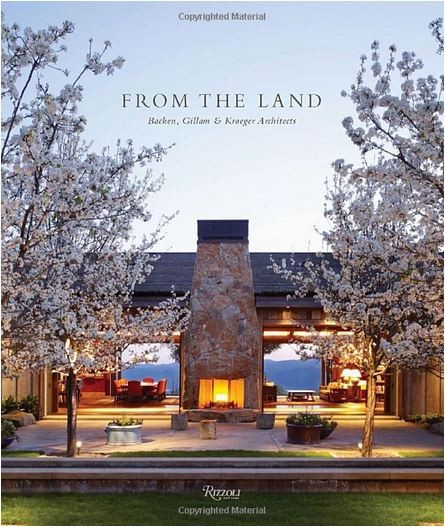
Some architecture arrives like a marching band: loud, shiny, and very pleased with itself. The work gathered in From the Land: Backen, Gillam, & Kroeger Architects does the opposite. It walks in wearing dusty boots, opens the doors to the vineyard breeze, and somehow makes stone, timber, light, and silence feel like the most luxurious materials on earth.
Backen, Gillam & Kroeger Architects became closely associated with a refined but unpretentious version of California Wine Country architecture: houses that seem to have been there longer than the driveway, wineries that appear tucked into the hill rather than dropped on top of it, and hospitality spaces that make guests feel like they have been invited to a private ranch dinner instead of a design lecture. The firm’s design language is often described through words like rustic, elegant, natural, warm, and elemental. But the deeper idea is more interesting: architecture should not simply sit on land. It should listen to it.
That philosophy is the heart of From the Land, the 2013 Rizzoli monograph celebrating the firm’s work. The book explores farmhouses, hilltop homes, lakeside retreats, seaside houses, wineries, and interiors where natural materials are not decorative afterthoughts. Wood, stone, brick, glass, metal, shadow, and soil all become part of the same conversation. The result is architecture that feels expensive without acting expensivewhich, in the world of luxury design, is a small miracle and possibly a form of emotional maturity.
The Story Behind Backen, Gillam & Kroeger Architects
The firm was originally established in 1996 as Backen Gillam Architects by Howard J. Backen and Jim Gillam. Over time, with partners including Loren Kroeger and a growing design team, the practice became known as Backen, Gillam & Kroeger Architects. Its work expanded across private residences, wineries, restaurants, resorts, retail spaces, and hospitality projects, especially in Northern California’s Napa and Sonoma regions.
Howard Backen’s earlier career had already touched major projects and influential clients, but his Wine Country work created a distinct architectural identity. Instead of chasing novelty, Backen and his collaborators refined a way of building that felt tied to agriculture, climate, craft, and casual California living. Barn forms, board-and-batten siding, deep overhangs, reclaimed wood, stone walls, sliding glass doors, and generous outdoor rooms became recurring tools. Yet the best projects never feel like a checklist. They feel inevitable, as if the architect discovered the building rather than invented it.
Today, the legacy continues through Backen & Backen, the successor practice carrying forward the firm’s ideas around architecture, lifestyle, wellbeing, land, and human experience. That evolution matters because From the Land is not only a book about completed buildings. It is a record of a design attitude that still influences contemporary residential architecture, winery design, and the broader American fantasy of indoor-outdoor living.
What “From the Land” Really Means
The phrase “from the land” sounds poetic, but in this context it is also practical. It means the site is not treated as blank space. Topography, views, wind, sun, soil color, agricultural history, existing trees, and local building traditions all guide the architecture. A hill is not an obstacle. It is a design partner. A vineyard row is not background scenery. It is a line the building may echo. A weathered barn is not nostalgia bait. It is a clue about proportion, shade, labor, storage, shelter, and durability.
Buildings That Belong Before They Impress
Many luxury homes try to impress from the first glance. Backen, Gillam & Kroeger projects often work more slowly. A low roofline settles into the horizon. A courtyard pulls the eye inward. A stone wall seems to grow out of the ground. Large openings frame a view without shouting, “Please notice how expensive this window is.” The drama is real, but it comes from restraint.
This is one reason the firm’s work photographs beautifully and still feels livable. The architecture understands that the best room in the house may be the space between the kitchen and the oak tree. It also understands that natural light is not just illumination; it is atmosphere. Morning light softens plaster. Afternoon sun warms timber. Evening shadows make a stone terrace feel like a place where conversations should naturally become more honest.
Natural Materials Without the Costume Party
Rustic design can go wrong quickly. Add too many beams, too many lanterns, and too much “farmhouse charm,” and suddenly the house looks like it is auditioning for a butter commercial. The Backen, Gillam & Kroeger approach is more disciplined. Materials are often humblewood, stone, brick, corrugated metal, steel, concretebut they are handled with precision.
Reclaimed wood may bring age and texture, but clean lines keep it from feeling theatrical. Stone may anchor a building, but glass keeps the interior connected to landscape. Metal roofs may recall agricultural structures, but crisp detailing gives them modern clarity. The balance is the secret: enough rustic warmth to feel human, enough refinement to feel architectural.
Signature Design Elements in the Firm’s Work
Although every project responds to its own site, several ideas appear again and again in the firm’s portfolio. These are not visual gimmicks. They are design strategies that support comfort, durability, beauty, and a deep connection to place.
Indoor-Outdoor Living
Backen, Gillam & Kroeger helped shape the modern American dream of indoor-outdoor living. Large sliding or folding glass walls dissolve the boundary between living rooms and terraces. Covered porches extend usable space. Courtyards create protected outdoor rooms. Kitchens open to dining patios, and bedrooms often face morning views. In these buildings, “outside” is not where you go after the house ends. It is part of the house’s daily rhythm.
Simple Forms With Strong Proportions
The firm’s architecture often uses familiar forms: barns, sheds, ranch houses, farm compounds, and low modern pavilions. But the power comes from proportion. Roof pitch, wall height, window placement, and axial views are carefully controlled. A simple building can look dull if its proportions are wrong. In the best Backen-influenced spaces, simplicity feels calm rather than empty.
Layered Light
Light is one of the firm’s most important materials. Deep roof overhangs protect interiors from harsh sun. Clerestory windows pull brightness into large rooms. Sliding doors create luminous transitions. Fireplaces, lanterns, and warm interior lighting add evening intimacy. The result is not one flat brightness but layers of light that change through the day.
Hospitality at the Center
Whether designing a winery, resort, restaurant, or private home, the firm often treats hospitality as a core architectural idea. Rooms are arranged for gathering. Kitchens feel active rather than hidden. Fireplaces become social anchors. Terraces invite lingering. Even large homes often avoid palace-like stiffness. They feel made for meals, muddy shoes, wine glasses, family dogs, and long conversations that outlast the playlist.
Notable Project Types: Homes, Wineries, Resorts, and Retail
The firm’s reputation grew through a broad range of work, but its Wine Country projects remain especially influential. Napa Valley architecture has a tricky assignment: it must serve serious production, luxury hospitality, environmental sensitivity, and the mythology of the vineyard all at once. That is not easy. A winery needs to function like a workplace, welcome visitors like a private estate, and disappear just enough to let the landscape remain the star.
Wineries That Work With the Terrain
Projects associated with Backen’s design legacy, including wineries such as Harlan Estate and Ovid Napa Valley, demonstrate how architecture can support both production and atmosphere. At Ovid, the design is known for being embedded into the hillside, using the land’s thermal stability and preserving the contours of the ridge. That kind of move is visually subtle but architecturally ambitious. It makes the building quieter, more efficient, and more connected to the earth beneath it.
At many Wine Country projects, fermentation, barrel storage, tasting, and hospitality are arranged with careful attention to sequence. Arrival matters. A visitor may pass through a courtyard, along a stone path, or toward a framed view before entering the tasting room. The building prepares the senses before the first pour. That is architecture doing what good service does: making people feel welcome before anyone says a word.
Residences That Feel Collected, Not Decorated
The residential work featured in From the Land often has a lived-in ease. Rooms may be grand in scale, but they rarely feel formal in the stiff, museum-rope sense. Natural textures, wide openings, soft palettes, and strong connections to gardens create interiors that feel collected over time. Even when everything is carefully designed, the spaces suggest informality.
This is especially important in high-end architecture. Luxury can become cold when it is too polished. Backen, Gillam & Kroeger’s best homes avoid that trap by bringing tactile materials into daily spaces. A kitchen island can feel like a worktable. A fireplace wall can look solid enough to survive three generations of family stories. A porch can become the true living room for half the year.
Resorts and Restaurants With a Sense of Place
The firm’s hospitality work also reflects the same land-based philosophy. At resort and restaurant projects, the architecture often borrows from regional building traditions without becoming theme-park architecture. The point is not to paste on “local flavor.” The point is to understand how people move, gather, eat, rest, and look at the landscape.
Projects such as The Farmhouse at Ojai Valley Inn show how agricultural forms can be translated into contemporary hospitality spaces. Large barn-like volumes, generous gathering rooms, outdoor kitchens, courtyards, and durable materials make the building feel connected to California’s agricultural past while serving modern events and culinary programs. In simpler terms: it is a barn, but it went to finishing school.
Retail Design and the American Home Imagination
Backen’s influence also reached retail environments for major home brands. That matters because retail design shapes how people imagine domestic life. A store can teach customers what warmth, scale, material, and room arrangement might feel like. The firm’s work for brands associated with American interiors helped spread a version of relaxed, textural, indoor-outdoor living far beyond Napa Valley.
Why the Book Still Matters
From the Land remains valuable because it captures architecture before it becomes over-filtered by trends. The book is not merely a collection of pretty rooms, though there are plenty of those. It is a study in how buildings can be luxurious and grounded at the same time. That combination has only become more relevant as homeowners and designers look for spaces that feel healthier, quieter, more tactile, and more connected to nature.
In an era of endless digital inspiration, the book also reminds readers that architecture is not made by mood boards alone. Real design depends on site visits, material knowledge, climate awareness, construction craft, and the discipline to remove what is unnecessary. Anyone can save a photo of a stone farmhouse. It takes serious skill to design one that does not look fake, heavy, or confused.
Design Lessons From Backen, Gillam & Kroeger Architects
Homeowners, architects, designers, and builders can learn several practical lessons from the firm’s work. First, start with the site. Before choosing finishes, study the views, sun path, wind, trees, and surrounding structures. A beautiful house in the wrong position is like a great joke told at the wrong moment: technically impressive, emotionally awkward.
Second, use fewer materials but use them well. A restrained palette of wood, stone, plaster, metal, and glass can feel richer than a dozen competing finishes. Third, design transitions carefully. Doors, thresholds, patios, porches, breezeways, and courtyards are where architecture becomes experience. Finally, prioritize comfort. A house may win awards, but if nobody wants to sit in the living room, something has gone terribly wrong.
The Emotional Power of Unpretentious Luxury
The phrase “unpretentious luxury” appears often around Backen, Gillam & Kroeger’s work, and for good reason. Their projects prove that luxury does not have to sparkle. It can be quiet. It can be a perfect breeze through a shaded room. It can be a stone floor that stays cool under bare feet. It can be a dining table placed exactly where sunset becomes part of dinner.
This kind of architecture feels generous because it gives attention back to the land, the weather, and the people using the space. It does not insist on being admired every minute. Instead, it creates conditions for living well. That may be the most enduring idea in From the Land: the best buildings are not objects of attention but instruments of belonging.
Experience Notes: Living With the “From the Land” Mindset
Spending time with architecture inspired by From the Land changes the way you notice ordinary spaces. You begin to see that a good room is not just about furniture. It is about orientation, texture, temperature, sound, smell, and the small ceremonies of daily life. Where does the morning coffee land? Where do people naturally gather when dinner is almost ready? Can someone sit in shade and still feel part of the conversation? Does the house offer a quiet place to disappear for ten minutes without making you feel exiled?
The most memorable land-based buildings often feel relaxed because they have solved many problems you do not immediately notice. The porch is deep enough that the sun does not bully everyone at 3 p.m. The windows frame the best view but do not expose the room like an aquarium. The floor material can handle dust, pets, boots, and the occasional dramatic olive oil incident. The kitchen connects to the outdoor dining area without turning the cook into a lonely backstage employee. These details may not sound glamorous, but they are what make a home feel intelligent.
One practical experience related to the Backen, Gillam & Kroeger philosophy is learning to respect imperfection. Natural materials age. Wood darkens. Stone varies. Metal weathers. Plaster catches light differently from one wall to the next. Instead of fighting these changes, land-based design welcomes them. A house should not look terrified of fingerprints. It should be able to absorb life gracefully.
Another experience is understanding the value of restraint. Many people decorate because they are afraid of emptiness. But in a landscape-driven home, empty space can be the frame that lets nature speak. A plain wall beside a window may be exactly what the room needs. A simple bench under a tree may outperform a complicated outdoor furniture set that looks like it requires its own legal department. Restraint does not mean blandness. It means confidence.
If you are applying this mindset to your own home, start small. Study where light enters your rooms. Move seating toward the best natural view. Choose one honest material and let it repeat. Replace cluttered decor with texture: linen, wood, clay, stone, woven fiber, matte metal. Make outdoor space easier to use, even if it is just a balcony with a chair, a plant, and enough shade to prevent your iced coffee from becoming soup.
The greatest lesson from From the Land is that architecture is not only about how a building looks in a photograph. It is about how life feels inside it. The firm’s best work suggests a slower, warmer, more grounded way of livingone where luxury is measured less by spectacle and more by ease, memory, and connection. In that sense, “from the land” is not just an architectural description. It is a reminder to build, design, and live with more attention.
Conclusion
From the Land: Backen, Gillam, & Kroeger Architects remains a powerful reference for anyone interested in Wine Country architecture, rustic modern homes, natural materials, and indoor-outdoor living. The firm’s work shows that buildings can be sophisticated without becoming showy, modern without becoming cold, and luxurious without losing their soul. By listening to landscape, climate, craft, and human comfort, Backen, Gillam & Kroeger created an architectural language that still feels fresh because it was never chasing fashion in the first place.
In a design world often obsessed with novelty, this body of work offers a quieter lesson: build with the land, not against it. Let materials be honest. Let rooms breathe. Let views do some of the decorating. And please, if the house has a porch, use it. The porch did not come all this way to hold one lonely decorative pillow.