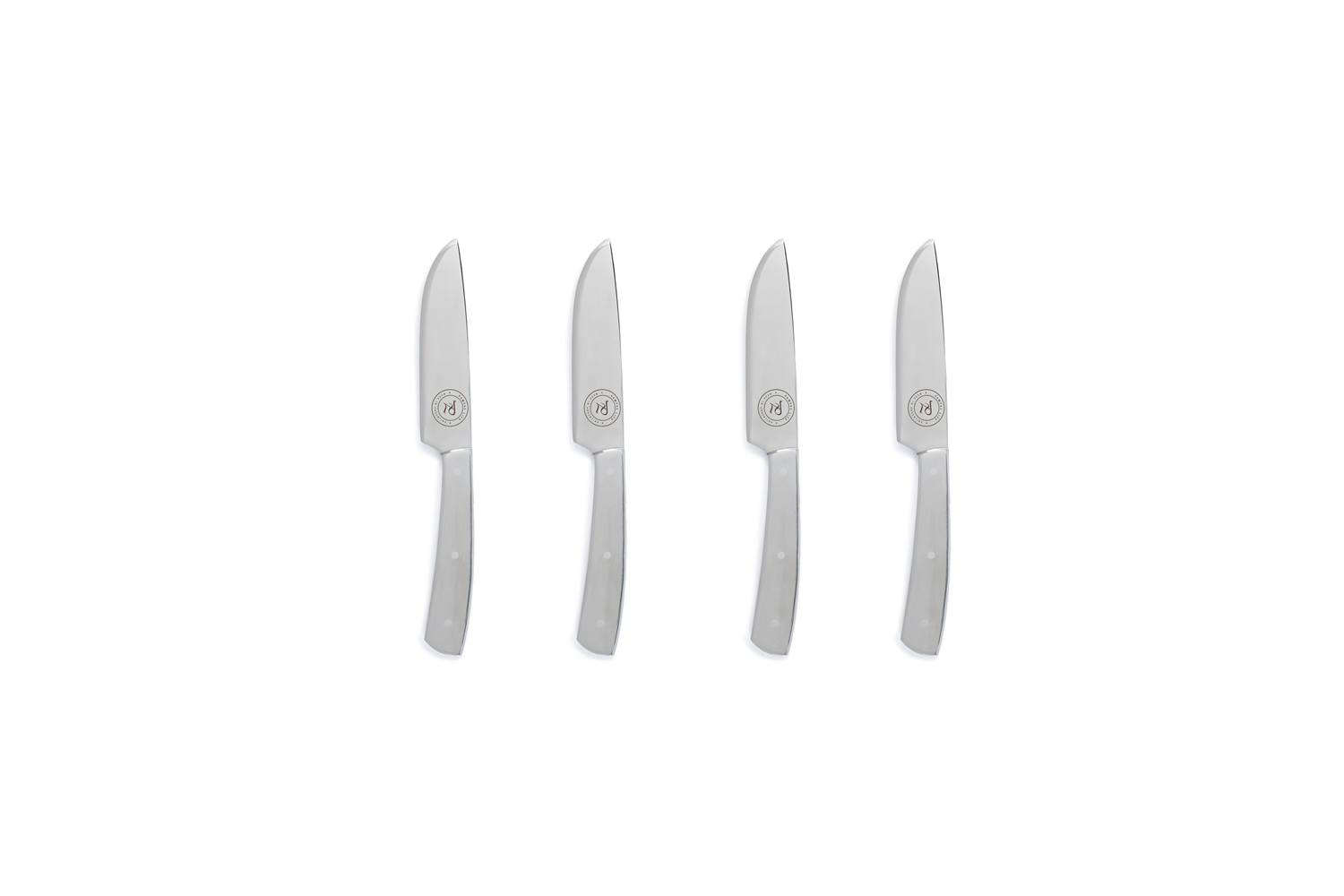
The Rio de la Plata Steak Knife Set is the kind of tableware that makes an ordinary steak dinner feel as though someone should be playing tango music nearby. Designed in Argentina, polished until it gleams like silver, and originally presented in a handmade wooden case, this four-knife collection combines South American character with restrained modern design.
It is not a rustic gaucho knife decorated with antler, leather, and enough metalwork to require its own passport. Instead, the Rio de la Plata set takes a cleaner approach. Its uninterrupted stainless steel surfaces, compact proportions, and mirror-like finish give it a sophisticated appearance that can work in contemporary dining rooms, minimalist kitchens, and traditional steak-night settings alike.
The set has also become something of a design collectible. Its former retailer listing is no longer active, and archived product information identifies it as discontinued. That makes a careful evaluation especially important for shoppers considering a secondhand set, collectors researching Argentine tableware, or hosts wondering whether these polished knives deserve a place beside the good plates.
What Is the Rio de la Plata Steak Knife Set?
The Rio de la Plata Steak Knife Set was offered as a collection of four Argentine stainless steel knives. Each knife was listed with a 4-inch blade and a 4-inch handle, producing an overall length of approximately 8 inches. Both the blade and handle were finished in highly polished stainless steel, creating the sleek, silver-colored appearance that inspired the product’s name.
The four knives came in a custom wooden presentation case. According to the archived description, the case was handmade by carpentry artisans in Patagonia using wood collected from fallen forest trees. This detail gave the set an appealing contrast: cool, reflective metal housed inside warm, naturally varied wood.
Quick Product Overview
- Set size: Four steak knives
- Design origin: Argentina
- Material: Highly polished Argentine stainless steel
- Blade length: 4 inches
- Handle length: 4 inches
- Storage: Handmade Patagonian wooden case
- Availability: Discontinued through its former retailer
- Historical listed price: Approximately $325 per set
A Design Inspired by the Silver River
The name refers to the Río de la Plata, the immense estuary separating parts of Argentina and Uruguay. It is frequently described as the widest river in the world, although geographers more precisely classify it as an estuary formed where the Paraná and Uruguay river systems meet the Atlantic Ocean.
In Spanish, “Río de la Plata” translates to “River of Silver.” The name is an appropriate match for a knife set with an almost mirror-like finish. Light moves across the metal as the knives are turned, making the surfaces appear brighter and more decorative than the satin finish commonly found on everyday flatware.
The reference is more than a clever label. The Río de la Plata region includes Buenos Aires and Montevideo, cities connected by language, trade, cattle culture, and a deep affection for grilled meat. Naming a steak knife after this region links the object to the social world of the asado, where food, fire, storytelling, and long meals are treated as parts of the same ritual.
Why the All-Stainless Design Stands Out
Many premium steak knives rely on wooden, resin, horn, or composite handles. The Rio de la Plata set removes those visual transitions. The polished metal appears to run continuously from the blade through the handle, giving each knife the streamlined look of modern sculpture.
A Clean, Contemporary Appearance
The absence of visible wood grain, colored scales, or decorative rivets makes the knives easy to coordinate with different dinnerware. They can sit beside white porcelain, dark stoneware, vintage silverware, or modern black flatware without creating a visual wrestling match on the table.
The finish is glamorous without being covered in ornament. That distinction matters. A highly decorated knife may dominate a place setting, while this set contributes shine and refinement without shouting, “Please stop looking at your ribeye and admire me.”
A Cool, Substantial Hand Feel
All-metal handles generally feel cooler and firmer than wood or polymer. They can also feel more substantial, although the archived specifications do not provide an individual knife weight or construction diagram. Buyers should therefore avoid assuming that the knives have a particular balance, tang style, or degree of heft without examining the actual set.
The smooth surface may feel elegant, but it could become slippery when handled with greasy fingers. That is a normal consideration with polished metal cutlery rather than a defect unique to this product. A comfortable dining grip, rather than a clenched carving grip, should provide adequate control during normal use.
How a Good Steak Knife Should Perform
A steak knife has a wonderfully simple job: cut meat cleanly without forcing the diner to saw, crush, or chase dinner around the plate. In practice, that performance depends on more than decorative materials or a luxury price.
Independent steak-knife testing has repeatedly shown that edge quality, handle comfort, blade geometry, and balance can matter more than brand prestige. A sharp knife should pass through seared crust and interior muscle fibers with controlled pressure. Ragged cutting can squeeze juices onto the plate and make even a carefully cooked steak look as if it lost an argument with a lawn mower.
Straight Edge or Serrated Edge?
The surviving specifications for the Rio de la Plata set do not clearly identify its original edge geometry. That is worth checking when evaluating a used set.
A sharp straight edge usually produces a cleaner slice and can be professionally sharpened or maintained with suitable equipment. Serrated knives can retain a usable cutting action for a long time, but deep teeth may tear meat fibers, and sharpening them often requires specialized tools.
Because this set is discontinued, the condition of the particular knives matters more than their original showroom reputation. A carefully maintained set with clean, even edges may perform beautifully. A neglected set with rolled, chipped, or heavily dulled edges may need professional attention before dinner.
The Patagonian Wooden Case Is Part of the Appeal
The presentation box elevates the set from loose utensils to a complete design object. It also provides practical protection by preventing the blades from knocking against forks, spoons, and other knives in a crowded drawer.
Wood introduces warmth to the otherwise industrial composition. Natural variation in grain, knots, and tone would make each case slightly different, which is part of the charm of artisan-made storage. A polished knife may be manufactured to look nearly identical to its siblings; a piece of wood stubbornly refuses to wear a uniform.
For collectors, the original case can significantly affect desirability. A complete set of four knives in its proper box is likely to be more appealing than one or two loose knives of uncertain history. Buyers should inspect the hinges, lid alignment, interior supports, moisture damage, odors, and any cracks around the grain.
Advantages of the Rio de la Plata Steak Knives
Distinctive Argentine Identity
The set reflects Argentine dining culture without leaning on predictable cowboy imagery. Its identity comes through the product name, material story, craftsmanship, and connection to the asado tradition.
Versatile Table Styling
Polished stainless steel works with formal and casual settings. These knives can accompany grilled strip steak at a summer gathering, filet mignon at an anniversary dinner, roasted pork at the holidays, or a suspiciously tough grilled vegetable that has decided to test everyone’s patience.
Protective Presentation Box
The wooden case helps protect the blades and makes the set suitable for gifting, display, or organized storage. It also creates a more memorable unboxing experience than a molded plastic tray.
Collector Interest
Discontinued design products often appeal to shoppers who prefer objects with a story. Limited availability may make a complete, well-preserved example more interesting than a current mass-market knife set.
Possible Drawbacks to Consider
The Set Is No Longer Widely Available
The former retail listing identifies the product as discontinued. Shoppers may need to search vintage design stores, resale platforms, estate sales, or specialty tableware dealers. Availability and condition will vary.
Four Knives May Not Be Enough
A four-piece set is practical for a household or an intimate dinner, but larger gatherings require additional knives. Finding a matching second set may be difficult and potentially expensive.
Polished Metal Shows Marks
Mirror-like stainless steel readily displays fingerprints, water spots, and fine surface scratches. This is the tableware equivalent of owning a black car: gorgeous when polished, surprisingly talented at documenting every touch.
Replacement Information Is Limited
Because the archived listing does not publish details such as the steel grade, blade hardness, production method, or recommended sharpening angle, restoration may require examination by an experienced knife professional.
How to Care for the Rio de la Plata Steak Knife Set
Even stainless steel benefits from sensible care. “Stainless” means corrosion-resistant, not indestructible, immortal, or willing to spend the night soaking beneath a layer of steak sauce.
Wash the Knives by Hand
Use warm water, mild dish soap, and a soft nonabrasive sponge. Hold each knife with the edge facing away from your hand, clean it carefully, rinse it, and dry it immediately.
Although some stainless cutlery can technically tolerate dishwashers, high-quality knives are generally better protected by hand-washing. Dishwasher detergents, prolonged moisture, high heat, and contact with other utensils may dull the edge or mark the polished finish.
Dry Before Returning Them to the Case
Never place damp knives inside a closed wooden box. Trapped moisture can encourage spotting on the steel and swelling, staining, or odor development in the wood.
Avoid Abrasive Polishes
Harsh scouring pads may leave visible scratches. For light fingerprints, a clean microfiber cloth is usually sufficient. Any metal polish should be food-safe and tested on a discreet area before it is used across the entire knife.
Protect the Cutting Edges
Do not cut directly on ceramic plates more aggressively than necessary. Plate surfaces are much harder than ordinary cutting boards and gradually wear down knife edges. Steak knives are made for tableside cutting, but they do not need to be driven into the plate like tiny chrome pickaxes.
Use Professional Sharpening When Necessary
Seek sharpening when the knives begin requiring noticeably more pressure or produce ragged cuts. A professional can identify the edge type, preserve the blade profile, and avoid unnecessary removal of metal.
How to Buy a Discontinued Set Safely
Secondhand shoppers should request clear photographs of all four knives, both sides of every blade, the tips, handles, cutting edges, and wooden case. Reflections can hide scratches, so photographs taken in soft daylight are more helpful than images blasted with a camera flash.
Ask whether the knives have been sharpened, placed in a dishwasher, exposed to rust, or repaired. Look for mismatched dimensions, inconsistent finishes, bent tips, deep grinding marks, loose components, and gaps that may suggest replacement pieces.
The original set should contain four knives measuring roughly 8 inches each, divided between a 4-inch blade and 4-inch handle. The case and Argentine origin are central parts of the documented product description.
Do not assume an old retail price establishes present value. Condition, completeness, scarcity, seller reputation, and buyer demand all influence resale pricing. A scratched incomplete set without its case should not automatically command a museum-worthy premium simply because the listing contains the magical word “discontinued.”
Who Is This Steak Knife Set Best For?
The Rio de la Plata set is particularly suitable for design-conscious hosts, collectors of South American craftsmanship, steak enthusiasts, and gift buyers seeking something less familiar than a standard department-store knife set.
It may be less suitable for large families that need eight or twelve matching knives, buyers who demand dishwasher-safe convenience, or users who want readily available replacement pieces. It is also not the ideal choice for someone who treats every utensil drawer like a metal avalanche.
For the right owner, however, the combination of Argentine design, polished steel, cultural storytelling, and handmade storage creates an object that is useful enough for dinner and attractive enough to discuss before dinner.
The Ownership Experience: What Using the Set May Feel Like
The following is an informed ownership portrait based on the documented dimensions, materials, storage case, and established steak-knife design principles. It is not presented as a claim of direct laboratory testing.
Opening the Wooden Case
The experience begins before food reaches the table. Opening a fitted wooden box feels deliberate in a way that pulling loose knives from a drawer does not. The contrast between natural wood and reflective stainless steel immediately signals that these are special-occasion objects, even if the special occasion is simply “we bought good steaks and nobody burned them.”
At approximately 8 inches long, the knives should look compact and controlled rather than oversized. Their matching polished surfaces create visual consistency, while the handcrafted case adds enough variation to prevent the collection from feeling sterile.
Setting the Table
Placed beside neutral plates and simple linen napkins, the knives would contribute a bright line of reflected light. They are likely to work especially well with white ceramics, clear glassware, dark wood tables, and understated flatware. Because the design is already reflective, the rest of the setting does not need sequins, crystal chandeliers, or a centerpiece visible from space.
The four-piece format naturally encourages smaller gatherings. A table for four tends to support conversation, shared dishes, and a slower mealthe same social qualities associated with the Argentine asado. While the knives cannot provide friends, charcoal, or conversational skills, they can support the atmosphere.
Cutting the First Steak
Actual cutting performance will depend on edge condition. A properly maintained example should allow the diner to guide the blade through the browned exterior of a steak without applying excessive downward pressure. The compact 4-inch blade is long enough for ordinary portions while remaining maneuverable around fat, connective tissue, and bone.
The all-metal handle may initially feel cool. As dinner continues, it should warm in the hand. Some diners will enjoy the smooth, unified profile; others may prefer the tactile grip of wood. This is why handle preference is personal and why buying a luxury knife solely from a glamorous photograph can be risky.
During a Dinner Party
The set’s name supplies an easy conversation starter. Hosts can explain the connection to the Río de la Plata, the silver-like finish, Argentine steak culture, and the Patagonian case. This is far more charming than announcing the knives’ serial numbers and forcing guests to admire the hinges before they are permitted to eat.
Because the knives are visually distinctive, they may also encourage diners to slow down and notice the place setting. Thoughtful objects can subtly change a meal. They do not improve the seasoning or rescue an overcooked tenderloin, but they can make serving and eating feel more intentional.
Cleaning and Storing the Set
After dinner, ownership becomes slightly less romantic. Every knife should be washed separately, dried completely, and lightly buffed to remove water spots and fingerprints. The process takes only a few minutes, but it is more involved than dropping inexpensive utensils into a dishwasher.
Returning each knife to the wooden case closes the ritual. The box protects the edges, keeps the four pieces together, and prevents the polished surfaces from being scraped by everyday cutlery. Over time, fine marks may still develop. They should be understood as normal evidence of use rather than a personal betrayal by stainless steel.
Living With the Set Long Term
The most satisfying ownership experience would likely come from using the knives rather than preserving them untouched. A well-cared-for design object can collect memories without becoming neglected. It might appear at birthdays, holiday dinners, backyard cookouts, or quiet weekend meals for two.
Its discontinued status adds responsibility. There is no guarantee that a damaged knife can be replaced with an identical one. Careful washing, protected storage, and occasional professional sharpening therefore become part of preserving both function and value.
Ultimately, the Rio de la Plata set offers a combination that many dining tools lack: a clear cultural story, a recognizable visual identity, practical purpose, and enough elegance to make steak night feel pleasantly ceremonial.
Final Verdict
The Rio de la Plata Steak Knife Set is memorable because it avoids the two extremes of steak-knife design. It is neither a disposable serrated utensil nor an aggressively rustic showpiece. Its polished Argentine stainless steel, balanced 8-inch proportions, four-piece format, and handmade Patagonian case create a refined interpretation of South American dining culture.
Its greatest strengths are its visual simplicity, regional identity, presentation, and collector appeal. Its limitations include scarce availability, limited technical documentation, a small four-knife capacity, and the extra maintenance required by a mirror-polished finish.
Anyone purchasing a secondhand set should prioritize condition over hype. Confirm that all four knives are present, inspect the edges and tips, examine the wooden case, and budget for professional sharpening if necessary.
For collectors and hosts who appreciate useful objects with a good story, the Rio de la Plata Steak Knife Set remains an appealing piece of Argentine table design. It cuts dinner, starts conversations, and looks excellent doing bothwhich is more than anyone can reasonably demand from a knife without giving it a speaking role.