Some days arrive wearing sensible shoes and carrying a detailed schedule. Other days trip over the welcome mat, spill coffee on the sment missing. On those days, a collection of sweet dog pictures can feel surprisingly useful.
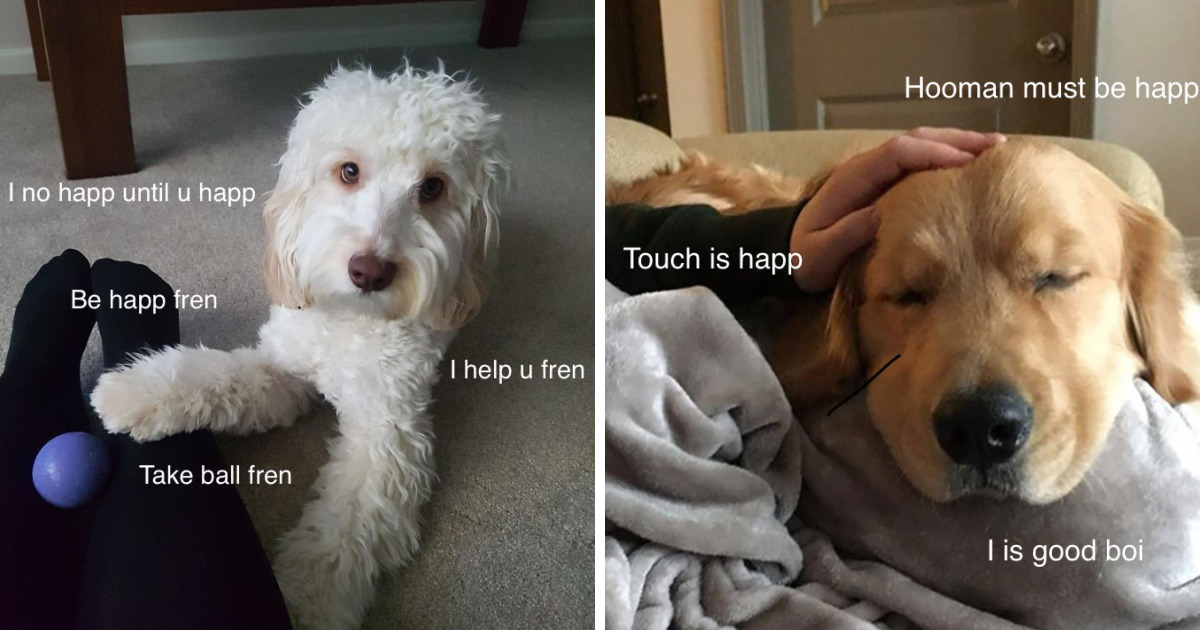
This project began with a simple idea: take already-heartwarming dog photos and give them playful captions that reflect what the dogs might be thinking. The inspiration came while browsing a gallery about unconditional dog love and noticing how easily each image suggested its own tiny story. A protective dog became a highly qualified security officer. A generous pup offering a ball became a four-legged philanthropist. A thirsty dog looked ready to deliver an urgent presentation about water-bowl management. result was not intended to be serious art criticism or a grand cultural statement. It was a cheerful dog post created for one uncomplicated purpose: to make people smile. Still, the enthusiastic reactions to cute dog photos reveal something interesting. These pictures work because dogs are expressive, familiar, emotionally engaging, and unintentionally hilarious. Give a dog one tilted ear and a slightly concerned expression, and the internet will immediately appoint it director of quality control.
Why Sweet Dog Pictures Can Brighten a Difficult Day
Looking at adorable dogs cannot repair a broken appliance, finish a late assignment, or persuade a printer to stop claiming it is offline while clearly sitting two feet away. However, positive animal imagery can create a brief emotional pause. That pause may be small, but small moments of relief still count.
Research into human-animal interaction suggests that contact with companion animals may reduce stress, encourage social connection, and support emotional well-being. The National Institutes of Health notes that pets may help decrease stress, support heart health, and assist children with social and emotional development. The Centers for Disease Control and Prevention also identifies companionship, exercise, outdoor activity, and increased opportunities for socialization among the potential benefits associated with pets. ourse, seeing a dog picture online is not the same as living with, walking, or interacting with a real dog. A photograph will not remind you to go outside at 6:12 a.m. in the rain. It also will not stare at your sandwich with the concentration of a professional negotiator. Even so, images can activate some of the positive feelings people associate with animals: warmth, playfulness, safety, curiosity, and affection.
Cuteness May Encourage Careful Attention
One frequently discussed study on “kawaii,” the Japanese concept of cuteness, found that participants performed certain detail-oriented tasks more carefully after viewing images of puppies and kittens. The researchers proposed that cute images narrowed attention and encouraged more deliberate behavior. That does not mean a puppy photo is a substitute for sleep, training, or competent project management. It does suggest that a wholesome dog break may be less frivolous than it appears. ractical terms, the effect is easy to understand. A sweet dog picture asks very little from the viewer. There is no argument to win, crisis to analyze, or complicated plot to remember. You simply notice the round eyes, floppy ears, muddy paws, or absurdly proud expression. For a few seconds, your attention rests somewhere gentle.
Dogs Are Remarkably Expressive
Dogs also seem unusually suited to visual storytelling. Research has shown that dogs can distinguish between positive and negative human facial expressions, while studies of canine facial anatomy suggest that domestic dogs developed muscles around the eyes that help produce expressions humans find especially appealing. In other words, puppy-dog eyes are not merely a metaphor. They are an extremely effective communications department. ns naturally interpret those expressions as stories. A dog looking sideways may appear suspicious. A dog holding a toy may look proud. A dog lying upside down with all four paws in the air may seem to have resigned from adulthood. The caption completes the scene by turning an expression into a recognizable human moment.
How I Turned Cute Dog Photos Into Miniature Stories
The pictures in this sweet dog post were not designed around complicated editing techniques. The central creative tool was observation. Instead of asking, “What caption would get the most attention?” I asked, “What personality does this dog appear to have?”
That small shift matters. Generic captions describe what is already visible: “Cute puppy holding a ball.” A stronger caption adds an imagined motive: “I brought you my best ball because your meeting sounded stressful.” The second version gives the dog a role, creates a relationship with the viewer, and adds a tiny emotional surprise.
Step 1: Look for the Emotional Center
Every memorable dog photo has an emotional center. It might be loyalty, confusion, excitement, determination, comfort, or the deep personal betrayal caused by an empty treat jar.
Before writing, study the dog’s eyes, posture, surroundings, and relationship with any people or animals in the frame. A dog sitting beside a child may suggest protectiveness. A muddy dog beside a formerly clean sofa may suggest a legal defense. A dog waiting at a door may suggest devotionor an urgent need to inspect a squirrel.
The goal is not to explain every visible detail. It is to identify the feeling that makes the picture worth sharing.
Step 2: Give the Dog a Distinct Voice
A funny dog caption works best when the language matches the apparent personality. A dignified older dog might sound like a patient professor. A chaotic puppy might communicate entirely through exclamation points. A tiny dog guarding a doorway may speak like the head of an international security agency despite weighing approximately nine pounds.
Possible character voices include:
- The loyal assistant: “I reviewed your schedule. It needs more walks.”
- The concerned parent: “You have been working for 14 minutes. Please rest.”
- The fearless guardian: “A leaf moved outside. I handled it.”
- The generous friend: “You may borrow my ball, but this is a major emotional investment.”
- The household philosopher: “Perhaps the real treat was the crumbs we found along the way.”
The humor comes from the contrast between the dog’s appearance and the seriousness of its imaginary message.
Step 3: Keep the Caption Short
Dog pictures are visual first. The caption should support the image rather than sit on top of it like an overpacked suitcase. One or two sentences are usually enough to establish the joke.
Short captions also work better on social media, where people scan quickly. A viewer should be able to understand the setup, enjoy the punch line, and send the post to a friend before the next notification demands attention.
Step 4: Write With Affection, Not Ridicule
The best funny dog pictures celebrate the animal’s personality. They do not depend on frightening, embarrassing, or physically manipulating a dog for entertainment. Humor should come from ordinary canine behavior: dramatic sighs, toy obsession, selective hearing, strange sleeping positions, and the belief that every delivery driver is personally announcing the end of civilization.
A warm caption invites viewers to laugh with the dog rather than at it. That affectionate tone is one reason uplifting dog posts are so easy to share. The humor feels safe, inclusive, and instantly understandable.
Creating Better Dog Photos Without Annoying the Dog
A charming caption cannot rescue a photography session that made the dog uncomfortable. The animal’s welfare must come before the picture, even when the picture has excellent meme potential.
Professional pet photography guidance recommends choosing a familiar, comfortable setting and using favorite toys, treats, games, or tricks to keep the session enjoyable. Photographers should also stop when a dog shows signs of fatigue or stress, which may include pinned-back ears, repeated lip licking, shaking, or a lowered tail. Comfortable Light
Soft natural light usually produces more flattering dog portraits than a harsh flash. A shaded outdoor location, a room beside a bright window, or the warm light near sunrise or sunset can reveal fur texture and create catchlights in the eyes. The American Kennel Club also recommends photographing at the dog’s eye level and focusing on the eyes when possible. ing to eye level may require kneeling in grass, lying on a rug, or accepting that your clean pants are no longer relevant to the artistic process. This is normal. The dog is the star. The photographer is temporary floor furniture.
Let Personality Beat Perfection
A technically flawless image is not always the most memorable one. The better picture may contain a crooked bandana, one blurry paw, or an ear caught halfway through a flop. Those details make the moment feel alive.
Try photographing familiar activities rather than forcing formal poses. Capture the dog waiting for breakfast, carrying an oversized stick, investigating a cardboard box, greeting a favorite person, or proudly displaying a toy that has survived approximately six minutes.
Continuous shooting or burst mode can help capture fast expressions. Take several frames, then choose the image where the eyes, ears, and body position tell the clearest story.
Respect Canine Communication
Dog body language communicates emotional states, but people can misunderstand individual signals when they focus on only one feature. A wagging tail, for example, should be interpreted together with posture, facial tension, ear position, and the surrounding situation. Responsible photography requires watching the whole dog rather than assuming every pose means happiness. he dog turns away, repeatedly leaves the setup, freezes, hides, or refuses treats it normally enjoys, the session should end. No online reaction is worth sacrificing trust. The human-animal bond is supposed to benefit both sides, not convert one side into unpaid content production. Sharing Uplifting Dog Posts Matters
The internet is excellent at delivering information, entertainment, community, and an alarming number of opinions about how strangers should load a dishwasher. Positive dog content offers a softer form of participation.
Sending a cute dog picture can function as a small social gesture. It may mean, “I thought of you,” “You need a break,” or “This dog has the same expression you made during yesterday’s conference call.” Pets can also help create conversations and social connections in everyday life, according to discussions of the human-animal bond from Harvard Health and veterinary organizations. e posts can be especially meaningful when they highlight rescue dogs or adoptable animals. Best Friends Animal Society notes that many adopters first encounter their future pets through online photographs, and its photography guidance emphasizes that cheerful, personality-driven images can help people connect with shelter animals. The ASPCA has similarly shared examples of shelter photography attracting attention to pets waiting for homes. eet dog photo therefore has several possible jobs. It can entertain someone during lunch, preserve a family memory, introduce an adoptable dog to a potential home, or simply remind viewers that the world still contains creatures whose greatest ambition is to locate the squeaker hidden inside a stuffed duck.
My Experience Making These Sweet Dog Pictures
The most enjoyable part of making these pictures was discovering how quickly each dog seemed to become a character. At first, I assumed the captions would require long brainstorming sessions. Instead, the expressions did most of the work.
One dog looked so serious that I imagined it guarding its person from every danger in the neighborhood, including suspicious mailboxes and recycling bins that had recently changed position. Another held a ball with such care that the image felt less like a game of fetch and more like an important diplomatic exchange. A sleepy dog seemed to be offering emotional support while also making it clear that all support services would end at naptime.
I learned that the funniest caption was rarely the most complicated one. My early ideas sometimes included too much setup. I tried to explain who the dog was, what had happened, why the situation mattered, and where the imaginary story might go next. By the time the joke arrived, it needed its own GPS.
The better approach was to choose one emotion and exaggerate it slightly. Concern became heroic concern. Pride became executive-level confidence. Hunger became a constitutional crisis. That method preserved the sweetness of the original photo while giving viewers an extra reason to pause.
I also became more aware of small visual details. Before this project, I might have described a picture simply as “a dog sitting beside a person.” While writing captions, I began noticing the dog leaning against a leg, placing one paw forward, watching someone’s face, or holding a toy close to its chest. These details changed the story.
A leaning dog suggested comfort. A raised paw suggested an offer. A sideways glance suggested that somebody had made a questionable decision and the dog had documentation. The images became more interesting once I stopped treating them as generic cute dog photos and started looking for relationships inside the frame.
The audience reactions were another memorable part of the experience. People did not respond only to the technical quality of the pictures. They responded to familiarity. They recognized their own pets in the dramatic expressions, generous gestures, and wonderfully illogical behavior. A caption about guarding the house reminded someone of a dog that barked at leaves. A joke about sharing a ball reminded someone else of a pet that delivered toys whenever a family member felt sad.
That recognition made the project feel communal. The pictures may have shown individual dogs, but the comments turned them into a celebration of canine personality in general. Everyone seemed to know a dog who behaved like a tiny security guard, an enthusiastic therapist, an unlicensed food inspector, or a best friend who had never once respected personal space.
Making the post also reminded me that creative work does not always need to be ambitious to be worthwhile. A piece of content can be simple, lighthearted, and still give people something valuable. Not every picture needs to reveal a hidden truth about society. Sometimes it is enough to show a happy dog, add a silly sentence, and help a tired person smile before returning to the rest of the day.
Most importantly, I came away with a greater appreciation for the trust visible in dog photographs. The sweetest pictures were not necessarily the ones with perfect poses. They were the ones showing a dog relaxed beside someone, offering a favorite toy, resting its head on a familiar shoulder, or looking toward a person with complete attention.
That trust is what gives the humor its heart. Without it, the caption is merely a joke. With it, the picture becomes a small portrait of companionship.
A Little Dog-Shaped Reminder
Sweet dog pictures will not solve every problem, but they can interrupt a gloomy moment with warmth, humor, and uncomplicated affection. They remind us to notice small gestures, share cheerful things with people we care about, and occasionally approach life with the confidence of a Chihuahua confronting a vacuum cleaner.
Whether you create funny dog captions, photograph your own pet, volunteer with a rescue, or simply enjoy an uplifting dog post during a difficult afternoon, the guiding principle is the same: celebrate the personality of the animal and protect the trust behind the picture.
And when the internet becomes too loud, there is no shame in closing the argument, opening a gallery of adorable dogs, and spending five peaceful minutes with creatures who remain blissfully unaware of reply-all email chains.
Note: Dog photography and social media content should always prioritize animal comfort, safety, and dignity. Never frighten, restrain, dress, or position a dog solely to obtain a humorous image.