Boiled beets are one of those humble kitchen wins that make you feel strangely accomplished. You start with dirt-covered little root vegetables that look like they were excavated from a medieval garden, and you end with glossy, tender, jewel-colored slices ready for salads, grain bowls, sandwiches, soups, or midnight fridge snacking.
Learning how to boil beets is simple, but a few small details make a major difference. Leave the skins on, avoid turning the pot into a volcanic rolling boil, and test the center instead of trusting a timer like it owes you money. With the right method, boiled beets become sweet, tender, easy to peel, and far less intimidating than their dramatic purple-red juice suggests.
Why Boiling Beets Is Worth Knowing
Roasting beets gets plenty of attention because it concentrates their sweetness, but boiling beets has its own superpowers. It is straightforward, requires no oven space, works beautifully for meal prep, and gives you soft, tender beets that are perfect for chilled salads, creamy dips, pickling, soups, and quick side dishes.
Boiling whole beets also keeps the prep work low. Instead of peeling and chopping hard raw beets, you simply scrub them, simmer them, cool them slightly, and slip off the skins. It is a small miracle of kitchen physics, with less danger of turning your cutting board into a crime scene.
Whole beets are commonly simmered until a knife slides into the center with little resistance; cooking time can range from about 20 minutes for small beets to roughly an hour for larger ones.
What You Need to Boil Beets
Ingredients
- Fresh beets, preferably similar in size
- Water
- Kosher salt, optional
- Ice, optional but helpful for fast cooling
Equipment
- Large pot or Dutch oven with a lid
- Colander
- Paring knife or skewer
- Large bowl for an ice bath
- Paper towels or clean kitchen towel
- Disposable gloves, optional for stain-averse cooks
Choose the Best Beets Before You Start
Good boiled beets begin at the store or farmers market. Look for beets that feel firm, heavy for their size, and free from deep cuts, soft spots, or wrinkled skin. Small to medium beets are often more tender and cook more evenly than giant ones that resemble tiny bowling balls.
If the greens are attached, they should look fresh and lively rather than limp and sad. Beet greens are edible, so do not toss them automatically. Sauté them with olive oil, garlic, and a squeeze of lemon, or add them to soups, frittatas, and grain bowls.
For the easiest cooking experience, buy beets that are roughly the same size. This helps them finish at about the same time, saving you from the awkward moment when one beet is tender while another still has the emotional texture of a brick.
Fresh beets are generally best when they are firm and unblemished; keeping a short piece of stem attached can help reduce moisture and color loss before cooking.
How to Boil Beets Step by Step
Step 1: Trim the Beet Greens
Cut off the leafy tops, leaving about 1 inch of stem attached to each beet. Do not cut deeply into the beet itself. That small stem buffer helps keep some of the vivid beet juice inside during cooking.
Leave the long root tip attached too. It may look like a tiny vegetable tail, but it has a purpose. Cutting it off before cooking can encourage more color and flavor to escape into the water.
Step 2: Scrub the Beets Well
Place the beets under cool running water and scrub away dirt with your hands or a vegetable brush. Beets grow underground, so a little grit is part of their personality. Your job is to remove it before dinner, not after someone discovers it between their teeth.
Do not peel raw beets before boiling. Their skins become much easier to remove after cooking, and keeping them intact helps protect their color and texture.
Step 3: Add Beets to a Pot
Place the scrubbed whole beets in a large pot. Add enough cold water to cover them by about 1 inch. Add a pinch or two of kosher salt if you like. Salt is optional, but it can give the cooking water a little extra flavor support.
Use a pot large enough for the beets to sit comfortably. They do not need to have personal space worthy of a luxury resort, but they should not be packed together so tightly that they cook unevenly.
Step 4: Bring the Water to a Boil
Set the pot over high heat and bring the water to a boil. Once it reaches a lively boil, reduce the heat to maintain a gentle simmer. Cover the pot, leaving the lid slightly ajar so steam can escape.
A gentle simmer is the sweet spot. A furious rolling boil can knock the beets around, increase splashing, and make the water look like a scene from a low-budget vampire movie.
Step 5: Simmer Until Tender
Cook the beets until a paring knife, skewer, or fork slides easily into the center. The exact time depends on their size, age, and general stubbornness.
| Beet Size | Approximate Boiling Time |
|---|---|
| Small beets | 20 to 30 minutes |
| Medium beets | 30 to 45 minutes |
| Large beets | 45 to 60 minutes |
Start checking small beets around the 20-minute mark. For medium beets, check around 30 minutes. Large beets may need closer to an hour. The center should feel tender but not mushy. Think “soft baked potato,” not “vegetable pudding.”
Recipe testing from major American cooking sites consistently uses tenderness as the deciding factor, with timing varying widely according to beet size.
Step 6: Drain and Cool the Beets
Once tender, drain the beets in a colander. You have two good options for cooling them:
- Quick method: Transfer the beets to a bowl of ice water for 5 to 10 minutes.
- Relaxed method: Let them cool on a plate until they are comfortable to handle.
An ice bath stops the cooking quickly and makes peeling easier, especially when you are preparing a large batch. It is also helpful when you need chilled beets for a salad and do not have time to wait around while they slowly contemplate room temperature.
Step 7: Peel the Beets
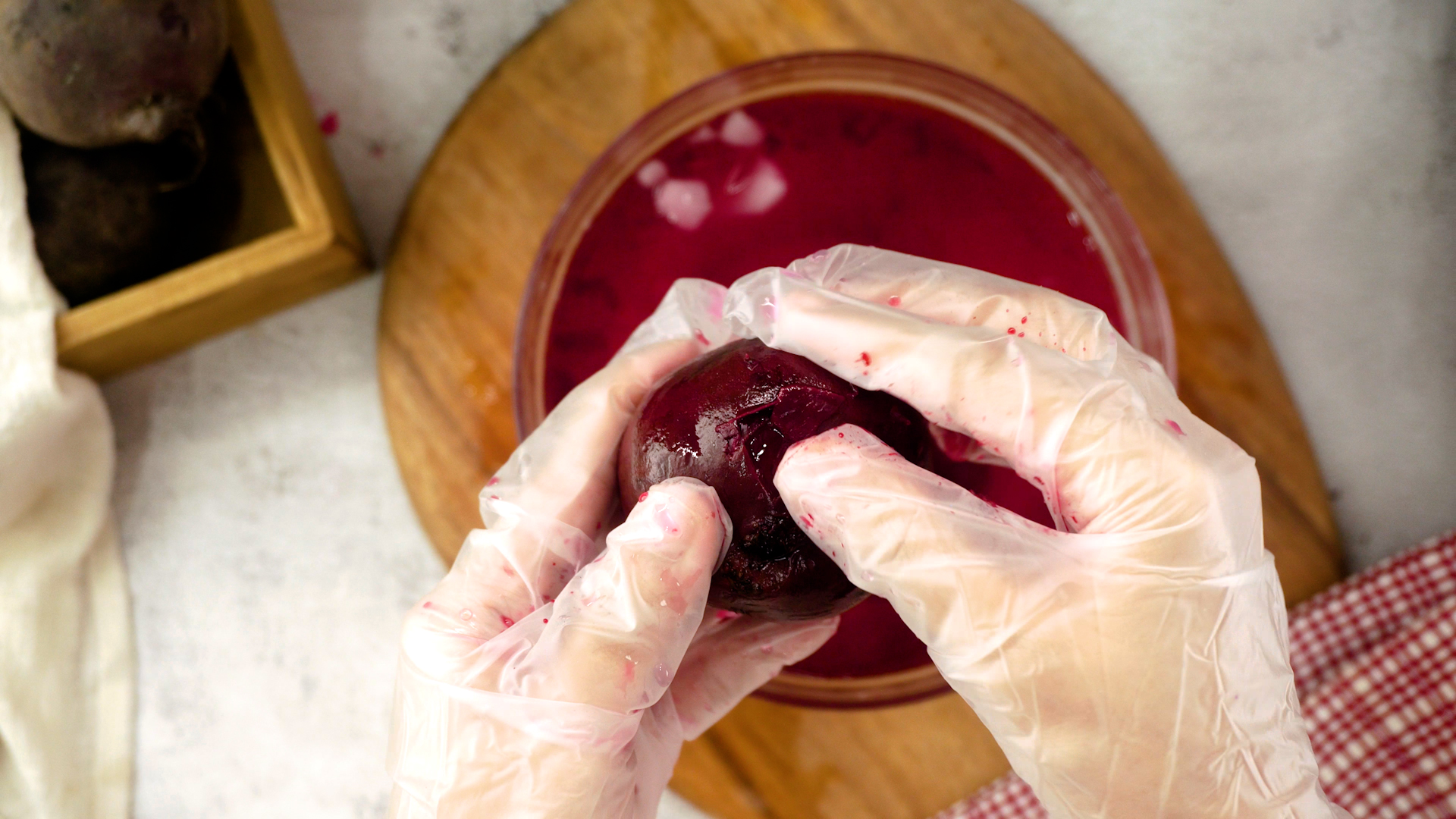
When the beets are cool enough to handle, trim off the stem and root ends. Use your fingers, a paper towel, or a clean kitchen towel to rub away the skins. They should slide off surprisingly easily.
Wear disposable gloves if beet stains bother you. Red beet juice can tint your hands pink or purple, which is harmless but may make coworkers wonder whether you spent your lunch break wrestling a dragon.
For particularly stubborn skins, use a paring knife to gently lift the peel away. Avoid cutting too deeply into the beet flesh unless you enjoy sacrificing perfectly good beet for no reason.
Should You Boil Beets Whole or Cut Them First?
For the best balance of color, flavor, and easy peeling, boil beets whole with the skin on. Whole beets retain more of their deep color and remain less waterlogged than peeled pieces.
However, cutting beets before boiling can be useful when time matters. Peeled beet cubes cook in about 10 to 15 minutes, making them a smart option for soups, purées, and quick weeknight dishes. The trade-off is that cut beets may lose more pigment into the water and can taste slightly less concentrated.
When you want beautiful slices for a beet salad, boil them whole. When you want a fast beet soup or a bright pink puree, chopped beets are perfectly practical.
Cooking peeled beet pieces in salted water can take about 10 to 15 minutes, while whole beets require substantially longer depending on size.
How to Tell When Boiled Beets Are Done
The best test is simple: insert a paring knife, thin skewer, or fork into the thickest part of the beet. It should slide in with little resistance.
Do not judge doneness by the outer surface. A beet can look soft on the outside while still being crunchy in the center. Also, avoid repeatedly stabbing every beet in the pot. Test one or two first, preferably the largest ones.
Perfectly boiled beets should be tender enough to slice cleanly but firm enough to hold their shape. If you plan to blend them into hummus or soup, you can cook them a few minutes longer for extra softness.
Common Mistakes When Boiling Beets
Peeling Before Cooking
Peeling raw beets is extra work and usually unnecessary. Cook first, peel later, and let heat do the difficult part for you.
Cutting Off the Root End Too Early
Removing the root tip before cooking can release more beet juice into the water. Leave it attached until after boiling for better color retention.
Using Beets of Wildly Different Sizes
A tiny beet and a monster beet do not cook at the same speed. Either choose similar sizes or remove smaller beets as they become tender.
Boiling Too Aggressively
After the water reaches a boil, lower the heat to a simmer. A calm simmer cooks evenly and reduces splatters.
Overcooking
Overcooked beets can become watery and mushy. Start testing early, especially with small beets. The goal is tender, not tragic.
Easy Ways to Use Boiled Beets
Once you know how to boil beets, you suddenly have a colorful ingredient ready to improve almost any meal. Try these easy ideas:
- Toss sliced beets with olive oil, balsamic vinegar, salt, pepper, and fresh herbs.
- Add diced beets to a salad with goat cheese, walnuts, arugula, and orange segments.
- Blend boiled beets into hummus for a bright pink dip.
- Mix grated beets into yogurt with garlic and lemon for a quick side dish.
- Add cubes to grain bowls with quinoa, chickpeas, feta, and tahini dressing.
- Make a simple beet soup or chilled borscht-style soup.
- Slice and layer them into sandwiches with hummus, avocado, greens, or roasted turkey.
- Quick-pickle them with vinegar, sugar, salt, and spices.
Boiled beets work particularly well with tangy ingredients such as lemon, vinegar, goat cheese, feta, yogurt, mustard, and citrus. Their earthy sweetness loves a little acidity. It is a culinary friendship as reliable as fries and ketchup, only much more purple.
How to Store Boiled Beets
Let boiled beets cool before storing them. Keep whole or sliced beets in an airtight container in the refrigerator. For the best flavor and food safety, use them within 3 to 4 days.
If you are meal prepping, store beets plain and add dressings later. Acidic dressings are delicious, but storing them separately keeps the texture fresher and gives you more flexibility during the week.
You can also freeze boiled beets. Peel and cut them, arrange the pieces in a single layer on a baking sheet, freeze until firm, then transfer them to a freezer-safe container. Frozen beets are excellent for soups, smoothies, sauces, and blended dips.
Food-safety guidance recommends refrigerating cooked leftovers promptly in shallow containers and using them within about four days; freezing is useful for longer storage.
Boiled Beets vs. Roasted Beets
Boiled beets are tender, quick to prepare, and ideal when you want a softer texture. Roasted beets are more concentrated, sweeter, and slightly deeper in flavor because dry oven heat encourages caramelization.
Choose boiled beets when you want speed, a clean flavor, or soft beets for blending. Choose roasted beets when you want maximum sweetness and richer flavor for salads or side dishes. Neither method is wrong. They are simply two different moods for the same excellent vegetable.
Real-Kitchen Experience: What Boiling Beets Teaches You
The first time many people boil beets, they tend to overthink the process. They worry about peeling, staining, timing, and whether the beet is secretly plotting revenge. In reality, boiling beets teaches one of the most useful kitchen lessons: simple techniques become reliable when you pay attention to texture instead of obsessing over exact minutes.
A recipe may say medium beets take 35 minutes, but your beets may need 28 minutes or 48 minutes. Freshness, size, water temperature, pot thickness, and how crowded the pot is can all affect the final timing. The knife test is more trustworthy than a timer because it tells you what is happening inside the beet right now. Once the knife slides in easily, you are done. No drama. No spreadsheet. No beet-based existential crisis.
Another useful lesson is that appearance can be misleading. Raw beets look tough, dusty, and almost armored. But after simmering, their skins loosen and their flesh becomes smooth, tender, and naturally sweet. This makes beets a great ingredient for cooks who want impressive color without complicated techniques. A simple bowl of sliced boiled beets can look restaurant-worthy when dressed with olive oil, flaky salt, orange zest, goat cheese, and toasted nuts.
Boiling beets also rewards preparation. If you cook a few extra beets on Sunday, weekday meals become easier. You can add cold beet slices to lunch salads, fold cubes into a grain bowl, blend them into hummus, or turn them into a bright side dish in minutes. This is the kind of meal prep that feels useful rather than heroic. You are not spending an entire weekend portioning 47 identical containers of chicken and rice. You are simply giving future-you a colorful shortcut.
There is also something satisfying about learning to work with the mess instead of fighting it. Beet juice stains, yes, but gloves, paper towels, and a quick rinse solve most problems. A plastic cutting board may pick up a little color, but that is not a culinary emergency. It is evidence that you cooked something real. Beets are vivid, earthy, slightly sweet, and impossible to ignore. Their color is part of the fun.
The most practical experience-based tip is to cook beets in batches based on how you plan to use them. Boil small beets when you want snackable, salad-ready pieces. Boil medium beets for slicing and serving as a side dish. Use larger beets for soup, hummus, or puree, where shape matters less than tenderness. Once you start thinking this way, beets stop being a mysterious root vegetable and become a flexible ingredient with a surprisingly large personality.
Final Thoughts
Knowing how to boil beets gives you an easy, dependable way to turn a simple root vegetable into something colorful, nutritious, and versatile. The method is uncomplicated: scrub the beets, keep them whole, cover them with water, simmer until tender, cool them, and rub away the skins.
From there, the possibilities are wide open. Serve boiled beets warm with butter and herbs, chilled with citrus and cheese, blended into dips, mixed into grain bowls, or pickled for later. Once you master the basic technique, you may find yourself buying beets more oftennot because you suddenly became a garden wizard, but because they are genuinely easy, delicious, and much less scary than they look.
Note: For the best results, cook beets until tender in the center rather than relying only on a fixed boiling time.