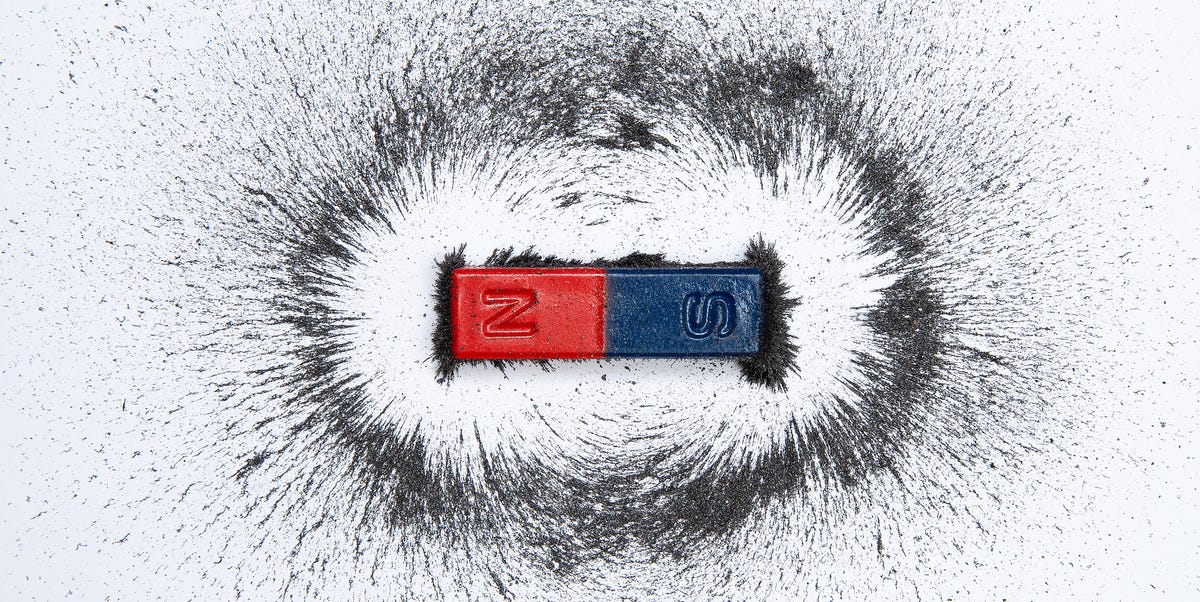
Note: In strict physics language, this experiment did not switch gravity off. It used magnetism, motion, and stability tricks to counterbalance weight so effectively that gravity looked like it had taken an unscheduled coffee break.
Every few years, science serves up a headline that sounds like it escaped from a late-night sci-fi channel: magnets suspended gravity. That phrase is dramatic, a little cheeky, and not entirely wrong if you read it with your eyebrows raised. A recent wave of attention around a strange magnetic levitation experiment came from a deceptively simple setup: one spinning magnet, one free magnet, and a result that seems to thumb its nose at everyday intuition. Instead of snapping together or flying apart like impatient refrigerator magnets, the system produced stable levitation.
That is the part that makes physicists lean closer to the bench and regular humans say, “Hold on, do we live in a wizard school now?” The answer is no. Still no floating castles. But the experiment is exciting because it turns a classic rule of magnetism into a practical loophole. In ordinary conditions, magnets do not like to hover stably near one another. They attract, repel, flip, wobble, and generally behave like tiny drama queens. Yet with the right spin, orientation, and geometry, researchers showed that levitation can emerge in a surprisingly clean and repeatable way.
And that matters. Not because engineers are about to cancel gravity by Friday, but because magnetic levitation has real uses in contactless handling, low-friction machinery, precision experiments, advanced sensing, and microgravity simulation. So yes, the headline is flashy. But the underlying science is legitimate, fascinating, and weird in the best possible way.
What Actually Happened in the Magnet Experiment?
At the heart of the story is a form of spin-stabilized levitation. One magnet is rotated at high speed. A second magnet, often called the floater, is positioned nearby. In a normal static setup, those magnets would not settle into a stable hover. One would either slam into the other or slip away from equilibrium. That basic instability has haunted magnetic levitation for a very long time.
But once the rotor magnet spins, the picture changes. The motion introduces a dynamical effect that helps hold the free magnet in a stable suspended position. The floater does not just hang there like a frozen cartoon object. It interacts with the rotating magnetic field, locks into the motion, and can settle into a stable orbit or hover a short distance away. The result looks almost ridiculous in the most delightful possible way: a levitating magnet that should not, by our everyday intuition, be levitating there at all.
That is why the experiment caught so much attention. It was not merely another flashy magnet demo. Researchers were able to analyze the forces in detail and show that the levitation comes from motion-dependent magnetic behavior, not from hidden supports, editing tricks, or wishful thinking. The system appears simple, but the physics inside it is anything but simple. Like a good magic trick, it becomes more interesting after you know how it works.
No, Gravity Was Not “Turned Off”
Let’s give gravity its due. Gravity was still very much on the clock. The Earth did not forget how to pull. What changed was the balance of forces. The magnetic interaction produced an upward or stabilizing effect strong enough to offset the weight of the floating magnet. In other words, the experiment did not erase gravity. It countered gravity.
That distinction matters because it keeps the science honest. When people say an experiment “suspended gravity,” what they usually mean is that another force successfully compensated for gravity over a useful region of space. That is still remarkable. A lot of modern physics looks like that, actually: not breaking the rules, but finding deliciously clever ways to use them.
Why Stable Magnetic Levitation Is Normally So Hard
Here is the annoying rule that makes this result special: under static conditions, ordinary permanent magnets cannot usually levitate one another in stable equilibrium. This is tied to a famous result often summarized through Earnshaw’s theorem. In plain English, the theorem says you cannot rely on simple fixed arrangements of classical inverse-square forces to create stable hovering in all directions. A magnet may momentarily balance, but it tends to slip sideways, flip orientation, or snap into contact.
That is why a basic “put one bar magnet on top of another and hope for the best” experiment ends with disappointment and maybe a pinched finger. Static repulsion alone does not solve the stability problem. Magnets are not being difficult to be rude. They are being difficult because the math says they should be.
So when a research team demonstrates a clean levitating magnet setup, the first interesting question is not “Can magnets float?” We already know the answer is sometimes yes. The real question is, what loophole are they using?
The Three Classic Loopholes
The first loophole is diamagnetism. Many materials, including water and biological tissue, are weakly repelled by magnetic fields. In strong enough fields, that repulsion can help stabilize levitation. That is the principle behind famous floating-frog demonstrations and other spectacular lab setups where living things, droplets, and lightweight samples appear to defy gravity.
The second loophole is superconductivity. Superconductors can expel magnetic fields and create highly stable levitation effects, especially when flux pinning locks a levitating object into position. This is the physics behind those viral “quantum levitation” videos that make people immediately want a hoverboard, followed by the disappointing realization that liquid nitrogen is not yet standard skateboard equipment.
The third loophole is motion. Spin can stabilize an otherwise unstable magnetic arrangement, just as a spinning top resists falling over. That principle shows up in the classic Levitron toy and, in a more refined way, in the newer rotation-driven levitation experiments. The headline experiment belongs to this third family, which is one reason it feels both modern and strangely old-school at the same time.
How Rotation Changes the Game
Rotation does something wonderfully sneaky. In a non-spinning system, the floating magnet tries to reorient itself in a way that makes the interaction purely attractive, and then the whole arrangement collapses into contact. That is the boring outcome. But when one magnet rotates, the changing magnetic environment creates a coupling between motion and force. The floater can lock into a configuration that would be unstable in a static case.
Think of it as a negotiation happening many times per second. The spinning magnet keeps changing the terms of the magnetic interaction, and the free magnet responds dynamically. Instead of settling into the obvious crash course, the system can maintain a stable suspended state. The floater effectively finds a narrow path through a physical no-man’s-land and stays there.
This is why the experiment feels so counterintuitive. The magnetic force between the objects has not stopped being magnetic force. Yet the motion changes the stability landscape so much that the system behaves like it has discovered a hidden clause in the laws of physics. Technically, it has not. But emotionally? Absolutely.
Even better, the setup is not absurdly complicated. That simplicity is part of its charm and part of its engineering appeal. If a basic rotation-based system can produce reliable levitation without complicated active control hardware, then it becomes much easier to imagine practical devices built around the idea.
Other Real Experiments That Make Gravity Look Nervous
The spinning-magnet story is not an isolated curiosity. It joins a long and gloriously strange family of experiments in which magnetic forces make gravity look less like a tyrant and more like a negotiable workplace policy.
One of the most famous examples is the floating frog. Because water is diamagnetic, and living tissue contains plenty of water, a sufficiently strong magnetic field can levitate a small animal. This is not useful for amphibian entertainment, but it is a vivid proof that magnetic forces can compensate for gravity in real physical systems.
Researchers have also levitated mice and other biological samples to study how altered effective gravity affects living tissue. NASA and related research programs have explored magnetic levitation as a way to simulate reduced gravity on Earth. That is especially valuable because sending every experiment to space is expensive, slow, and not exactly available through standard shipping.
Then there is superconducting levitation, the darling of science museum videos and internet rabbit holes. Cool a superconductor enough, place it in the right magnetic environment, and you can create stable hovering and locked trajectories that look almost fake. But they are not fake. They are just physics showing off.
And beyond dramatic demos, magnetic levitation already has serious applications. Maglev trains reduce friction. Magnetic bearings support high-speed rotating machinery with minimal wear. Contactless sample handling helps researchers manipulate fragile objects without contamination. In biomedical research, magnetic levitation has even been used to help organize cells and tissue-like structures in three dimensions.
Why This Matters Beyond the Cool Factor
Let’s be honest: the cool factor is doing a lot of work here. A hovering magnet is the kind of thing that can carry an entire conversation by itself. But the deeper importance lies in what stable levitation enables.
First, it reduces mechanical contact. Whenever parts touch, you get friction, wear, dust, heat, noise, and eventual complaints from engineers. Levitation can eliminate or reduce those problems. That is why it matters in bearings, rotors, and precision instruments.
Second, it offers clean handling of delicate materials. In micro-scale systems, contamination and mechanical disturbance are a big deal. If magnetic levitation can hold or move tiny components without touching them, that opens possibilities in manufacturing, sensing, and laboratory automation.
Third, it provides a tool for simulating altered gravity environments. Scientists do not actually remove gravity in these setups, but they can compensate for it enough to explore how fluids, cells, and small organisms behave under different effective gravitational loads. That matters for space medicine, materials science, and basic biology.
Fourth, unusual levitation platforms can become sensors. A suspended object is exquisitely sensitive to disturbances. That makes levitated systems interesting for precision measurement, including force sensing, inertial sensing, and potentially even gravimetry. In other words, the same strange physics that produces a hover can also produce exquisite sensitivity.
The Headline Is Wild, but the Science Is More Interesting Than the Headline
“A Wild Experiment With Magnets Actually Suspended Gravity” works as a headline because it delivers instant drama. But the sober version is arguably more impressive: researchers found a simple dynamical magnetic system in which rotation stabilizes levitation that static magnet arrangements cannot achieve. That sounds less like a movie trailer, but much more like a scientific breakthrough.
The big lesson is not that gravity lost. The lesson is that stability is everything. Science is full of forces that can, in principle, balance one another. The hard part is keeping that balance from collapsing the instant reality bumps the table. The spinning-magnet experiment matters because it reveals a surprisingly elegant way to create stable balance where classical intuition says it should be impossible.
That is also why the experiment resonates so widely. It feels like a loophole in common sense. We all grow up with the idea that heavy things fall, magnets either stick or shove, and hovering belongs to special effects. Then a lab setup with rotating magnets casually informs us that reality is more imaginative than our first draft of it.
What These Experiments Feel Like in Real Life: The Human Experience of Seeing Gravity “Lose”
If you have ever stood in front of a magnetic levitation demo, you know the experience lands in the brain before it lands in language. The first reaction is almost never technical. It is usually something elegant like, “Nope,” or “That cannot be right,” or the always classy, “Okay, what is the trick?”
That reaction is part of what makes this whole field so addictive. Magnetic levitation does not merely teach physics. It exposes how much of our understanding of the world depends on habit. We are used to tables holding things up. We are used to strings, shelves, hands, hooks, and floors. When an object floats in clean air with nothing obvious touching it, the mind starts patting its pockets for lost explanations.
In classroom settings, the emotional arc is almost predictable. First comes skepticism. Then comes inspection. People crouch down, change angles, squint, and look for transparent supports like amateur detectives in a very nerdy crime drama. Once they accept that the object is genuinely suspended, the mood changes from suspicion to delight. Suddenly everyone becomes interested in words they did not care about five minutes earlier: field gradient, diamagnetism, flux pinning, gyroscopic stability. It is one of the few corners of physics where wonder acts like a recruitment strategy.
There is also a special kind of pleasure in watching a levitation experiment that is slightly temperamental. A polished museum display is impressive, but a lab demo that needs tuning feels even more magical because you can sense the invisible balancing act. A researcher nudges a position, adjusts speed, changes distance by a hair, and then the object settles into a hover. That moment tells you something profound: nature is not being broken; it is being persuaded.
Engineers tend to experience these systems with two emotions running in parallel. One is awe. The other is immediate problem-solving. Once a magnet floats, the next questions arrive fast. How long can it remain stable? What happens if the temperature changes? What if the object is heavier? Can the geometry be scaled down? Can it be scaled up? Can it survive vibration? Can it carry a sensor? Can it move on command? It is the most engineer-coded form of excitement imaginable: “Wonderful. Now let’s make it annoying and practical.”
For the public, though, the emotional center is simpler. Levitation feels like a preview of the future we were promised as kids. Maybe not jetpacks on every driveway, but at least a reminder that the universe still contains surprises. That matters more than it sounds. In an age where people often meet science through scary headlines or abstract arguments, a hovering object offers a cleaner invitation. It says: come closer, this is real, and reality is weirder than fiction.
That may be the lasting appeal of the “magnets suspended gravity” story. It is not just about technical physics. It is about the rare pleasure of seeing the world behave in a way that forces your intuition to grow up a little. Gravity did not vanish. Magnetism did not become magic. But for a brief moment, one tiny object hangs in space and your brain has to admit an uncomfortable truth: the universe has better special effects than we do.
Final Takeaway
The magnet experiment behind the viral headline did not repeal gravity, rewrite Newton, or open a portal to anti-gravity sedans. What it did do is more meaningful: it showed that rotation can stabilize a magnetic levitation state that ordinary static magnet setups cannot maintain. That insight connects beautiful theory with simple hardware, and it points toward practical tools for contactless manipulation, precision engineering, and gravity-compensation research.
So yes, the title is dramatic. But the truth is even better. Science did not discover how to turn gravity off. It discovered, once again, how clever the laws of physics can be when you stop treating them like walls and start treating them like blueprints.