If you have ever opened Amazon looking for one innocent strand of lights and somehow ended up comparing twelve different Christmas trees before lunch, welcome home. The good news is that when Amazon’s popular artificial Christmas tree goes on sale, it is usually not some random flimsy twig impersonating a pine. It is typically a full, realistic model from a brand shoppers already know, with the National Tree Company Dunhill Fir line showing up again and again in buying guides, roundup articles, and sale coverage.
That matters because an artificial Christmas tree is no longer a “good enough” backup plan. For many households, it is the main event: cleaner than a live tree, easier to store than you remember, and often more customizable than the real thing. You can choose full or slim silhouettes, pre-lit or unlit branches, warm white or multicolor lighting, classic green or snowy flocking, and sizes that fit anything from a studio apartment to a room with cathedral ceilings. In other words, the fake tree has had a glow-up.
So what makes Amazon’s popular artificial Christmas tree worth the click when it goes on sale? Let’s break down why shoppers keep coming back, what features actually matter, and how to decide whether this is the year you finally stop vacuuming pine needles out of the rug until Valentine’s Day.
Why This Amazon Artificial Christmas Tree Keeps Showing Up in Sale Headlines
When retail editors write about a popular artificial Christmas tree on Amazon, one family of products keeps stealing the spotlight: National Tree Company’s Dunhill Fir models. That line has been featured in deal coverage, buying guides, and product roundups because it hits a rare sweet spot between realism, variety, and price.
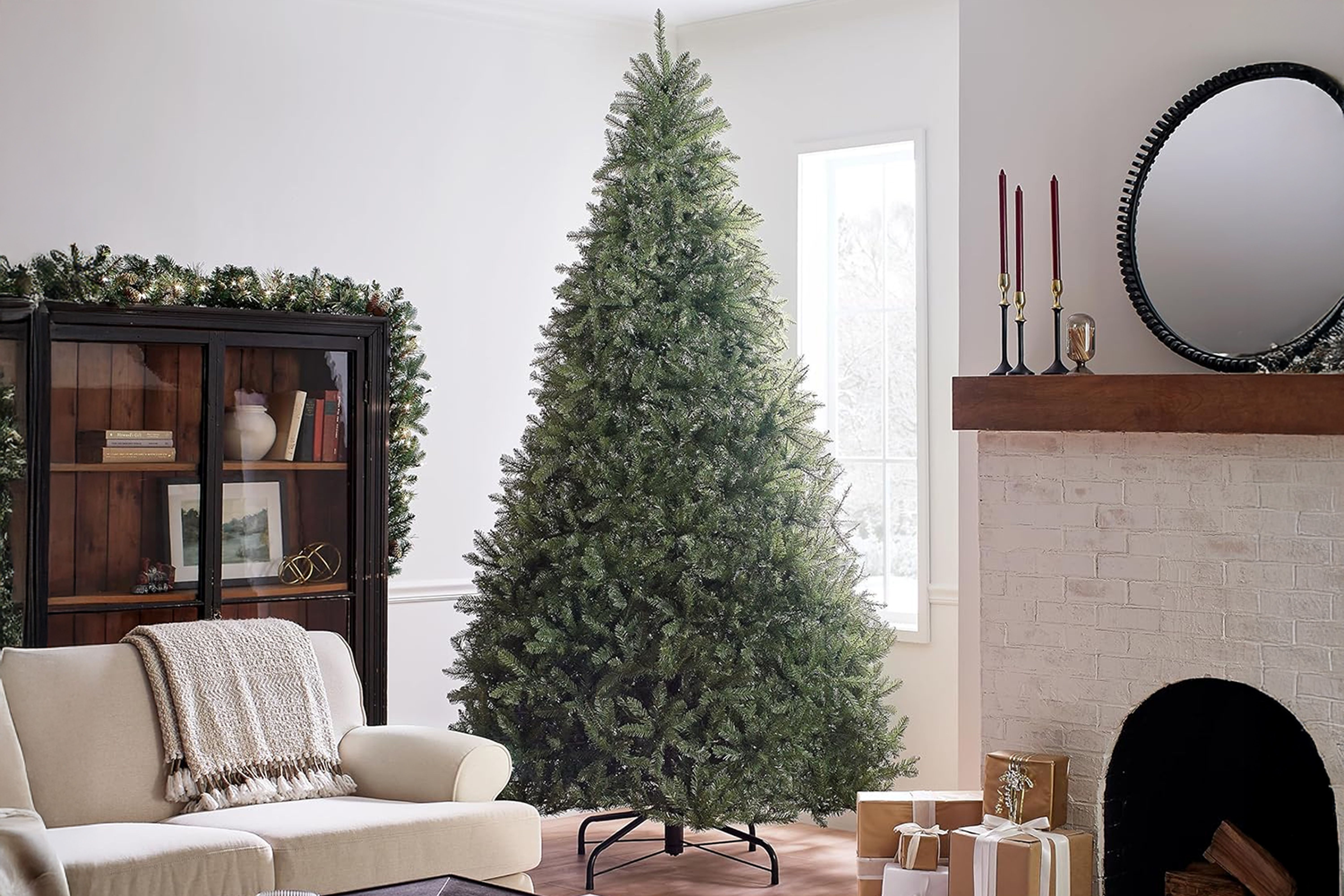
The Dunhill Fir is available in multiple heights, including 6-foot, 7.5-foot, and 9-foot versions, and the line includes both pre-lit and unlit options. That range alone makes it easy to recommend. A smaller home can grab a 6-foot version that still feels substantial, while larger living rooms can go straight for a 9-footer with the kind of full silhouette that says, “Yes, we absolutely own more ornaments than any reasonable family should.”
Editors also like it because the specs sound good on paper and usually make sense in real life. The 7.5-foot unlit version is built with a wide 59-inch base diameter, while the 9-foot version stretches to a generous 66-inch diameter and a hefty branch-tip count designed to create that lush, classic tree profile. The pre-lit versions add built-in lights, which removes one of the most annoying parts of decorating: wrestling a tangled light string like it personally insulted you.
In short, this is not just a tree that looks good in a product photo. It is the kind of product line that keeps resurfacing because it gives shoppers what they actually want: a traditional shape, an easy setup system, and a holiday centerpiece that looks impressive without requiring a tiny forest and a prayer.
What Shoppers Love Most About It
1. It Looks More Realistic Than the Average Budget Tree
One reason this Amazon artificial Christmas tree stands out is its full-bodied, traditional fir shape. The branch tips are designed to create a dense silhouette, which matters more than most people realize. A tree can have lights, height, and decent reviews, but if it looks sparse in the middle, it will always feel a little bit like holiday fraud.
The Dunhill Fir line leans into that classic, lush look. It is not trying to be ultra-modern or aggressively minimalist. It is aiming for the timeless Christmas-tree silhouette most people picture in their heads: wide at the bottom, balanced through the middle, and ready to carry a mix of ornaments without looking overwhelmed.
That design direction also lines up with broader decorating trends. Full, luxurious trees continue to be popular, while snow-dusted flocked styles and slim trees remain strong alternatives for smaller spaces or more stylized holiday decorating. Amazon shoppers like having options, and this category delivers them.
2. Hinged Branches Make Setup Less Dramatic
Artificial trees always promise easy assembly, but the definition of “easy” can be suspiciously flexible. This is where hinged construction helps. On many of the popular National Tree Company models, the branches are pre-attached and swing down into place. That means fewer mystery pieces, fewer assembly tantrums, and a faster path to “Wow, that actually looks good.”
That said, realism still requires one unavoidable step: fluffing. Multiple shopping experts and product pages note that you should set aside around 45 to 60 minutes to shape the branches properly. This is not a flaw; it is part of the deal. The tree arrives compressed for shipping, and the payoff comes after you separate, bend, and spread the tips until the silhouette fills out. Think of it as the holiday version of steaming a wrinkled shirt. Necessary? Yes. Glamorous? Absolutely not.
3. Pre-Lit Versions Save Time
If you want fewer cords, fewer dead bulbs, and less muttering under your breath, the pre-lit versions are especially appealing. National Tree Company offers several pre-lit models with built-in lighting, and editorial roundups consistently favor pre-lit trees for convenience. They are easier for busy households, easier for first-time buyers, and frankly easier for anyone who would rather be sipping hot chocolate than untangling light strands on the floor.
Some versions also emphasize lights that stay lit even if a bulb goes out, which is the kind of feature you never appreciate until a regular string goes dark right after you finish decorating the last branch. Holiday magic is wonderful. Re-stringing half a tree is not.
4. It Offers Long-Term Value
A great artificial Christmas tree is not a one-season fling. It is a long-term household piece, more like a sofa than a scented candle. That is why durability matters. Shoppers and editors consistently look for sturdy metal stands, solid branch construction, flame-resistant materials, and low-maintenance storage features.
Many of the popular Amazon models in this category are also described as hypoallergenic, which is a nice bonus for households where live trees bring more sneezing than nostalgia. No watering, no sap, no sudden realization that your tree stand has somehow leaked onto the hardwood floor again. That alone makes the artificial route feel downright civilized.
How It Compares With Other Popular Artificial Christmas Trees
The Amazon holiday tree market has three big lanes: budget-friendly basics, mid-range crowd-pleasers, and premium “is this secretly in a luxury hotel lobby?” upgrades.
This popular Amazon artificial Christmas tree lives comfortably in the middle lane. It is more polished and traditional-looking than many entry-level budget trees, but it does not usually carry the premium price tag of a luxury brand like Balsam Hill. That is a big reason it gets so much attention during sales events. It gives shoppers the feeling of upgrading without requiring them to take out a festive little loan.
Budget brands like Best Choice Products often win on price, especially for smaller homes, guest rooms, and secondary trees. These can be great value picks when you want something simple and functional. But if your goal is a main living-room tree with a fuller silhouette and more classic realism, the National Tree Company line tends to feel more elevated.
On the premium side, Balsam Hill and a few designer-leaning options often get praised for ultra-realistic needles, sophisticated lighting, and beautiful shaping. They are gorgeous, no question. But they can also be expensive enough to make you stare at the screen and whisper, “For a tree that still lives in a box 11 months a year?”
That is where Amazon’s popular mid-range trees shine. They offer enough realism to look special, enough convenience to feel modern, and enough sale potential to make shoppers feel clever. And let’s be honest: feeling clever about a holiday purchase is half the fun.
Is It Smart to Buy an Artificial Christmas Tree Early?
Yes, and not just because holiday shopping brings out everyone’s inner raccoon. Retail coverage repeatedly points out that early-season and major deal-event markdowns can be the best time to buy. Waiting until the decorating rush often means fewer choices, more out-of-stock notices, and less room to compare styles calmly.
Buying early also gives you more control. You can choose the exact height you need, decide whether you want pre-lit or unlit, and grab matching storage or décor accessories before the market turns chaotic. If you already know you want a realistic artificial Christmas tree, an Amazon sale can be the least stressful moment to make the purchase.
There is also an off-season argument for shopping now. A good tree does not expire. If you find a style you love at a better price, storing it until the holidays is often smarter than gambling that your favorite model will still be available when everyone else suddenly decides it is time to “just quickly browse.” Nothing in holiday shopping is ever quick.
How to Make It Look Even Better at Home
Even the best artificial Christmas tree needs a little styling help to look its best. The easiest upgrade is proper fluffing. Seriously, do not skip it. A well-shaped tree looks more expensive, fuller, and more believable before a single ornament goes on.
Next, match the tree to your room. A full 9-foot tree is stunning in a larger living room, but it can overpower a tighter space. Slim and pencil-style trees work better for apartments, corners, entryways, or homes where you want multiple trees instead of one giant centerpiece. If your ceilings are standard height, a 6-foot or 7.5-foot tree usually leaves enough space for a topper without turning installation into a ladder-based trust exercise.
Finally, decorate with intention. Warm white lights create a classic, upscale look. Multicolor lights lean playful and nostalgic. Ribbon adds volume quickly, while larger ornaments help fill visual gaps without crowding every branch. And if you really want that natural look, use depth: tuck some ornaments closer to the trunk and keep others at the outer tips. It gives the tree dimension and makes it feel richer, not just busier.
What the Experience Is Really Like
Owning an artificial Christmas tree like this changes the rhythm of the season in small but surprisingly satisfying ways. First comes delivery day, which feels oddly dramatic for a cardboard box. It shows up on the porch looking far too compact to become a full holiday centerpiece, and for a moment you wonder whether you accidentally ordered a very festive broom. Then you open it, sort the sections, click the trunk pieces together, and the transformation begins.
The first real experience most people remember is fluffing. It is not glamorous, and nobody posts the first ten minutes of it on social media because it mostly looks like you are negotiating with compressed branches in sweatpants. But once you get into a rhythm, it becomes part of the ritual. You shape one section, then another, and suddenly the tree starts looking less like boxed plastic and more like something that belongs in your living room. By the time you finish, there is a real sense of payoff. It feels built, not just bought.
Then comes the decorating phase, which is where artificial trees really start winning people over. You are not working around dry spots or trying to guess which branch can actually support a heavier ornament. A fuller artificial tree gives you structure. There are enough branch tips to spread things out, layer decorations, and experiment with style without everything sinking into one sad clump in the center. If you chose a pre-lit version, this part feels even better because the lights are already there, quietly doing their job instead of testing your patience.
Another big experience is the lack of mess. This sounds boring until you live it. No daily needle drop. No watering. No sticky sap. No tree stand drama. No low-level anxiety about whether the trunk is drinking enough water or leaning in a suspiciously emotional way by the window. Households with pets, kids, allergies, or just limited patience tend to appreciate this more every year. The tree becomes part of the holiday mood instead of another task to manage.
There is also something nice about the predictability. A good artificial tree becomes familiar. You remember how it fits in the corner, where the topper box is stored, which ornaments look best on the wider bottom branches, and how the room feels once the lights come on at night. That familiarity is part convenience and part comfort. It creates continuity from one holiday season to the next, like bringing back a favorite recipe or unpacking the same stockings each year.
And then, after the last cookies are gone and the wrapping paper has lost its will to live, takedown is far less painful than with a real tree. You remove the ornaments, fold the branches in, separate the sections, and pack everything away. No dragging a crispy tree outside. No trail of needles through the hallway. No sudden existential moment on the curb. Just a cleaner ending and the quiet satisfaction of knowing the tree will be ready again next year.
That is really the appeal of Amazon’s popular artificial Christmas tree when it goes on sale. It is not just a deal. It is a smoother holiday experience: easier to set up, easier to decorate, easier to live with, and easier to store. And once you have had one season without sweeping pine needles out from under the sofa, it becomes very hard to go back.
Final Thoughts
If you are shopping Amazon for an artificial Christmas tree and want something that balances realism, convenience, and price, it is easy to see why this category favorite keeps landing in sale headlines. The best models offer a classic shape, practical setup, useful size options, and enough polish to anchor your whole holiday decorating plan. Whether you choose a pre-lit Dunhill Fir, a slimmer space-saving style, or a budget-friendly alternative, the smartest buy is the one that fits your room, your routine, and your decorating personality. Because at the end of the day, the best Christmas tree is the one that makes your home feel festive without making you work like an unpaid seasonal contractor.