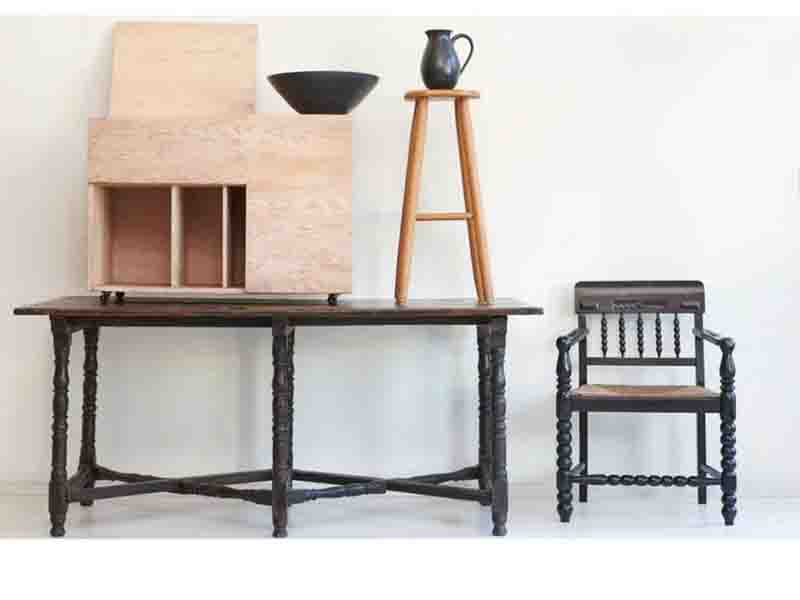
The phrase “Antique Albert Frey Cabinet” sounds, at first, like something you might find hiding in a dim estate sale corner beside a porcelain dog and a lamp with opinions. But this particular cabinet belongs to a far sharper world: the clean-lined, sun-baked, plywood-and-ingenuity universe of Albert Frey, the Swiss-born architect who helped give Palm Springs its modernist backbone. Unlike fussy antiques that arrive wearing carved roses, claw feet, and the emotional weight of three Victorian parlors, an Albert Frey cabinet is quiet, clever, and almost suspiciously practical.
Designed in the spirit of desert modernism, the antique Albert Frey cabinet is not merely a storage piece. It is a compact architectural argument. It says that furniture should work hard, take up little space, respect materials, and look good without begging for applause. In other words, it is the cabinet equivalent of a person who shows up to brunch in a crisp linen shirt and somehow also knows how to repair a roof.
Who Was Albert Frey?
Albert Frey was born in Switzerland in 1903 and trained in Europe before bringing modernist ideas to the United States. He worked in the orbit of Le Corbusier, absorbed the principles of the International Style, and later adapted those ideas to the heat, light, landscape, and open sky of Southern California. His name became closely tied to Palm Springs, where he designed houses, civic buildings, commercial structures, and interiors that treated the desert not as an obstacle, but as a collaborator.
Frey’s best-known works include Frey House II, Palm Springs City Hall, the Palm Springs Aerial Tramway Valley Station, and the former Tramway Gas Station that now serves as the Palm Springs Visitors Center. These buildings share a language of industrial materials, economical construction, geometric clarity, and a deep awareness of climate. The antique Albert Frey cabinet belongs to that same design family. It may be smaller than a house, but it carries the same DNA: efficiency, restraint, flexibility, and a wink of invention.
Why an Albert Frey Cabinet Matters
Many famous architects designed furniture because ordinary furniture simply did not suit the spaces they were creating. Modernist buildings had open plans, glass walls, exposed structure, and less tolerance for bulky, ornamental pieces. A heavy carved cabinet in a Frey interior would feel like someone parked a stagecoach in a laboratory.
Frey understood furniture as part of architecture. Storage, seating, tables, and built-ins were not afterthoughts. They helped shape how people moved, worked, listened to music, entertained guests, and kept clutter from staging a hostile takeover. His cabinets are valuable because they show how modernism entered daily life at human scale. A house can express ideals from across the street; a cabinet has to prove itself when you open it, roll it, store records in it, or dust around it on a Sunday morning.
The Design: White-Washed Plywood, Casters, and Clever Storage
The antique Albert Frey cabinet most often discussed in design circles is a white-washed plywood piece made around the early 1940s. Descriptions of related examples note compact proportions, practical storage, and, in some cases, caster wheels that allow the cabinet to move easily. That mobility matters. Frey was interested in flexible, convertible spaces, and a cabinet on wheels is furniture that refuses to be nailed emotionally to one corner.
White-washed plywood gives the piece a modest but luminous presence. Instead of hiding the material under heavy varnish or decorative veneer, the finish allows the cabinet to remain honest and light. Plywood was not being treated as a budget embarrassment; it was being promoted to design hero. That is very Frey. He had a gift for taking industrial or humble materials and making them look inevitable.
The cabinet’s storage zonesfront, side, and top in certain descriptionsalso reveal Frey’s practical intelligence. This is not storage as a blank box. It is storage as choreography. The cabinet invites use from multiple angles, which makes sense in open interiors where furniture often floats instead of lining up politely against walls like nervous students on picture day.
Desert Modernism in Cabinet Form
Desert modernism is often described through architecture: low profiles, broad overhangs, indoor-outdoor living, durable materials, and sensitivity to sun and terrain. But the antique Albert Frey cabinet shows that the same ideas can live inside a small object. Its pale surface reflects light. Its simple geometry avoids visual clutter. Its plywood construction suggests economy and adaptability. Its movable form supports flexible living.
In Palm Springs, Frey’s buildings often used metal, glass, concrete, and carefully selected colors to respond to the landscape. His interiors were similarly disciplined. Frey House II, for example, is famous for its compactness, built-ins, and integration with a massive natural boulder. The lesson is clear: when space is limited, every element must earn its keep. The cabinet follows that rule. It does not lounge around being decorative. It has a job, and it does that job with clean shoes.
Antique or Vintage? The Useful Distinction
Strictly speaking, many design professionals use “antique” for objects at least 100 years old, while “vintage” often refers to collectible pieces from a particular era. A cabinet made around 1940 is approaching antique territory but is more commonly described as vintage or midcentury modern. Still, “Antique Albert Frey Cabinet” has become a practical search phrase because buyers and design lovers use “antique” broadly to mean rare, old, collectible, and not currently sitting in a flat-pack warehouse waiting for an Allen key.
For SEO and reader clarity, both terms matter. “Antique Albert Frey cabinet” captures search intent from people looking for a historic collectible. “Vintage Albert Frey cabinet,” “midcentury modern cabinet,” “white-washed plywood cabinet,” and “desert modernism furniture” help explain what the object actually is. The cabinet occupies a fascinating middle ground: it is collectible design, architectural furniture, and functional storage all at once.
Materials and Craft: Why Plywood Was a Modernist Power Move
Plywood may sound ordinary today, but in the modernist period it carried a sense of experimentation. It could be cut, shaped, joined, and finished efficiently. It was lighter than many traditional hardwood constructions and compatible with the modernist desire for clean planes and honest structure. Frey’s use of plywood connects him to a broader design culture that valued affordability, clarity, and new ways of living.
The white-washed finish is especially important. It softens the surface without disguising it. The cabinet looks warm but not rustic, modern but not cold, practical but not dull. That balance is difficult to achieve. Too much polish and the piece becomes precious. Too little and it looks like shop class furniture with stage fright. Frey’s best work lives between those extremes.
How the Cabinet Fits Today’s Interiors
An antique Albert Frey cabinet works beautifully in midcentury modern interiors, but it does not need to live in a museum-like room where nobody is allowed to breathe near the sofa. Its simple form can fit into minimalist apartments, warm modern homes, creative studios, desert houses, and even traditional rooms that need one clean-lined piece to calm everyone down.
In a Living Room
Used as a media cabinet, record cabinet, or low storage unit, a Frey-inspired piece brings architectural discipline to a living area. Its low, horizontal presence pairs well with lounge chairs, simple sofas, woven rugs, and sculptural lighting. Add a turntable and a few carefully chosen records, and suddenly the room feels like it knows who Charles and Ray Eames are but does not need to name-drop at dinner.
In a Study or Studio
Frey’s work is ideal for creative spaces because it respects tools, paper, books, and equipment. A compact cabinet can hold supplies without making the room feel visually heavy. The pale plywood surface keeps the mood bright, while the geometric form adds order. For designers, architects, writers, and anyone whose desk occasionally becomes an archaeological dig, that order is a blessing.
In a Bedroom
As a bedside storage piece or low cabinet, the design offers a calmer alternative to ornate case goods. It pairs especially well with platform beds, linen bedding, simple ceramics, and natural textures. The cabinet does not compete for attention. It simply stands there, useful and composed, like it did yoga before breakfast.
What Collectors Should Look For
Because authentic Albert Frey furniture is rare, collectors should pay close attention to documentation. Provenance matters. A piece associated with a specific Palm Springs residence, a known Frey project, a reputable dealer, or an auction record is far more compelling than a cabinet that merely “looks modernist.” Many plywood cabinets look simple. Very few carry the design context of Albert Frey.
Condition is also important. Age-related wear is expected, especially with plywood and white-washed finishes. Small marks, mellowing, and honest patina can add character. However, severe water damage, poor repairs, replaced panels, or aggressive refinishing may reduce value. A cabinet should look cared for, not like it survived a bar fight with a humidifier.
Buyers should also examine construction details: joinery, hardware, caster quality, finish consistency, and whether any compartments or doors operate smoothly. If the cabinet was originally designed for records or audio equipment, check for evidence of that function. Functional clues often help confirm the story of the piece.
Why Frey Furniture Is Rare
Frey did not become famous as a mass-market furniture designer. His furnishings were often custom, built-in, experimental, or created for specific interiors. That makes surviving examples scarce. Some pieces emerged from Frey House I, Frey House II, or residences connected to his personal and professional circle. Others appear occasionally through galleries, auction houses, or curated vintage design shops.
This scarcity gives the antique Albert Frey cabinet its charm. It is not another endlessly reproduced midcentury silhouette. It is closer to an architectural fragment: a usable object that once belonged to a larger philosophy of living. Owning one is less like buying storage and more like adopting a small, disciplined piece of Palm Springs design history.
Styling an Antique Albert Frey Cabinet Without Overdoing It
The best way to style a Frey cabinet is to resist the urge to decorate it into submission. Let the form breathe. A ceramic bowl, a small lamp, a stack of design books, or a simple vase is enough. If you pile on candles, framed quotes, six succulents, and a decorative chain no one asked for, the cabinet may silently judge youand frankly, it would have a point.
Pair it with natural materials such as wool, linen, leather, stone, or rattan. Keep colors restrained but not lifeless. Desert modernism loves sandy neutrals, chalky whites, muted greens, warm woods, sky blues, and sun-faded yellows. The goal is not to recreate a Palm Springs postcard; it is to create a room that feels relaxed, intelligent, and edited.
Care and Preservation Tips
An antique plywood cabinet needs gentle care. Keep it away from excessive moisture, direct harsh sunlight, and extreme temperature changes. Dust with a soft cloth. Avoid strong chemical cleaners that can strip or discolor the finish. If deeper cleaning or repair is needed, consult a furniture conservator familiar with midcentury materials.
Do not rush to refinish the cabinet. Original surfaces are part of the object’s value and story. A few marks from age can be more desirable than a shiny new surface that erases history. In collectible design, “perfect” is not always better. Sometimes perfect just means someone sanded away the good parts.
Market Appeal and Investment Value
The market for architect-designed furniture has grown as collectors increasingly value objects connected to important buildings, movements, and designers. Albert Frey’s furniture benefits from several desirable qualities: rarity, strong architectural context, Palm Springs relevance, modernist purity, and practical beauty. These pieces appeal not only to furniture collectors but also to architecture enthusiasts, museums, designers, and historically minded homeowners.
Values can vary widely depending on authenticity, condition, provenance, size, and design significance. A documented Frey cabinet from the 1940s or a related residence will naturally command more attention than an unattributed piece in the same style. For serious buyers, expert evaluation is essential. For casual admirers, the cabinet remains a wonderful lesson in how good design can make even storage feel quietly glamorous.
Experience: Living With the Idea of an Antique Albert Frey Cabinet
Imagine bringing an antique Albert Frey cabinet into a room for the first time. It would not enter like a dramatic antique armoire, demanding two movers, a structural engineer, and a family meeting. It would arrive with a lighter attitude. You would place it against a wall, perhaps below a window, and for a moment it might seem almost too simple. Then the room would begin to change around it.
The cabinet’s pale plywood surface would catch natural light during the day. In the morning, it might glow softly beside a linen sofa. By afternoon, it could look warmer, more textured, more connected to the floor and surrounding objects. At night, under a small lamp, its clean geometry would become more pronounced. This is one of the pleasures of restrained design: it does not shout once; it speaks differently all day.
Using the cabinet would be part of the experience. Open a compartment and it reminds you that modernist furniture was not created only for photographs. It was designed for living. You might store records, magazines, sketchbooks, chargers, camera equipment, or the mysterious household items that seem important but never have a proper home. The cabinet gives those things a place without turning storage into a visual punishment.
If the cabinet has casters, the experience becomes even more Frey-like. You can move it when the room changes purpose. It can serve as a media unit one month, a studio supply cabinet the next, and a display surface whenever guests come over and you want the room to look like you are the kind of person who casually understands architectural history. No shame. We all have aspirations.
The most enjoyable part is how the piece teaches restraint. You start editing the objects around it. The loud side table suddenly feels unnecessary. The fake plant begins looking nervous. The stack of random mail finally gets handled because the cabinet seems too dignified to host chaos. Good furniture can do that. It can quietly improve your habits by making disorder feel slightly rude.
There is also a tactile pleasure. White-washed plywood does not have the icy perfection of lacquer or the heavy seriousness of dark mahogany. It feels approachable. It suggests hands, tools, plans, and problem-solving. It feels connected to architecture but not trapped by it. You can imagine Frey thinking through the relationship between a cabinet and a room the way he thought about a house and a desert hillside.
For collectors, living with an antique Albert Frey cabinet is a daily reminder that design history is not abstract. It is not only preserved in museum labels, glossy monographs, or carefully lit house tours. It can sit in your living room holding records. It can support a lamp. It can hide cables. It can make a corner feel more intelligent. That is the magic of a piece like this: it turns usefulness into atmosphere.
In a world crowded with furniture that tries too hard, the antique Albert Frey cabinet feels refreshingly calm. It does not need carved decoration, luxury branding, or theatrical curves. Its appeal comes from proportion, purpose, material, and context. It is proof that a cabinet can be modest and important at the same timelike a quiet guest at a party who turns out to have designed half the city.
Conclusion
The antique Albert Frey cabinet is more than a collectible storage piece. It is a compact expression of desert modernism, architectural thinking, and midcentury experimentation. With its white-washed plywood, efficient form, and practical spirit, it reflects Frey’s belief that design should serve real life while remaining visually clear and emotionally light. Whether admired as vintage furniture, studied as architect-designed design, or used as a beautiful everyday cabinet, it remains a small but memorable chapter in the story of Palm Springs modernism.