Note: This article discusses professionally staged movie scenes as film criticism, focusing on storytelling, editing, choreography, and audience experiencenot real-life fighting advice.
Why Restaurant Fight Scenes Hit Differently
Restaurant fight scenes have a special flavor in cinema. They take a place associated with comfortcoffee refills, dumplings, noodles, birthday dinners, awkward first datesand turn it into a pressure cooker. In a restaurant, everyone is trapped between tables, counters, booths, swinging doors, servers with trays, and that one poor customer who just wanted soup. That contrast is exactly why filmmakers love the setting. A dining room is ordinary, public, and full of breakable rhythm. When conflict erupts there, the audience feels the shock immediately.
The best restaurant fight scenes are not memorable simply because characters throw punches. They work because the space itself becomes part of the drama. A booth can box someone in. A kitchen can feel like a maze. A diner can expose a character’s secret. A teahouse can turn into a stage for elegance, comedy, and chaos. In other words, the restaurant is not just background wallpaper with a cash register. It is the scene partner.
For SEO purposes, the phrase “best restaurant fight scenes” often brings up action movies, martial arts classics, diner confrontations, kitchen fights, and bar brawls. But from a storytelling angle, the real question is better: why do these scenes stay in our memory long after the plates stop rattling? The answer usually comes down to four ingredients: geography, character, escalation, and style. Like a good meal, balance matters. Too much noise and the scene becomes cinematic junk food. Too little energy and the scene lies there like cold fries.
What Makes a Restaurant Fight Scene Great?
Clear Geography
A great fight scene lets the viewer understand where everyone is. The best directors treat the restaurant like a map. We know where the door is, where the counter is, where the stairs lead, and why a character cannot simply stroll out like they forgot their wallet. This spatial clarity is crucial in films such as The Raid 2, where the famous kitchen finale depends on tight movement, clean camera placement, and a sense of exhausting momentum.
Character Revealed Under Pressure
Restaurant fights are especially good at exposing identity. Someone who seemed harmless may suddenly become precise and terrifying. Someone who acted confident may panic. Someone who looked graceful may prove reckless. In A History of Violence, the diner confrontation matters because it changes how everyone sees Tom Stall. The scene is less about spectacle and more about revelation: the quiet owner of a small-town diner may not be as ordinary as his apron suggests.
Escalation Without Confusion
A restaurant scene usually starts with social tension: a stare, a threat, a bad joke, an insult, a suspicious arrival. Then it climbs. The best scenes do not begin at maximum volume. They simmer, then boil over. That rhythm makes the audience lean forward before the first major burst of action.
Style That Matches the Movie
A Quentin Tarantino restaurant showdown will not feel like a Steven Soderbergh diner fight. A Jackie Chan restaurant brawl will not move like a David Cronenberg diner scene. That is the fun. Restaurant fight scenes become a signature test: give five directors the same room, and each will order something completely different from the action menu.
The Most Memorable Restaurant Fight Scenes in Movies
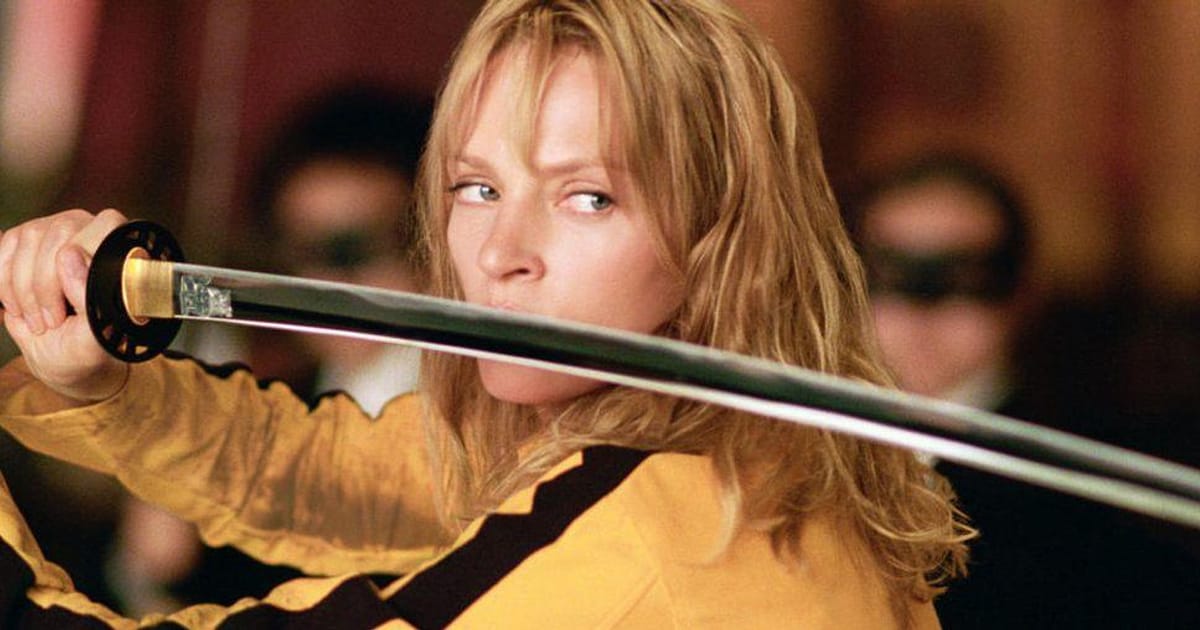
1. Kill Bill: Volume 1 The House of Blue Leaves
Quentin Tarantino’s Kill Bill: Volume 1 turns the House of Blue Leaves into one of the most famous restaurant-adjacent action arenas in modern cinema. The Bride, played by Uma Thurman, enters a stylish Japanese restaurant and nightclub where the setting feels theatrical before the confrontation even begins. The scene blends martial arts cinema, revenge storytelling, pop-art color, and operatic staging into one wild cinematic banquet.
What makes this sequence unforgettable is its confidence. It is not merely a fight in a restaurant; it is a full action movement with rooms, balconies, music, shifting visual tones, and a sense that the entire location has been designed for mythmaking. The scene understands spectacle as rhythm. It moves from anticipation to confrontation to aftermath with the boldness of a director who knows exactly how large the canvas is.
From an SEO perspective, this is often one of the first scenes people associate with the topic “best restaurant fight scenes.” From a film perspective, it endures because it is more than a brawl. It is character, style, homage, and revenge wrapped into one highly choreographed set piece.
2. The Raid 2 The Kitchen Finale
If Kill Bill is operatic, The Raid 2 is relentless. Gareth Evans’ sequel is filled with major action sequences, but the kitchen fight near the end has become legendary among action fans for its intensity, precision, and physical storytelling. The clean, modern kitchen setting is almost funny at first: shiny surfaces, open space, and professional calm. Then the scene turns that order into a test of endurance.
The genius of the sequence is how focused it feels. There is little clutter in the emotional sense. The viewer understands the stakes, the fatigue, and the narrowing path forward. The kitchen’s sleek design becomes a contrast to the desperation of the fight. Every movement feels heavy because the film has built to this moment. It is not just “cool choreography.” It feels like the final bill has arrived, and nobody is splitting it politely.
Many modern action films use quick cuts to create energy. The Raid 2 often does the opposite: it lets the viewer see the choreography breathe. That clarity is why the scene is frequently discussed among the best kitchen fight scenes and best martial arts movie fight scenes of the 21st century.
3. The Protector Tony Jaa’s Multi-Level Restaurant Sequence
Tony Jaa’s restaurant sequence in The Protector is one of those scenes that makes viewers ask, “Wait, how did they film that?” The scene follows Jaa’s character through a multi-level restaurant environment in a long, flowing take that emphasizes stamina, timing, and camera coordination. It feels less like a standard fight scene and more like a live obstacle course built by people with nerves made of titanium and very understanding insurance forms.
The setting matters because the restaurant is vertical. Instead of one flat dining room, the scene keeps climbing. Floors, stairs, corners, and doorways create momentum. The camera travels with the character, making the audience feel pulled upward through the building. That continuous movement gives the scene its identity.
What separates this from many action scenes is the sense of human effort. The viewer can feel the coordination behind the camera as much as the movement in front of it. That is why this sequence remains a landmark in discussions of restaurant fight scenes, single-take action, and martial arts cinema.
4. A History of Violence The Small-Town Diner Scene
David Cronenberg’s A History of Violence offers a very different kind of restaurant confrontation. This is not a grand martial arts display or a stylish revenge ballet. It is a sudden eruption inside a small-town diner, and its power comes from how quickly it changes the story.
Tom Stall, played by Viggo Mortensen, appears to be a mild family man and local business owner. When danger enters his diner, his response shocks the characters around him and reframes the entire movie. The diner is important because it represents normal life: coffee, regular customers, friendly small talk, routine. Once violence enters that space, normality becomes suspicious. The audience begins asking the same question as the film’s characters: who is this man, really?
That is what makes the scene one of the best restaurant fight scenes in dramatic cinema. It does not rely on scale. It relies on consequence. The action is brief, but the psychological impact echoes through the rest of the film.
5. Haywire The Roadside Diner Fight
Steven Soderbergh’s Haywire opens with a diner confrontation that tells viewers exactly what kind of action movie they are getting. Gina Carano’s Mallory Kane sits in a public space that should feel safe and ordinary. Then an encounter with Aaron, played by Channing Tatum, turns the diner into a stripped-down arena.
The scene works because Soderbergh keeps it grounded. There is a practical, almost blunt quality to the staging. The diner is not transformed into a fantasy playground; it remains a diner. That realism makes the confrontation feel immediate. The absence of excessive flourish helps sell the physicality and gives the scene a sharp, unfussy personality.
For viewers tired of action scenes that hide movement behind frantic editing, Haywire offers a refreshing alternative. The diner fight is direct, character-driven, and efficient. It is the cinematic equivalent of black coffee: no whipped cream, no syrup, just a jolt.
6. Crouching Tiger, Hidden Dragon Jen Yu at the Tavern
Ang Lee’s Crouching Tiger, Hidden Dragon includes one of the most elegant restaurant-style confrontations in wuxia cinema. Jen Yu, played by Zhang Ziyi, takes on challengers in a tavern-like setting, and the scene becomes both action and character study. She is not merely fighting; she is announcing herself.
The brilliance of the scene lies in its graceful arrogance. Jen’s confidence fills the room. The setting allows the film to contrast social performance with martial skill. A public dining place becomes a stage where reputation, youth, pride, and freedom collide.
Unlike heavier action scenes, this one floats. The choreography carries the lyrical quality that defines much of the film. The result is a restaurant fight scene that feels almost like calligraphy in motionif calligraphy occasionally knocked over furniture and embarrassed loud men.
7. The Legend of Drunken Master Jackie Chan’s Tavern Energy
Jackie Chan’s restaurant and tavern-style fight work is essential to any discussion of the best restaurant fight scenes. In The Legend of Drunken Master, Chan’s genius is not just athleticism; it is comic timing, environmental awareness, and rhythm. He turns confined public spaces into playgrounds of movement.
What makes Jackie Chan’s restaurant action so beloved is the way he reacts to everything around him. The comedy does not interrupt the choreography; it is built into it. A chair, a table, a doorway, or a sudden change in balance can become part of the joke and the tension at once. Few performers have ever made physical danger look so musical while still keeping the audience aware of the character’s personality.
In many action films, the hero dominates the room. In Jackie Chan’s best scenes, the room fights back. That is why his restaurant-style sequences remain so rewatchable. They are not only about winning. They are about problem-solving under pressure, with a facial expression that seems to say, “I did not order this.”
8. Fearless Jet Li and the Restaurant Duel
Jet Li’s Fearless uses restaurant action in a more classical martial arts tradition. The scene often associated with restaurant destruction is memorable because it reflects pride, rivalry, and discipline. In Jet Li’s best work, physical movement often carries moral meaning. A fight is rarely just a fight; it is a test of ego, restraint, and identity.
The restaurant environment adds public pressure. People are watching. Reputation matters. Every movement says something about status and control. That is why martial arts scenes in public dining spaces can feel so dramatic: the character is not only trying to survive the moment but also being judged by the room.
Fearless stands out because it treats action as part of a larger emotional arc. The restaurant scene is not just a set piece; it reflects the character’s journey from arrogance toward understanding. That gives the choreography extra weight.
9. Rush Hour Comedy, Timing, and Restaurant Chaos
Rush Hour may not be the most technically complex restaurant fight in cinema, but it understands one crucial truth: restaurant chaos is funny when the timing is sharp. Jackie Chan and Chris Tucker bring opposite energies into the same frame. Chan provides precision and movement; Tucker provides verbal panic and comic reaction.
The restaurant setting helps the buddy-cop formula because it puts both characters in a crowded, socially awkward space. Action comedy needs obstacles, and restaurants naturally provide them. There are people in the way, rules of politeness being destroyed, and the constant sense that someone will have to apologize to the manager afterward.
This kind of scene works because it keeps the tone light without making the action meaningless. The audience enjoys the physical choreography, but also the personality clash. That balance helped make Rush Hour a mainstream favorite and a useful example of how restaurant fight scenes can serve comedy as much as action.
Why Restaurants Are Perfect Movie Battlegrounds
Restaurants are built for social order. People sit where they are told, wait their turn, lower their voices, and pretend not to hear the couple arguing at table six. When a movie breaks that order, the disruption feels immediate. Unlike a battlefield or an alley, a restaurant is supposed to be civilized. That contrast gives filmmakers an instant dramatic advantage.
Dining spaces also provide layers. There is the front-of-house area, where customers see smiles and service. Then there is the kitchen, where speed, pressure, and heat define the atmosphere. A director can use those zones to shift tone. A dining-room fight may feel public and embarrassing. A kitchen fight may feel claustrophobic and urgent. A diner fight may feel intimate because everyone is close enough to hear the coffee machine.
Another reason restaurant fight scenes work is that they are easy for audiences to imagine. Most viewers have been in diners, cafes, taverns, fast-food places, banquet halls, or family restaurants. That familiarity makes the action more surprising. A spaceship battle may be exciting, but few viewers have personally worried about a villain interrupting their pancakes. The ordinary setting makes the scene more relatable.
Restaurant Fight Scenes and Film Craft
Editing
The best scenes know when to cut and when to hold. Too many cuts can make movement feel like a blender with opinions. Longer shots, when done well, let the viewer appreciate timing and performance. However, long takes only work when the choreography, camera, and performers are perfectly coordinated.
Sound Design
Restaurant scenes can use sound beautifully: the sudden silence before conflict, the scrape of a chair, the murmur of customers, the clatter of plates, the hum of kitchen equipment. Sound design can make the room feel alive before anything happens.
Production Design
A restaurant fight scene depends heavily on layout. Where are the exits? How crowded is the room? Is the space elegant, cheap, bright, narrow, or maze-like? The design tells the audience what kind of scene to expect before the first move begins.
Performance
Great action performers act with their whole bodies. A glance, a stumble, a pause, or a breath can reveal fear, confidence, exhaustion, or surprise. In the best restaurant fight scenes, performance does not stop when movement begins. It intensifies.
Audience Experiences: Why These Scenes Are So Fun to Discuss
Part of the fun of talking about the best restaurant fight scenes is that everyone seems to remember a different detail. One viewer remembers the elegance of Crouching Tiger, Hidden Dragon. Another remembers the jaw-dropping stamina of The Protector. Someone else remembers the cold shock of A History of Violence. And then there is always the friend who says, “Actually, the kitchen fight in The Raid 2 is the greatest thing ever filmed,” and suddenly the room becomes a film club with snacks.
These scenes are easy to debate because they combine different pleasures. Some viewers care most about choreography. They want movement that is readable, creative, and physically impressive. Others care about emotional stakes. They want the scene to change the character or push the story forward. Some love comedy and timing, which is why Jackie Chan’s restaurant scenes remain so beloved. Others prefer scenes that feel tense and grounded, such as the diner fight in Haywire or the confrontation in A History of Violence.
There is also a shared social experience in watching these scenes. A great restaurant fight scene often produces the same reactions in a room: laughter, surprise, silence, then someone saying, “Rewind that.” Even when viewers know the action is carefully staged by professionals, the craft can feel spontaneous. That illusion is movie magic. It is also why these scenes travel so well across cultures. A restaurant is universally understandable. So is tension. So is the comedy of a peaceful meal going completely off the rails.
Another experience connected to these scenes is the way they make viewers notice real restaurants differentlynot with fear, but with cinematic curiosity. A narrow diner aisle suddenly looks like a perfect tracking shot. A swinging kitchen door feels like a dramatic entrance waiting to happen. A quiet booth in the corner looks like where a mysterious character would sit while pretending not to be mysterious. Cinema has a way of turning ordinary places into imaginary stages, and restaurant fight scenes do that better than almost any action subgenre.
For writers, bloggers, and film fans, the topic is especially useful because it opens the door to many kinds of analysis. You can write about martial arts history, action editing, stunt coordination, production design, genre conventions, comedy, suspense, or character development. You can compare American thrillers with Hong Kong action cinema, Indonesian martial arts films, wuxia classics, and modern revenge movies. A simple phrase like “best restaurant fight scenes” becomes a buffet of film criticism. Yes, a buffet. We made it this far without the food metaphor getting cold.
The lasting appeal comes from contrast. Restaurants promise comfort; movies love disruption. Put the two together and you get scenes that are funny, tense, stylish, shocking, or strangely beautiful. Whether it is a diner, tavern, teahouse, nightclub, or kitchen, the best restaurant fight scenes remind us that setting is never neutral. In cinema, even a table for two can become a stage for legend.
Conclusion
The best restaurant fight scenes are not remembered only because they are loud or energetic. They last because they use familiar spaces in surprising ways. Kill Bill: Volume 1 turns a restaurant-nightclub into pop-art revenge opera. The Raid 2 transforms a kitchen into an endurance test. The Protector turns vertical restaurant architecture into a single-take marvel. A History of Violence uses a small-town diner to expose a hidden identity. Haywire strips the diner fight down to grounded action. Crouching Tiger, Hidden Dragon brings grace to the tavern. Jackie Chan adds comedy, rhythm, and inventive movement.
That range is what makes restaurant fight scenes so endlessly watchable and so useful for film analysis. They can be elegant, funny, tense, brutal in implication without needing graphic detail, or emotionally revealing. Most importantly, they prove that location matters. A great scene does not just happen somewhere. It happens because of where it is.