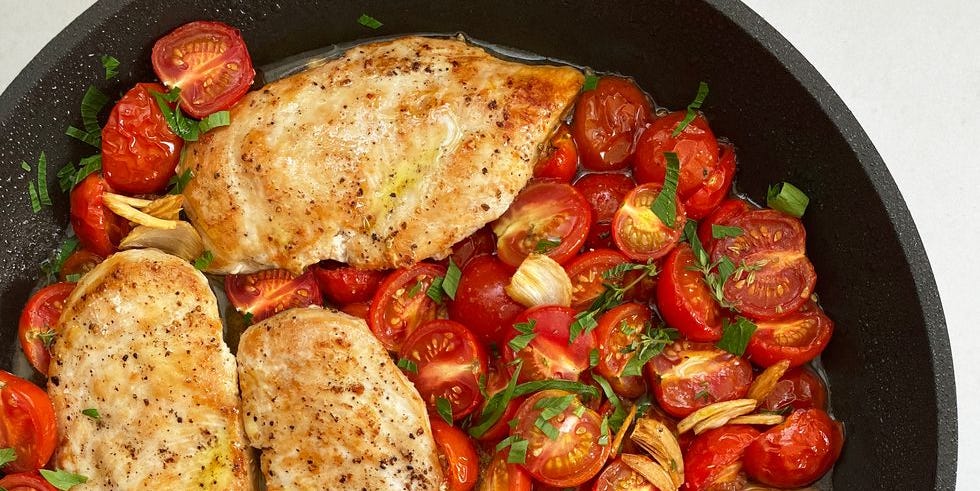
Skillet roasted chicken and tomatoes is the kind of dinner that makes you feel like you have your life together, even if your laundry is currently negotiating for independence. It is golden, juicy chicken roasted in one pan with tomatoes that burst, soften, and turn into a glossy, savory sauce without asking you to open a jar, wash six bowls, or perform advanced culinary yoga.
The beauty of this dish is simple: a hot skillet, well-seasoned chicken, sweet tomatoes, garlic, herbs, olive oil, and enough oven heat to make everything taste deeper, brighter, and more impressive than the prep time suggests. The chicken gets browned first for flavor, then finishes roasting while the tomatoes collapse into a rustic pan sauce. By the time it hits the table, it looks like something from a charming countryside kitchen, not a weeknight survival mission.
This guide explains how to make the best skillet roasted chicken and tomatoes at home, including what chicken cuts to use, how to build flavor, how to avoid dry meat, and what to serve with the glorious tomato juices left in the pan. Spoiler: crusty bread is not optional in spirit, even if technically optional in writing.
Why This Skillet Roasted Chicken and Tomatoes Recipe Works
The best skillet roasted chicken and tomatoes recipe works because it uses two cooking methods in one pan. First, the chicken is seared on the stovetop to create browning. Browning gives chicken deeper flavor, better color, and the kind of skin that makes people suddenly gather near the stove “just to check on things.” Then the skillet moves to the oven, where steady heat cooks the chicken through while the tomatoes roast, blister, and release their juices.
Tomatoes are especially useful in skillet chicken recipes because they bring acidity, sweetness, moisture, and body. Cherry or grape tomatoes are ideal because they hold their shape long enough to roast, then burst into a jammy sauce. Add garlic, shallots, thyme, basil, or oregano, and the pan sauce tastes like it took far more effort than it did.
A cast-iron skillet is excellent here because it holds heat well and moves easily from stovetop to oven. A stainless-steel oven-safe skillet also works. The most important thing is that the pan can handle high heat and has enough surface area so the chicken browns instead of steams. Crowded chicken is not roasted chicken. It is chicken having an awkward elevator ride.
Ingredients for Skillet Roasted Chicken and Tomatoes
Main Ingredients
- 4 bone-in, skin-on chicken thighs, or 2 large bone-in chicken breasts
- 2 cups cherry or grape tomatoes
- 1 small red onion or 2 shallots, sliced
- 4 garlic cloves, smashed or thinly sliced
- 2 tablespoons olive oil, divided
- 1 tablespoon balsamic vinegar or fresh lemon juice
- 1 teaspoon kosher salt, plus more to taste
- 1/2 teaspoon black pepper
- 1 teaspoon smoked paprika or sweet paprika
- 1 teaspoon dried oregano or Italian seasoning
- 4 sprigs fresh thyme, or 1 teaspoon dried thyme
- 1/4 cup low-sodium chicken broth or dry white wine
- Fresh basil or parsley for serving
Optional Flavor Boosters
- 1/4 teaspoon red pepper flakes for gentle heat
- 1 tablespoon capers for a salty pop
- 1/3 cup pitted olives for Mediterranean flavor
- 1 teaspoon Dijon mustard whisked into the pan juices
- A small pat of butter added at the end for a richer sauce
Best Chicken Cuts to Use
Bone-in, skin-on chicken thighs are the most forgiving choice for skillet roasted chicken and tomatoes. They stay juicy, develop excellent skin, and bring enough richness to balance the acidity of the tomatoes. Chicken drumsticks also work well, although they may need a few extra minutes in the oven.
Bone-in chicken breasts can be delicious, but they cook less evenly and can dry out if ignored. If using breasts, choose similar-sized pieces and check the internal temperature early. Boneless, skinless chicken breasts or thighs are faster, but they will not deliver the same roasted flavor or crispy skin. For a quicker version, sear boneless thighs for a few minutes per side, add the tomatoes, then roast until cooked through.
How to Make Skillet Roasted Chicken and Tomatoes
Step 1: Heat the Oven
Preheat the oven to 425°F. This temperature is hot enough to roast the tomatoes quickly and finish the chicken with good color. Place a rack in the center of the oven so the skillet gets even heat.
Step 2: Season the Chicken
Pat the chicken dry with paper towels. This step matters. Moisture on the surface prevents browning, and browning is where much of the flavor lives. Season the chicken with salt, pepper, paprika, and oregano. If you have time, season it 30 minutes ahead and leave it uncovered in the refrigerator. If dinner is already late and everyone is staring at you like a restaurant host, season it now and continue.
Step 3: Sear the Chicken
Heat 1 tablespoon olive oil in a large oven-safe skillet over medium-high heat. Add the chicken skin-side down and cook for 5 to 7 minutes, without moving it too much, until the skin is golden and releases easily from the pan. Flip and cook the other side for 2 minutes. Transfer the chicken to a plate.
Do not worry if the chicken is not cooked through yet. It will finish in the oven. The goal here is color, rendered fat, and a flavorful base in the skillet.
Step 4: Build the Tomato Base
Reduce the heat to medium. Add the sliced onion or shallots to the skillet and cook for 2 to 3 minutes, scraping up browned bits from the bottom. Add the garlic and cook for 30 seconds, just until fragrant. Garlic burns faster than gossip travels, so keep an eye on it.
Add the tomatoes, thyme, a pinch of salt, and the remaining tablespoon of olive oil. Stir to coat the tomatoes in the seasoned oil and chicken drippings. Add balsamic vinegar or lemon juice for brightness, then pour in the chicken broth or white wine.
Step 5: Roast Everything Together
Nestle the chicken back into the skillet, skin-side up, keeping the skin above the liquid so it stays crisp. Transfer the skillet to the oven and roast for 20 to 25 minutes, or until the chicken reaches 165°F in the thickest part. The tomatoes should be blistered, softened, and saucy.
Step 6: Rest and Finish
Let the chicken rest for 5 minutes before serving. Stir the tomato juices gently. If you want a silkier sauce, add a small pat of butter or a drizzle of olive oil. Scatter fresh basil or parsley over the top. Serve straight from the skillet for maximum drama and minimum dishes.
Tips for the Best Skillet Roasted Chicken and Tomatoes
Use a Hot Pan, But Not a Smoking Disaster
A properly heated skillet helps create a golden crust. Cast iron takes a few minutes to heat evenly, so give it time. However, if the oil is smoking aggressively, lower the heat. You want confident sizzling, not a smoke alarm duet.
Do Not Crowd the Skillet
Chicken pieces need space. If they are packed tightly, steam gets trapped and the skin turns soft. Use a 10- to 12-inch skillet for four thighs. If doubling the recipe, use two skillets or sear in batches and roast on a sheet pan.
Keep the Chicken Skin Above the Sauce
Once the tomatoes and broth are in the pan, place the chicken skin-side up. The bottom of the chicken can soak up flavor, while the top stays exposed to oven heat. This is how you get juicy meat and crisp skin in the same bite.
Choose Sweet, Firm Tomatoes
Cherry and grape tomatoes are dependable because they are naturally sweet and roast beautifully. If using larger tomatoes, cut them into wedges and remove excess watery pulp. Canned tomatoes can work in a pinch, but they create more of a braise than a roast.
Flavor Variations
Mediterranean Skillet Chicken
Add olives, capers, lemon slices, and oregano. Finish with parsley and a spoonful of Greek yogurt or feta. This version is salty, bright, and very friendly with warm pita.
Italian-Inspired Skillet Chicken
Use basil, garlic, balsamic vinegar, and a handful of mozzarella pearls added during the last 5 minutes of roasting. Serve with pasta or toasted ciabatta.
Spicy Tomato Chicken
Add red pepper flakes, smoked paprika, and a pinch of cayenne. Finish with lemon juice and fresh cilantro. This version wakes up the table without starting a fire.
Chicken and Tomato Skillet with Orzo
After searing the chicken, add 3/4 cup orzo and 1 1/2 cups broth to the skillet with the tomatoes. Stir well, return the chicken to the pan, and roast until the orzo is tender and the chicken is done. Add more broth if the pan looks dry.
What to Serve With Skillet Roasted Chicken and Tomatoes
This dish creates a natural pan sauce, so serve it with something that can catch every drop. Crusty bread is the easiest option and possibly the most emotionally correct. Mashed potatoes, rice, couscous, polenta, or buttered noodles also work beautifully.
For a lighter meal, serve the chicken with a crisp green salad, roasted green beans, sautéed spinach, or steamed asparagus. If you want a full Sunday-dinner feeling without spending Sunday-dinner energy, add garlic bread and a simple Caesar salad.
How to Store and Reheat Leftovers
Let leftovers cool, then store the chicken and tomatoes in an airtight container in the refrigerator for 3 to 4 days. Reheat gently in a covered skillet over medium-low heat with a splash of broth or water. You can also reheat in a 350°F oven until warmed through.
The microwave works, but the skin will soften. If crispy skin is important, remove the chicken from the sauce and reheat it in the oven or air fryer, then warm the tomato sauce separately. Leftover chicken can be shredded into pasta, folded into grain bowls, tucked into sandwiches, or served over toast with the tomato juices spooned on top.
Common Mistakes to Avoid
Skipping the Sear
Technically, you can put everything in the skillet and roast it. Emotionally, you deserve better. Searing adds color and flavor that the oven alone may not create quickly enough.
Using Too Much Liquid
The tomatoes will release juices as they roast. Start with just 1/4 cup broth or wine. Too much liquid turns the dish into soup, and while soup is lovely, it did not get invited to this skillet party.
Guessing When the Chicken Is Done
Use an instant-read thermometer. Chicken should reach 165°F in the thickest part. This keeps the dish safe without overcooking it into sadness.
Forgetting the Acid
Balsamic vinegar or lemon juice makes the tomatoes taste brighter and balances the richness of the chicken. A little acidity is the difference between “good” and “why is everyone suddenly quiet at the table?”
Why This Recipe Is Great for Weeknights and Guests
Skillet roasted chicken and tomatoes is flexible enough for Tuesday dinner but pretty enough for company. It uses simple ingredients, cooks mostly hands-off in the oven, and does not require a complicated sauce. The tomatoes make their own sauce, the chicken brings the richness, and the herbs make the kitchen smell like you own linen napkins.
It is also easy to scale. For a family dinner, use four to six chicken thighs. For a smaller meal, use two pieces and extra tomatoes for leftovers. For guests, serve the skillet at the table with bread, salad, and a chilled white wine or sparkling water with lemon. Nobody needs to know how easy it was. That secret can live between you and the skillet.
Nutrition and Ingredient Benefits
This dish offers a satisfying balance of protein, vegetables, and healthy fat. Chicken provides lean protein, while tomatoes bring vitamin C, potassium, and plant compounds such as lycopene. Olive oil adds richness and helps carry the flavors of garlic and herbs. Using bone-in chicken can also make the dish feel more filling and flavorful without requiring a heavy cream sauce.
To make the recipe lighter, remove the chicken skin after cooking, use boneless skinless thighs, or serve with salad instead of bread or pasta. To make it heartier, add white beans, orzo, chickpeas, or small potatoes to the skillet. The recipe is forgiving, which is another way of saying it understands real life.
Kitchen Experience Notes: What Making This Dish Teaches You
The first time you make skillet roasted chicken and tomatoes, the biggest surprise is how much flavor appears from such a short ingredient list. There is no secret packet, no complicated marinade, and no sauce that requires three pans and a motivational speech. The flavor comes from technique: dry the chicken, season it well, brown it patiently, and let the tomatoes roast until they give up their juices. It is a small lesson in how cooking often rewards attention more than effort.
One practical experience is learning to trust the sear. Many home cooks move chicken too soon because they are afraid it is sticking. Usually, the chicken releases when the skin has browned properly. If it clings to the pan, give it another minute. The skillet is not being rude; it is still working. Once you learn that, your confidence grows quickly, and the reward is crispier skin and better flavor.
Another lesson is how tomatoes behave under heat. At first, they look too firm and separate, like they are attending a meeting but refusing to participate. Then the oven works its magic. The skins wrinkle, the juices spill out, and suddenly the skillet has a sauce. A spoonful of those roasted tomatoes over chicken tastes sweet, tangy, garlicky, and rich all at once. It is the kind of sauce that makes people drag bread across the pan when they think nobody is watching.
This recipe also teaches timing. Chicken thighs are forgiving, but they still benefit from a thermometer and a short rest. Resting the chicken allows the juices to settle, and it gives you a moment to finish the sauce. That pause matters. It turns cooking from a frantic race into something calmer, even if the kitchen counter looks like a tiny herb tornado passed through.
From a meal-planning perspective, skillet roasted chicken and tomatoes is a dependable anchor recipe. You can change the herbs, add beans, use lemon instead of balsamic, or serve it over different sides without making it feel repetitive. On Monday it can be rustic with bread. On Wednesday it can become pasta. On Friday it can turn into a grain bowl with greens and a spoonful of yogurt. Few recipes stretch that gracefully.
The best experience, though, is serving it straight from the skillet. The chicken looks golden, the tomatoes look glossy, and the whole thing gives off that cozy, roasted aroma that makes dinner feel intentional. It is simple food, but not boring food. It proves that a good skillet, a hot oven, and a handful of honest ingredients can still perform a little weeknight magic.
Conclusion
The best skillet roasted chicken and tomatoes recipe is built on simple steps: sear the chicken, roast it with tomatoes, finish with herbs, and serve it with something ready to catch the pan sauce. It is practical, beautiful, flavorful, and forgiving enough for busy cooks. Whether you make it with chicken thighs, breasts, olives, basil, or orzo, this one-pan dinner earns a regular spot in the rotation.
When a recipe gives you juicy chicken, jammy tomatoes, crispy skin, and only one skillet to clean, it is not just dinner. It is a small household victory with garlic.