COVID-19 vaccination has entered its seasonal-update era. The goal is no longer to collect booster doses like loyalty points at a coffee shop. Instead, updated vaccines are designed to refresh protection against the SARS-CoV-2 lineages currently causing illness, especially protection against hospitalization, critical disease, and death.
That sounds simple until age, vaccination history, medical risk, pregnancy, immune status, recent infection, and product availability join the conversation. This guide explains the current U.S. COVID-19 vaccine guidelines, age-based schedule, expected effectiveness, safety considerations, and practical vaccination experience as of July 2026.
What Is an Updated COVID-19 Vaccine?
A COVID-19 vaccine trains the immune system to recognize important features of SARS-CoV-2. It does not contain a tracking device, rewrite a person’s DNA, or provide free Wi-Fithree rumors that have proven far more durable than they deserved.
Updated vaccines work like a revised photograph on a wanted poster. The virus changes over time, so manufacturers periodically adjust vaccine composition to more closely match circulating variants. For the 2025–2026 season, U.S. vaccines were based on the JN.1 family of variants. Pfizer-BioNTech and Moderna products targeted the LP.8.1 lineage, while the Novavax formulation targeted JN.1.
In May 2026, an FDA advisory committee recommended that the 2026–2027 formula preferably target the JN.1-lineage XFG variant. Those products are intended for the fall 2026 respiratory season and should not be confused with vaccines currently stocked during the 2025–2026 season.
Which COVID-19 vaccines are available?
The principal U.S. options for the 2025–2026 season include:
- Pfizer-BioNTech Comirnaty: an mRNA vaccine available for eligible people age 5 and older.
- Moderna Spikevax: an mRNA vaccine available for eligible people beginning at 6 months of age.
- Moderna mNexspike: a lower-dose mRNA product available for eligible people age 12 and older.
- Novavax Nuvaxovid: a protein-based, non-mRNA option for eligible people age 12 and older.
FDA labeling broadly covers everyone age 65 and older. For younger people, approved indications generally focus on those with at least one condition that increases the risk of severe COVID-19. CDC guidance permits people to self-attest to qualifying risk factors rather than arrive at the pharmacy carrying a three-ring binder of medical evidence.
Current COVID-19 Vaccine Guidelines
The CDC’s published 2025–2026 guidance uses individual-based decision-making for people age 6 months and older. In practical terms, a patient, parent, pharmacist, or clinician considers the person’s health risks, previous vaccination, recent infection, exposure likelihood, and preferences.
The expected benefit is greatest for people who are more likely to develop severe disease. That includes adults age 65 and older, people with chronic medical conditions, residents of long-term care facilities, pregnant patients, and people with moderate or severe immunocompromise.
Who is most likely to benefit?
- Adults age 65 and older, particularly those who are frail or have multiple health conditions.
- People with chronic lung, heart, kidney, liver, neurologic, metabolic, or immune-related conditions.
- People with obesity, diabetes, cancer, or a history of severe COVID-19.
- Residents and employees of long-term care or other congregate settings.
- Healthcare workers and others with frequent exposure to respiratory infections.
- Pregnant or recently pregnant patients.
- People who have never received a COVID-19 vaccine.
- Anyone seeking to reduce the likelihood of severe illness and potentially lower the risk of Long COVID.
What about healthy children?
Pediatric guidance is one area where recommendations differ. The American Academy of Pediatrics recommends COVID-19 vaccination for all children ages 6 through 23 months because the youngest children have a comparatively higher risk of hospitalization. It also recommends vaccination for older children and teenagers who have medical or exposure-related risk factors, have never been vaccinated, live with a high-risk person, or whose families want protection after discussing the benefits and risks.
Pregnancy and breastfeeding
The American College of Obstetricians and Gynecologists recommends updated COVID-19 vaccination during pregnancy, including in any trimester. Studies involving large numbers of pregnancies have not identified an increased risk of infertility, miscarriage, preterm birth, or babies being small for gestational age because of vaccination.
Pregnancy itself can increase the risk of serious COVID-19 complications. Maternal vaccination also produces antibodies that may help protect the baby during the first months of life. Vaccination is considered compatible with breastfeeding.
COVID-19 Vaccine Schedule by Age
The correct number of doses depends on age, immune status, prior doses, and the product being used. The table offers a readable overview rather than replacing the product-specific schedule used by vaccination professionals.
| Group | Simplified 2025–2026 Schedule | Important Details |
|---|---|---|
| Children 6–23 months | Unvaccinated children generally receive two Moderna Spikevax doses, 4–8 weeks apart. | Children with previous doses may need one or two updated doses, depending on the earlier product and number received. |
| Children 2–4 years | One Moderna Spikevax dose. | If previously vaccinated, the updated dose is generally given at least eight weeks after the last dose. |
| Children 5–11 years | One age-appropriate Moderna or Pfizer-BioNTech dose. | Previously vaccinated children generally wait at least eight weeks after the previous dose. |
| People 12–64 years | Most eligible people receive one updated dose. | Options may include Moderna, Pfizer-BioNTech, or Novavax. Product labeling and individual risk affect eligibility. |
| Adults 65 and older | Two 2025–2026 doses, normally six months apart. | The minimum interval is generally two months, or three months when mNexspike is used. |
| Moderately or severely immunocompromised people | A modified multidose schedule is used. | People who completed an initial multidose series generally receive two updated doses approximately six months apart. |
Timing after a previous vaccine
For most previously vaccinated people receiving Spikevax, Comirnaty, or Novavax, the updated dose is scheduled at least eight weeks after the most recent COVID-19 vaccine. The recommended interval for mNexspike is generally three months.
Longer spacing between early doses may produce a stronger immune response and may reduce the already rare risk of myocarditis in adolescents and young adults. Timing is not calendar Tetris for entertainment; the intervals have clinical reasons behind them.
Timing after a COVID-19 infection
People who recently had COVID-19 may consider delaying vaccination for up to three months after symptoms began or, for an asymptomatic infection, after the positive test. Recent infection provides temporary immune protection, and allowing more time between infection and vaccination may improve the immune response.
A person may choose an earlier dose when community transmission is increasing, exposure risk is high, severe-disease risk is substantial, or an important event or trip is approaching. Vaccination should wait until the acute illness has improved and the person is no longer isolating because of active infection.
Can COVID-19 and flu vaccines be given together?
Yes. COVID-19, influenza, RSV, and many other vaccines may be administered during the same appointment. There is no required waiting period between COVID-19 and flu vaccination. Receiving two shots at once may increase short-lived fatigue or arm soreness, but it also prevents the classic human tradition of forgetting to return for appointment number two.
How Effective Is the COVID-19 Vaccine?
Vaccine efficacy describes performance under controlled clinical-trial conditions. Vaccine effectiveness measures performance in real-world populations, where people differ in age, health, previous infection, exposure, and vaccination history.
Early COVID-19 vaccines were highly effective against symptomatic illness caused by the original virus. Today’s variants are more immune-evasive, and nearly everyone has some combination of vaccine-derived and infection-derived immunity. Consequently, modern effectiveness estimates should not be compared casually with numbers from 2020.
Protection against infection
An updated vaccine can reduce the risk of symptomatic infection for a period after vaccination, but it cannot guarantee that a person will never test positive. Protection against infection also declines faster than protection against severe disease. A vaccinated person can still become infected and transmit the virus, particularly when a new variant is circulating.
Protection against urgent care and hospitalization
CDC analyses of the 2024–2025 vaccine provide a useful real-world benchmark. During the first several months after vaccination, an updated dose was estimated to provide approximately 33% additional protection against COVID-19-related emergency department or urgent care visits among adults compared with not receiving that season’s dose.
Among immunocompetent adults age 65 and older, estimated additional protection against hospitalization was approximately 45% to 46%. Among immunocompromised adults in that age group, the estimate was about 40%. A separate pediatric analysis estimated roughly 56% protection against COVID-19-related emergency or urgent care visits during the first 7–179 days after vaccination.
These percentages are relative estimates, not guarantees. A 45% effectiveness estimate does not mean 45% of vaccinated people avoid hospitalization while everyone else is hospitalized. It means the hospitalization rate was estimated to be 45% lower in the vaccinated comparison group during the study period.
Why effectiveness changes
Effectiveness varies because viral lineages change, immunity declines, previous infections differ, and the risk of exposure is not evenly distributed. Older adults and immunocompromised people may also develop a weaker immune response, which is one reason additional seasonal doses are recommended for these groups.
The central benefit remains consistent: updated vaccination provides another layer of protection against severe outcomes. It works best as part of a broader strategy that includes ventilation, staying home when sick, testing when appropriate, and early antiviral treatment for high-risk patients.
COVID-19 Vaccine Safety and Side Effects
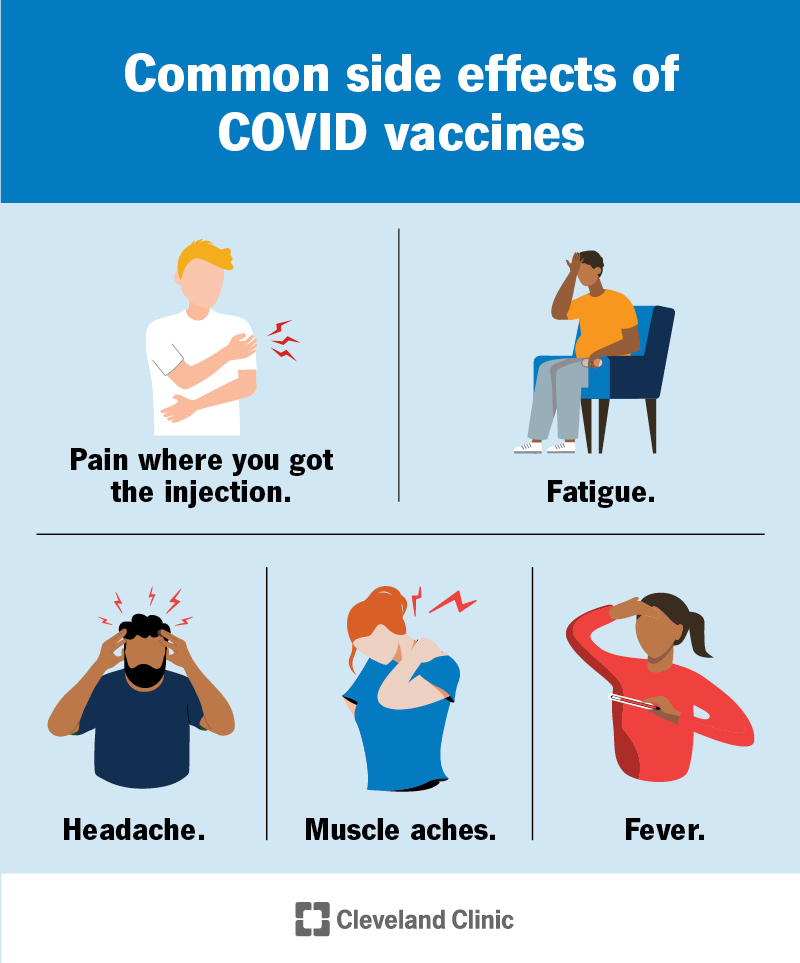
Common reactions include pain, redness, or swelling at the injection site, fatigue, headache, muscle aches, chills, fever, nausea, and swollen lymph nodes. These effects usually begin within a day and resolve within one to three days. They reflect immune activation, although having no reaction does not mean the vaccine failed.
Rare allergic reactions
Severe allergic reactions are rare. CDC clinical guidance has estimated anaphylaxis at approximately five cases per million mRNA vaccine doses. Vaccination locations are equipped to recognize and treat anaphylaxis, which is why patients are commonly observed for at least 15 minutes after the shot.
A history of severe allergy to a vaccine ingredient may rule out that product. A person who cannot receive an mRNA vaccine because of an ingredient such as polyethylene glycol may be evaluated for a protein-based alternative, depending on age and medical history.
Myocarditis and pericarditis
Myocarditis is inflammation of the heart muscle, while pericarditis affects the lining surrounding the heart. These conditions have occurred rarely after COVID-19 vaccination, most often in adolescent and young adult males and usually within the first week after an mRNA dose.
FDA analyses of 2023–2024 mRNA vaccine data estimated approximately eight myocarditis or pericarditis cases per million doses among people ages 6 months through 64 years. The estimate was approximately 27 cases per million doses among males ages 12 through 24.
Chest pain, shortness of breath, or a racing, pounding, or fluttering heartbeat after vaccination requires prompt medical evaluation. Anyone who developed myocarditis or pericarditis within three weeks of a previous COVID-19 dose should normally avoid another dose unless a specialist concludes that the benefits outweigh the risks and the inflammation has fully resolved.
When vaccination should be postponed
Vaccination is generally delayed during moderate or severe acute illness. People with a history of multisystem inflammatory syndrome or a serious immediate allergic reaction need individualized medical advice. Mild illnesses, such as a minor cold without significant fever, do not always require postponement.
Practical Experiences: What Getting an Updated Vaccine Is Often Like
The following scenarios reflect common patient experiences and clinical situations. They are illustrative examples, not personal medical testimonials.
Experience 1: The healthy working adult
A healthy 35-year-old may wonder whether another COVID-19 dose is worth the trouble. The answer depends on personal priorities and exposure. Someone working remotely with few medical risks may expect a smaller absolute benefit than a teacher, flight attendant, caregiver, or employee sharing an office with dozens of people who consider coughing into the open air a personality trait.
After discussing the options with a pharmacist, the patient may choose a single updated dose before winter travel. The appointment often lasts 15 to 30 minutes, including observation. Arm soreness may appear that evening, followed by mild fatigue the next day. Planning the shot before a relatively quiet day can be helpful, although most recipients continue normal activities.
Experience 2: An older adult arranging two seasonal doses
A 72-year-old with diabetes and heart disease has a different risk calculation. Age and chronic disease both increase the probability of hospitalization. Under the published 2025–2026 schedule, this patient generally receives two updated doses approximately six months apart.
The first dose might be scheduled in early fall before respiratory infections rise. The second could be planned for late winter or spring to restore protection as immunity declines. Rather than relying on memory, the patient adds the second date to a phone calendar and asks the pharmacy to send a reminder. Technology finally earns its keep.
The patient receives the COVID-19 and flu vaccines during the same visit, one in each arm. Temporary soreness in both arms is possible, so choosing the non-dominant arm for the injection expected to cause more discomfort may make sleep and daily tasks easier.
Experience 3: A parent deciding for a toddler
A parent of an unvaccinated 10-month-old may feel uncertain because severe COVID-19 is less common in children than in older adults. However, infants have a higher hospitalization risk than older children, and the American Academy of Pediatrics recommends vaccination for children ages 6 through 23 months.
The current schedule generally uses two Moderna doses given four to eight weeks apart. The pediatric dose is smaller than the adult dose. Possible reactions include fussiness, sleepiness, reduced appetite, fever, or injection-site discomfort. Parents can ask the pediatrician how to manage fever and which symptoms require a call. Preventive medication before vaccination is not routinely recommended unless the clinician advises it.
Experience 4: Vaccination after a recent infection
A 48-year-old tests positive for COVID-19 six weeks before a planned vaccination appointment. Symptoms are mild, and recovery is complete. Instead of automatically keeping the original appointment, the patient discusses timing with a clinician.
Because reinfection risk is often lower for several weeks after illness, delaying the dose for up to three months from symptom onset may be reasonable. On the other hand, an earlier dose may make sense if the patient takes immune-suppressing medication, expects substantial occupational exposure, or is preparing for international travel. The best timing is not identical for everyone because immune systems stubbornly refuse to use a universal spreadsheet.
Experience 5: An immunocompromised patient
A patient receiving treatment for lymphoma cannot assume that the standard one-dose schedule applies. Immunosuppressive treatment may weaken vaccine response, and the recommended schedule may contain an initial series plus later updated doses.
The oncology and infectious-disease teams coordinate vaccination around treatment when possible. Some vaccines are ideally given at least two weeks before immunosuppressive therapy, but vaccination should not automatically be delayed when treatment is already underway. People receiving continuing B-cell-depleting therapy may be advised to vaccinate approximately four weeks before the next treatment cycle.
This experience illustrates why the immunocompromised schedule should be designed with a clinician rather than reconstructed from social media graphics. Those graphics are excellent at being colorful and less reliable at managing chemotherapy.
Making the vaccination day easier
Bring a vaccination record when available, wear clothing that provides easy access to the upper arm, drink normally, and eat as usual unless a clinician says otherwise. Tell the vaccinator about previous severe allergies, fainting after injections, myocarditis, pregnancy, immune-suppressing treatment, or recent COVID-19.
After vaccination, gentle arm movement may reduce stiffness. Rest, fluids, and a cool compress can help with common symptoms. A clinician may recommend an over-the-counter pain or fever medicine after symptoms begin, provided it is safe for the patient. Emergency care is appropriate for breathing difficulty, facial or throat swelling, severe weakness, chest pain, or other signs of a serious reaction.
Conclusion
The modern COVID-19 vaccine schedule is targeted rather than one-size-fits-all. Most eligible people under 65 receive one updated dose, while adults 65 and older generally receive two seasonal doses. Young children and immunocompromised patients may need a multidose schedule based on age and previous vaccination.
Updated vaccines are not perfect shields against infection. Their most important job is reducing the likelihood that COVID-19 becomes a medical emergency. Real-world studies continue to show additional protection against urgent care visits, hospitalization, and severe disease, especially during the months soon after vaccination.
The best decision combines current medical guidance with individual risk. Age, pregnancy, chronic disease, immune status, previous reactions, recent infection, occupational exposure, and upcoming travel all belong in the conversation. In other words, the smartest vaccine schedule is not the loudest opinion onlineit is the one built from reliable evidence and the patient’s actual health needs.