The intes wisdom, but few have arrived with a mane.
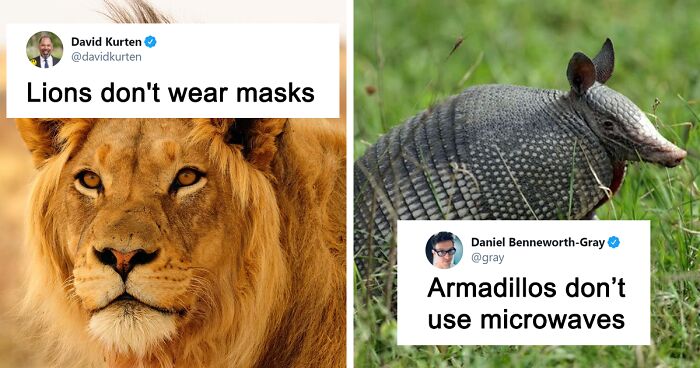
In late December 2020, British politician David Kurten posted a photograph of a lion accompanied by four apparently profound words: “Lions don’t wear masks.” The message appeared to be a defiant statement about COVID-19 precautions. Instead, it opened the gates to a comedy safari.
Commenters quickly pointed out that lions also do not use hospitals, hold public office, browse social media, pay taxes, or offer epidemiological advice. More awkwardly, lions could contract the coronavirusand several already had.
How Four Words Became a Viral Political Own Goal
At the time of the post, Kurten was a member of the London Assembly and leader of the recently formed Heritage Party. He had previously criticized mask use and publicly rejected the idea of receiving a COVID-19 vaccine. His lion post was therefore understood as another entry in the pandemic-era battle over face coverings, government rules, and personal freedom.
The problem was not merely that the message was simplistic. The analogy collapsed almost as soon as anyone thought about it for longer than the average microwave countdown.
Lions do not wear masks because lions do not understand respiratory-virus transmission. They do not ride commuter trains, shop in crowded supermarkets, visit relatives in nursing homes, or sit through three-hour municipal budget meetings. A wild animal’s failure to follow a human safety practice is not evidence that the practice is unnecessary.
By that logic, seat belts must be useless because cheetahs never buckle up.
Social media recognized the weakness immediately. Replies and reposts answered the statement with increasingly absurd lion facts. Users observed that lions do not use toilets, build hospitals, wear pants, write laws, or use the internet. One widely circulated response connected the tweet to reports that four lions at Barcelona Zoo had tested positive for SARS-CoV-2 earlier that month.
The king of the jungle had been called as an expert witness, only for the witness to become part of the evidence.
Incident and political background: section>
The Scientific Problem With the Lion Comparison
Lions Were Not Immune to SARS-CoV-2
By December 2020, infections among captive big cats had already been documented. Nadia, a tiger at the Bronx Zoo, tested positive in April after several lions and tigers developed respiratory symptoms. Officials believed an infected zoo employee had transmitted the virus to the animals.
Later that year, three female lions named Zala, Nima, and Run Run, along with a male named Kiumbe, tested positive at Barcelona Zoo. The animals displayed relatively mild symptoms, while two members of the zoo staff also tested positive.
Additional outbreaks were subsequently reported among lions, tigers, snow leopards, gorillas, otters, and other mammals. The U.S. Department of Agriculture began maintaining records of confirmed SARS-CoV-2 infections in American animals, while zoos introduced protective procedures for susceptible species.
This does not mean lions should wander around the savanna wearing disposable surgical masks. Attempting to place one on a wild lion would probably result in a very short public-health career.
It means the original argument confused behavior with biology. Animals may be vulnerable to a pathogen even though they cannot understand or participate in human prevention strategies. Zoo employees, veterinarians, protective equipment, ventilation practices, distancing procedures, and animal vaccination programs can reduce risk. The lion itself is not expected to read the safety memo.
Animal-infection research and reports: h3>Masks Were Designed as a Human Source-Control Tool
The primary purpose of community masking during the pandemic was source control: reducing the respiratory particles released by an infected person, including someone who had not yet developed noticeable symptoms.
Masks were never magical force fields. Their performance depended on filtration, material, fit, consistency, and the environment in which they were used. A loose single-layer cloth covering was not equivalent to a properly fitted N95 or KN95 respirator.
Nevertheless, laboratory experiments, hospital observations, epidemiological studies, and community research generally supported the conclusion that masks could reduce SARS-CoV-2 transmission, especially when appropriate masks were worn correctly and consistently.
That distinction matters because weak arguments often attack a safety measure for failing to provide perfect protection. A mask did not have to stop every viral particle in every situation to offer meaningful risk reduction.
Umbrellas do not stop thunderstorms. Sunscreen does not abolish sunlight. Oven mitts do not make lava safe. Imperfect protection can still be useful protection.
Mask-effectiveness evidence: section>
Why the Hilarious Internet Comments Worked
They Followed the Same Logic to Its Absurd Conclusion
The strongest replies did not require a semester-long lecture in virology. They accepted the lion premise and applied it consistently.
Yes, lions do not wear masks. Lions also do not drive cars, operate smartphones, attend medical appointments, use indoor plumbing, or stand in line at pharmacies. Once the comparison was extended beyond its dramatic opening sentence, its emptiness became obvious.
This style of comeback works because it conducts a miniature logic test in public. Instead of announcing, “Your analogy contains a category error,” commenters demonstrate that error through jokes.
It is the difference between receiving a textbook and watching the textbook gently bonk an argument on the head.
Humor Made the Correction Shareable
Facts sometimes compete poorly online. Reliable information may arrive as a lengthy report filled with qualifications, charts, and phrases such as “after controlling for potential confounding variables.” Misinformation can arrive as a four-word slogan attached to a magnificent lion.
The lion usually wins the first round.
Humor helps accurate information travel because a punchline is memorable, emotionally satisfying, and easy to repeat. A screenshot of a sharp comeback may reach people who would never voluntarily open a public-health report.
Of course, not every joke is educational and not every social-media pile-on is healthy. Excessive mockery can encourage harassment, deepen tribal divisions, and make people less willing to reconsider their beliefs.
In this case, however, many of the funniest responses targeted the argument rather than simply insulting its author. They exposed how a symbol of strength had been used as a substitute for evidence. The lion looked powerful, so the message was supposed to feel powerful.
The commenters removed the cinematic soundtrack.
What the Tweet Revealed About COVID-19 Misinformation
The pandemic created ideal conditions for bad information: widespread fear, scientific uncertainty, rapidly changing evidence, political conflict, and millions of people spending more time online.
Public-health guidance evolved as researchers learned more about airborne transmission, asymptomatic infections, mask quality, vaccines, and new variants. That evolution was sometimes portrayed as proof that experts knew nothing. In reality, updating recommendations when better evidence becomes available is a basic feature of science, not an embarrassing software bug.
Research organizations found that social media played a major role in exposing people to pandemic misinformation. Pew Research Center reported that Americans who primarily obtained news through social platforms were more likely to encounter fabricated COVID-19 claims and often knew less about important pandemic facts.
Harvard researchers also found an association between greater social-media exposure and misperceptions about COVID-19. The platforms did not create every false belief, but they provided rocket engines for content that was emotional, visual, tribal, and easy to repeat.
“Lions don’t wear masks” contained nearly every ingredient of a viral but unhelpful political message:
- It was extremely short.
- It used a familiar symbol of strength and courage.
- It implied that caution represented weakness.
- It encouraged people to identify with a fearless predator.
- It avoided making a measurable scientific claim.
There was no study to analyze, transmission rate to compare, or detailed policy proposal to evaluate. There was simply a lion staring nobly into the distance while human beings supplied the political meaning.
Social-media and misinformation research: section>
The Appealand Dangerof Nature-Based Political Analogies
Politicians and advertisers love animal metaphors because animals arrive preloaded with cultural meanings. Eagles represent freedom. Owls symbolize wisdom. Foxes suggest cleverness. Lions communicate leadership, bravery, and strength.
Nobody posts a damp raccoon beside a complicated zoning proposal, although democracy might become more entertaining if they did.
The trouble begins when symbolism pretends to be evidence. Nature contains examples that can be recruited to support almost any political position.
Lions live in organized social groups, so perhaps they support collective responsibility. They sleep for much of the day, so perhaps they favor a generous national nap program. Male lions have large manes, so perhaps hair volume is a constitutional principle.
Nature does not provide humanity with one clear political platform. People select whichever animal behavior flatters the conclusion they already prefer.
A useful analogy clarifies a genuine shared mechanism. For example, comparing multiple layers of disease prevention to slices of Swiss cheese can illustrate how several imperfect measures may work together. Each layer has holes, but the holes do not always line up.
A bad analogy merely creates a mood. The lion post offered mood first and mechanism never.
Why Public Officials Face a Higher Standard Online
A private citizen can post a flimsy meme and receive an eye roll from three cousins. An elected official or political leader communicates with borrowed authority. Supporters may repeat the message, followers may treat it as guidance, and journalists may amplify it far beyond the original audience.
That does not mean politicians must write every social-media update like a peer-reviewed medical journal. It does mean they should avoid presenting wildlife slogans as replacements for evidence during a public-health emergency.
Responsible communication includes distinguishing opinion from fact, acknowledging uncertainty, using credible sources, and correcting significant errors. The ability to say, “I was wrong,” is not weakness. It is intellectual maintenance.
Cars require oil changes, websites need security patches, and public arguments occasionally need to be taken behind the shed and replaced.
The backlash also offers a warning to anyone with a large audience: the internet will test your metaphor. It will identify exceptions, inspect timelines, retrieve old posts, and invite thousands of amateur comedians to perform quality control.
Before pressing “post,” it is worth asking whether the argument still works after someone replaces “lion” with “goat,” “hamster,” or “municipal pigeon.”
Was the Backlash Fair?
The term “covidiot,” widely used during the pandemic to insult someone perceived as ignoring COVID-19 precautions, was never an especially diplomatic label. It may attract clicks, but name-calling alone does not improve public understanding.
People can criticize Kurten’s analogy without pretending that ridicule is a complete public-health communication strategy. Changing minds often requires patience, trust, transparent evidence, local messengers, and respect for people who have sincere questions about medical guidance or government power.
Still, a strong backlash was predictable because the post framed a serious health issue as a toughness contest. It implied that masks were associated with timidity while lions represented people brave enough to refuse them.
People who wore masks to protect patients, relatives, coworkers, or vulnerable strangers could reasonably interpret that framing as contempt rather than thoughtful policy criticism.
The jokes responded by emphasizing that responsible behavior is not cowardice. Courage does not always mean charging forward without protection. Sometimes it means accepting a minor inconvenience because it may reduce risk for someone else.
Experiences and Practical Lessons From the “Lions Don’t Wear Masks” Moment
The most useful experience to take from this episode is not that writers should abandon animal metaphors. Animal metaphors can be vivid, funny, and occasionally magnificent. The lesson is to pressure-test a metaphor before releasing it into the digital wilderness.
Begin by rewriting the implied argument in plain language. In this case, the hidden reasoning was approximately: lions are strong and do not wear masks; therefore, strong human beings should not wear masks. Once separated from the majestic photograph, the argument sounds less like political leadership and more like a rejected cereal-box slogan.
A second practical lesson is to conduct a basic fact check. Search the subject, the central claim, and obvious counterexamples. Had someone searched whether lions could contract SARS-CoV-2, reports about the Barcelona and Bronx Zoo infections would have appeared quickly.
This habit is valuable for politicians, journalists, content creators, social-media managers, and everyday users. It becomes particularly important when a post makes an absolute statement, compares human society with animal behavior, or claims to resolve a complicated scientific question through “common sense.”
Third, distinguish meaningful skepticism from performance. Healthy skepticism asks what evidence supports a recommendation, how reliable that evidence is, what tradeoffs exist, and whether the advice should change under different conditions.
Performative skepticism begins with a desired conclusion and searches for an impressive prop. A lion photograph is an excellent prop. It is not a systematic scientific review.
Audiences should reward people who ask precise questions rather than those who merely strike the boldest pose beside stock photography.
Fourth, humor can correct misleading information, but it is most constructive when directed at a faulty argument or a powerful public figurenot at sick, frightened, or confused individuals. The memorable responses to the tweet challenged its analogy: lions do not use hospitals, lions do not tweet, and lions do not write legislation.
Those jokes were effective because they revealed a logical flaw. Random personal abuse would have generated additional heat without producing additional clarity.
Fifth, communicators should avoid turning public health into a personality test. During the pandemic, masks became symbols of compassion, fear, expertise, control, loyalty, resistance, and political identity. Once a piece of fabric carried that much ideological luggage, practical discussions about filtration, ventilation, fit, and exposure became far more difficult.
Better communication focuses on mechanisms and situations: respiratory particles, crowded indoor environments, vulnerable people, mask quality, ventilation, and the length of an exposure. Specific information lowers the emotional temperature and helps people make decisions based on circumstances rather than tribal slogans.
Another useful habit is separating image selection from claim validation. A dramatic photograph can make writers feel that an argument is complete when it has merely become attractive. Before publishing, remove the image and read the words alone. If the reasoning suddenly looks hungry, confused, and lost on the savanna, it probably needs more work.
Finally, the episode demonstrates the permanence of a careless post. A four-word message can outlive the news cycle, the policy debate, and even the branding of the platform on which it appeared. Screenshots become searchable artifacts, and deleted posts sometimes continue roaming the internet like digital wildlife.
For anyone communicating publicly, the best pre-publication checklist remains wonderfully boring: Is the claim accurate? Is the analogy valid? Is the tone appropriate? Could the message cause unnecessary harm? Can the argument survive without the picture?
When the answer to that last question is no, release the lion back into the stock-photo library.
Conclusion: The Lion Was Fine; the Logic Needed Veterinary Care
The “Lions don’t wear masks” tweet became memorable not because it offered a serious challenge to pandemic policy, but because it reduced a complicated public-health question to a mascot.
Commenters responded by exposing the enormous gap between animal behavior and human responsibility, often with jokes sharper and more memorable than a formal rebuttal.
The broader lesson remains relevant beyond COVID-19. Strong images can make weak arguments feel persuasive. Political identity can transform practical safety measures into moral theater. Social media frequently rewards confidence before checking competence.
The best defense is a combination of evidence, context, intellectual humility, andwhen necessarya well-aimed reminder that lions do not have Wi-Fi.
Note: This article examines a historical social-media controversy from December 2020. It is not a substitute for current medical guidance. Recommendations for preventing respiratory illnesses depend on the disease, setting, individual risk factors, and current advice from qualified health authorities.