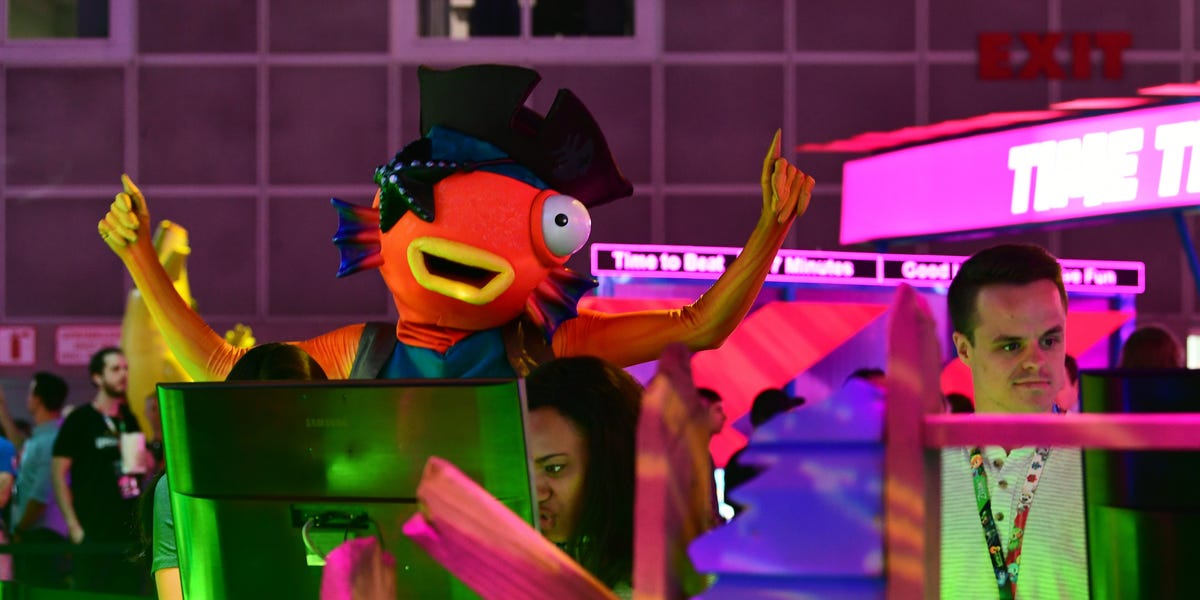
E3 2019 opened its show floor in Los Angeles with the kind of controlled chaos that only the gaming industry can turn into a marketing strategy. On paper, Day 1 was another packed day of demos, booths, trailers, interviews, branded stages, and enough LED lighting to make a spaceship feel underdressed. In practice, it became a snapshot of where video games stood in 2019: blockbuster nostalgia was back, live-service games were becoming cultural festivals, and loot-driven shooters were still very eager to hand players a gun that somehow had more personality than most movie villains.
The biggest conversation starters on Day 1 were not random. Final Fantasy VII Remake showed that a legendary RPG could return without simply polishing its old materia and calling it a day. Borderlands 3 reminded fans that absurd weapons, co-op mayhem, and comic-book chaos still had a giant audience. Fortnite, meanwhile, proved that it did not need a traditional reveal to dominate attention. It simply had to exist loudly, colorfully, and preferably with a dancing TomatoHead nearby.
This E3 2019 Day 1 recap looks at how Fortnite, Final Fantasy VII Remake, and Borderlands 3 shaped the early mood of the show. It also explores why these three names mattered beyond the booths: each represented a different path for modern gaming. One was a global social platform disguised as a battle royale. One was a beloved role-playing classic rebuilt for a new era. One was a loud, loot-filled shooter determined to make “more guns” sound like a philosophical statement.
Why E3 2019 Day 1 Felt Different
E3 2019 arrived during a strange transition period for the industry. The PlayStation 4 and Xbox One generation was nearing its final lap, streaming platforms were trying to convince everyone that hardware might become optional, and publishers were experimenting with new ways to reach fans directly. Sony skipped the show, which changed the rhythm of the week. Without one of E3’s traditional giants on the stage, the show floor and surrounding events had to carry more of the spectacle.
That shift made Day 1 feel less like a single parade of announcements and more like a living, breathing theme park for gaming culture. There were hands-on demos, influencer-driven activations, publisher presentations, cosplay-ready displays, and lines long enough to make a patient person reconsider every life choice. The Los Angeles Convention Center became a place where game announcements competed not only with each other but also with physical experiences. A trailer could trend online, but a booth could make thousands of attendees pull out their phones at the same time.
In that environment, Fortnite, Final Fantasy VII Remake, and Borderlands 3 were perfect Day 1 subjects. They were not competing in the same lane. Fortnite dominated through community and spectacle. Final Fantasy VII Remake dominated through history, expectation, and finally seeing the thing in motion. Borderlands 3 dominated through personality, co-op energy, and a promise that its familiar formula had been expanded rather than replaced.
Fortnite: The Battle Royale That Became an E3 Attraction
By 2019, Fortnite was no longer just a popular battle royale game. It was a cultural weather system. If Fortnite drifted into your city, you knew about it. If Fortnite built a booth, it did not whisper. It yelled in bright colors, handed the microphone to a mascot, and turned a dance emote into a public performance.
On E3 2019’s first show-floor day, Fortnite’s presence captured one of the biggest truths of the event: live-service games had changed how publishers thought about hype. Fortnite did not need to announce a sequel. It was already everywhere. Its value came from constant updates, seasonal events, celebrity tie-ins, streamer attention, and a player base that treated the game as both entertainment and social hangout.
Fortnite’s E3 Presence Was About Culture, Not Just Content
Unlike a traditional E3 reveal, Fortnite’s impact came through atmosphere. The game’s booth and surrounding promotional presence leaned into color, interaction, and fan recognition. A dancing TomatoHead on the show floor may sound like a small detail, but it summed up the entire Fortnite strategy. The character was instantly recognizable to fans, goofy enough to attract casual attendees, and photogenic enough to spread across social feeds. In other words, it was marketing with marinara.
Fortnite also extended the E3 conversation beyond the convention center through the Fortnite Summer Block Party, a fan-focused event held in Los Angeles after the main show days. That event included the second Fortnite Celebrity Pro-Am, which paired professional players and content creators with celebrities for charity. Airwaks and RL Grime later won the competition, further reinforcing Fortnite’s strange but effective blend of esports, entertainment, music, and celebrity culture.
That mattered because Fortnite was helping redefine what a “gaming event” could be. E3 once revolved around closed-door demos and press conferences. Fortnite treated the broader week as a festival. It invited players, creators, musicians, and fans into the same orbit. The message was clear: Fortnite was not merely a game you played at home; it was a platform that could fill an arena, command livestream audiences, and make a person in a TomatoHead costume seem like a reasonable business expense.
Final Fantasy VII Remake: The Legend Finally Looked Real
If Fortnite represented the future of gaming as an always-on social ecosystem, Final Fantasy VII Remake represented something older and more emotional: the power of a legendary game returning at exactly the right dramatic volume. Fans had waited years for a substantial look at the remake. Many had wondered whether Square Enix could possibly satisfy expectations around one of the most beloved RPGs ever made.
At E3 2019, the answer started to look like “yes, maybe, and please let me play the demo again.” Square Enix showed an extended look at Final Fantasy VII Remake, including its modernized combat system, cinematic presentation, and reimagined version of Midgar. The company also confirmed that the game would launch for PlayStation 4 on March 3, 2020, a date that gave the long-running project something fans had desperately wanted: a real destination on the calendar.
A Combat System Built Between Past and Present
The biggest question around Final Fantasy VII Remake was always combat. The original game used turn-based Active Time Battle mechanics, a system that helped define an era of Japanese role-playing games. The remake could not simply copy that structure without feeling dated to many modern players. But if it abandoned the old system entirely, it risked upsetting the fans who had been emotionally bonded to Cloud, Barrett, Tifa, Aerith, and Midgar since the late 1990s.
Square Enix’s E3 showcase revealed a hybrid approach. Players could move and attack in real time, building ATB charges that allowed them to use abilities, spells, and items. The result looked more action-oriented than the original while still preserving a layer of tactical decision-making. Instead of replacing the old soul, the remake appeared to translate it. That distinction mattered. Fans did not want a museum piece; they wanted the memory of Final Fantasy VII to feel alive again.
The demo footage also highlighted character switching, cinematic boss encounters, and the scale of the Guard Scorpion fight. It was polished, dramatic, and proudly expensive-looking. Cloud’s sword looked enormous, Midgar looked oppressive and detailed, and Barrett had enough personality to power a small generator. The footage reassured many skeptical fans that Square Enix was not treating the remake as a simple nostalgia product. It was building a full modern RPG experience around a classic foundation.
Midgar Became More Than an Opening Chapter
Another major E3 2019 talking point was the scope of the project. Square Enix explained that the first release would focus on Midgar and that the physical version would span two Blu-ray discs. That raised eyebrows, questions, and a few jokes about whether Midgar had been quietly eating protein powder for two decades. But it also suggested a serious creative goal: the remake would expand the city, its characters, and its story rather than racing through familiar scenes.
For longtime fans, that approach was both exciting and slightly nerve-racking. Final Fantasy VII is remembered not only for its plot twists but also for its pacing, world map, music, and emotional momentum. Spending an entire release in Midgar meant Square Enix had to make the city feel like a complete experience. The E3 presentation argued that this was possible by turning Midgar into a denser, more cinematic, more character-focused setting.
On Day 1, the remake felt like the emotional center of E3 2019. Other games had flash. Final Fantasy VII Remake had history. It carried the weight of childhood memories, forum debates, soundtrack nostalgia, and years of “where is it?” jokes. When it finally appeared in playable form, it did not just show gameplay. It gave fans permission to be excited again.
Borderlands 3: More Guns, More Worlds, More Mayhem
Borderlands 3 arrived at E3 2019 with a very different kind of pressure. It did not need to reinvent an iconic 1997 RPG. It needed to prove that the Borderlands formula still had energy in a market full of live-service shooters, shared-world games, and loot systems. Gearbox and 2K leaned into what the series did best: irreverent humor, co-op chaos, cel-shaded style, and a loot pool so large it sounded like a dare.
The game was scheduled for release on September 13, 2019, for PlayStation 4, Xbox One, and PC, giving E3 attendees a relatively close look at a major fall release. Borderlands 3 promised four new Vault Hunters: Moze the Gunner, Amara the Siren, FL4K the Beastmaster, and Zane the Operative. It also introduced the Calypso Twins as its central villains, pushing the story beyond Pandora and into a larger galaxy of vaults, cults, and ridiculous weaponry.
Refinement Instead of Reinvention
One of the smartest things Borderlands 3 did at E3 2019 was avoid pretending to be something else. The demos and coverage suggested a game that felt like Borderlands, only smoother, broader, and more flexible. Gunplay had been tightened. Movement felt more modern. Environments looked more varied. The loot was still gloriously excessive. The tone was still loud enough to wake a sleeping skag.
That approach made sense. Borderlands fans did not want a serious tactical military shooter. They wanted co-op firefights where one friend was experimenting with a bizarre elemental weapon while another accidentally triggered chaos in the next room. They wanted damage numbers, skill trees, strange enemies, and dialogue that treated subtlety as a limited-time event. Borderlands 3’s E3 presence promised exactly that, while also expanding the playground.
The new Vault Hunters gave players distinct reasons to replay missions and experiment with builds. Moze offered mech-powered destruction. Amara brought Siren abilities with close-range aggression. FL4K appealed to players who wanted pets, precision, and a mysterious robot vibe. Zane leaned into gadgets, deception, and flexible combat tools. Together, they suggested a game designed around co-op variety rather than one-size-fits-all shooting.
The Calypso Twins and the Age of Influencer Villains
Borderlands has always had a talent for turning pop culture into parody, and Borderlands 3’s villains fit the 2019 moment perfectly. Troy and Tyreen Calypso were not just power-hungry antagonists; they were cult-leader personalities with a media-savvy edge. In an era dominated by streaming, followers, fandoms, and online influence, the Calypso Twins felt like Borderlands holding up a cracked carnival mirror to internet fame.
That made the game feel timely even while its core formula remained familiar. Borderlands 3 was not trying to abandon its DNA. It was trying to update the target of its satire. If Handsome Jack was the corporate villain with a smug voice and a moon base worth of ego, the Calypsos were villains for the age of subscriber counts and weaponized attention.
Fortnite vs. Final Fantasy VII vs. Borderlands 3: Three Visions of Gaming
Looking back at E3 2019 Day 1, what makes Fortnite, Final Fantasy VII Remake, and Borderlands 3 so interesting together is how differently they defined success. Fortnite did not need a release date because it was already a living platform. Final Fantasy VII Remake needed a release date because fans had waited so long for certainty. Borderlands 3 needed a release window close enough to turn curiosity into preorders and hands-on hype.
Fortnite showed the power of community and spectacle. Its E3 presence was about visibility, participation, and cultural momentum. Final Fantasy VII Remake showed the power of nostalgia when paired with genuine modernization. It reminded the industry that players will wait years for a remake if the final product looks ambitious enough. Borderlands 3 showed the power of a strong identity. It did not apologize for being loud, weird, and loot-obsessed. It simply tried to be a better version of itself.
Together, these games made Day 1 feel like a crossroads. The industry was balancing old and new, physical and digital, single-player storytelling and live-service communities, premium releases and ongoing events. E3 2019 did not belong to one model. It belonged to all of them fighting for attention under the same fluorescent roof.
Key Takeaways from E3 2019 Day 1
1. Nostalgia Works Best When It Evolves
Final Fantasy VII Remake did not win attention simply because people remembered the original. It won attention because it looked like Square Enix understood that nostalgia alone was not enough. The remake had to feel modern, cinematic, and mechanically engaging. Day 1 suggested that the team was taking that challenge seriously.
2. Live-Service Games Need Real-World Presence
Fortnite’s E3 impact showed that digital games can become physical communities. Booths, fan events, celebrity tournaments, and photo-worthy mascots all helped extend the Fortnite brand beyond the screen. The game’s success was not only measured in matches played but also in moments shared.
3. Familiar Franchises Still Need a Fresh Hook
Borderlands 3 leaned on familiar strengths, but it also introduced new Vault Hunters, expanded worlds, smoother mechanics, and villains tailored to the social media era. That mix of comfort and novelty helped it stand out during a crowded E3 week.
4. E3 Was Becoming More Than Press Conferences
By 2019, E3’s identity had shifted. Livestreams, fan events, influencer coverage, and hands-on impressions mattered as much as stage presentations. Day 1 demonstrated how publishers were designing hype for both the people inside the convention center and the millions watching from home.
Conclusion: Day 1 Delivered the Kind of Gaming Chaos Fans Wanted
E3 2019 Day 1 was not just a collection of trailers and booths. It was a loud, colorful argument about what video games had become. Fortnite showed that a game could transform into a cultural gathering place. Final Fantasy VII Remake showed that a classic could return with blockbuster confidence. Borderlands 3 showed that a series built on guns, jokes, loot, and co-op madness still had plenty of ammunition left.
For fans, the day offered something rare: variety that actually felt meaningful. You could admire the technical ambition of Final Fantasy VII Remake, laugh at the absurdity of Borderlands 3, and still find yourself watching Fortnite command attention without needing a traditional sequel announcement. That was the magic of E3 at its best. It gave every kind of player something to obsess over, debate, screenshot, preorder, or complain about lovingly on the internet.
In hindsight, E3 2019 Day 1 feels even more significant because it captured the industry before another major turning point. New consoles were coming. Streaming was gaining attention. Live-service games were reshaping habits. Remakes were becoming prestige releases. And somewhere in Los Angeles, a TomatoHead was dancing like the future depended on it. Honestly, maybe it did.
Personal Experience and Player Perspective: Remembering the Energy of E3 2019 Day 1
Experiencing E3 2019 Day 1 as a fan, even from a distance through livestreams, articles, reaction videos, and social media, felt like standing outside a giant arcade while every machine inside hit jackpot at the same time. The noise was part of the fun. One browser tab had Final Fantasy VII Remake reactions. Another had Borderlands 3 gameplay breakdowns. Social feeds were filled with Fortnite photos, booth clips, cosplay shots, and jokes about how E3 had become both a trade show and a carnival that occasionally remembered to discuss release dates.
The Final Fantasy VII Remake footage created a special kind of excitement because it touched a memory that many players had protected for years. For longtime fans, Final Fantasy VII was not just another RPG. It was the game that made them understand scale, drama, and emotional storytelling in a new way. Seeing Cloud move through a modern Midgar with cinematic camera work and real-time combat felt surreal. It was familiar but not frozen in time. The experience was like hearing an old song performed by a full orchestra: the melody was the same, but the room suddenly felt bigger.
Borderlands 3 created a different reaction. It was less emotional and more immediate. Watching the gameplay made it easy to imagine sitting with friends, arguing over loot, laughing at bad decisions, and pretending that “just one more mission” would not turn into three more hours. The best part of Borderlands has always been its social messiness. It is a game series built for stories that start with, “Remember when everything exploded and nobody knew why?” E3 2019 made Borderlands 3 look like it would deliver plenty of those moments.
Fortnite’s presence was fascinating because it made the show feel bigger than traditional gaming news. Not everyone cared about every Fortnite update, but almost everyone understood that Fortnite had changed the rules. It had become a place where players hung out, watched events, followed creators, and participated in a shared pop-culture loop. Seeing it at E3 felt like watching a digital playground step into the real world. The costumes, events, and celebrity tie-ins could seem silly, but they were also smart. Fortnite knew its audience wanted memories, not just patch notes.
What stands out most about E3 2019 Day 1 is how each game offered a different emotional flavor. Final Fantasy VII Remake offered awe. Borderlands 3 offered chaos. Fortnite offered spectacle. Together, they made the day feel like a buffet where every dish was aggressively seasoned. You could be a nostalgic RPG fan, a loot-shooter addict, or a battle royale regular and still find something worth talking about.
That is why this day remains memorable. It captured gaming as a shared experience, not just a product category. People were not only asking, “What was announced?” They were asking, “Did you see that?” That difference matters. E3 was always at its best when it created moments fans could remember together. Day 1 of E3 2019 did exactly that, with swords, shotguns, dance emotes, and enough hype to keep the internet arguing happily for days.