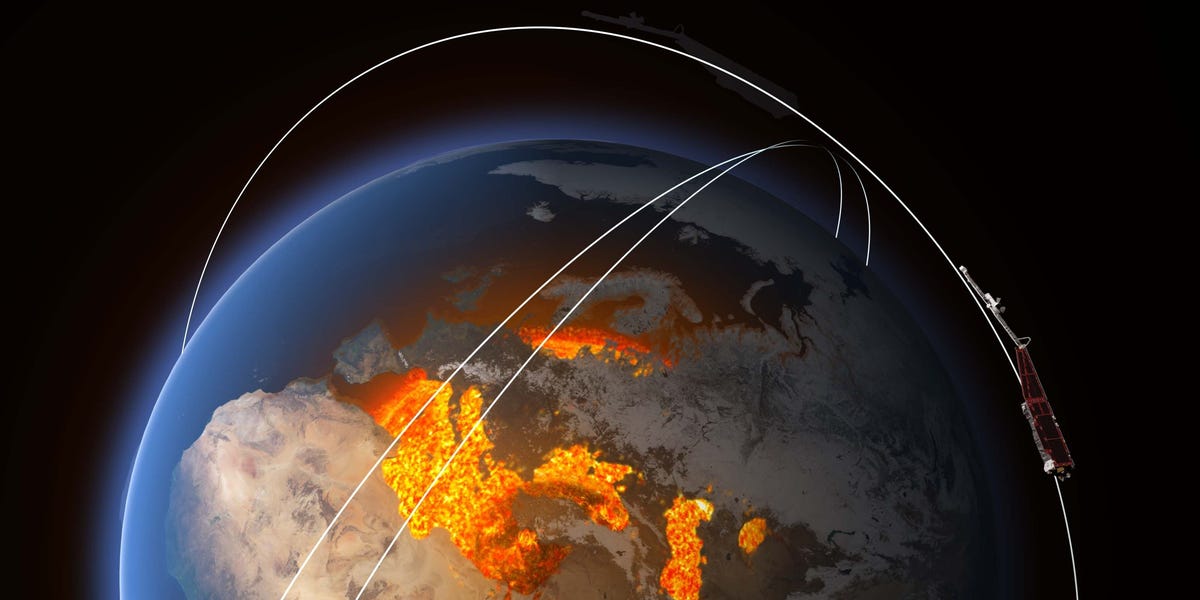
Earth does not come with a visible superhero cape, but it does have something almost as dramatic: a magnetic field. This invisible force wraps around the planet, stretches far into space, and quietly helps make modern life possible. It guides compasses, shapes auroras, influences satellites, and helps shield Earth from streams of charged particles coming from the Sun. In other words, the Earth magnetic field is one of those background systems you barely notice until you realize how much depends on it.
It is also wonderfully weird. The magnetic poles do not sit neatly on top of the geographic poles. The field changes over time. It can weaken in some regions, strengthen in others, and even flip polarity over geologic time. That sounds like the opening scene of a science-fiction movie, but it is normal planetary behavior. The trick is understanding what the field is, where it comes from, and why scientists pay such close attention to it.
This guide breaks down the geomagnetic field in plain English, with enough depth to satisfy curious readers and enough clarity to keep things from sounding like a graduate seminar in molten metal. Let’s get into the invisible architecture of the planet.
What Is the Earth Magnetic Field?
The Earth magnetic field, also called the geomagnetic field, is the magnetic influence generated mainly by movements deep inside Earth’s outer core. At the surface, the field behaves roughly like a tilted dipole, which means it resembles the field around a giant bar magnet. That is the simple version, anyway. The real field is more complicated, because it is shaped by multiple sources and changes continuously over time.
If you have ever used a compass, you have already interacted with the magnetic field. The needle lines up with the local direction of magnetic north, not true north. That difference matters. The angle between true north and magnetic north is called magnetic declination, and it varies from place to place. This is why maps, aircraft systems, ships, military operations, and survey tools all care deeply about accurate magnetic models.
Scientists describe the field using measurements such as declination, inclination, and total intensity. Inclination tells you how steeply the field points into or out of Earth at a given location. Near the equator, the field is more horizontal. Near the poles, it becomes much more vertical. So while the field may be invisible, it is absolutely measurable, mappable, and anything but imaginary.
How Earth Creates Its Magnetic Field
The geodynamo: Earth’s deep, hot power plant
The main magnetic field comes from the geodynamo, a process inside Earth’s liquid outer core. That outer core is made largely of molten iron and nickel. As the fluid metal moves, it generates electric currents. Those currents, in turn, produce magnetic fields. Add Earth’s rotation to the mix, and the result is a self-sustaining magnetic system powerful enough to shape the space around the planet.
This is not a static magnet tucked inside Earth like a forgotten refrigerator souvenir. It is an active, moving, churning system. Heat escaping from the deep interior drives convection in the outer core, and rotation organizes that movement. Because the liquid metal is constantly in motion, the magnetic field is constantly evolving too. That is why the field drifts, why magnetic north wanders, and why magnetic maps need regular updates.
Earth’s crust also contributes a smaller magnetic signature. Certain rocks preserve magnetization, which helps geophysicists study crustal structure and the history of tectonic activity. On top of that, currents in the ionosphere and magnetosphere can affect measurements near Earth. So the field we experience is really a layered story, with the core writing the main plot and other sources adding side characters, plot twists, and occasional chaos.
Why the Earth Magnetic Field Matters So Much
The most headline-worthy role of the Earth magnetic field is protection. The field helps form the magnetosphere, a region of space dominated by Earth’s magnetic influence. When the solar wind, a stream of charged particles from the Sun, reaches Earth, the magnetosphere deflects much of that energy. On the sunward side it is compressed, while on the night side it stretches into a long magnetic tail. Think of it as a cosmic weather shield that is always on duty and never asks for overtime pay.
Still, the magnetic field is not a perfect force field. Earth’s atmosphere does a huge amount of protective work too. The magnetic field mainly helps redirect charged particles and manage how solar energy interacts with near-Earth space. Without it, the space environment around our planet would be much harsher for satellites, communications systems, and high-altitude technology.
The field also matters for navigation. Aviation, marine travel, surveying, drilling, and military systems all rely on magnetic reference information. Even though GPS gets most of the applause these days, magnetic data remains essential because heading and orientation still matter. If your device knows where you are but not which direction it is facing, you are only halfway informed.
There is also a biological side to the story. Evidence suggests that some animals, including sea turtles and salmon, can sense Earth’s magnetic field and use it for orientation. That means the field is not just a technical convenience for humans. It is part of the navigational backdrop of life itself.
Magnetic North Is Not the Same as True North
One of the easiest ways to misunderstand the Earth magnetic field is to assume magnetic north and geographic north are the same thing. They are not. Geographic north is defined by Earth’s axis of rotation. Magnetic north is the place where the field points vertically downward. Those two locations are different, and magnetic north moves over time.
This movement is not a glitch. It is a natural consequence of the changing flow of liquid metal in the outer core. Because the field changes, organizations such as NOAA and its partners update global magnetic models so navigation systems stay accurate. The World Magnetic Model is one of the best-known examples. It is used in civilian and defense applications that need reliable heading data, from aircraft and ships to mapping systems and handheld devices.
For everyday people, this means your compass works, but not in a lazy, one-size-fits-all way. It works relative to your location, the current magnetic field, and the model being used. Hiking with a compass is still cool, but it is cooler when you know that magnetic declination exists and your map is not gaslighting you.
Space Weather, Auroras, and the Drama Above Our Heads
When solar activity ramps up, the Earth magnetic field becomes part of a beautiful and occasionally troublesome space-weather story. During geomagnetic storms, energy from the solar wind is transferred into Earth’s magnetosphere more efficiently than usual. That can disturb currents and fields around the planet, creating effects that range from gorgeous auroras to serious operational headaches.
The friendly version of this is the aurora. Charged particles interact with gases in the upper atmosphere and produce shimmering curtains of light, usually at high latitudes. It is one of nature’s best visual flexes. The less friendly version involves impacts on power systems, radio communications, satellites, and GPS accuracy. Strong geomagnetic activity can create errors in positioning and stress infrastructure that depends on stable electromagnetic conditions.
This is why space-weather forecasting matters. It is not just for scientists staring meaningfully at solar graphs. Utilities, airlines, satellite operators, and communications networks all benefit from understanding when geomagnetic activity might intensify. The magnetic field is not merely a science topic tucked inside a museum exhibit. It is part of the working environment of a technological civilization.
The South Atlantic Anomaly and Other Magnetic Oddities
If the magnetic field were a perfectly tidy bubble, scientists would be bored, and that would be tragic. Instead, Earth offers strange regional features, including the South Atlantic Anomaly. This is an area where the magnetic field is weaker than average, allowing energetic particles to get closer to low-Earth orbit. Spacecraft passing through that region can experience higher radiation exposure, which is exactly the kind of sentence that makes satellite engineers sit up very straight.
The anomaly does not mean Earth’s shield is failing in some cinematic, end-of-the-world sense. It does mean the field is complex, dynamic, and worthy of close monitoring. Variations like this help scientists learn more about what is happening deep inside the planet and how Earth’s magnetic environment changes over time.
Researchers watch these changes using observatories, satellites, field measurements, and mathematical models. The point is not only scientific curiosity, though there is plenty of that. Monitoring the magnetic field also supports hazard mitigation, infrastructure planning, navigation, and the safe operation of spacecraft.
Can the Magnetic Field Reverse?
Yes. Earth’s magnetic field has reversed polarity many times in geologic history. Rocks and sediments preserve evidence of those reversals, which is one reason paleomagnetism is such a powerful tool in Earth science. When a reversal happens, magnetic north and south swap places. That sounds dramatic because, frankly, it is dramatic. But it is also normal on geologic timescales.
Just as important is what a reversal does not mean. It does not mean the field instantly disappears, the planet suddenly forgets how to function, or compasses everywhere burst into tears. Reversals unfold over long periods, likely thousands of years, and the field remains present during the transition, though it may become weaker and more complex.
Scientists do not treat present-day changes as proof that an imminent reversal is around the corner. The field is always changing. That is its whole personality. Watching it evolve is part of normal geophysical monitoring, not a reason to dramatically stockpile canned beans.
How the Earth Magnetic Field Shows Up in Everyday Life
You may not think about the geomagnetic field when checking a map app, boarding a flight, reading about auroras, or using a compass on a camping trip, but it is there in the background. Smartphones contain magnetometers. Surveyors correct for magnetic differences. Drilling operations rely on magnetic models. Pilots and mariners use heading systems that depend on accurate field data. Power-grid operators keep an eye on geomagnetic storm risk.
Even classrooms and museums use the field as a gateway topic because it connects so many branches of science at once: physics, geology, planetary science, atmospheric science, engineering, and biology. It is hard to find another invisible feature of Earth that manages to be both deeply technical and surprisingly poetic.
After all, the Earth magnetic field is the story of a restless planet whose liquid metal heart is constantly shaping the world above it. That is not just useful science. That is excellent material for conversation the next time someone says, “The Earth is basically just a rock.” Technically true. Spiritually incomplete.
Experiences That Make the Earth Magnetic Field Feel Real
For many people, the Earth magnetic field becomes real not in a laboratory, but in a moment. A hiker unfolds a paper map on a cold ridge, sets a compass against the edge, and realizes north on the needle is not quite the same north printed on the page. That small correction, known as declination, turns an abstract science term into a practical lesson. Suddenly, the planet is not just beneath your boots. It is actively shaping the tools in your hand.
A pilot flying at high latitude may experience the magnetic field in a different way. Route planning, instrument references, and space-weather awareness all become more important when geomagnetic conditions are active. Nothing may look unusual out the window, but invisible forces are pushing on the technology that supports navigation and communication. In those moments, the magnetic field feels less like a school diagram and more like part of the operational environment.
Aurora watchers probably have the most cinematic relationship with the magnetic field. They spend hours checking solar activity, cloud forecasts, and geomagnetic conditions, hoping the sky will open into green ribbons, violet arcs, or shimmering curtains of light. When it happens, the experience is unforgettable. The aurora is beautiful, but it is also a reminder that Earth is connected to the Sun through a dynamic magnetic relationship. The sky is not passive. It is participating.
Then there are the quieter experiences. A geologist studies magnetic signatures in rock and sees evidence of ancient reversals. A satellite operator plans around radiation exposure in regions where the field is weaker. A power-grid engineer watches geomagnetic storm alerts with the kind of respect usually reserved for thunderstorms and caffeine shortages. A marine navigator trusts updated magnetic models because a few degrees of error can matter a great deal over long distances.
Even animal migration adds a kind of wonder to the story. Sea turtles crossing open ocean and salmon returning toward their natal rivers appear to use magnetic cues in ways humans are still trying to fully understand. That means the Earth magnetic field is not just a system we measure. It is part of the sensory landscape of life on this planet.
What makes these experiences powerful is that none of them require you to see the field directly. You see its effects. You see the compass needle shift, the aurora glow, the navigation chart update, the spacecraft precautions increase, the scientific record preserved in rock. The magnetic field reveals itself through consequences rather than appearance. It is the invisible architecture behind many visible outcomes.
That may be the most fascinating thing about it. The Earth magnetic field is active all the time, whether we notice or not. It is part of the reason Earth feels stable even though it is physically dynamic from core to atmosphere to space. Once you understand that, ordinary moments gain a little extra depth. A hike, a map, a night sky, a migrating animal, a satellite pass overhead, all of them become tiny reminders that Earth is not a silent planet. It is humming with motion, electricity, and magnetism.
Conclusion
The Earth magnetic field is far more than a textbook topic or a trivia-night answer. It is a dynamic planetary system generated by the geodynamo in Earth’s outer core, shaped by solar interactions, and reflected in everything from compasses and migration patterns to auroras and satellite safety. It changes over time, sometimes in subtle ways and sometimes in spectacular ones, but its importance remains constant.
Understanding the field helps us better understand Earth itself: not as a static ball of rock, but as an active world with a molten interior, a responsive space environment, and a long geologic memory. The magnetic field is invisible, yes, but its fingerprints are everywhere. Once you start noticing them, the planet seems a lot more alive.