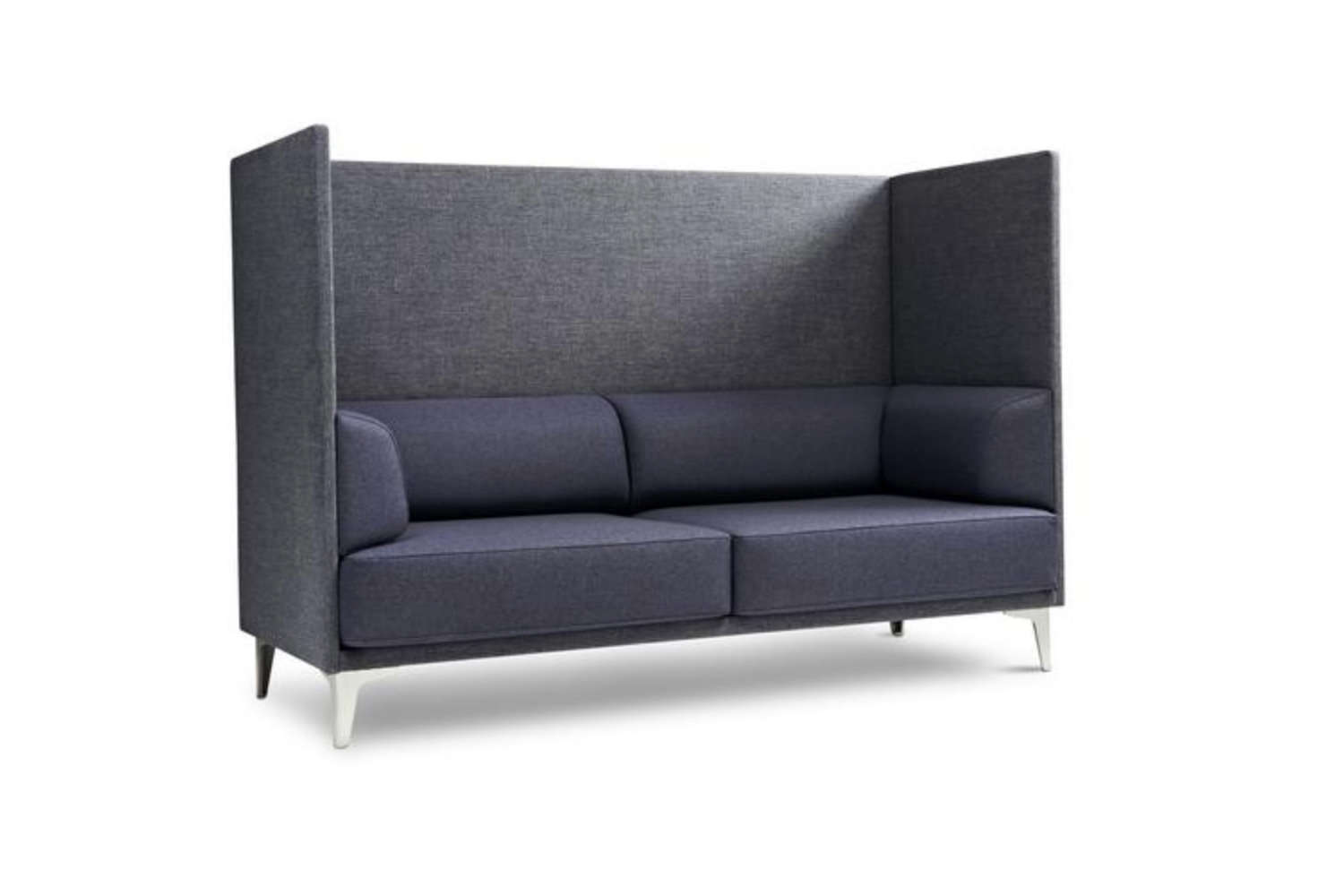
The EJ 400 Apoluna Box Sofa is what happens when a comfortable sofa develops a healthy respect for personal space. Designed by Studio Hannes Wettstein for Danish furniture manufacturer Erik Jørgensen, this dramatically high-backed seat combines Scandinavian simplicity, Swiss precision, and the welcoming softness of a well-upholstered lounge.
Unlike a conventional couch that simply waits against a wall, the Apoluna Box can shape the room around it. Its tall upholstered back and side panels create a sheltered interior where two people can talk, read, work, or quietly avoid the noisy coffee machine nearby. That makes it particularly relevant in open offices, hotel lounges, libraries, reception areas, and large residential interiors that need more structure.
This guide explores the sofa’s design, dimensions, construction, comfort, acoustic qualities, styling options, ideal applications, and practical ownership considerations. We will also look at what using a high-back privacy sofa feels like in everyday lifebecause furniture should do more than look impressive in a photograph taken in a suspiciously spotless room.
What Is the EJ 400 Apoluna Box Sofa?
The EJ 400 Apoluna Box Sofa is the high-back version of the broader Apoluna seating family. The original series included more traditional two-seat and three-seat sofas, while the Box model added tall upholstered panels around the seating area.
Designed in 2011 by Studio Hannes Wettstein, the Apoluna collection reflects the studio’s preference for functional objects with restrained forms and carefully considered details. The manufacturer described it as a Swiss sofa series that balances minimalist ambition with a padded, cozy character.
That description is surprisingly accurate. The sofa has clean geometry, but it does not feel cold or visually severe. Its box-like outer shell is softened by upholstery, rounded internal transitions, supportive padding, and a relatively open front. It feels enclosed without becoming claustrophobic.
Think of it as a room within a roomonly this room has cushions and does not require a building permit.
Key EJ 400 Apoluna Box Sofa Specifications
Published specifications for the high-back model identify it as a generously sized, fully upholstered acoustic sofa. Exact specifications may depend on the configuration, upholstery, production year, and dealer, but commonly listed measurements include:
- Width: Approximately 78.7 inches or 200 centimeters
- Depth: Approximately 31.5 inches or 80 centimeters
- Overall height: Approximately 54.7 inches or 139 centimeters
- Seat height: Approximately 16.5 inches or 42 centimeters
- Weight: Approximately 198 pounds or 90 kilograms
- Capacity: Commonly described as a two-seat or 2.5-seat sofa
- Leg options: Polished or ground aluminum and oak, depending on specification
The measurements reveal an important detail: the Apoluna Box is wide, but not unusually deep. Its visual impact comes primarily from its height. The 54.7-inch enclosure rises well above seated users, producing the sheltered effect that distinguishes the model from an ordinary lounge sofa.
At roughly 198 pounds, it is also substantial furniture. This is not the sofa you casually drag six inches to the left whenever the afternoon light changes. Planning the installation route and final position beforehand is strongly recommended.
Design Language: Minimalism with a Protective Side
A Clean Architectural Silhouette
The EJ 400 Apoluna Box Sofa has a strong architectural presence. Viewed from the back, it can resemble a freestanding upholstered wall. From the front, however, its inviting seat and softly padded interior become visible.
This contrast is central to the design. The exterior communicates order, structure, and visual calm. The interior delivers comfort and enclosure. The result is furniture that can organize an open room without making that room feel permanently divided.
The high panels also give the sofa a distinctive sense of scale. In a large lobby or office, it creates an immediate focal point. In a residential living room, it can look sculptural and dramaticalthough the ceiling height and room proportions deserve careful consideration.
Two-Tone Upholstery Possibilities
The Apoluna Box has been offered with single-color and contrasting upholstery treatments. A two-tone specification can emphasize the difference between its exterior shell and interior seating area.
For example, a dark gray exterior paired with a lighter interior creates a cocoon-like effect without appearing bulky. A neutral outer fabric with a richer interior color can make the sofa feel more playful while remaining suitable for a professional environment.
This flexibility gives interior designers room to coordinate the sofa with flooring, wall finishes, brand colors, rugs, curtains, and nearby lounge furniture. It also prevents a large upholstered surface from looking like one enormous fabric-covered monolith.
Materials and Construction
Wooden Inner Frame and No-Sag Support
Product literature describes the Apoluna Box as having an internal wooden frame with No-Sag or zigzag spring support. This type of suspension is commonly used in upholstered seating to distribute weight and help the seat retain its shape.
A wooden frame gives the sofa the structural strength needed to support its unusually tall panels. The frame must manage both everyday seating loads and the leverage created by a high upholstered enclosure.
Cold-Cured Foam
The sofa uses cold foam or cold-cured polyurethane foam in its upholstered construction. Molded cold-cured foam can provide consistent shaping, resilient support, and clean transitions between the seat, back, and surrounding panels.
Its comfort should not be confused with the extremely deep, loose-cushion feel of a casual family-room sectional. The EJ 400 Apoluna Box is intended to offer supportive lounge seating within a relatively controlled architectural form.
In other words, it welcomes you politely rather than swallowing you whole and keeping your television remote as collateral.
Aluminum or Oak Legs
Leg options have included polished or ground aluminum and oak. Aluminum gives the sofa a crisp, contemporary appearance and works especially well in commercial interiors with glass, steel, stone, or concrete finishes.
Oak creates a warmer visual transition between the upholstered body and the floor. It may be the more natural choice for hospitality spaces, libraries, residential interiors, and offices designed with a softer Scandinavian character.
Is the Apoluna Box Sofa Really Acoustic?
The EJ 400 Apoluna Box Sofa is frequently described as an acoustic sofa. That does not mean it functions like a sealed recording booth. It has no door, roof, mechanical ventilation, or published promise of complete speech confidentiality.
Its acoustic value comes from three primary features:
- Large upholstered surfaces can absorb some reflected sound.
- The tall back and side panels create a physical barrier between users and surrounding activity.
- The enclosure reduces direct sightlines, making nearby movement feel less distracting.
These qualities can improve perceived privacy and conversational comfort in open environments. Similar high-back seating is now widely used in offices, schools, airports, hotel lounges, and coworking spaces to create small refuge zones without constructing permanent walls.
Placement matters, however. Positioning the sofa beside a busy corridor may provide visual shielding, but people walking directly past the open front can still be distracting. Turning the opening away from major circulation routes usually creates a calmer experience.
For confidential legal discussions, medical consultations, or sensitive personnel meetings, a fully enclosed room remains more appropriate. The Apoluna Box provides shelter, not invisibility.
Where the EJ 400 Apoluna Box Sofa Works Best
Open-Plan Offices
In an open office, the sofa can establish a semi-private conversation area without adding drywall. Two colleagues can review a project, conduct a brief check-in, or take a video call while feeling less exposed to the surrounding floor.
It works particularly well in transition zones between individual workstations and formal meeting rooms. These spaces often need flexible seating but receive little architectural definition.
Hotel and Corporate Lobbies
Large lobbies need furniture that looks substantial from across the room. The EJ 400 Apoluna Box Sofa has enough height and visual weight to hold its own in a generous space.
It can also make waiting more comfortable by shielding guests from reception traffic. Paired with a compact coffee table, it becomes a natural place for an informal meeting or a quiet pause between appointments.
Libraries and Educational Spaces
Students often need somewhere between an exposed lounge and a reservable study room. A high-back sofa can fill that gap. It supports quiet reading, paired study, tutoring, and small discussions while preserving an open overall floor plan.
Residential Interiors
The Apoluna Box can work at home, but it needs space to breathe. It is best suited to lofts, large living rooms, open-plan apartments, libraries, and home offices rather than compact rooms with low ceilings.
Used carefully, it can separate a reading or conversation zone from a dining area without blocking the room with permanent construction. It may also appeal to anyone whose dream living room includes a stylish place to hide from both household noise and unsolicited opinions.
Comfort and Ergonomic Considerations
With a seat height of approximately 16.5 inches, the Apoluna Box sits slightly lower than some task-oriented office lounge furniture. That supports a relaxed posture, although taller users may find rising from the seat less effortless than they would from a higher chair.
The relatively moderate depth helps prevent the seating position from becoming excessively reclined. Users can sit back comfortably while remaining upright enough for conversation, reading, or short periods of laptop work.
For extended computer use, the sofa should be paired with an appropriately positioned table. Holding a laptop directly on the knees for several hours can encourage neck and shoulder strain, no matter how expensive the sofa happens to be.
The surrounding panels contribute to psychological comfort as much as physical comfort. Many people relax more easily when they are not exposed to movement from every direction. The sofa creates a defined territory, giving users a stronger sense of control over their immediate environment.
How to Style the EJ 400 Apoluna Box Sofa
Keep the Surroundings Visually Quiet
Because the sofa is tall and sculptural, nearby furniture should generally be lower and simpler. A compact coffee table, restrained floor lamp, and low-pile rug can complete the seating zone without competing for attention.
Use Color Strategically
Neutral upholstery helps the sofa blend into corporate, hospitality, and residential interiors. Charcoal, gray, beige, navy, and muted green are practical choices for large surfaces.
More expressive colors can turn the sofa into a landmark. Deep blue, burgundy, rust, or mustard may work particularly well when the surrounding architecture is minimal. Two-tone upholstery offers another way to introduce personality without covering the entire structure in a bold color.
Allow Enough Clearance
Avoid squeezing the Apoluna Box between other large pieces. Its high panels need negative space around them to appear intentional rather than oversized.
Before ordering, use painter’s tape to mark the sofa’s 78.7-by-31.5-inch footprint on the floor. Then create a temporary vertical marker at 54.7 inches. The height is much easier to understand when it is standing in the room rather than behaving innocently on a specification sheet.
Buying Considerations
The EJ 400 Apoluna Box Sofa is a premium designer product, and historical retail listings placed it well above the price of an average mass-market sofa. Current pricing and availability may vary because production arrangements, dealer inventories, textile grades, shipping costs, and regional distribution can change.
Before purchasing a new, vintage, showroom, or pre-owned example, confirm:
- The exact model and production year
- Overall dimensions and weight
- Upholstery manufacturer and fabric grade
- Leg material and finish
- Foam and spring condition
- Presence of stains, fading, odors, or fabric abrasion
- Whether replacement upholstery is available
- Doorway, elevator, stairway, and delivery clearances
Because the high shell is an integrated part of the sofa, delivery access deserves special attention. Measure every doorway and turn along the route. A beautiful designer sofa stuck in a stairwell is still beautiful, but the admiration may become somewhat theoretical.
Cleaning and Long-Term Care
Maintenance depends on the selected textile, so the fabric manufacturer’s instructions should always take priority. General care usually includes regular vacuuming with a soft upholstery attachment and prompt attention to spills.
Blot liquids instead of rubbing them deeper into the fibers. Test any cleaning product in an inconspicuous location before applying it to a visible surface. For wool, specialty textiles, or extensive staining, professional upholstery cleaning may be the safer approach.
The upper edges of the panels can collect dust because they sit above normal eye level. Include them in routine cleaning rather than waiting for a brave visitor to discover an archaeological layer.
Periodically inspect the legs and attachment points, especially when the sofa is used in a commercial environment. Avoid dragging the sofa across the floor. Its weight and tall structure make professional repositioning or appropriate lifting equipment preferable.
Living with the EJ 400 Apoluna Box Sofa: Practical Experiences
The most noticeable experience of using the EJ 400 Apoluna Box Sofa is the transition that occurs when you sit down. One moment, you are standing in an open room surrounded by movement, furniture, conversations, and architectural noise. The next, much of that visual activity disappears behind the upholstered panels.
The effect is not complete isolation. You remain connected to the room through the open front, yet the environment feels less demanding. There are fewer moving objects in your peripheral vision, and the tall back creates a reassuring boundary behind you.
In an office, this can make an informal meeting feel more focused. Two people can sit side by side and review a document without feeling as though the entire floor is participating. Conversation tends to become quieter because users are physically closer and partially surrounded by upholstery.
The sofa is also useful for short periods of individual work. Sitting near one end can create a personal corner for answering email, reading, or planning the day. A nearby table is essential, however. The Apoluna Box is supportive lounge furniture, not a replacement for an adjustable workstation.
In a lobby, the panels reduce the awkwardness that sometimes accompanies waiting in a fully exposed chair. Guests can settle in without continuously making accidental eye contact with everyone entering the building. This is a small benefit, but anyone who has spent 20 minutes pretending to read the same brochure will appreciate it.
The enclosure also changes how people behave around the sofa. In a large room, users often treat it as a destination rather than generic seating. It signals that the interior is suitable for conversation, retreat, or focused activity. People are more likely to remain there than they might on an exposed bench placed beside a corridor.
At home, the experience can be especially cozy. The sofa creates a naturally intimate place for reading with a child, sharing coffee, or watching a movie on a tablet. Soft lighting positioned near the opening can strengthen the sense of having a small private lounge inside the larger living space.
There are practical compromises. The high panels limit sightlines, so the sofa is not ideal when users need a clear view of a television positioned far to one side. The tall shell can also block natural light when placed directly in front of a window.
Temperature is another consideration. The upholstered surround can feel warmer than open seating, especially under strong sunlight or near heating equipment. In warm climates, breathable upholstery and good air circulation become important.
Cleaning requires slightly more effort than maintaining a conventional sofa because the exterior panels create a large fabric surface. In public spaces, those surfaces may receive contact from bags, hands, and passing users. Durable commercial-grade upholstery can make ownership easier.
Moving the sofa is not a spontaneous weekend activity. Its approximate 198-pound weight demands planning, and the tall back can make corners and doorways challenging. Once installed, however, that same weight contributes to a reassuring sense of stability.
The overall experience is best described as controlled coziness. The EJ 400 Apoluna Box Sofa does not rely on oversized cushions or exaggerated softness. Instead, it creates comfort through proportion, padding, visual protection, and a clear boundary between the user and the surrounding room.
For people who value privacy but dislike enclosed pods, it offers a compelling middle ground. You can retreat without disappearing, concentrate without closing a door, and hold a conversation without constructing another conference room. That combination explains why high-back sofas have remained relevant in modern offices and hospitality interiors long after open-plan design stopped feeling entirely revolutionary.
Final Verdict
The EJ 400 Apoluna Box Sofa is more than an unusually tall couch. It is an architectural seating solution designed to introduce comfort, privacy, and visual order into open interiors.
Its wooden frame, spring-supported seat, cold-cured foam, generous upholstery, and aluminum or oak legs reflect the material quality expected from premium Danish furniture. Meanwhile, the 54.7-inch-high surround gives the sofa its defining function: creating a calm, semi-private destination without completely separating users from the room.
It will not suit every space. The Apoluna Box is heavy, visually dominant, and dependent on careful placement. Buyers must consider ceiling height, delivery access, circulation routes, upholstery durability, and the need for nearby tables or lighting.
In the right environment, however, it can serve as seating, a privacy screen, a space divider, an acoustic aid, and a sculptural centerpiece all at once. Few sofas work that hard while still looking relaxed.
Note: Product dimensions and construction details are based on published manufacturer and dealer specifications. Upholstery options, finishes, pricing, production status, and availability may vary by year and market. Confirm current information with an authorized furniture dealer before ordering.