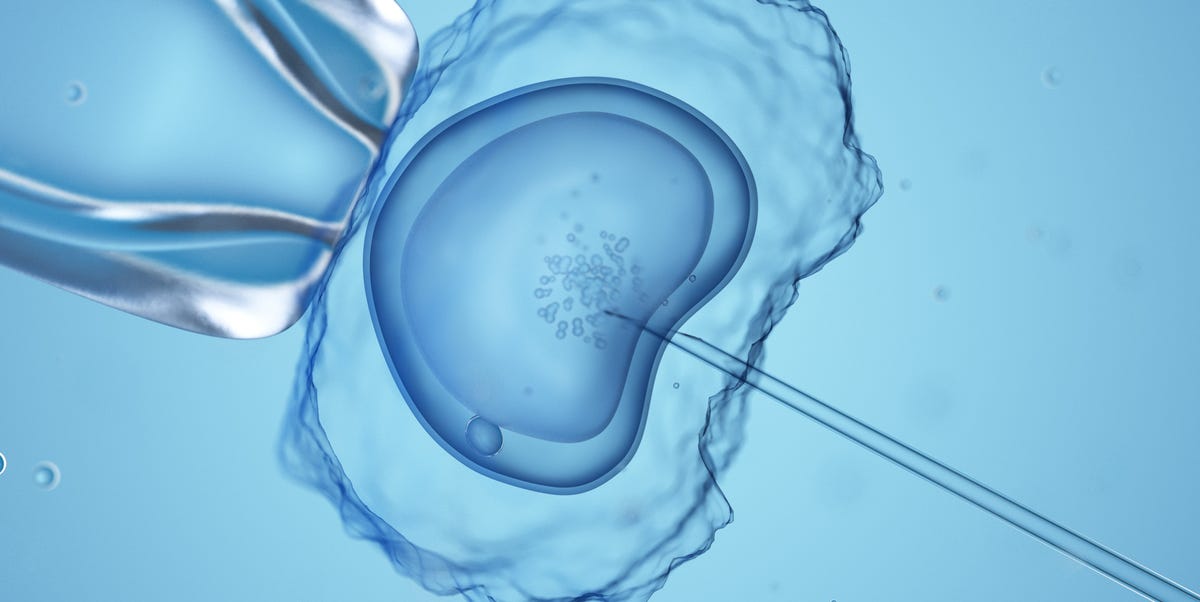
The phrase “first synthetic human embryo created” sounds like it escaped from a sci-fi movie trailer, preferably one with dramatic violin music and a scientist shouting, “Shut it down!” But the real story is both more fascinating and much less Hollywood. Researchers have created human embryo-like models from stem cells, giving science a new way to study the earliest stages of human development without using sperm, eggs, or a fertilized embryo.
That distinction matters. These structures are not babies in a dish. They are not ready for implantation. They are not a backdoor to instant cloning, despite what your most excitable group chat may suggest. They are laboratory models designed to imitate certain features of early human embryos so scientists can better understand pregnancy loss, infertility, genetic disorders, implantation, and the mysterious biological choreography that happens before most people even know a pregnancy exists.
So what does the creation of a synthetic human embryo model actually mean? It means researchers have opened a window into one of the most hidden chapters of human biology. It also means society now has to wrestle with new ethical questions faster than regulators, lawmakers, and the average coffee-fueled internet commenter may be ready for.
What Is a Synthetic Human Embryo?
A synthetic human embryo, more accurately called a stem-cell-based human embryo model, is a lab-grown structure made from human stem cells. These stem cells can self-organize into patterns that resemble some stages of early embryonic development. The word “synthetic” can be misleading because the cells are real human cells, not plastic, metal, or tiny robot parts. The “synthetic” part refers to how the model is assembled in the lab rather than formed through fertilization.
In natural reproduction, an embryo begins when a sperm fertilizes an egg. The resulting cell divides, forms a blastocyst, implants in the uterus, and begins a complex developmental journey. In embryo model research, scientists start with pluripotent stem cells, which are cells capable of becoming many cell types. Under carefully controlled laboratory conditions, these cells can arrange themselves into structures that mimic some features of early development.
These models can include cell types similar to those that would contribute to the embryo, yolk sac, placenta, and other supporting structures. Some advanced models have reproduced aspects of development around the second week after fertilization, a period researchers often call the “black box” of human development because it is so difficult to observe directly.
Why Scientists Created Human Embryo Models
The short answer: because early human development is incredibly important and incredibly hard to study.
During the earliest days of development, a small cluster of cells makes decisions that shape the entire body plan. Cells begin to specialize. Signals pass between embryonic and extra-embryonic tissues. Implantation begins. The foundations for future organs, placenta formation, and germ cells start to emerge. It is biology’s version of setting up a complicated group project, except every participant is microscopic and nobody has a calendar invite.
Studying this stage in natural human embryos is limited by ethics, law, and availability. Donated IVF embryos are precious and scarce. Many countries restrict how long human embryos can be grown in a lab, commonly using the 14-day rule or the appearance of the primitive streak as a key boundary. Animal models, such as mice, are useful but not perfect substitutes. A mouse embryo can teach us a lot, but it is not a tiny human wearing whiskers.
Human embryo models help fill that gap. They allow scientists to observe early developmental events, test how genes influence cell fate, study why implantation fails, and investigate how certain disorders may begin long before symptoms appear.
What Exactly Did Researchers Achieve?
Several research groups have reported major progress in creating human embryo-like models from stem cells. Some models mimic post-implantation development, meaning they represent stages after the embryo would normally attach to the uterine lining. Others reproduce organized three-dimensional structures that include multiple early cell lineages.
One major achievement involved creating integrated human stem-cell-derived embryo models that resembled key features of embryos up to around 13 to 14 days after fertilization. These models included cell types and compartments associated with early embryonic and extra-embryonic development, such as the epiblast, hypoblast, trophoblast-like tissues, and yolk-sac-related structures.
Another important line of work produced human embryo-like models that mimic parts of the second week of pregnancy. This is especially important because the second week is when implantation and early tissue organization occur. Many pregnancies fail around this time, often before a person realizes they were pregnant.
The breakthrough is not that scientists made a complete human embryo ready to become a fetus. They did not. The breakthrough is that they created models realistic enough to study processes that were previously almost invisible.
What This Does Not Mean
Because the topic is emotionally loaded, it is important to clear away a few myths.
It Does Not Mean Scientists Created a Baby in a Lab
These models are not equivalent to naturally fertilized embryos. They are research tools. They mimic certain biological events, but they do not have the full developmental potential of a natural embryo. Responsible labs do not attempt to implant these models, and professional guidelines clearly reject reproductive use.
It Does Not Mean Human Cloning Is Suddenly Here
Stem-cell-based embryo models are not a shortcut to cloning people. They are created to study development, disease, and pregnancy biology. Turning this research into reproductive cloning would be scientifically reckless, ethically unacceptable, and legally restricted in many places.
It Does Not Mean Ethics Are Optional
Actually, the opposite is true. The more realistic embryo models become, the more oversight they need. Researchers, journals, ethics committees, regulators, and the public all have a role in deciding what should be allowed, what should be prohibited, and how transparent the work must be.
Why the Discovery Matters for Pregnancy Loss
Miscarriage is common, painful, and often poorly understood. Many early losses happen during implantation or shortly afterward. Because this stage occurs deep inside the body and very early in pregnancy, scientists have had limited ways to study what goes wrong.
Synthetic human embryo models could help researchers examine the signals exchanged between early embryonic cells and support tissues. If those signals fail, development may stop. By studying models in the lab, scientists may identify genetic, molecular, or environmental factors that contribute to early pregnancy loss.
This does not mean a quick cure for miscarriage is around the corner. Biology rarely hands out instant answers like coupons at a grocery store. But embryo models could help researchers build a better map of early pregnancy, and better maps usually lead to better medicine.
How Embryo Models Could Improve IVF
In vitro fertilization has helped millions of families, but it is still inefficient and emotionally demanding. Not every embryo implants. Not every cycle succeeds. Patients often endure repeated procedures, uncertainty, and significant cost.
Human embryo models could help scientists understand what makes implantation successful. Researchers may be able to study how early cell types communicate, how the embryo prepares to interact with the uterus, and why some developmental patterns are more likely to continue than others.
In the future, this knowledge could improve embryo culture conditions, fertility treatments, and diagnostic tools. The goal is not to replace embryos with models in reproduction. The goal is to use models to understand the biology that makes healthy pregnancy possible.
What It Could Mean for Genetic Disorders and Birth Defects
Many birth defects begin very early, when cells are first choosing their roles and organizing into tissues. By the time a condition is detected later in pregnancy or after birth, the original developmental error may be long gone from view.
Embryo models may help researchers trace those errors back to their earliest steps. Scientists can study how specific genes influence development, how mutations disrupt cell signaling, and how environmental exposures might affect early tissue formation.
This kind of research could eventually support better screening, earlier diagnosis, and more precise prevention strategies. It could also help scientists test potential treatments in a controlled model before moving toward more complex research systems.
The Ethical Questions Are Bigand They Should Be
When a model looks increasingly like an embryo, society has to ask: how similar is too similar? That question is not simple. A model may lack full developmental potential but still resemble an embryo closely enough to raise moral concern.
There are several ethical issues at the center of the debate:
- Moral status: At what point should an embryo model receive special ethical protection?
- Research limits: Should embryo models follow the same 14-day boundary as natural embryos?
- Consent: How should donors be informed when their cells may be used to create embryo-like models?
- Transparency: How much should researchers explain to the public before controversial work begins?
- Misuse: How can society prevent irresponsible reproductive experiments?
The best answer is not panic. It is governance. Scientific progress needs speed, but ethics needs brakes, mirrors, and a very loud seatbelt reminder.
Why the 14-Day Rule Keeps Coming Up
The 14-day rule is a widely known boundary in embryo research. It generally limits the culture of human embryos in the lab to 14 days after fertilization or until the primitive streak appears, whichever comes first. The primitive streak is significant because it marks the beginning of gastrulation, when the body plan starts taking shape and twinning is no longer possible.
Embryo models complicate this rule because they are not fertilized embryos. Some guidelines treat them differently, while still recommending strong oversight. The challenge is that technology is moving quickly. A model that was obviously incomplete five years ago may become far more realistic tomorrow.
That is why scientific societies have updated guidance for stem-cell-based embryo models. The emerging consensus is that these models require clear scientific justification, defined endpoints, specialized review, and firm bans on implantation into a human or animal uterus.
Could Synthetic Embryo Models Replace Animal Testing?
Not entirely, at least not soon. But they could reduce reliance on some animal models in certain areas of developmental biology.
Animal research has helped science understand mammalian development, but species differences matter. A drug, mutation, or environmental exposure may affect mouse development differently than human development. Human embryo models may provide more relevant information for questions that are uniquely human.
For example, if researchers want to know how a gene influences early human placental development, a human stem-cell-based model may offer insights that animal models cannot. The model will not answer every question, but it can make research more targeted and potentially more humane.
What Are the Medical Benefits?
The possible benefits of synthetic human embryo models are wide-ranging, but they should be described carefully. This research is promising, not magical.
Better Understanding of Infertility
Embryo models may help scientists identify why implantation fails or why early development stops. This could eventually improve fertility care and IVF outcomes.
Improved Study of Early Disease
Some diseases begin during development. Models could help researchers see how early cell decisions influence later health.
Safer Drug Testing
Embryo models may help evaluate whether certain medications or chemicals interfere with early human development. That could improve safety testing without relying only on animal data.
Regenerative Medicine
Understanding how cells organize themselves during early development could support future work in tissue engineering and organ repair. If scientists learn how the body builds itself, they may become better at helping it heal.
What Are the Risks?
The biggest risks are not that a tiny lab model will suddenly grow into a movie monster. The real risks are misuse, hype, weak oversight, and public distrust.
Hype can damage science. If people hear “synthetic embryo” and think researchers are manufacturing humans, fear can outrun facts. On the other hand, if scientists dismiss public concerns as silly, they can lose trust. The responsible path is clear communication: explain what the models are, what they are not, why they matter, and where the limits are.
Another risk is commercial pressure. If embryo models become valuable for drug testing, fertility research, or biotech platforms, companies may race ahead of public debate. Strong rules should not wait until after a scandal. That is like installing smoke alarms after the kitchen is already on fire.
Why Language Matters So Much
“Synthetic human embryo” is catchy, but catchy is not always accurate. The phrase can make the work sound more complete and more reproductive than it is. “Human embryo model” or “stem-cell-based embryo model” is more precise.
Good language helps readers understand the science without fear or false hope. It also helps policymakers create rules that match reality. Calling every embryo-like structure an embryo could overregulate useful research. Calling every model just a “cell cluster” could understate its ethical significance. The truth sits somewhere in the careful middle, wearing sensible shoes.
Real-World Experiences and Human Questions Around Synthetic Human Embryo Research
For patients, the phrase “first synthetic human embryo created” may not sound like an abstract laboratory milestone. It may sound personal. Someone who has experienced miscarriage may wonder whether this research could finally explain what happened. Someone going through IVF may wonder whether it could improve their chances. Someone born with a genetic condition may wonder whether earlier understanding could help future families.
Imagine a couple who has gone through three IVF cycles. Each time, embryos looked promising in the clinic, but implantation failed. The medical explanation may be frustratingly vague: sometimes it happens. For patients, “sometimes it happens” is not an answer; it is a shrug wearing a lab coat. Embryo models could help researchers investigate the cellular conversations that occur during implantation, giving doctors better explanations and eventually better tools.
Consider a family with a history of a rare genetic disorder. Today, genetic testing can identify many risks, but it cannot always explain exactly how a mutation disrupts early development. A stem-cell-based embryo model could allow researchers to observe how certain genes behave during early cell organization. That could lead to deeper knowledge of disease origins and, over time, better prevention or treatment strategies.
There is also the experience of the researchers themselves. Early development is one of biology’s most difficult puzzles. Scientists are trying to study a process that is tiny, fast, hidden, and ethically sensitive. Embryo models give them something they have rarely had before: a controlled way to watch early human-like development unfold. For a developmental biologist, that is like finally getting headlights on a road that was previously pitch black.
But there is another human experience here: discomfort. Many people feel uneasy about embryo-like models, even when they understand the science. That discomfort deserves respect. Science does not happen in a vacuum; it happens in society. People bring religious beliefs, personal experiences, medical histories, and moral instincts to this conversation. The goal should not be to mock concern or inflate fear. The goal should be honest public dialogue.
A useful comparison is organoid research. Brain organoids, heart organoids, and mini-gut models once sounded strange too. Over time, the public became more familiar with the idea that lab-grown models can help researchers study disease without being full organs. Embryo models may follow a similar path, but the ethical stakes are higher because they touch reproduction, identity, and the beginning of human life.
For journalists and educators, the experience is also challenging. The topic demands accuracy without dullness. Say too little, and people misunderstand. Say too much too dramatically, and suddenly everyone thinks a biotech company is growing toddlers in a basement. The best communication balances awe with caution.
For society, the biggest experience may be learning to live with scientific gray zones. Synthetic human embryo models are not ordinary cell cultures, but they are not natural embryos either. They are powerful research tools that sit between categories. That means our rules, language, and ethics must become more sophisticated too.
In practical terms, this research invites a new kind of public responsibility. Patients should ask how their donated cells may be used. Scientists should explain their work clearly. Journals should require ethics review. Governments should update rules before technology outruns them. And readers should resist both panic and hype, which are the twin goblins of modern science news.
Conclusion: A Breakthrough That Needs Both Wonder and Wisdom
The creation of advanced synthetic human embryo models is one of the most important developments in modern developmental biology. It may help scientists understand miscarriage, infertility, birth defects, genetic disease, implantation, and the earliest stages of human life. It gives researchers a new way to study events that were once almost impossible to observe.
But the meaning of this breakthrough is not simple. These models are not natural embryos, and they are not meant for reproduction. They are research tools with extraordinary potential and serious ethical weight. The right response is not fear. It is not blind excitement either. It is careful progress, strong oversight, transparent communication, and public involvement.
The first synthetic human embryo model does not mean science has created life on demand. It means science has built a better window into how life begins. What we choose to do with that window will say as much about our values as it does about our technology.