Some students can explain photosynthesis, identify a misplaced modifier, and recite the causes of the American Revolutionyet still forget to submit the completed assignment sitting in their backpack. That frustrating gap is often related to executive function skills.
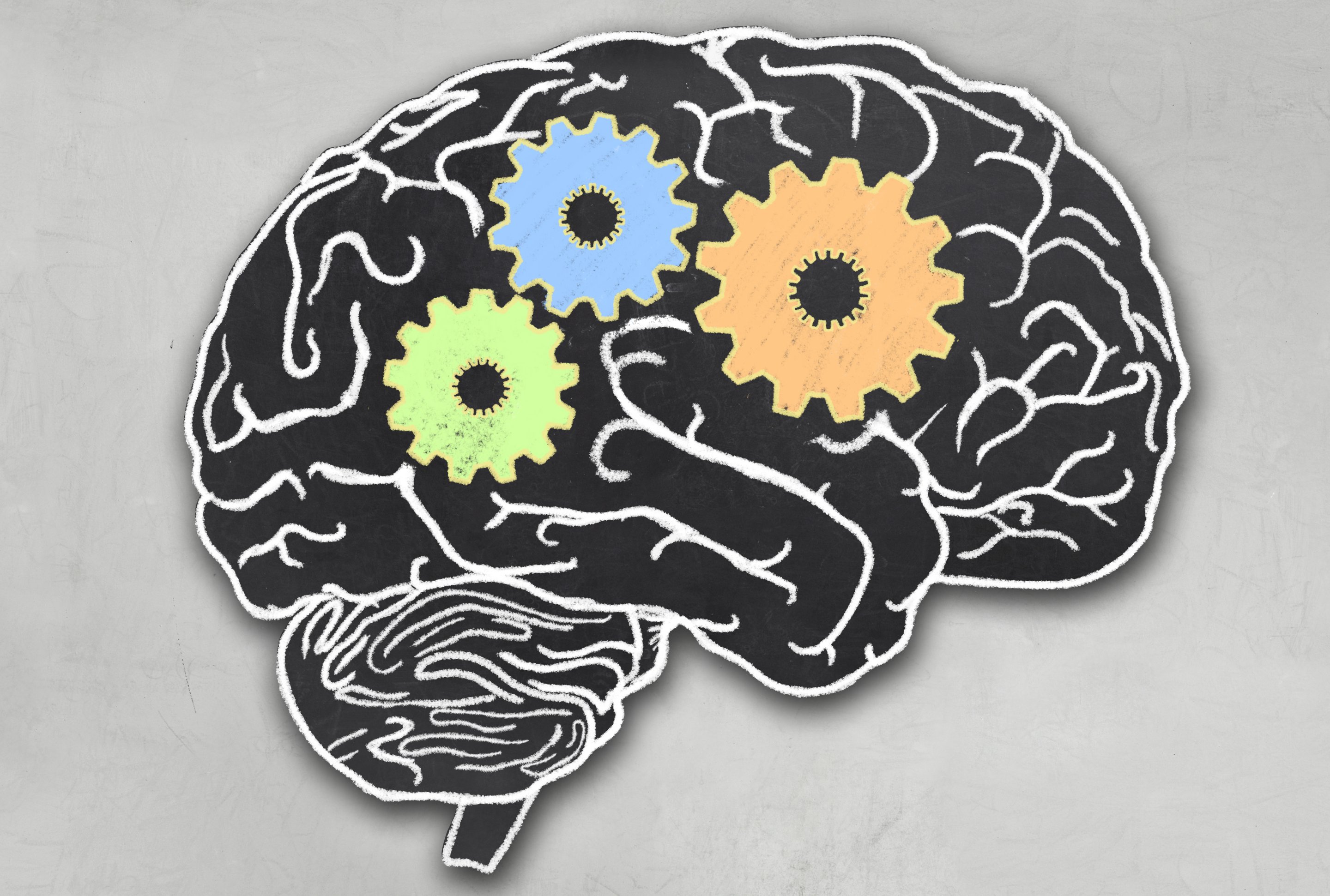
Executive functions are the mental processes students use to focus attention, remember instructions, control impulses, adjust to change, organize materials, and move toward a goal. They operate like the brain’s management team. When that team is still learning the job, even a simple instruction such as “Finish the worksheet and upload it before lunch” can become a surprisingly complicated mission.
Helping students develop executive function skills does not mean lowering academic expectations or organizing every pencil for them. It means explicitly teaching the planning and self-management strategies that successful learners often appear to use automatically. With practice, feedback, and gradually reduced support, students can become more independent at school and beyond.
What Are Executive Function Skills?
Executive function is an umbrella term rather than one isolated ability. The Center on the Developing Child at Harvard University describes three foundational areas: working memory, mental flexibility, and self-control. These processes work together whenever a student follows directions, solves a problem, begins an assignment, or resists the gravitational pull of a nearby phone.
Working Memory
Working memory allows students to hold information in mind while using it. A student relies on it when remembering the steps of a math problem, connecting a pronoun to an earlier sentence, or carrying out a three-part instruction.
A learner with limited working-memory capacity may complete the first direction and forget the remaining two. This is not necessarily carelessness. The information may simply disappear before the student can act on it.
Inhibitory Control
Inhibitory control helps students pause before acting, ignore distractions, manage emotions, and remain focused. It is the mental brake that prevents every passing thought from turning into an immediate action.
In class, inhibitory control supports turn-taking, careful reading, appropriate transitions, and persistence. It also helps students resist checking an unrelated browser tab when they are supposed to be researching the Louisiana Purchase.
Cognitive Flexibility
Cognitive flexibility is the ability to change strategies, consider another perspective, and adapt when circumstances shift. Students use it when a familiar solution does not work, the schedule changes, or a classmate proposes a completely different approach.
Flexible thinking does not mean abandoning structure. It means recognizing when the original plan needs revision and selecting another useful path without treating the change as an educational apocalypse.
Everyday Skills Built on These Foundations
Working memory, self-control, and flexibility support a larger group of school-related abilities, including:
- Starting tasks without excessive delay
- Setting goals and identifying priorities
- Estimating and managing time
- Organizing materials and digital files
- Breaking projects into manageable steps
- Monitoring progress and checking work
- Regulating frustration and recovering from mistakes
Difficulty in these areas should not automatically be labeled laziness or defiance. Executive function challenges can affect any student, although they are common among learners with ADHD, autism, learning disabilities, anxiety, sleep problems, or high levels of stress. Executive function difficulty is not, by itself, a medical diagnosis. Educators should describe observable behaviors and investigate barriers instead of making clinical assumptions.
Why Executive Function Instruction Matters
Schools frequently grade executive function without directly teaching it. Students lose points for missing deadlines, incomplete work, disorganized notebooks, and forgotten directions, even when no one has shown them how to plan backward, estimate time, or build a reliable reminder system.
That approach is a little like grading someone on bicycle maintenance after handing over a tire pump and saying, “You know what to do.” Some students infer effective systems by watching adults or experimenting. Others need clear instruction, guided practice, and feedback.
Executive function skills develop over many years. According to research summarized by the National Institutes of Health, they grow rapidly during early childhood and contribute to school readiness. Development continues through adolescence, when academic demands become more complex and adults begin removing external structure.
This creates an important teaching principle: independence should be the destination, not the entry requirement. Temporary scaffolds help students practice skills successfully before assuming full responsibility.
Practical Strategies for Helping Students Develop Executive Function Skills
1. Make the Invisible Process Visible
Teachers often demonstrate an academic answer without demonstrating the management process used to produce it. A think-aloud makes that hidden process visible.
Before starting a research project, for example, a teacher might say: “The final report is due Friday. I am going to list the required parts, estimate how long each one will take, and assign each part to a day. I will leave Thursday for revision because plans occasionally misbehave.”
Model how to prioritize, choose a strategy, respond to an interruption, and recover from a mistake. Students need to see that effective planning involves adjustments, not supernatural foresight.
2. Reduce Unnecessary Working-Memory Demands
Important directions should not vanish as soon as they are spoken. Display instructions on the board, provide a checklist, or place a brief model beside the assignment. Keep the wording direct and organize steps in the order students should complete them.
Ask students to restate directions in their own words rather than asking, “Does everyone understand?” That question reliably produces nods, including from students who were mentally visiting another galaxy.
Visual schedules, labeled folders, color coding, anchor charts, and assignment templates allow students to reserve mental energy for learning instead of using it to reconstruct forgotten procedures.
3. Break Large Assignments Into Milestones
“Write a report” is a destination, not a plan. Teach students to convert broad assignments into visible actions:
- Choose and narrow the topic.
- Locate credible sources.
- Record notes by category.
- Create an outline.
- Draft one section at a time.
- Revise for ideas and organization.
- Edit, format, and submit.
Assign intermediate deadlines and provide feedback at meaningful checkpoints. Over time, invite students to create their own milestones. This gradual transfer is more effective than either permanent adult control or a sudden plunge into total independence.
4. Teach Students to Plan Backward
Backward planning begins with the deadline and works toward the present. Students identify the final product, estimate the time required for each stage, and place those stages on a calendar.
Use real assignments rather than generic worksheets whenever possible. A student may complete a pretend planning activity perfectly and still have no idea how to organize Thursday’s science presentation. Strategy instruction becomes useful when students apply it within authentic academic work.
5. Make Time Concrete
Time is invisible, which makes it difficult to manage. Ask students to predict how long a task will take, record the actual duration, and compare the two. This builds time awareness without turning the classroom into an airport control tower.
Use analog clocks, visual timers, calendar blocks, and short work intervals. Give transition warnings such as “Ten minutes remain” and “You have two minutes to reach a stopping point.” These cues help students prepare for change rather than experiencing it as an ambush.
6. Create Predictable Routines
Consistent procedures reduce the number of decisions students must make. Establish routines for entering class, recording assignments, obtaining materials, submitting work, and packing up.
The Collaborative for Academic, Social, and Emotional Learning notes that clear routines create a more predictable environment that can support self-regulation and focus. Predictability is not the enemy of creativity; it clears space for creativity by reducing avoidable confusion.
Keep routines simple enough to survive a busy Tuesday. A complicated organizational system with seven folders, twelve symbols, and a secret handshake will probably become another task students must manage.
7. Teach Task Initiation With a First Action
Students sometimes avoid work because the starting point is unclear, not because they refuse to try. Replace “Get started” with a concrete first action: open the document, write the date, highlight the question, or solve the easiest problem.
A two-minute launch routine can help:
- Name the task.
- Choose the first physical action.
- Remove one likely distraction.
- Work until a short timer ends.
Beginning creates momentum. Once students cross the starting line, the assignment often feels less intimidating.
8. Practice Flexibility and Self-Control Through Play
Games provide natural opportunities to remember rules, wait, plan, and adjust. Younger students can benefit from Simon Says, Red Light, Green Light, matching games, imaginative play, rhythm activities, and increasingly complex movement games. The National Association for the Education of Young Children highlights playful learning as a practical context for strengthening working memory, inhibitory control, and cognitive flexibility.
Older students can use strategy games, team challenges, debates, role-play, and open-ended design tasks. Add reflection afterward: What was your plan? What changed? How did you manage frustration? The reflection turns an enjoyable activity into transferable learning.
9. Build Metacognition With Short Check-Ins
Metacognition means thinking about one’s own thinking and learning. Use brief questions before, during, and after a task:
- What is the goal?
- What strategy will you try?
- What could interfere with your plan?
- Are you making progress?
- What will you repeat or change next time?
Keep reflection specific and low stakes. “I need to be more responsible” is too vague to guide action. “I will photograph the homework board before leaving class” is observable, practical, and much harder for a backpack to swallow.
10. Design an Executive-Function-Friendly Classroom
Support should be built into the environment rather than reserved only for students who request help. Post clear goals, reduce visual clutter near work areas, provide models of finished products, and offer appropriate choices for demonstrating learning.
This approach aligns with CAST’s Universal Design for Learning guidance, which encourages educators to help learners set goals, develop strategies, plan, monitor progress, and reflect. Supports such as checklists and visual directions can benefit the whole class while remaining essential for some students.
Adjust Strategies by Age and Development
Elementary School
Young students benefit from visual routines, one-step directions that gradually become more complex, games with changing rules, storytelling, movement, and adult-guided planning. Teachers can narrate self-control and problem-solving: “I feel frustrated, so I am going to pause, check the directions, and try a smaller step.”
Middle School
Middle school creates a dramatic increase in teachers, deadlines, materials, and digital systems. Explicitly teach students how to use planners, interpret assignment portals, organize files, estimate homework time, and plan multiweek projects. A weekly organization reset can prevent one loose worksheet from evolving into an archaeological an archaeological layer.
High School
Adolescents need meaningful goals and increasing ownership. Encourage them to choose tools, evaluate whether those tools work, communicate their needs, and revise their systems. Harvard’s adolescent activity guidance emphasizes setting personally meaningful goals, planning, monitoring progress, and adjusting behavior.
Older students should practice skills that transfer beyond school, including writing professional emails, preparing for appointments, managing competing deadlines, and breaking long-term goals into weekly actions.
Support Without Creating Dependence
Effective scaffolding follows a gradual-release pattern: model the skill, practice it together, prompt the student, and then reduce the prompt. If an adult continues managing every step, the student may complete the assignment without developing the underlying ability.
Instead of repeatedly saying, “Put your homework in your bag,” point to the student’s packing checklist. Later, ask, “What does your system tell you to do?” Eventually, allow the student to follow the routine independently.
Give feedback on strategies as well as outcomes. Statements such as “Your checklist helped you catch the missing paragraph” connect success to a repeatable process. Praise that simply declares a student “smart” offers much less information.
When Students Need Additional Help
Universal classroom strategies are valuable, but persistent difficulty may require individualized support. Document what happens, when it happens, which demands are involved, and which strategies improve performance.
A student may need help from a school psychologist, counselor, special educator, occupational therapist, pediatric professional, or another qualified specialist when executive function difficulties significantly affect learning or daily life. Families and school teams can also determine whether formal accommodations or specialized instruction are appropriate.
Avoid diagnosing from classroom behavior alone. Missing work may reflect unclear directions, anxiety, a learning disability, attention difficulty, language barriers, unstable routines, insufficient sleep, stress, or several factors working as an unhelpful committee.
Experience-Based Examples: What Progress Looks Like in Real Classrooms
The following composite scenarios illustrate common experiences reported by educators and families. They are not accounts of specific identifiable students, but they show how executive function support can work in everyday situations.
The Student Who Could Not Begin
A seventh-grade student regularly spent the first 15 minutes of independent work sharpening a pencil, opening and closing tabs, and asking questions that had already been answered. Reminders to “focus” increased frustration but did not produce much writing.
The teacher replaced the broad instruction with a start card: open the document, copy the question, and write one sentence beginning with “My first idea is.” The student also used a five-minute timer and could ask for help after attempting the three actions.
Within several weeks, the delay before starting became shorter. The biggest improvement did not come from a motivational speech. It came from making the first step unmistakable. Once the student experienced successful starts, the card was reduced to a single question: “What is your first visible action?”
The Student With the Bottomless Backpack
A fifth-grade student often finished assignments but failed to turn them in. The initial adult response focused on repeated reminders. Unfortunately, reminders disappeared faster than the papers.
The teacher and student mapped the journey of an assignment from desk to submission. They discovered three failure points: the paper was not placed in the take-home folder, the folder was not checked at home, and completed work was not removed the next morning.
Together they created a two-folder system“To Do” and “Turn In”plus a packing checklist attached inside the backpack. The student practiced the routine at the same time each day. A family member initially checked the folders in the evening but gradually stepped back.
The system worked because it matched the student’s real environment. It also replaced the moral judgment of “irresponsible” with a solvable design problem.
The High School Student Buried by a Long-Term Project
A high school student understood the content of a history project but postponed working until the final weekend. “Work on project” appeared on the planner for three straight weeks, technically proving that writing something down does not automatically make it useful.
During a short conference, the teacher asked the student to define the finished product and plan backward. They created separate calendar entries for selecting sources, reading, note-taking, outlining, drafting, and revising. Each entry described an action that could be completed in one sitting.
The student predicted how long each stage would take and compared the estimates with actual working time. Early predictions were wildly optimistic. That was useful data, not failure. By the next project, the student scheduled more realistic blocks and included a buffer day.
The Class That Learned to Reflect
One elementary teacher ended complex lessons with a three-question routine: What helped you stay focused? Where did you get stuck? What will you try tomorrow? At first, answers were vague. Students said they would “try harder,” the traditional plan of people who do not yet have a plan.
The teacher modeled specific responses and displayed a menu of strategies: move to a quieter seat, underline key words, use a checklist, ask for directions in writing, take a movement break, or divide the task into parts.
Over time, students began selecting tools independently and discussing them without embarrassment. Executive function support became part of classroom culture instead of a private correction delivered only after something went wrong.
These experiences point to a consistent lesson: students improve when adults replace judgment with curiosity, teach strategies in context, and treat setbacks as information. The goal is not flawless organization. Even adults occasionally search for glasses already sitting on their heads. The goal is for students to recognize a problem, choose a tool, evaluate the result, and adjust.
Conclusion
Helping students develop executive function skills requires more than distributing planners or reminding everyone to concentrate. Students need explicit instruction in starting tasks, managing time, organizing information, controlling impulses, adapting plans, and reflecting on their progress.
The strongest support combines predictable routines, visible directions, authentic practice, positive relationships, and gradual release of responsibility. These methods improve access to learning while building skills students can use in college, work, relationships, and daily life.
Executive function growth is rarely a straight line. A strategy may work beautifully on Monday and vanish into the fog by Thursday. Patient repetition matters. When educators consistently make thinking processes visible, students begin to understand not only what they must learn, but how to guide themselves through learning.