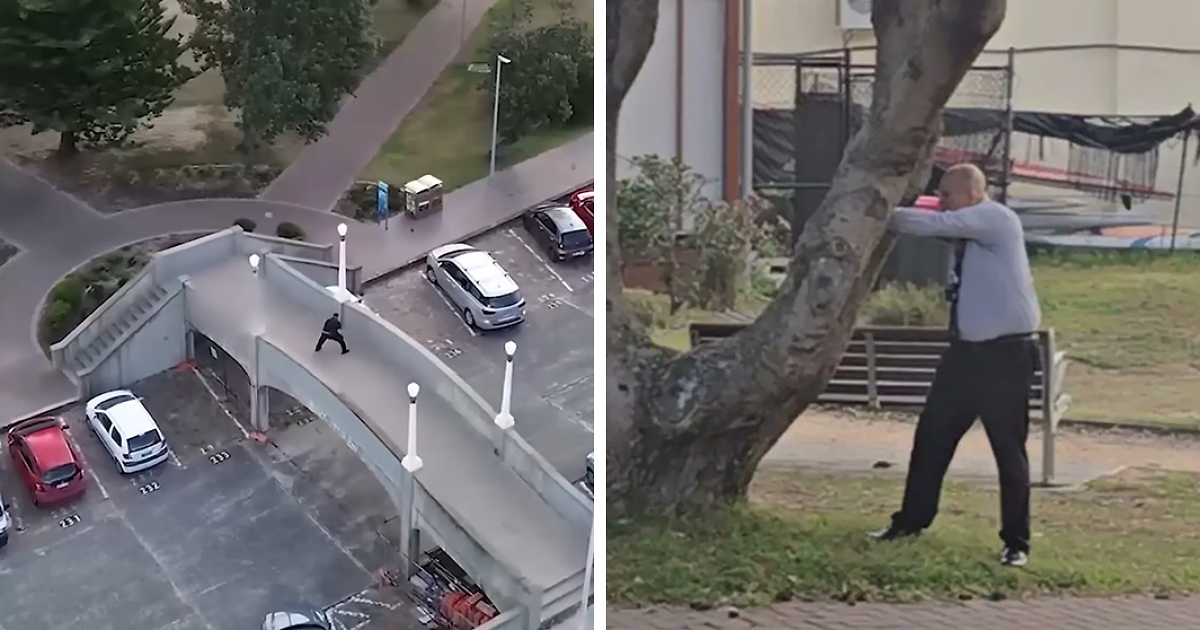
The police officer credited in multiple reports with helping stop the Bondi Beach attacker has been identified as Detective Senior Constable Cesar “Cess” Barraza, a New South Wales officer whose calm response in an almost unimaginable moment has made him one of the central names in the story of the Bondi Beach terror attack.
On December 14, 2025, a Hanukkah celebration near Sydney’s famous Bondi Beach turned from a warm community gathering into a national tragedy. Authorities have said the attack targeted the Jewish community and left 15 people dead, with dozens more injured. The alleged attackers were identified as father and son Sajid Akram and Naveed Akram. Sajid Akram was killed at the scene, while Naveed Akram survived and was later charged with multiple offenses, including murder and terrorism-related charges.
But in the middle of that horrifying story, another story emerged: the story of people who ran toward danger when every survival instinct said, “Absolutely not, please go the other way.” Among them were civilians, first responders, medical teams, and one plainclothes detective whose reported precision under pressure has been described as a “once-in-a-lifetime” move.
Who Is Detective Senior Constable Cesar “Cess” Barraza?
Detective Senior Constable Cesar Barraza is the Bondi-based New South Wales police officer widely identified in news reports as the officer who fired the decisive shots that helped end the attack. He was reportedly working in plain clothes, not dressed like a tactical movie hero with dramatic theme music, when the emergency unfolded.
That detail matters. Barraza was not entering a controlled training room or a scripted police drama. He was responding to a live public emergency where families, children, volunteers, and worshippers were in danger. According to multiple reports, he took cover and returned fire from a difficult distance while the attackers were positioned near a footbridge. The shot has been called extraordinary because of the pressure, distance, chaos, and stakes involved.
Older footage from the television series “Recruits” also resurfaced after the attack, showing a younger Barraza explaining that he wanted to become a police officer because he “hates crime.” Years later, that line suddenly looked less like reality-TV color and more like a career thesis statement.
What Happened at Bondi Beach?
The Bondi Beach attack occurred during a public Hanukkah event, often described in reports as a family-friendly gathering near Archer Park. People had come for community, celebration, music, food, and a peaceful start to the holiday. Bondi, normally known for surfboards, sunscreen, and tourists trying to look casual while taking 47 beach selfies, became the center of a major terror investigation.
Authorities have said the attackers opened fire on the celebration, and police later treated the incident as antisemitic terrorism. Sajid Akram, 50, was killed during the police response. His son, Naveed Akram, 24, was injured, taken into custody, and later charged. As of the latest official CDPP update, Naveed Akram faces a long list of charges, including counts connected to murder, attempted murder, terrorism, and explosives-related allegations. Because the case is still before the courts, he should be described as accused unless and until legal proceedings determine otherwise.
The “Once-In-A-Lifetime” Move That Stopped More Bloodshed
The phrase “once-in-a-lifetime move” has followed the reporting around Barraza because experts and officers described the reported shot as exceptionally difficult. The situation was fast, crowded, loud, and dangerous. Unlike a practice range, real life does not pause, line up neatly, or politely ask everyone to stop moving for safety.
Reports say Barraza used his service handgun from about 40 meters away while taking cover. That is not a casual distance under emergency conditions. Add the pressure of protecting civilians, the presence of other officers and bystanders, and the speed of the attack, and it becomes clear why his actions drew such strong praise.
Still, it is important to avoid turning a tragedy into an action-movie poster. The point is not that one officer became famous. The point is that training, courage, and decision-making under pressure can change the outcome of a disaster. Barraza’s reported actions are being discussed because they appear to have helped stop further harm at a moment when seconds mattered.
Other Heroes Also Stepped Forward
Detective Barraza was not the only person praised after the Bondi Beach attack. Syrian-Australian shop owner Ahmed al Ahmed became internationally known after video showed him confronting and disarming one of the gunmen. He was injured during the attack and later received widespread public support, including major fundraising efforts and praise from political leaders.
Other civilians also acted with remarkable courage. Reports identified Boris and Sofia Gurman among those who tried to intervene before the attack fully unfolded. Lifeguards, paramedics, doctors, nurses, police officers, and ordinary bystanders also helped evacuate, comfort, protect, and care for victims.
Heroism in events like this rarely looks polished. It looks like shaking hands applying pressure to a wound, strangers helping strangers move to safety, a first responder making one hard choice after another, and people refusing to let fear have the final word. Not glamorous. Not tidy. But deeply human.
Why the Identification Matters
When the public learns the name of a person who acted bravely, the story becomes more than an abstract headline. “Hero cop” becomes Cesar Barraza. “Bystander” becomes Ahmed al Ahmed. “Victims” become names, families, stories, and unfinished futures.
That naming matters because it helps communities remember the full picture. Terror attacks aim to create fear, division, and helplessness. The names of those who resisted that violence tell a different story: people can still choose courage, service, and solidarity.
At the same time, public attention must be handled responsibly. Barraza’s actions should be recognized without turning the tragedy into entertainment. The people killed and injured must remain at the center of the story. The Jewish community that was targeted deserves safety, dignity, and support. And the legal process must continue carefully, based on evidence rather than social-media shouting matches, which are rarely famous for nuance.
The Bigger Conversation: Security, Antisemitism, and Public Safety
The Bondi Beach attack pushed Australia into difficult conversations about antisemitism, gun laws, counterterrorism, emergency readiness, and community protection. Australian leaders described the attack as a strike against the Jewish community and against the broader values of a peaceful society.
After the attack, officials announced support for victims, community recovery programs, and proposals for tougher security and firearms-related measures. The Australian government also moved to recognize acts of bravery connected to the attack through a special honors process.
For readers in the United States, the story may feel both distant and painfully familiar. Public gatherings, faith communities, holiday events, and schools all depend on trust. When that trust is attacked, people naturally ask what could have been done, what warning signs were missed, and how communities can stay open without becoming fortresses.
Lessons From the Bondi Beach Hero Cop Story
1. Training Matters Before the Crisis
Barraza’s reported action is a reminder that critical decisions are rarely born in the moment alone. They are built through years of training, discipline, repetition, judgment, and public-service culture. In a crisis, people usually do not rise to a fantasy version of themselves; they fall back on preparation.
2. Courage Is Not the Absence of Fear
There is a stubborn myth that brave people do not feel fear. That is nonsense with a cape on. Brave people often feel fear clearly, maybe more clearly than anyone else, and act anyway because someone else needs help.
3. Community Response Continues After the Headlines Fade
The first news cycle focuses on the attack, the suspect, the officer, and the shocking numbers. But survivors and families live with the aftermath long after the trending topic disappears. Recovery includes medical care, mental health support, legal proceedings, financial help, remembrance, and public accountability.
4. Language Should Be Accurate and Human
Calling the attack antisemitic terrorism is not just a label; it reflects how authorities described the targeting of a Jewish holiday event. But responsible writing also avoids spreading rumors, glorifying attackers, or sharing unnecessary violent detail. The story is powerful enough without turning it into a spectacle.
Experience-Based Reflection: What This Story Teaches About Everyday Courage
Stories like the Bondi Beach attack force people to ask an uncomfortable question: “What would I do?” It is a natural question, but it can also be unfair. Most people never know how they will react in an emergency until they are inside one. Some freeze. Some run. Some help. Some do all three in the same minute. Human beings are complicated creatures; we can forget where we parked but somehow remember how to comfort a stranger in the worst moment of their life.
The lesson from Cesar Barraza’s reported actions is not that everyone should imagine themselves as a hero in a crisis. The better lesson is that preparation and responsibility matter. Police officers train for public danger. Medical workers train for mass-casualty response. Event organizers train for evacuation. Teachers train for lockdowns. Parents teach children how to find help. Even ordinary people can learn basic emergency awareness: know exits, follow official instructions, help without creating more danger, and call emergency services when safe.
Another experience-related lesson is that courage often begins before the dramatic moment. It begins when a person takes their job seriously on the boring days. It begins when communities report threats, challenge hate, support vulnerable neighbors, and build trust with local authorities. It begins when people decide that public safety is not someone else’s chore, like taking out the trash and hoping a raccoon handles it.
For journalists, bloggers, and content creators, this story also offers a responsibility lesson. Writing about violence requires restraint. A headline can attract readers without exploiting victims. A story can praise a hero without making the attacker infamous. An article can analyze public safety without giving tactical advice to harmful people. That balance is not always easy, but it is necessary.
For readers, the Bondi Beach story is a reminder to pay attention to the helpers. In every major tragedy, there are people who run medical supplies, shield others, drive victims to care, open their homes, donate blood, raise funds, sit with the grieving, and keep showing up after the cameras leave. They may never be identified in headlines, but they are part of the reason communities survive.
That is why the identification of Detective Senior Constable Cesar “Cess” Barraza matters. His name gives the public a person to thank, but it also points to a larger truth: safety depends on trained responders, brave civilians, responsible leaders, and communities that refuse to normalize hate. The “once-in-a-lifetime” move may belong to one officer, but the duty to protect one another belongs to everyone.
Conclusion
Detective Senior Constable Cesar “Cess” Barraza has been identified in multiple reports as the hero officer whose extraordinary response helped stop the Bondi Beach attacker during one of Australia’s darkest public tragedies. His reported action, described as a “once-in-a-lifetime” move, stands alongside the bravery of civilians like Ahmed al Ahmed and the tireless work of first responders who helped save lives.
The Bondi Beach attack will be remembered for its devastating loss, its antisemitic targeting, and the questions it raised about security and hate. But it should also be remembered for the people who acted with courage when it mattered most. In a moment built to create fear, they answered with service. That may not erase the tragedy, but it gives the public something solid to hold onto: even in the worst moments, helpers still appear.