Art cannot stop a missile, rebuild a home, or replace some can preserve identity, carry a story across borders, raise money, honor courage, and remind viewers that Ukraine is not merely a headline or a colored shape on a map. It is a country with living traditions, restless creativity, complicated history, beloved cities, and millions of individual lives.
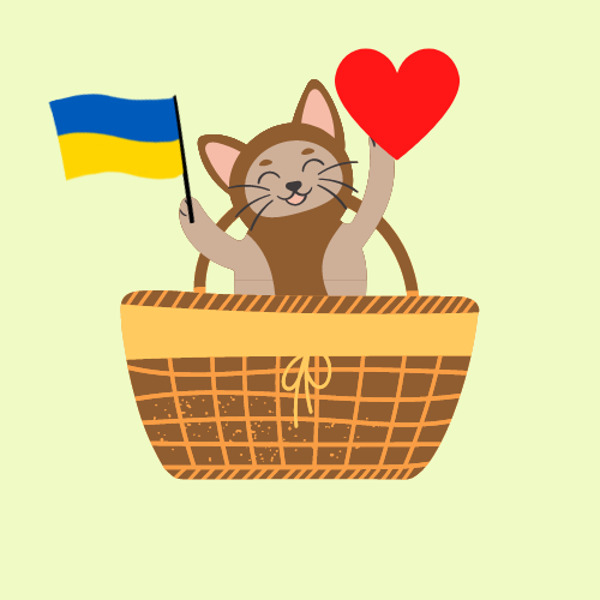
That is why the invitation “Hey Pandas, post some art supporting Ukraine” can become much more than a collection of blue-and-yellow drawings. It can be a community gallery of solidarity, remembrance, cultural curiosity, and practical support. A pencil sketch, digital poster, handmade sunflower, painted egg, photograph, mural concept, embroidery pattern, or clay sculpture can all contributeprovided the work is created thoughtfully.
You do not need a prestigious studio, a dramatic artist’s scarf, or a paintbrush that costs more than your groceries. You need an idea, respect for the people represented, and the willingness to learn before posting.
Why Art Supporting Ukraine Still Matters
Russia’s full-scale invasion, launched on February 24, 2022, has threatened not only human life and physical infrastructure but also museums, monuments, archives, churches, historic buildings, and works of art. Cultural preservation specialists have worked to protect Ukrainian collections, document damage, move vulnerable objects, and preserve evidence of a distinct national heritage.
The stakes are larger than saving attractive objects from dusty display cases. Culture tells people who they are. When cultural sites and traditions are erased, misattributed, stolen, or destroyed, a nation can lose pieces of its recorded memory.
The experience of the Ivankiv Historical and Local History Museum illustrates that danger. The museum held works connected to celebrated Ukrainian folk artist Maria Prymachenko, whose fantastic animals, bold flowers, and imaginative scenes became internationally recognized expressions of Ukrainian creativity. Reports that residents helped rescue some works from the damaged museum turned preservation itself into an act of resistance.
Contemporary artists have also responded directly to the war. Ukrainian sculptor Mikhail Reva has transformed missile fragments and other debris into emotionally charged works. Street art in Kyiv has memorialized fallen soldiers, volunteers, rescue efforts, and symbols of national resilience. Banksy created a gymnast balancing on rubble in Borodyanka, using a damaged structure as both surface and subject.
These examples show why art supporting Ukraine should not be dismissed as decorative activism. At its best, it records, remembers, raises questions, and keeps attention from wandering away when the news cycle gets distracted by a celebrity haircut.
Research basis for cultural heritage, Maria Prymachenko, wartime murals, Banksy, and Mikhail Reva: hat Kind of Ukraine-Supporting Art Can You Post?
There is no single correct visual style. Sincere solidarity can appear in realism, folk art, collage, comics, photography, abstraction, sculpture, embroidery, animation, or a gloriously chaotic marker drawing made at the kitchen table.
1. Blue-and-Yellow Artwork With a Personal Idea
Ukraine’s flag colors are immediately recognizable and commonly interpreted as a blue sky above golden wheat fields. They offer a clear starting point, but color alone rarely makes an artwork memorable.
Try turning the colors into a story. A yellow window glowing beneath a blue night sky might represent a family staying connected during a blackout. Blue hands protecting a yellow seedling can symbolize care and renewal. A ribbon winding through several countries can show international solidarity.
The goal is to move beyond “I used two crayons and patriotism happened.” Give the colors emotional or narrative purpose.
2. Sunflowers as Symbols of Life and Defiance
Sunflowers are closely associated with Ukraine and have appeared repeatedly in solidarity posters, public installations, fundraising campaigns, and personal artwork. They can represent warmth, agriculture, continuity, and the determination to keep turning toward light.
A sunflower does not have to be cheerful. It may grow through cracked pavement, rise beside a damaged home, or appear as a field containing the silhouettes of missing people. It can also be gentle: a child carrying one flower, a vase beside a letter, or seeds held in an open palm.
3. Ukrainian Folk-Art Influences
Ukrainian culture offers a vast visual vocabulary beyond the national flag. Artists can study decorative floral painting, woven textiles, ceramics, wood carving, paper cutting, traditional clothing, and regional embroidery.
Vyshyvanka embroidery patterns are especially recognizable, but they should not be treated as random geometric decoration. Designs vary by region and can carry cultural meaning. Researching a pattern’s origin before using it helps transform borrowing into informed appreciation.
Pysanky, the Ukrainian tradition of decorating eggs with wax-resist designs, offers another rich source of inspiration. Artists might create an authentic pysanka, illustrate one digitally, or use its layered process as a metaphor: wax protecting color just as communities protect memory.
4. Art Inspired by Ukrainian Cities
Kyiv, Kharkiv, Odesa, Lviv, Mariupol, Chernihiv, Kherson, and other Ukrainian cities have distinctive architecture, public spaces, coastlines, streets, and local identities. A cityscape can celebrate ordinary life instead of portraying Ukraine only through destruction.
Draw a café terrace, apartment balcony, train station, theater, church dome, park, marketplace, or family kitchen. Showing places as inhabited communities reminds viewers that cities are more than strategic points mentioned by television anchors standing beside enormous maps.
5. Portraits That Center Individuals
Portraits can honor artists, medics, rescue workers, journalists, teachers, volunteers, musicians, athletes, parents, children, and displaced families. However, real people should be represented with care.
Use photographs only when you have permission or when the image is legitimately available for that purpose. Name the subject when appropriate, verify the story, and avoid turning another person’s suffering into emotional decoration. A dramatic portrait gains meaning from accuracy, not from an invented caption designed to collect reactions.
6. Memorial Art
Some artworks supporting Ukraine will necessarily address grief. Memorial pieces can use candles, empty chairs, birds, damaged musical instruments, handwritten names, family objects, or quiet landscapes.
Restraint often makes memorial art more powerful. Graphic imagery is not always necessary to communicate loss. A child’s shoe beside a doorway can say more than an overloaded scene filled with every symbol the artist discovered during a five-minute internet search.
7. Art Made From Reclaimed Materials
Artists have transformed military debris, damaged metal, broken glass, discarded wood, and everyday remnants into sculpture and installation. This approach can reverse an object’s original meaning: something associated with destruction becomes a flower, figure, bell, or monument.
For safety and legal reasons, never collect or handle ammunition, weapon fragments, or unidentified battlefield objects yourself. Reclaimed-material art can use safe domestic items insteadtorn fabric, damaged frames, rusted hardware, packaging, newspapers, or broken household objects.
8. Art About Cultural Survival
Not every work must depict combat. In 2026, a Kyiv contemporary art fair titled This Is Normal presented hundreds of works and emphasized cultural continuity, reflection, and the persistence of creative life during wartime. The choice to exhibit art not exclusively focused on war was meaningful in itself.
You can support Ukraine by illustrating music lessons continuing, artists returning to studios, couples dancing, grandparents teaching recipes, families celebrating holidays, or children reading. Survival includes the right to make ordinary, strange, playful, and beautiful things.
Research basis for contemporary art, cultural continuity, U.S. exhibitions, and institutional preservation: ow to Create Solidarity Art Respectfully
Learn Before You Draw
Spend time with Ukrainian artists, museums, photographers, writers, and cultural organizations. Learn the difference between Ukrainian and Russian cultural attribution. For generations, some Ukrainian-born creators have been labeled broadly or inaccurately as Russian, particularly when they worked under the Russian Empire or Soviet Union.
Accurate attribution is not a tiny museum-label technicality. It determines whether Ukrainian cultural identity is recognized or absorbed into someone else’s national story.
Credit Ukrainian Inspiration
When your work is inspired by a specific artist, textile, photograph, mural, or folk tradition, acknowledge it. Avoid copying a living artist’s composition and presenting it as your own creative breakthrough.
Supporting Ukrainian art while quietly borrowing from Ukrainian artists without credit is a little like eating someone’s birthday cake and announcing that you support birthdays.
Avoid Reducing Ukraine to Trauma
War is part of Ukraine’s current reality, but Ukraine did not suddenly appear in 2022. It has centuries of art, literature, architecture, humor, food, music, religious traditions, regional identities, and modern cultural experimentation.
Balance images of grief and resistance with images of creativity, friendship, landscapes, daily routines, and future possibilities. Ukrainians deserve to be represented as complete people, not as anonymous symbols waiting for outside rescue.
Be Careful With Artificial Intelligence
Generative tools can quickly produce blue-and-yellow posters, but speed does not guarantee originality, accuracy, or ethical value. An AI-generated image may imitate styles without compensating the artists whose work influenced the system. It may also create distorted flags, fake embroidery, incorrect landmarks, or emotionally manipulative scenes that never happened.
When AI is used, disclose it. Do not present synthetic portraits as real Ukrainians or invented destruction as documentary evidence. Better still, consider commissioning a Ukrainian illustrator, purchasing an existing work, or collaborating with a human artist.
How to Post Your Art So It Has Real Impact
Write a Useful Caption
A caption should explain the idea, materials, cultural references, and intended action. Instead of writing only “Stand with Ukraine,” tell readers why you selected a particular symbol and what you learned while creating it.
For example:
“This piece combines a sunflower with a wax-resist pattern inspired by Ukrainian pysanky. I created it as a reminder that cultural traditions survive because people keep practicing, teaching, and protecting them.”
If the post supports a fundraiser, identify the organization clearly. Do not make vague claims such as “profits help Ukraine” without specifying the percentage, recipient, and method of donation.
Add Accessible Alternative Text
Describe the image for people who use screen readers. Mention the medium, major objects, colors, composition, and visible text. Good alternative text might read:
“Digital illustration of a yellow sunflower growing through a cracked gray sidewalk beneath a deep blue sky. A small embroidered pattern circles the flower’s center.”
Accessibility is part of solidarity. A post designed to express inclusion should not accidentally exclude part of its audience.
Use Focused Hashtags
A few relevant hashtags are more useful than a giant block containing every political and artistic word known to civilization. Options may include phrases related to art supporting Ukraine, Ukrainian artists, cultural preservation, solidarity art, peace artwork, or a specific fundraising event.
Check each hashtag before using it. Online conversations change, and a once-helpful tag can become flooded with spam, misinformation, or unrelated content.
Turn Artistic Attention Into Practical Support
Posting is only the first step. Art supporting Ukraine becomes more meaningful when visibility is connected to action.
Purchase Work From Ukrainian Artists
Buying directly supports an artist’s livelihood and gives you a genuine connection to Ukrainian creative culture. Look for established galleries, museum shops, verified artist profiles, reputable exhibitions, and clear seller information.
Do not pressure artists to explain personal trauma before you consider their work worthy of purchase. Ukrainian creators are allowed to make abstract paintings, funny ceramics, romantic landscapes, experimental videos, and pictures of cats behaving like tiny landlords.
Attend Ukrainian Exhibitions and Programs
Institutions such as The Ukrainian Museum in New York, the Ukrainian National Museum in Chicago, Ukraine House in Washington, D.C., and independent American arts centers have presented Ukrainian art and cultural programming. Visiting, donating, becoming a member, or sharing an event can strengthen the institutions preserving and presenting this work.
Organize a Community Art Sale
A school, workplace, library, café, or local gallery can host a benefit exhibition. Establish the financial rules before accepting submissions. State whether all proceeds or a percentage will be donated, identify the recipient, document the transfer, and publish the result.
Transparent fundraising is less glamorous than posing beside a giant check, but it is considerably more useful.
Commission Rather Than Copy
When you discover a Ukrainian artist whose style fits your project, ask about a paid commission. This is especially valuable for organizations creating event posters, editorial illustrations, merchandise, album covers, or campaign graphics.
Exposure can be helpful, but exposure is not a currency accepted by grocery stores, landlords, or electricity providers.
A Shared Experience: From a Blank Page to Meaningful Solidarity
The experience of making art supporting Ukraine often begins with an uncomfortable blank page. The artist wants to say something sincere but fears producing an image that feels predictable, performative, or insensitive. The first idea is usually a flag. The second is usually a sunflower. The third is often the realization that several thousand other people had exactly the same first two ideas.
That moment does not mean the project should be abandoned. It means the artist needs to move from symbols toward a specific story.
Imagine beginning with a simple sunflower sketch. During research, you discover Ukrainian decorative art, regional embroidery, contemporary installations, street murals, and the fantastic creatures painted by Maria Prymachenko. The flower slowly changes. Its center becomes a patterned circle. Its roots wrap around fragments representing memory: a house key, a train ticket, a sheet of music, and a child’s drawing.
The process becomes less about decorating a page and more about listening. You notice how easily outside observers focus only on explosions, uniforms, and geopolitical speeches. Ukrainian artists, meanwhile, continue making work about dreams, absurdity, family, identity, environmental damage, love, boredom, displacement, beauty, and the strange business of remaining human during war.
Posting the finished piece can produce another mixture of emotions. Some viewers may respond immediately. Others may ask why art matters when people need food, medicine, shelter, and security. That is a fair question. The answer is not that art replaces material assistance. It is that art can direct attention toward it, help fund it, document why it is needed, and preserve the culture whose future is being defended.
The most rewarding response may come from someone who recognizes a detail. A Ukrainian viewer might identify the regional influence behind a pattern, explain a tradition, correct a spelling, or share a family memory. Receiving a correction can sting for approximately seven seconds. Then it becomes a gift: the work is improved, the artist learns something real, and the conversation becomes more important than protecting one person’s creative ego.
A community project deepens the experience further. One contributor posts a digital landscape. Another shares a hand-embroidered piece. A child draws a blue cat carrying a yellow umbrella. A photographer submits an image of a candlelight gathering. A sculptor builds a sunflower from safe recycled metal. None of the works looks the same, yet together they create a fuller expression of solidarity than any single poster could achieve.
The experience also teaches patience. Public attention rises sharply during major attacks or political announcements and then fades. Artists may wonder whether continuing to post is repetitive. Yet cultural support is most valuable when it lasts beyond the moment when everyone else has moved to the next trending subject.
Long-term engagement might mean following Ukrainian artists, attending exhibitions, learning correct cultural attribution, donating periodically, or creating a new work for an annual benefit. The artist stops treating Ukraine as a temporary theme and begins engaging with Ukrainian culture as something worth knowing in its own right.
That is the strongest experience this kind of project can offer. The final artwork matters, but so does the transformation behind it. A person begins by searching for something supportive to post and ends with a deeper understanding of cultural survival, artistic responsibility, and the difference between being visible for a day and remaining meaningfully present.
Conclusion: Post the Art, but Make It Count
Art supporting Ukraine can be bright, mournful, traditional, experimental, polished, or charmingly imperfect. What matters is that it respects Ukrainian identity, avoids misinformation, credits its influences, and encourages something beyond a quick reaction.
Draw the sunflower, but give it roots. Use blue and yellow, but tell a story with them. Share the poster, but also share a Ukrainian artist. Create a memorial, but verify the person’s name. Host a sale, but publish where the money went.
Most importantly, allow Ukrainians to remain at the center of art made in their support. Solidarity is not about borrowing someone else’s struggle to make ourselves look compassionate. It is about listening, learning, preserving, contributing, and refusing to let cultural identity disappear behind the machinery of war.
Note: This article is intended to encourage respectful cultural solidarity. Before using protected artwork, personal photographs, organizational logos, or fundraising claims, confirm that you have permission and current, verifiable information.
Additional research synthesis: